
Translated material
Trump threatens the "Security of Europe"
The EU countries asked the United States to release European companies from sanctions for business with Iran - they are insisted by the American president
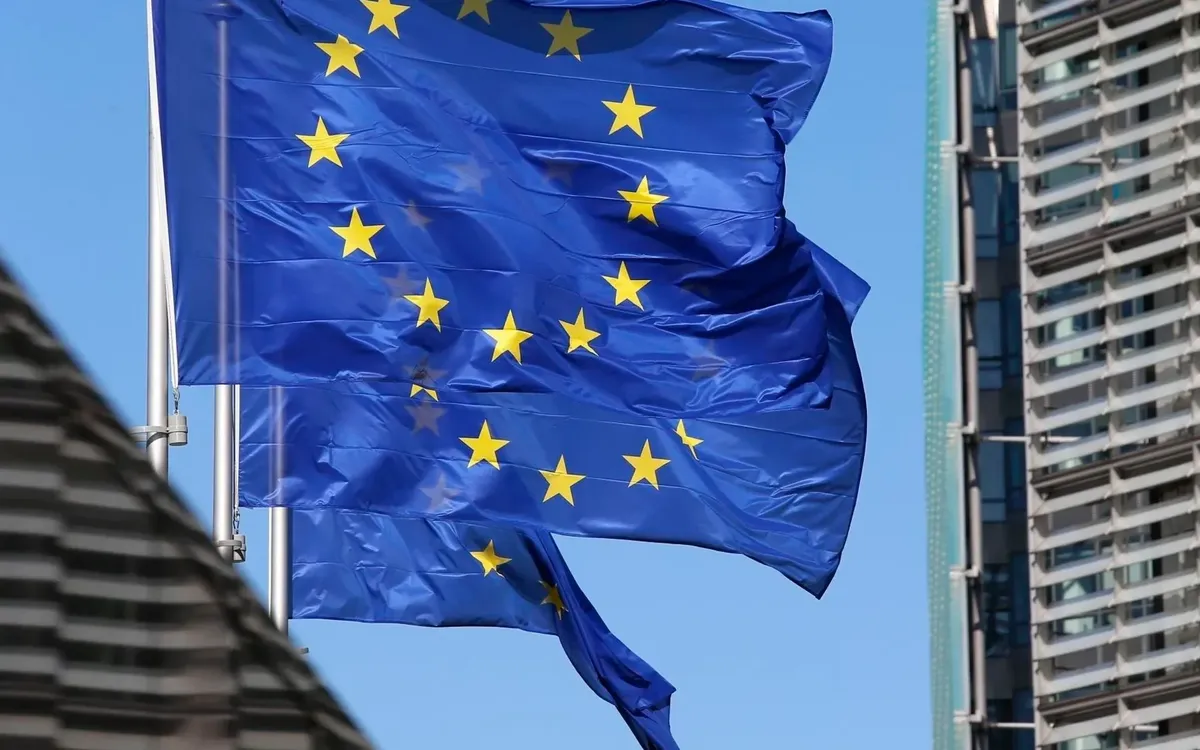
Ministers of Foreign Affairs and Economics of Great Britain, France and Germany sent the American Minister of Finance Stevens Mnuchin and Secretary of State Mike Pompeo a letter demanding that European companies operating in Iran from US sanctions. The letter was also signed by the Supreme EU for Foreign Affairs Federica Mogherini.
US position
On May 8, Trump announced the exit of the United States from an agreement on Iran’s nuclear program. We are talking about a document signed in 2015 after more than ten years of negotiations - “a joint comprehensive plan of action” (SVPD). In July 2015, the document was signed by seven countries: on the one hand - Iran, on the other - the USA, Great Britain, France, Germany, Russia and China.
Under this agreement, Iran required by two -thirds to reduce the number of centrifugs to enrich uranium, not to produce highly enriched uranium for 15 years, to reduce the existing reserves of enriched uranium from 10 tons to 300 kg, as well as to allow inspectors of the International Atomic Energy Agency for their facilities. In exchange for this, the EU and the United States agreed to partially remove the sanctions imposed on a nuclear program-in particular, Iran got the opportunity to sell oil in the international market.
The signing of the SVPD was an important success of the Obama administration, but Trump repeatedly criticized him for the time of measures (most of the restrictions should be lifted 15 years after signing the transaction), the lack of a ban on testing ballistic missiles and that the contract does not limit Iran’s policy in the Middle East.
In January 2016, the Magate in his report confirmed that Iran fulfills the terms of the transaction. However, in October 2017, Trump said that Iran did not comply with the deal - in particular, he did not reduce the number of centrifugs and did not allow the IAEA inspectors to conduct a full -fledged inspection. In addition, Trump reminded, Iran supports the Bashar al-Assad regime in Syria, the Al-Qaeda and Taliban terrorist groups (prohibited in the Russian Federation) and, possibly, reports the DPRK technology. Then Trump first announced that the United States could withdraw from a nuclear transaction.
At the end of April this year, Israeli Prime Minister Benjamin Netanyahu said that the Iranian authorities lied about the lack of nuclear weapons at the time of the transaction. The United States supported the position of Israel.
After leaving the SVPD, Trump signed a memorandum to resume sanctions against Iran, which will enter into force for 180 days. In addition, the US president warned that European companies that would continue to trade with Iran would fall under sanctions.
The resumption of enrichment of uranium
European partners in this situation are worried about two points. Firstly, having left the SVPD, the United States threatened the deal itself and, accordingly, restraining Iran’s nuclear potential. Secondly, some large European companies faced a choice: to lose millions of euros, stopping transactions with Iran, or to be on US sanctions lists.
The first fears are already coming true. On June 5, Tehran informed the Magate about the resumption of the enrichment of Uranus, this was stated by the head of the Iranian atomic energy organization Ali Akbar Salehi. Ali Akbar Salehi also said that the new object for the production of centrifuges will be built on the basis of Natanz. On the eve of June 4, the Supreme Leader of Iran Ayatollah Ali Khamenei instructed the Iranian Ministry of Energy to prepare for the renewal of work on enrichment. According to Ali Khamenei, Iran cannot simultaneously be under sanctions and comply with the terms of the transaction.
European leaders promise to continue to do everything possible in order to preserve the SVPD. “The United States of America left the SVPD, but we are convinced that this (SVDP - ed. ) The best measure of preventing the development of Iran’s nuclear potential. Currently, we do not see worthy alternatives, ”the Foreign Ministry of the Foreign Ministry and ministries of the economy of France, Germany and Great Britain said in a joint letter.
European companies
A large European business is also under the blow. After the conclusion of a nuclear transaction, many European companies began to actively work in Iran. So, the French oil and gas giant Total last year signed a contract for $ 5 billion on the purchase of Iranian oil. The French company Airbus as part of a contract for several billion dollars has already begun the supply of its aircraft to Tehran.
Total has already stated that they would refuse a deal with Iran if this entails American sanctions. According to the company's statement, so far 40 million dollars have been invested in the project - and these losses will be much less painful than the loss of American shareholders and the US market. “Total will be forced to curtail all the relevant operations before November 4, 2018, if the United States, with the support of the EU and France authorities, does not guarantee Total that the sanctions will not be imposed,” the company management said. The French company PSA Group, producing Peugeot and Citroën cars, made a similar statement.
Among the partners of Iran there are German suppliers. So, the German concern Volkswagen reported on the supply of cars to Iran. The new US Ambassador to Germany Richard Grenell has already warned on his Twitter: “German companies leading business with Iran should immediately stop all trading operations.”
European partners are trying to find a way not to submit to American sanctions-firstly, from economic interests, and secondly, otherwise Iran will be able to finally consider the nuclear transaction invalid. After the May Summit of the EU countries in Sofia, the European Commission updated the so -called “blocking status” of 1996, which prohibits European companies to obey the US extraterritorial sanctions. Then the European Commission began negotiations with the European Investment Bank (EIB) on the possibility of investing European projects in Iran from the EU budget in order to protect its companies from sanctions. However, on June 6, the bank issued its verdict: “EIB cannot be a solution to this problem,” the representative of the institution said Reuters. The bank in this situation itself is afraid of pressure and possible sanctions by the United States.
EU countries can be hoped that Trump will make an exception for their companies.
“As allies, we expect the United States to refrain from actions that can harm the interests of European security,” the ministers of France, Germany and Great Britain in their appeal say. “The EU will make serious efforts to maintain the regime of weakening of sanctions against Iran in order to fulfill our obligations under the SVPD, as long as Iran observes its obligations.”
In particular, the ministers urge the United States to the following measures: do not impose sanctions against European companies that started business with Iran after signing a nuclear transaction; abandon sanctions in key areas - medicine, pharmacology, energy, automobile and construction industries; To free from sanctions banking and financial transactions with Iran, in particular with the Central Bank of Iran and other banks that are not included in the sanctions list of the European Union.