
Translated material
Who does the Science have?
The legendary publishing house of the Academy of Sciences goes to the knife. State contracts and profit from the publication of the works of Russian scientists abroad will go to the owners of offshores

The head of the Academy of Sciences, Alexander Sergeyev, called on the other day without fail to translate all scientific publications into English. In parallel, the “optimization” of the Publishing House “Science” unfolded, which prepared more than a hundred scientific journals of the Russian Academy of Sciences, and also published thousands of items of special literature. “Science” will lose the opportunity to publish magazines, and most of all this optimization will hit long -term book publishing projects, for which no private business will take up.
At the same time, all the “tops”, that is, the profitable components of business in scientific publications, have been belonging to the offshore company Alexander Sudovich, a businessman with Russian roots for 20 years. The New Gazeta was versed in why the leadership of the academy and relevant officials consider it normal.
Back in the early nineties, the Russian Academy of Sciences (RAS) transferred the right to publication of the English -language versions of its scientific journals of the Offshore company Places Pablining, registered in the Virgin Islands. There was such a time: they survived as they could. But since then, the country has repeatedly risen from the knees, and the profitable international business - the trade of subscriptions to scientific magazines - is still being built bypassing the Nava Simple. In the plus, the American businessman Alexander ShURYSHEVICH, who owns the "Pleiades" and controls the publications of Russian scientists in English, as well as, possibly, possibly aged structures in the Russian Academy of Sciences. It seems that soon he will be able to increase the momentum of his own business, because the legendary publishing house "Science" is on the verge of bankruptcy.
But the three-hundred-year history of the Publishing House "Science" began with the academic printing house of St. Petersburg, founded in 1727. Academician Sergey Vavilov became the chairman of the editorial board of the USSR Academy of Sciences of the Academy of Education of the Academy of Sciences of the USSR, in 1945, in 1945, in 1945. Vavilov’s idea was to connect a publishing house, a printing house and a trading network into a single chain. The Akademkniga brand is memorable to many, although today you can meet this sign on the streets of Russian cities less and less. The chain bookstores began to die back in the 90s, now the time has come for the publishing house itself.
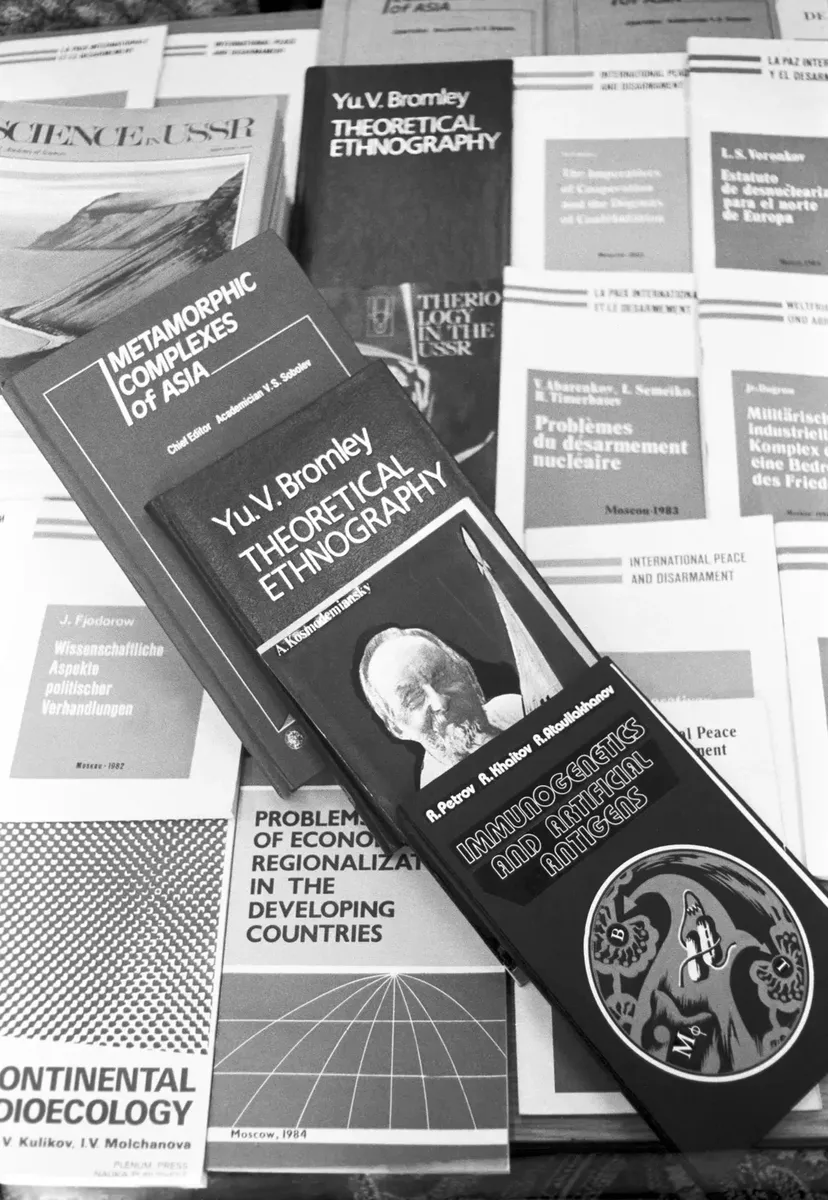
Initially, “science” had two main goals, says Internet publishing house Vladimir Kharitonov: a fundamental book publishing and the publication of Russian-speaking scientific journals. In Soviet times, the publishing house was well financed, the science brand was widely known not only in Russia, but throughout the world. The book series "Literary Monuments" dedicated to classical fiction was especially popular. A few years ago, “Science” published hundreds of items of scientific literature. Now the book publishing program of the Russian Academy of Sciences is practically folded.
After the collapse of the USSR in 1992, the Russian Academy of Sciences, together with the American company Publisching Group, was registered in offshore jurisdictions by the American company, the International Academic Publishing Publishing Company Science/Interiperodika (Maik). Relations between the Russian Academy of Sciences and Science remained the same: the publishing house ensured the publication of 140 Academy magazines, receiving money from the budget for this and earning at the expense of subscription revenues. Maik, on the other hand, began to translate part of the articles into English, and the pleades received a monopoly right to distribute abroad, in particular through the large scientific publishing house Springer Nature. The sale of subscriptions to large Western educational institutions is a profitable niche, but it is difficult to make a plausible assessment of the revenues of the “Pleiades”. The system of distribution of articles is so opaque that its functioning is poorly represented by the leadership of “science”. This is a commercial secret, confirms the participant of the Falanster bookstore, the publisher of the site about books and reading Gorky and adviser to the director of Science Boris Kupriyanov. However, according to rumors, we can talk about $ 45 million a year.
In the zero years, a complete confusion came in the publishing house. “In the last 10-15 years,“ science ”has been in critical condition, it was noticeable to anyone. New books have become less and less, ”says Kharitonov.
First, the situation with translated publications worsened. The circulations of the English -language versions of the articles of Russian scientists were sharply reduced, prices rose an order of magnitude, and the quality of the translation became unacceptable. “The annual subscription to the not -out -of -out Russian magazine was worth more than an annual subscription to Nature ( one of the most prestigious scientific publications in the world. - A.Kh. ),” says Mikhail Gelfand, deputy director of the Institute for Information of the Russian Academy of Sciences and a member of the editorial board of the magazine "Nature". - “Science” and “Pleiades” acted in the calculation that there are large subscribers - for example, the library of the US Congress - which fundamentally purchase everything in a row. But everyone else refused subscriptions, the circulations became piecely. ” The impact factor of translated Russian magazines, reflecting their significance in the international scientific community, “monstrously low”, confirms Kupriyanov. Subsequently, the same strategy for receiving rent from minimal circulations “killed” and the Russian -language segment of scientific articles.
Half a billion debts and lost shards
In the spring of this year, the fate of "science" hung in the balance. The debt of the publishing house to the tax authorities exceeded 500 million rubles. According to one version, the reason was a conflict of interest in the leadership of the publisher. Despite the fact that there were contractual relations between “science” and Maik, for a long time the head of both organizations was the same person-corresponding member of the Russian Academy of Sciences Vladimir Vasiliev.
“It is Vasilieva that should be asked about the origin of these debts,” Kupriyanov is sure. “The“ science ”itself has quite successfully existed in the market of 30 years.”
The main part of the debt was formed after 2012, when for some reason the company stopped paying taxes to the state, Oleg Vavilov, Deputy Director of Science for Publishing Activities, explains. Prior to this, the amount of tax debts was in the region of 2 million rubles, but then began to increase like a snowball. “No one can definitely explain why this happened,” says Vavilov. “There are two versions: mismanagement and connivance, or intentional bankruptcy in order to prevent“ science ”to further bidding.”
The version confirms life: in April, auctions were held to provide public services for the publication of academic magazines, but Science could not take part in the tender. The winners were the Integration: Education and Science LLC, related to the State Academic University of Humanities (Gaugn), and Akademknig LLC, 100% controlled by Pleaples. The state will allocate 67.5 million rubles a year for the publishing house of Russian magazines for natural sciences by the American company Pleades.
The auction format suggests that the contract is won by firms with the most competitive price policy, and all other criteria, such as product quality, remain beyond. A state of 500 professionals - editors, proofreaders, layouts, typographs, designers who ensured the compliance with high standards of publications worked in Science. “Each magazine has its own specific terminology, its own unique style.
And now we are outsourcing all this to try to save. RAS actually abandons its most important function "
- says the Scientific Director of the Institute of Oceanology named after Shirshov Robert Nigmatulin.
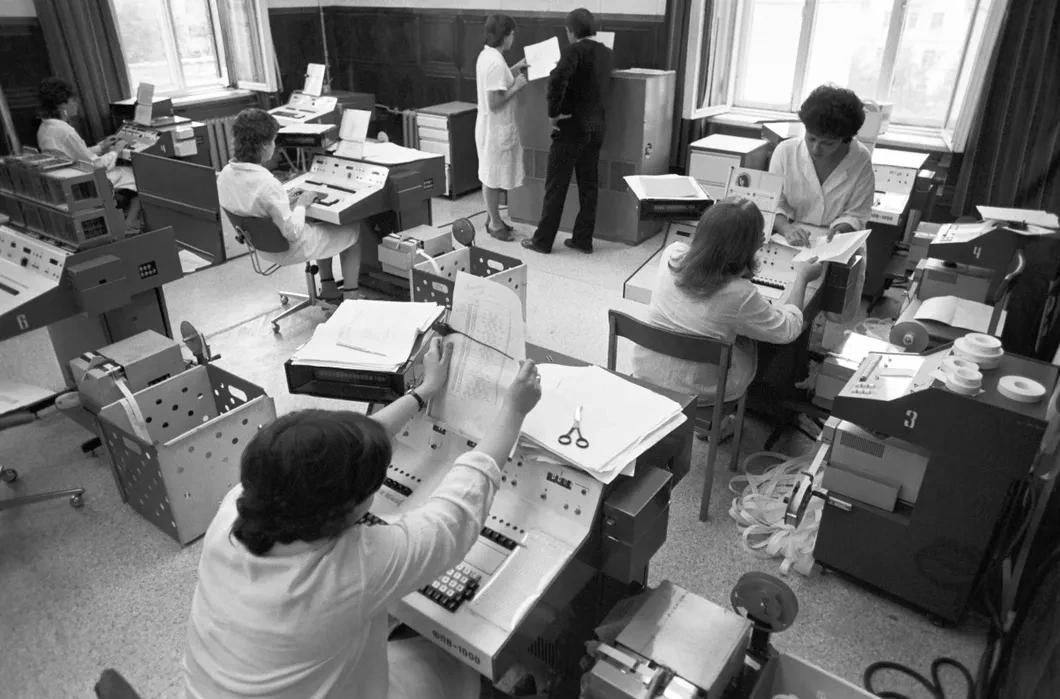
The leaders of Science informed the employees that work on the preparation of magazines would be suspended, and the state structure was optimized. Many employees will not be able to find new employment, as they are approaching the retirement age. “For the first half of the year, money was allocated for the magazine, but what will happen in the second is completely incomprehensible,” says Alexander Markov, a biologist, a member of the editorial board of the “General Biology Journal”. “Our editors are sitting in the Science building - maybe they will drive out into the street.”
At the same time, the “science” in assets, according to the most modest estimates, is 5 billion rubles, including an area of 18 thousand square meters near the Smolenskaya metro. “These are real big objects. The leadership of the “science” many times turned to Fano with proposals to use their part to repay debt to continue the publishing program, but, unfortunately, they were rejected every time, ”says Vavilov. But, according to the former head of the Science, Sergei Tentkin, one of the premises of the publishing house illegally occupies Maik, whose rental arrears exceeds 114 million rubles.
Scientific business in the style of nineties
Substracted by "new" scientists and publishers agree that the history of the bankruptcy of "science" looks extremely opaque. Control over the publication of a significant part of the magazines of the Russian Academy of Sciences actually moved to the "pleades".
“This resembles a classic raider seizure scheme: to fill up with debts, bankrupt, pick up assets. People who were engaged in business in the 1990s reproduce previous models, ”says Kharitonov.
Director General of the Pleiades Alexander Shralesovich is a Russian-American businessman with a rich biography. The son of a corresponding member of the Russian Academy of Sciences in the nineties tried to build a business on the export of Russian uranium in the United States, but the matter did not burn out, and he decided to engage in publishing.
SURYSHEVICH, among other things, published a Russian -language version of the erotic magazine Penthouse, but quickly began to show scientific ambitions. “There was a wonderful story when the play“ pleades ”on one of the scientific magazines managed to recapture, because the responsible secretary brought Penthouse to the meeting and said: imagine at the exhibition our magazine next to this. The decision somehow postponed, ”says Gelfand.
Subsequently, relations with the scientific journals of the WHAS “Pleiades” built a harshly, continues Gelfand: “There were situations when the Pleapes twisted their hands to the editorial offices of the magazines, forcing them to break the contracts with the publishers that historically translated their articles.
They called the director of the institute and said: if the magazine does not go to the pleas, we will delay your salary, and so on. ”
The levers of the influence of Shudovich, apparently, are in the Presidium of the Russian Academy of Sciences, which either could not or did not want to intervene in the situation.
Whatever methods, the “pleades” really use, an attempt to complete commercialization of scientific book publishing in itself looks somewhat absurd. In Russia, the very modest scale of book publishing: the entire annual turnover, including the commercial segment, is about 1 billion euros. About 20% of all books are published by scientific publications, their average circulation is 369 copies.
Now the question is as follows: either the “science” in a package form concludes a subcontract with the winners of auctions to prepare scientific journals in the previous format, or is closed within two to three months.
“Science” is not just a publishing house, but a system -forming scientific complex that is extremely important for the Russian academic environment. “The departure of Science will create a grand hole in the market,” Kharitonov warns. And the orders of the Pleiades, apparently, will only grow: recently the head of the Russian Academy of Sciences, Alexander Sergeyev, said that all scientific articles of Russian scientists should be translated into English without fail. Publishing House "Science" in its current form, according to Sergeyev, the Academy of Sciences "maybe not necessary."
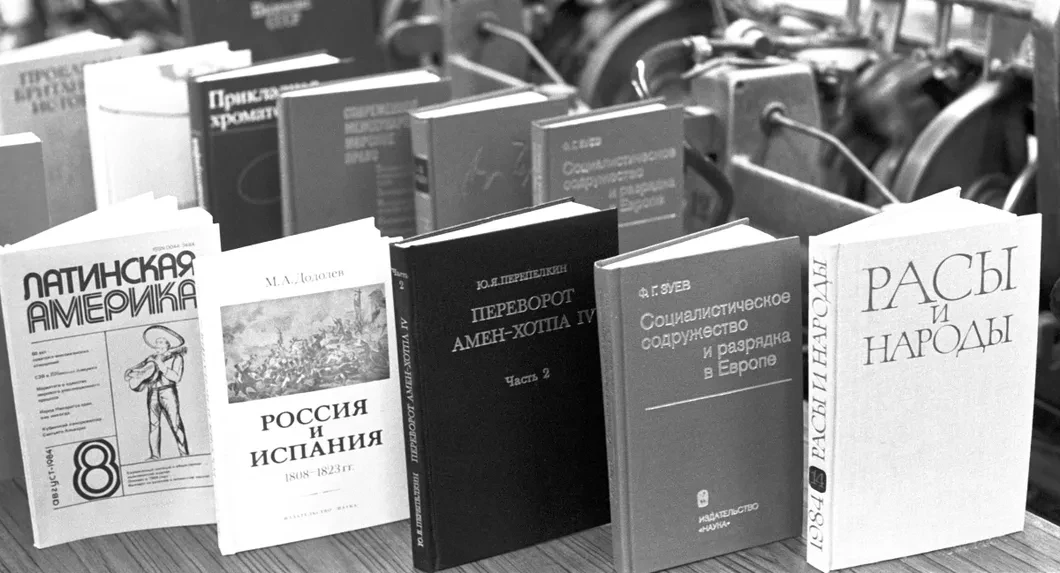
Everyone knows about the disadvantages of “science”, but the publishing house as the most important scientific center must be preserved, Kupriyanov objects. “In Russia, a big problem with heritage and tradition - everything is born quickly and quickly dies. Many wonderful new institutions were born and live in publishing: “Gileya”, “hell Margin”, “UFO”, etc. But we must clearly understand that there are books that they will never publish. In the wounds, not a word is said about this, discussing only academic magazines. ” Along with books on the natural sciences, “Science” is published by the humanitarian book series “Eastern Literature”, “Monuments of folklore of the peoples of Siberia and the Far East” and “Monuments of historical thought”, which have serious scientific and educational value.
Open New World
The crisis situation of “science” coincided with the global processes of the transformation of the industry of academic book publishing. In addition to technological innovations, the industry changes under the influence of the conflict between major publishers who make profits from the sale of subscriptions and scientists who get too modest fees (or, as in the case of reviewers, work completely for free) to afford to legally acquire expensive articles of their colleagues.
The main function performed by publishers is curators, that is, the selection of high -quality material that allows maintaining the prestige of the magazine. But due to the high cost of intermediaries services, taxpayers are forced to fork out twice: first, in order for the scientist to be able to conduct his study, and then so that others can learn about the results through the subscription.
In 2013, on this basis, an “uprising of mathematicians” took place against the publishing house Elsiever. “When publishers once again raised the prices for subscriptions, mathematicians organized a strike and refused to send their work to Elsiever,” says Kharitonov. “In many ways, the“ Open Access ”movement began with this, which suggests that all scientific publications should be available at least by scientists themselves.” The Golden Open Access Scheme implies that the costs for the publication of the articles are paid from a grant for research.
Last year, the European Commission ruled that all scientific publications financed the EU should be free by 2020.
The Russian Ministry of Education and Science also relied on open access through the Elibrary platform (the final beneficiary of which, however, is also Svrazlyovich). Now every fifth scientific publication in the world can be read for free. The process is launched, which means that sooner or later, commercial publishers will have to either radically change their business model, or completely disappear.
“Science” also found herself on this wave of transformations, and in a relatively prepared state, Kharitonov believes: “Science has its own editorial system that allows you to prepare digital publications from beginning to end than few publishers boast. There is also the strength and desire to offer a single platform for the distribution of paper publications and electronic resources. ” It remains to find like -minded people who will not reduce the functions of scientific journals to profit. "Pleapes" is clearly not suitable for this criterion.
PS
At a meeting of the Presidium of the Russian Academy of Sciences on June 5, “Science” was deprived of the right to publish about 150 scientific journals. The magazines of the humanitarian cycle have been transmitted to a little -known publishing house, which has still published one electronic journal.
Comment
Alexey Khokhlov
Vice President of the Russian Academy of Sciences, Head of the Scientific and Publishing Council of the Academy
- The issue of employing of the publishing house should be addressed to the science itself, not RAS. This year, Science was not able to participate in auctions for publishing services for RAS magazines due to the fact that their debts exceeded a certain threshold. We cannot influence this process, as we must declare an auction and conduct it in accordance with the law. Another thing is that after the results are known, we are negotiating that the qualified employees of Science retain their jobs. Now the appropriate guarantees are available from both winners of auctions. All employees have already been proposed or will be proposed to go to the staff of either the winner of the auction or the institute with whom the magazine is most closely associated. All magazines in the second half of the year will be produced as usual. So for the employees of Science, I do not see any problem here.
Of course, we believe that it is better to conduct auctions on the magazines of RAS, but competitions at which participants can put forward qualification requirements. Publishing services are high -tech services, they require a certain experience with scientific periodicals, interaction with reviewers, etc. In principle, we were afraid that firms that do not have such experience would take part in auctions. But, fortunately, companies that have been working in the field of publication of scientific books have long been the winners.
It is clear that if the enterprise is close to bankruptcy, then not everything was smooth with it. Unfortunately, in those years when the “science” was under the jurisdiction of Fano, people who never worked in the publishing business became leaders. I think this is one of the reasons. While the publishing house was under the auspices of the Academy, there was an opportunity to influence the situation, but after that all responsibility should be assigned to Fano.
Роли «Плеадес» в банкротстве «Науки» никакой нет, за исключением того, что один из победителей ассоциирован с этой компанией. Но издателем всех журналов является РАН, и авторские права будут передаваться РАН, а не издательству, как раньше. То, на что проводится аукцион, — это технические услуги по редактированию, изготовлению оригинал-макета и по распространению журнала. В чем проблема, если компания, связанная с «Плеадес», участвует в этих вещах? Они же заинтересованы в том, чтобы выходили переводные версии журналов, следовательно, будут четко оказывать издательские услуги по отношению к русскоязычным версиям. Тем более «Плеадес» добились того, что весь пакет переводных версий наших журналов включен в базу Springer/Nature и тем самым распространяется в более чем 20 тыс. организаций по всему миру.
«Наука» не реформировалась годами и привыкла жить, как при советской власти. Деньги тратились бездумно, и с тех пор никаких изменений не произошло. Счетная палата выявила большое число нарушений в деятельности издательства. Более того, в цифровой век в «Науке» до сих пор работают с бумагой и карандашом, а статьи рассылаются рецензентам с курьером. Новые подрядчики обязаны будут провести цифровизацию всех внутренних процессов в редакции. Есть конкурентный издательский рынок, который диктует свои правила. Кто не вписывается — тот теряет заказчиков. И этот рынок абсолютно не зациклен на издательстве «Наука». Есть огромное количество издательств, которые выпускают научную и учебную литературу.
Вопросы от редакции
У редакции «Новой» остались принципиальные вопросы, которые мы адресуем руководству РАН и лично президенту Академии наук Александру Сергееву, а также министру науки Михаилу Котюкову:
Почему ФАНО и РАН допустили доведение издательства «Наука» до банкротства при отсутствии явных финансовых трудностей до 2012 года?
В чем польза компании Шусторовича для современной российской науки? Обладает ли она компетенциями академического издательства?
На каком основании «Плеадес Паблишинг Груп» распоряжается публикациями российских ученых? В каких хозяйственных и правовых отношениях состоят РАН, «Плеадес» и МАИК?
Почему МАИК безвозмездно использует помещения «Науки», а также не платит дивиденды при использовании материалов от сотрудников издательства при подготовке англоязычных статей?
Могут ли крупные мировые научные издательства, такие как Springer, работать с российскими журналами без посредников? Как в РАН относятся к новым моделям научных публикаций, связанных с открытыми платформами в интернете?
Может ли «Наука» поддерживать книгоиздательскую программу, лишившись субсидий на издание журналов по фундаментальным наукам, в том числе тех, которые интересуют компанию Александра Шусторовича?
Считают ли представители российского научного сообщества ценностью научное книгоиздание? Какие действия были предприняты РАН для сохранения собственной книгоиздательской программы за последние пять лет?
Возможна ли ситуация, при которой «Наука» продолжит свое существование и получит право заниматься редакционно-издательской подготовкой научных журналов РАН в качестве субподрядчика?