
Translated material
War of the palace
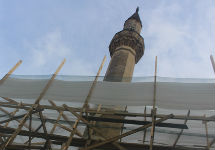
The Ukrainian police opened a criminal case on the destruction of the Khan Palace in Bakhchisarai. "In temporarily occupied Crimea, under the guise of restoration work, the destruction of the monument of the eighteenth century continues," the official report said.
The works that the Russian government calls "restoration" began in December 2017.
The Khan Palace in Bakhchisarai is the most famous museum of the history of Crimean Tatars. On the territory of the complex there are a palace, a harem building, a Khan cemetery and a mosque. The monument is included in the preliminary list of the UNESCO World Heritage. However, the former director of the museum of Elmir Ablyalimov fears that after the "restoration work" UNESCO will not bring the palace to the list - historical and cultural value will be lost.
From activists who follow the progress of work, we already know about the losses. This is the historical coating of the roof and its design, the painting of the XVII century work of the master of Omer. Several stained -glass windows and two tombstones cracked from mechanical exposure. One of them belongs to the Golden Horde period, the second - to the time of the Crimean Khanate. Together with the roof, the entire decor of the ceiling of the large Khan mosque (Khan-Jami) was completely removed.
“The most important thing is that you can’t return the complex as such. The Khan Palace is a complex, we will never see the holistic picture of the museum,” Ablyamov laments. According to her, while workers are operating in the palace - restorers will begin later.
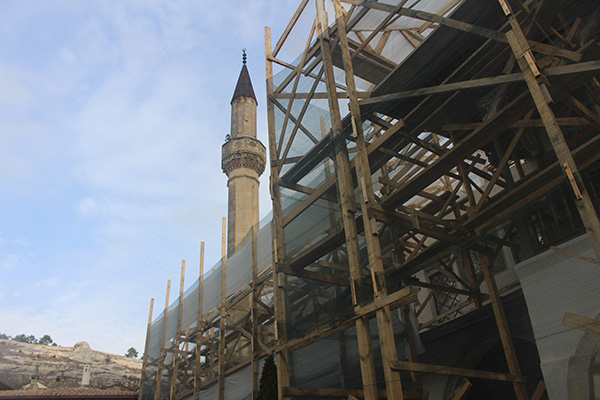
The Big Khan Mosque is closed to "restoration"
The change of tiles to the Spanish "analogue" is what you can see for yourself without going into the museum itself. According to the current general director of the Bakhchisarai historical, cultural and archaeological museum-reserve Vadim Martynyuk, the replacement was necessary: "Stena is floating, the harem floats, the roof is leaking." During the work, the original tile and Hansarai beams were removed and put in the open air behind the museum complex.
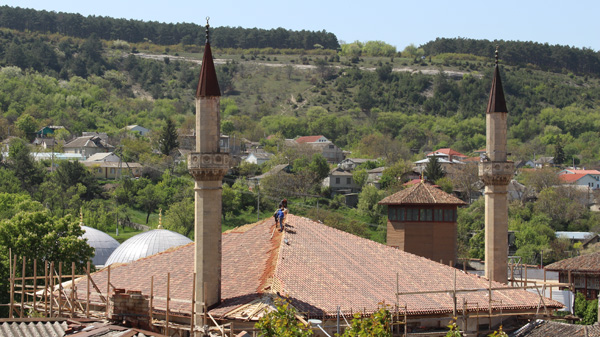
Change of tiles to a big khan mosque
In order to confirm or refute the words of Martynyuk, one fragment of the tile was brought to Kyiv for an independent examination. The International Center for the Study of the Preservation and Restoration of Cultural Values (ISSR) came to the conclusion that the leaks occurred due to damage to hermetic joints between fragments, and not the historical coating itself. "The tile was laid on plastic clay, which for many years dried up and cracked with some deformation of wooden sections of the load -bearing elements of the coating. Obviously, it was necessary to sort out the tile, clean it and put it back on a new hermetic layer," the expert center says.
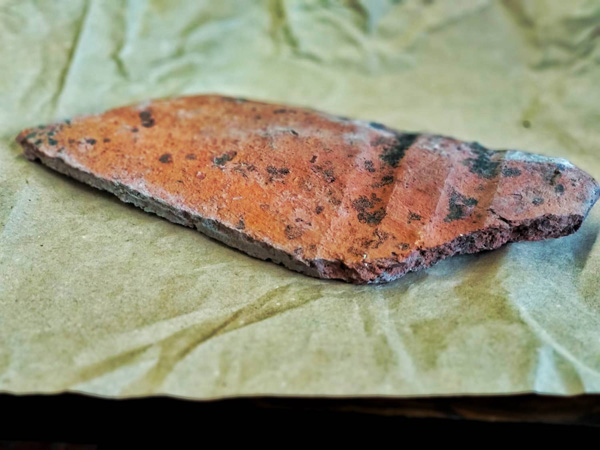
Tile fragment studied by experts
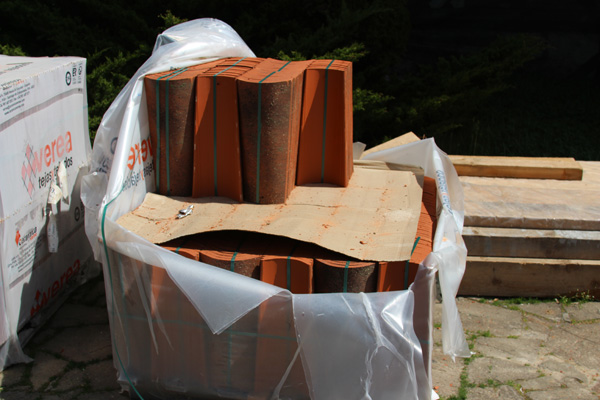
Analogue of the original roof "Spanish"
Lawyer Nikolai Polozov filed a lawsuit in the Koptevsky District Court to the contractor of all restoration work on the territory of the Khan Palace. Previously controlled by Russia, the Railway District Court of Simferopol and the Supreme Court of Crimea refused to consider similar claims.
Is the arrival of the UNESCO monitoring mission to Crimea real? “Unfortunately, I cannot predict the favorable outcome of this mission,” says Polozov. “The Russian Federation repeatedly met the refusal of the UN monitoring mission. Requests must be sent, the mission must be equipped - perhaps such systematic refusals from the Russian Federation will enter one of the sanctions packets aimed towards this state. The sanctions, as we see, are very sensitive to Russia.”
Crimean Tatars consider Bakhchisarai their capital. They collect signatures against barbaric reconstruction. Eden Ablaev is one of those who spent single pickets at the Khan Palace. “I remember how old houses were demolished several years ago. Then there was a huge wave of indignation of local residents,” says Ablaev. “And here they destroy Hansarai, also a mosque. In fact, they take the most sacred from us.”
Photo by the author