
Translated material
"Hunger is our natural state"
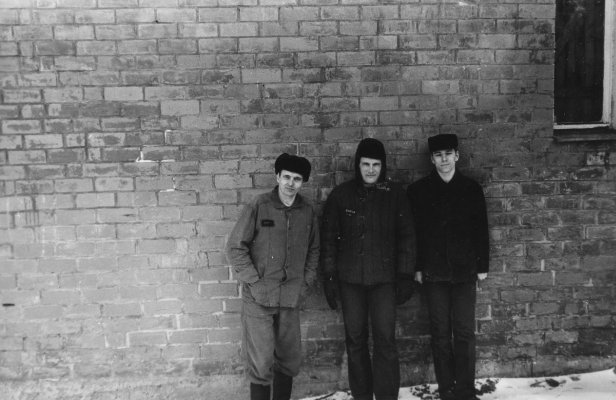
Oleg Sentsov, who is starving for the release of 64 Ukrainian political prisoners (more about who can be one of them, read here), wrote an appeal to the leaders of the “Big Seven” on the 23rd day. We publish the text of a letter from the political prisoners of the Perm camp No. 35 (now the current colony of IK-35 of the Perm Territory) from the archive of the international memorial.
The hunger strike was a standard way of the political prisoners of the 1960-1980s to declare their rights, to protest. The hunger strikes were symbolic (primarily on October 30 - on the day of the political prisoner, which they themselves established in 1974), with specific requirements (for example, to allow the marriage of political prisoners of Alexander Ginzburg with his bride in 1969), solitary, replaced and collective. When we read about hunger strikes, we always need to pay attention to her character - “wet” or “dry”. The “wet” hunger strike is softer - a person does not eat, but at the same time he drinks water, juices (it is clear that there were no in prison), a “dry” hunger strike is a complete rejection of food and drinking.
Surrounding long hunger strikes - the seeds of Gloman ( twice 4 months ) and Mustafa Dzhemilev ( 303 days ). The prison doctors on 7-10 days of hunger strike made a decision on forced feeding, the procedure of which in Soviet times was an additional mockery.
The only requirement of the 117-day hunger strike Anatoly Marchenko in 1986 was the release of all political prisoners. It is believed that she accelerated the process of releasing political prisoners.
The text of the appeal of the prisoners of the Perm political camp No. 35 (now the current colony of the IK-35 of the Perm Territory) was previously published in the emigrant newspaper Russian Thought on September 15, 1977 and in the Chronicle of the Protection of Human Rights in the USSR (issue 27, p. 12–13).
Contact of the political prisoners 35
Our comrades are starving today. In prisons, camps, psychiatric hospitals. August 1, 1977 - the day of the protest of the Soviet political prisoners against the inhuman conditions of detention, targeted mockery, cruelty, against the persecution of dissent. We often starve. In croaks, in stage wagons. On ordinary, unreasonable days, in the days of the death of our comrades. In the days of emergency events in the zones, March 8 and December 10 [1] , August 1 and May 8 [2] , September 5 [3] ... We are too often starving. Diplomats, statesmen enter into new agreements on human rights, on freedom of information, on the abolition of torture ... and we are starving, because in the USSR all this is not fulfilled. We are starving, although every new day of a hunger strike, sometimes multi -month, irreversibly deprives us of the already meager strength, the remnants of energy. Hunger is our natural state, replacing “the satiety of malnutrition” in the best days [4] . Speeches are made somewhere, protocols are signed, they promise ... But nothing changes, left to ourselves, we are forced to respond to the hunger strikes of the protest to more and more lawlessness of the authorities, repressions and infringement of our rights. Today is just such a day when, under the ringing of multilingual speech of high negotiations, we continue to exist in the world of arbitrariness and barbed wire of the concentration camp. Therefore, today, August 1, 1977, we declare that we abandon the so -called traditional hunger strikes, leaving this our only weapon to fight our executioners when not to starve does not live. And in turn, we offer all those persons, agreements and persuasion with which the USSR, on humanitarian issues, ignores, use hunger strikes of protest as an effective method of combating the lawlessness of the totalitarian USSR in the field of international law.
August 1, 1977
Perm region, Chusovsky district, Art. Vsesvyatka, Uchr. VS-389/35 [5] .
[1] International Women's Day and International Human Rights Day.
[2] On August 1, 1975, Helsinki agreements were signed (including the USSR), in which states took on obligations, including in the field of human rights. May 8 - day of the end of World War II in Europe.
[3] On September 5, 1918, the decree of the Council of People's Commissars “On Red Terror” was released. It is this date since the mid-1970s that appears in the appeals of dissidents and political prisoners as a reference point of the communist terror.
[4] On the conditions of the content of political prisoners at that time, you can find out from the document No. 3 of the Moscow Helsinki group. Cm.
[5] Perm-35 as a political camp began the existence in 1972. The last political prisoners of the Soviet era left him in 1992.