
Translated material
Children are more honest than parents
Results "Kinotavra": what to watch from the program of the main Russian festival
The main Russian show ended, the battles around the films gradually subside. In any case, before the release of the paintings on the screens. It is strange that it is movie - and not political disasters and economic infringements - causes such a storm of passions, disputes, admiration and indignation. Moreover, this applies not only to films affecting “sick” Russian issues, such as the “history of one purpose” of Avdotya Smirnova. The picture about the participation of Leo Tolstoy in the process in the case of Pissee Shabunin (prize for script) is a multi -figure movie about “spiritual and mental disorder”, which, according to the classic, lies at the heart of many of our troubles and general disorders. It is just that the movie has the opportunity to speak indirectly or frankly with the viewer about what excites him, scares, infuriates, encourages. About the important. I must say that today a rare filmmaker takes this opportunity.

In the works of young people (this year a separate competition was created for them), the screen discovered a certain consonance of fears, complexes in complex relationships with the outside world and himself. These problems are considered through the optics of the relationship of children and fathers. Existing. Or absent.
In past times, parents and children defended their ideals. At the time of chaos, the unpredictability of life - private, public - parents, in fact, themselves turn into children who have lost in the "gloomy forest". They do not know where and why go. Generation Z - born after a millennium - with apprehension, entering the swamp apathetic Russian reality - three times outcast. A stuffy hostile world, destroying a family, by itself.
In the “Brescribes” of the festivals of Ivan Tverdovsky (prize for operator skills, Denis Alaron-Rramirezu, who shot the film in gloomy, noir tones) teenager Denis, in infancy thrown into the boarding school, suffers from a rare disease-analgesia. He does not feel pain. A youthful, attractive woman (Anna Sal - a prize for the best female role) takes him from the boarding school. The euphoria of family unity is quickly dispersed.
The seductive mother draws a young idealist into a criminal group consisting of the first people of the city. The guy is used as a tool for knocking out money from thicknesses - they are thrown under the wheels of expensive cars.
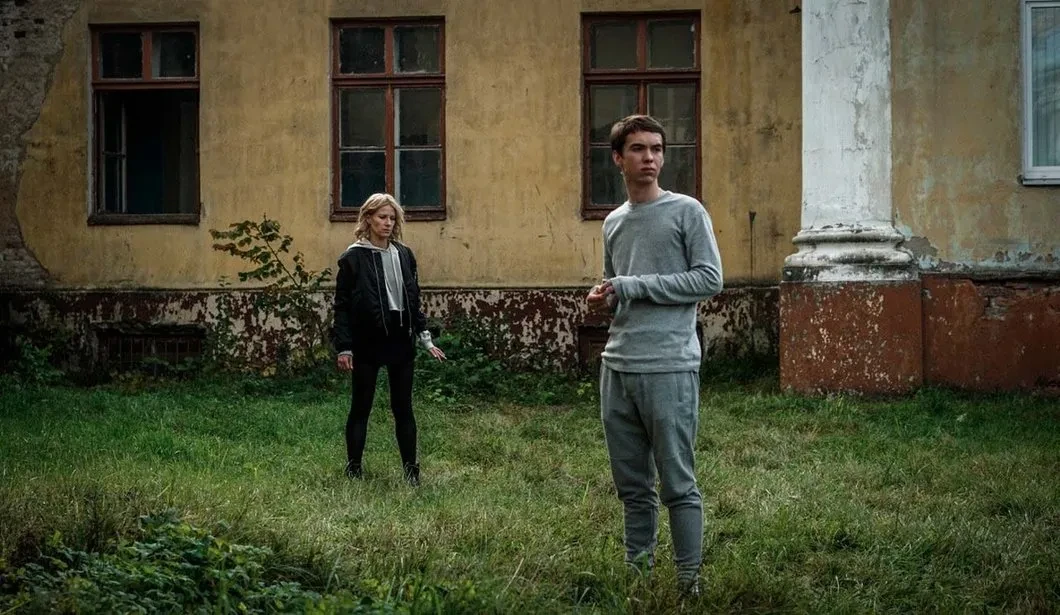
It turns out in the will: nobody still needs it. In fact, the hero of the film is another (m) student (that was the name of the film by Kirill Serebrennikov). Denis is tortured in a boarding school (their favorite fun of pupils is to pull each other with hoses to the impossibility of breathing), and in a relationship with a “mother” he is a means of earnings and a victim of her sexual dissatisfaction. As the plot develops, the abnormal hero (Favorite character of Tverdovsky) begins to feel more and more pain. The “thrown” hovered in the air, he has nowhere to land. If in the picture the motivations and relationships of the heroes were more accurately spelled out, it would be not speculative, but an justified drama that causes empathy to the hero.
An obvious trend: in the films of debutants, children are cleaner, more uncompromising, honest than parents who accustomed to get along with any ugly, even vile reality.
In the “acid”-a rough, student, but fresh, sincere directorial debut of actor Alexander Gorchilin (actor Gogol Center, student of Cyril Serebrennikov)-there is an abode, a generation of “unaccounted” exists behind the folla. In fact, they did not have time to live and are already tired of life. Orphans here is a sense of uncertainty, own worthlessness and unnecessary
(“What can we give the world except charging for iPhone?”),
alienation from false reality. The sensation of the generational gap is drowned out by "acid". At the next funeral of a comrade who jumped out of the window after an overdose, the hero shouts an inconsolable mother: “What did you know about your son?” Acid here is not LSD - but a rotten poisoning substance of a synthetic world, corroding everything and all. The generation of “acid” does not know how to defend from cynicism, falsehood, indifference without the help of “drugs”. He does not know how to simply “be”, “grow like flowers”, swim in the waves of his music, like characters from the generation of the eighties in the “summer” Kirill Serebrennikov. He can shout or keep silent about his longing and confusion. Anyway, no one will hear. It is no coincidence that one of the desperate and desperate heroes of the film Gorchilin loses his voice, and his mouth is naturally glued to him.
“Acid” shared the main award of the “Debuts” contest with the “deep rivers” of Vladimir Batokov, a student of Alexander Sokurov. The student, the younger “prodigal son” returns to the deaf Kabardian village to help the brothers and father to blame the forest.
The cruel "male education" borders here on humiliation. To grow to the wild, deadly morals of the brutal world with a pipe, soft city boy is not able to.
The picture is visually expressive (the house of the heroes literally hangs above the water, giant pines are lying directly on the camera), but neither the student Sokurov nor the student of Serebrennikov managed to excite a full -fledged semantic and artistic statement that can surprise and excite (as the recent “tightness” of Kantemir Blagren.
Nietzsche advised those who do not have a father - to get him.
“The Heart of the World” by Natalia Meshchaninova (the main prize, the prize of critics named after Daniil Dondurey) is, first of all, magical cinema. She fascinates from the first frame - the hand cuts the waves, as if floating by itself contrary to the flow. The hero of the film is a quiet, disliked, closed veterinarian Yegor (Stepan Devonin - a prize for a male role), never came out of an injury to a long -standing conflict with a drinking mother.
It seems to be so beautiful -minded, touching with an animal - from the bottles he feeds the goat, rushes with a dying dog - but emasculated inside, does not know how to forgive.
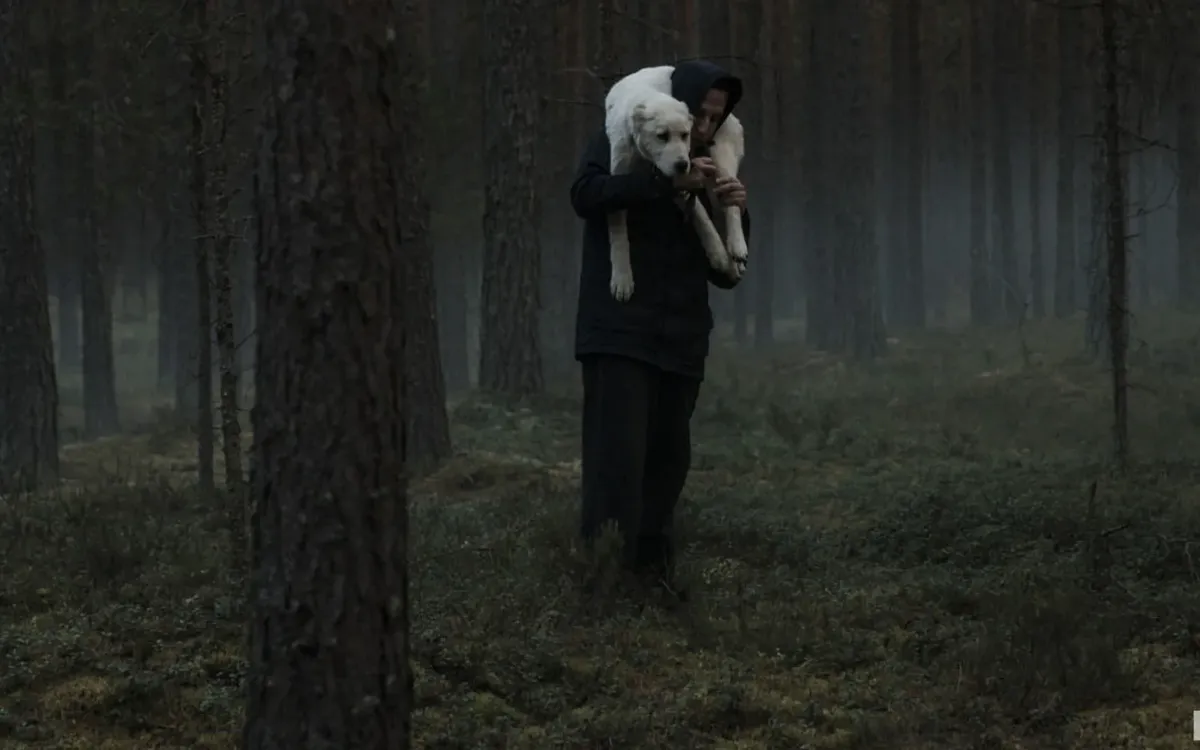
He himself is partly the beast-he lives in the gatehouse, tries to stick to the owner’s family in a dog, to find kinship, to break through the wall with each other and people. It turns out only with four -legged people who recognize him, take it into the family. In one of the main scenes of the film, the outcast, yearning, frozen Yegor clogs into a dog cage, and the white Alabai crawl on it - literally cover with warm, lively “white blanket”. The place of action is a sealing station at which dogs, goats, foxes, badgers, deer and other creatures in pairs live. Attitude to seal ( training of hunting dogs in artificial burrows to capture foxes, hares, wolves. - Ed. ) In the modern world, it is complicated. Natalia Meshchaninova does not delve into the essence of the conflict between hunters and green, but the place itself gives rise to the energy of the conflict, emphasizes the complexity of the world order in which there are no right and guilty. “The heart of the world”, according to Meshchaninova, is a place of power from where you cannot leave. The picture is full of visual poetry - a white dog swaying, as if along the waves, swims through the forest for a long time.
Relations of children and parents are confused, incest in (as in the film of Ivan Tverdovsky). This is a run in a crossed area in an unknown direction. In Mikhail Segal’s film “Elephants can play football” - Vladimir Mishukov regularly conducts meaningless negotiations in the role of “Man in a Case”, perfectly folds and lays things, believes that he lives. But a random meeting with a wonderful seventeen -year creation is breaking the life of a neat middle -aged person without bad habits. Tenderness wakes up in it. First, to one daughter of her comrade, then - another comrade, the third. The viewer has already imagined another variation on the topic of Humbert, but in the desire for an informal being, a thirst for unspent fatherly love and tenderness is guessed.
Segal knows how to turn everyday life into absurdity, look at the usual things from a paradoxical point of view. And his external action is not what is really happening. In his cinema, it is not a vector history, but the inner plot - pure impressionism of life.
The debut of Grigory of Constantinople Shapito-Borvestia “8 1/2 dollars” in the late 90s did not go on the screens, but made his way to the audience on the pirates, becoming a cult. In his “Russian demon” (prize for directing), the family theme unfolds in an unexpected direction. Hipster (Ivan Makarevich) with sparkling angry laughs is going to marry the daughter of a banker, who will help to open a restaurant for him. Then the flight of directorial fantasy begins - a thunderbing, in places witty, in places excessive. In the 90s and even at the beginning of the zero, such a directing could drive crazy, charm, or at least cheer up. But today, despite the good “sports uniform” of Constantinople, his film seems obsolete, the degree of energy to the finale decreases. For all that, it is impossible to refuse the author of the socio-criminal trash (the hero in the spirit of Trier arranges a bloody bathhouse to the entire corrupt bureaucratic world) in an insightful look at our reality. The skirmishes of the future restaurateur with a burned bureaucratic biomass are brought to the grotesque, while to pain, they are real.
Paradoxically, the most adult in this procession of the infantils was a small Jewish girl, who declared her war inhumanity (the outstanding work of Martha Kozlova received a special diploma with the wording “for creating a piercing image of war through the eyes of a child”). The film by Alexei Fedorchenko “Anna War” was, according to most participants in the festival, perhaps the most harmonious, artistic and relevant statement in the “Kinotavra” contest. It is a pity that the jury did not notice this.
PS
At the closing ceremony of the festival, the chairmen of the two jury (Alexei Popogrebsky and Andrei Plakhov), laureates and film critics spoke from the stage and about Kirill Serebrennikov, and about the need to exchange Oleg Sentsov, read out the statement of the cinema union. Gorchilin thanked his teacher Kirill Serebrennikov, Avdotya Smirnova appealed to the mercy of judges.
The broadcast of the ceremony went through the Russia 1 channel at the available time 3:30 in the morning.