
Translated material
Two years to survive
The government has prepared for an emergency increase in retirement age
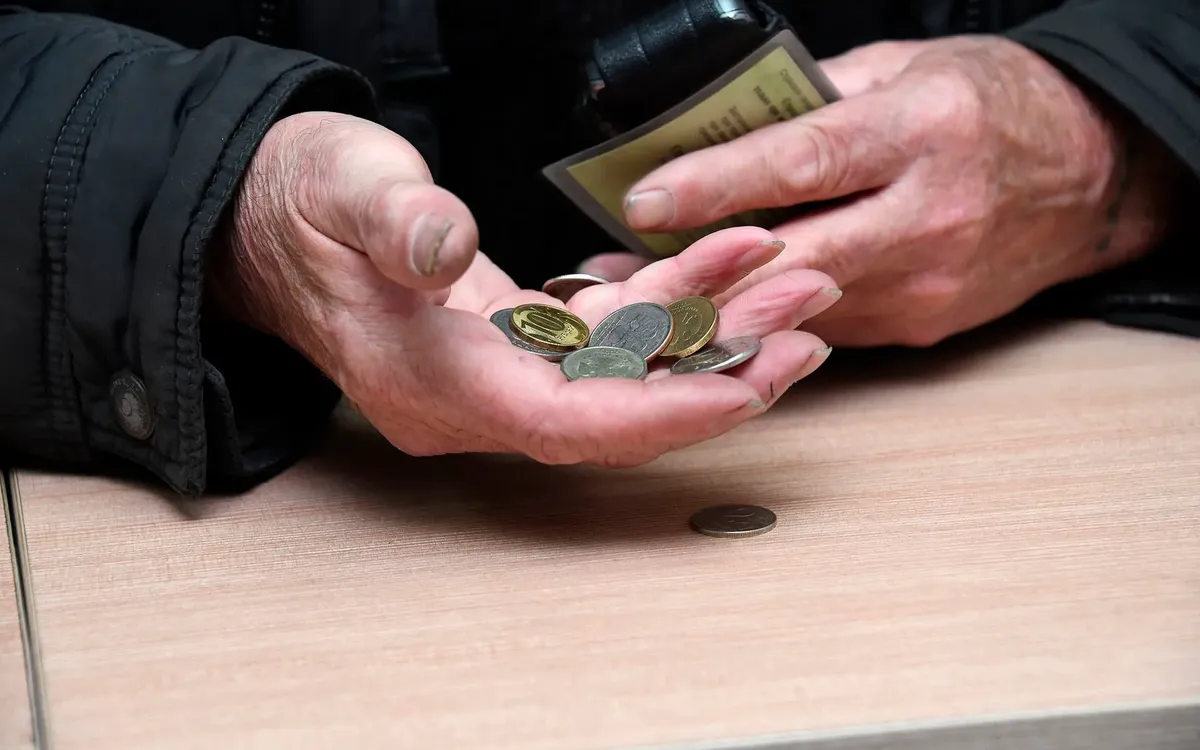
On the eve of submitting to the State Duma, the government discusses the bill on raising the retirement age - up to 65 years in men and up to 63 years for women. The moment was chosen, from an electoral point of view, suitable: the presidential elections have just passed, the Duma - in more than three years later. It's time for "unpopular measures." The discontent of citizens will no doubt be strong - but with a limited circle of persons: those who are soon retired. So there is no need to wait for very mass protests. Well, the logic of the next pension reform is entirely fitting into the famous phrase of Mikhail Zhvanetsky: "We should be less."
The Russian government and its trusted experts have been repeated about the need to raise the retirement age for a decade and a half. The volume of this “old, old song” usually increases when it turns out that once again there is not enough money for the payment of pensions, and the promises, given before the start of the next pension reform, did not come true once again.
Note: in 2005, speaking at the Direct Line, President Vladimir Putin confidently said:
“I want to pay attention - I am against increasing the terms of retirement age. And while I am the president, such a decision will not be made.
You just need to stimulate people who believe that after retirement they can continue to work. But it is impossible to infringe on pension rights. ”
However, now the concept has changed. And immediately after the presidential election, Prime Minister Dmitry Medvedev announced the need to increase the retirement age. Government experts immediately explained that the number of pensioners by the mid-2030s is equal to the number of working Russians for which insurance premiums are paid, and then exceed it, and it is necessary to either increase the rate of insurance pension contributions from the current 22% of the salary fund to 27%, or add money from the federal budget, or increase the retirement age.
In fact, everything is much easier. And more cynical. To understand this, let's look at the annual report of the Russian Pension Fund for 2017. The average size of pensions in the country is a fraction. She has a PFR budget in her numerator, and in the denominator - the number of pensioners receiving a pension from the FIU. There are about 40 million people today. Another 4 million, including military and civil servants, receive state pensions from the federal budget. The Pension Fund in 2017 spent 7.2 trillion rubles on the payment of pensions. We will divide the 40 million pensions and receive 15 thousand rubles a month by 40 million (the PFR report indicates the average insurance pension about 14 thousand rubles).
We are told that the money that the FIU collects in the form of insurance premiums (plus receipts from the federal budget) will soon be missing to pay pensions. That is, a shortage is formed in the number of pension fractions.
Generally speaking, to correct the situation, the numerator of the fraction should be increased. And not by raising pension contributions, but by other means: connecting to pension needs of other sources.
For example, income from the sale of natural resources or dividends of state -owned companies. What would be enough for the annual indexation of pensions not only to non -working, but also to working pensioners.
Another source is giant defense costs (2.8 trillion rubles in 2018). It is enough to reduce them by 30% so that pensions can be increased by 10% without any increase in retirement age. But what does the government offer? The exact opposite: cut the denominator. If you increase the retirement age, then the number of pension recipients will decrease. And the remaining pensioners will have more money. Then they will be enough - this is the logic of the government, which it is just right to name the cannibalist.
We turn to state statistics. Now in Russia about 78 million women and about 68 million men. Women aged 55 to 63 years - about 10 million men aged 60 to 65 years - about 6.5 million. If you raise the retirement age to 63 years of years and to 65 years in men, the number of pensioners will decrease by 16.5 million people, and the pensions themselves can be raised by 40%. Note that today on average men in Russia live only up to 67 years: in other words, they will only rely on two years of “survival” after retirement. Women live longer: on average up to 77 years, they will be released after retirement for almost one and a half decades.
About eight years ago, the then assistant to the President of Russia Arkady Dvorkovich said that it is necessary to "focus on increasing the duration of quality life, when at 60 or 70 years a person is not a burden to society, but a creator."
Those who are now not yet sixty, and are happy not to be a “burden of society”. But today in Russia, after 50 years, it is extremely difficult to find a job.