
Translated material
"With Kafka in Life"
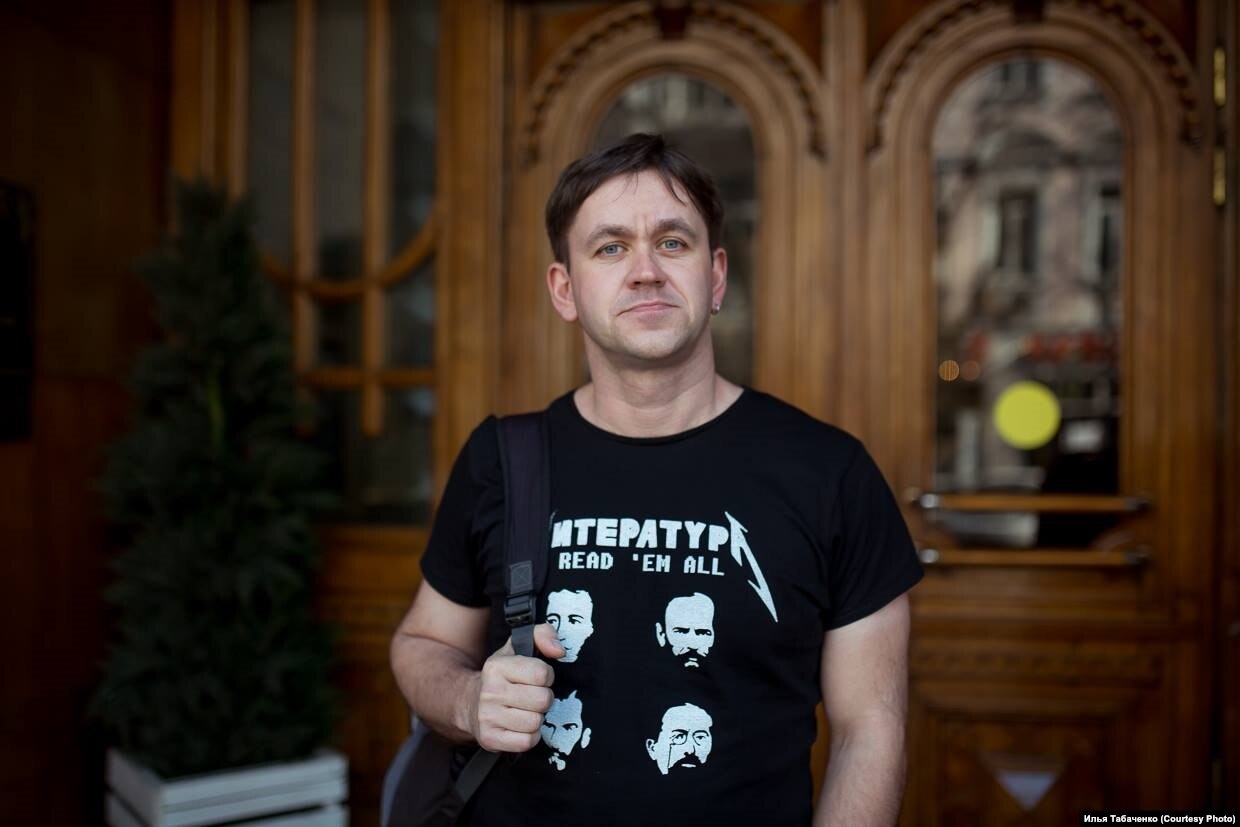
The book "The Way to the Castle, or a course of lectures on Franz Kafka" was published in Vladivostok with the help of folk financing - crowdfunding. For this company, the author of the book Maxim Zhuk invented the catchy name "Kafka-Craud". For 10 years now, in addition to working at the university, he has been giving free lectures for citizens. The Project " Cultural Intventation " brought him popularity in the Primorsky Territory and made it possible to hold a successful fundraising for the publication of the book.
SR in mobile SR on Instagram Wed Facebook
- You give lectures on world literature, from Homer to the present day. Why exactly Franz Kafka became the hero of your book?
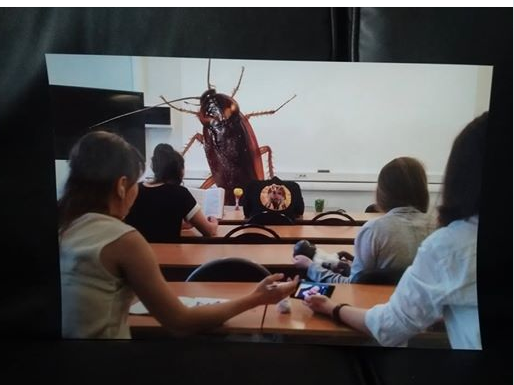
The Book of the Beetle about Kafka is a wonderful advertising slogan, because it causes associations with "transformation"
- It seems to me that I understand him as a writer and a person and I can tell you about him. In addition, I was lucky with the name and surname. I have the name of Kafka's best friend - Max Broda. In addition, "Ivanov wrote a book about Kafka" - sounds ordinary. But the Book of the Beetle of Kafka is a wonderful advertising slogan, because it causes associations with the "transformation" of Kafka. For the sake of this it is worth publishing a book.
- A good joke.
- I don’t know what the fate of the book will be, but for me it was a great joy to create this text. I literally could not tear myself away from the keyboard. Working intensely on the material for several months, I was in a completely happy and blissful state. Fragments from my work were published on GorkyMedia. They aroused great interest, judging by the number of views, reposts and positive comments. Soon, my colleague from St. Petersburg Andrei Avtitsaturov contacted me and suggested publishing my text in his imprint " Komarovo " on the Publishing Platform " Ridero ".
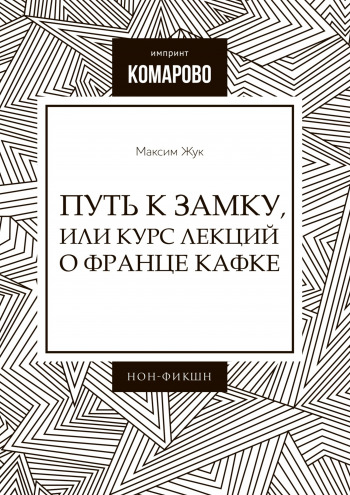
In the book, I tried to show everything that I know about the work of Kafka and the literature in general. In addition, my colleague from Rostov-on-Don Vera Kothelevskaya specifically for this project transferred the short story of Karl Brand "The reverse transformation of Gregora Zamza." This is a continuation of the Kafkian story "Transformation", written during the life of Kafka. The novel Brand and the commentary on her will be first published in Russian.
- In an article published on GorkyMedia, you debunk myths about this Prague genius. Write that Kafka was not an ascetic and a misanthrope - girls loved him, and he sometimes reciprocated. As far as I understand, the gloomy image of the writer arose in the Soviet Union, where they loved to joke that "we were born to make kafka the past." That is, your reading of Kafka, so to speak, anti -Soviet?
- Kafka in Russia is often perceived exclusively as a social critic who described the absurdity of bureaucratic idiocy and predicted gulag and fascism.
When his books were published in the USSR in the 1960s, they were read through the optics of Soviet totalitarian history. The names of the Kafkian works ("sentence", "in the correctional colony", "process") among Soviet readers inevitably called associations with the Stalinist past. That is why in the 1960s, winged phrases appeared: “with kafka in life”, “kafka behind Kafka”, “visiting Kafka”, “Kafka Korchagin” and, of course, “we were born to make the kafka a past.”
Of course, the socio-critical content is in the novels and novels of Kafka. And I talk about this in detail in the book. But the fact is that Kafka is a deeper writer. For example, he has a very complex understanding of the phenomenon of power. It is not as straightforward as George Orwell and other anti -utopists. Kafka shows not only what power wants from a person, but also why a person wants to obey. Why is the desire to be useful in it is stronger than the desire for freedom? In Kafka’s novel, the priest speaks about this to Joseph K.: "To be associated with the law is immeasurably more important than living free in the world." The Holy Grail, symbolizing the spiritual fullness of human life, is filled with the blood of Christ, that is, the true content of the world. And a person wants to be filled with truth in order to feel alive and present.
The totalitarian society, according to Kafka, uses a person’s need for universal rules that give life meaning. It manipulates the most important spiritual categories (freedom, justice, homeland, culture, religion, love, family) in order to identify itself in the minds of man with higher law. That is why the nameless officer from the novel in the correctional colony and Gregor Zamz from the "transformation" die with confidence in the authenticity of the values for which they go to death. But Kafka asks the reader the question: these heroes are righteous martyrs or victims of manipulation? He does not give an answer, and the reader himself must resolve this dilemma.
But in the Soviet and post -Soviet culture, Kafka is perceived very literally. We do not take into account its depths and ambiguity. This, of course, is understandable. After all, tragic absurd events that were and remain the usual background of Russian life, as if written off from the pages of Kafka’s novels. And therefore, for us, the word "Kafkian" is a synonym for the tragicomic absurd, which is so rich in our story.
-But still, the Kafkian texts helped the Soviet reader distance themselves from the surrounding reality, look at it with irony or critically. And now, today, reading Kafka has somehow changed?
- Since we live in the USSR 2.0, the meanings that the Soviet reader distinguished in the texts of Kafka became even more embossed.
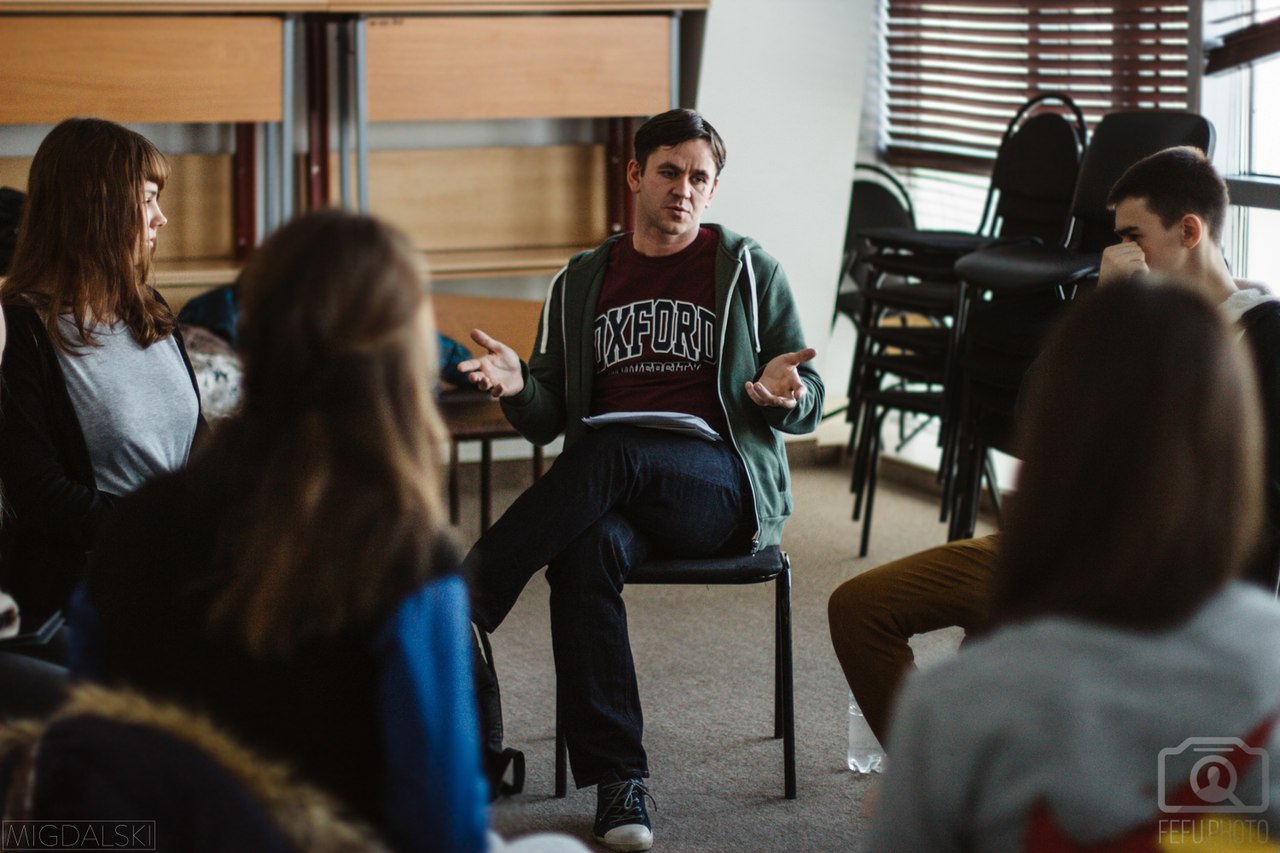
- And what do your students think of the Soviet Union? And how do they perceive today's reality?
- As far as I can judge, most of my students have no illusions about modern domestic policy, ideological situation, and they understand what future Russia is moving into. They themselves say: "We could conquer the cosmos, but we are planted for reposts."
Not so long ago, I worked part in one local university. It was a year after the Crimean events. The students and I sorted out the “lord of the flies” of William Golding and delved into the analysis of the signs of a totalitarian society: the cult of the leader, the persecution of dissenters, mass rituals and so on. In the middle of the lecture, a lady from the administration entered the audience and said in a commanding voice: "So, all students are now withdrawing lectures for a rally in honor of the annexation of Crimea to Russia." When she left, I said: "Guys, if you need, I can let you go early." But they answered: "No, we will not go to this rally."
A year ago, on March 26, a wave of protest rallies was held in Russia because of Navalny’s film "He is not Dimon to you." When I reviewed photos and videos from the Vladivostok rally , I saw a lot of my former, real and, possibly, future students.
These young people do not want a revolution, they, first of all, want to live in a normal country. But, looking into their future, they see there an economic dead end, total theft, arbitrariness of priests and officials. That is why they go to rallies. Not for Navalny and Sobchak, not for likes, but for their future. It seems to me that human pride and dignity woke up in these young people. Dolphin has a great image in one of the songs:
The future of children rests on the back with a bayonet.
We build a house from bones for them, turning blood into clay.
They say to us: "You must all your lives to the Motherland!"
But we are more than complex. It seems to be.
-It turns out that in the twentieth century in the USSR, every generation expected a bright future-to build something great in two five-year planes, or to start living under communism, or something else. And now a generation has grown, which, in general, has nothing to wait.
-Yes, they feel in some repeated, looped world and want to break it with a ring. And they do not rally for a specific political figure, but for themselves and their life. In addition, existential issues are very important for them: what is genuine, which is ephemeral; Who am I - biomass or individuality; What should you devote the time of your short human life?
Acute attention to these problems is characteristic of the generation of millennials with whom I am working now. This generation wants to live, not earn a living. It is fully to live and work, and not survive. I myself am so, so I really like them.
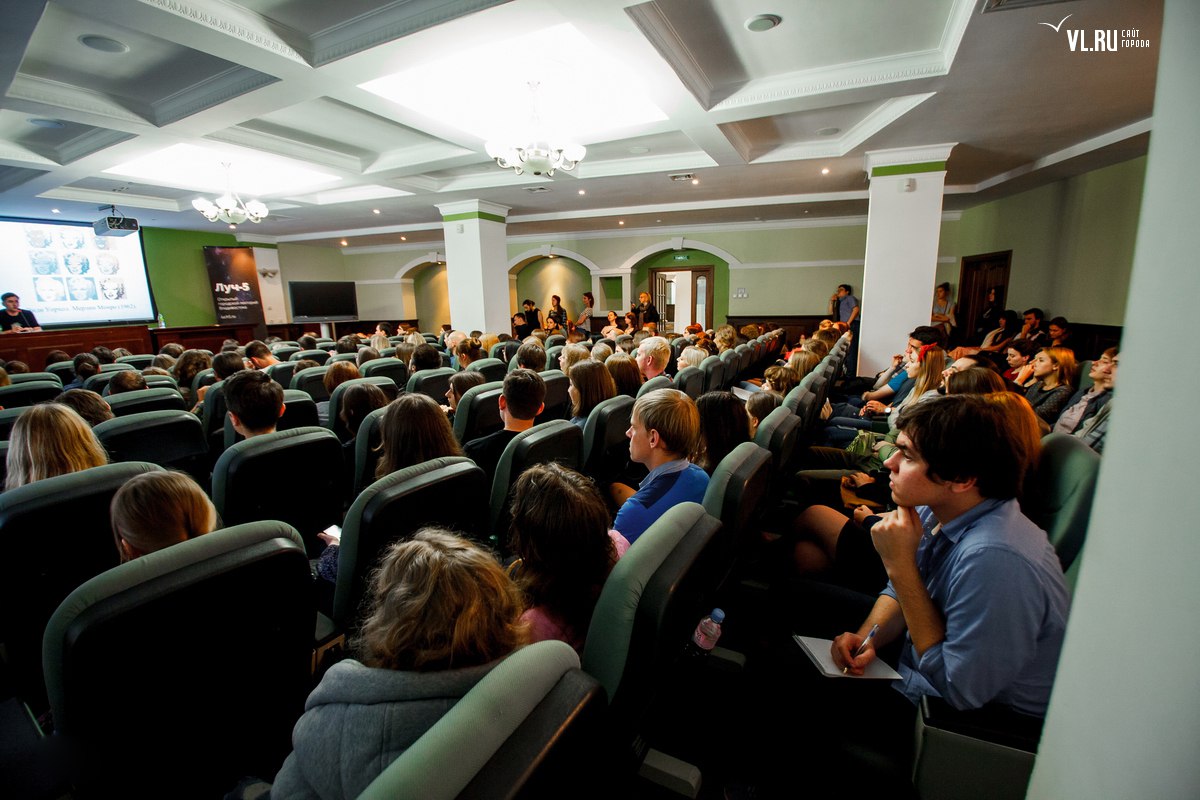
- Over the past hundred years, this is probably the first generation that has not taken conversations about hunger seriously, about a piece of bread.
- It may be good that he does not perceive. They were born in relatively well -fed time. It seems to me that they simply grew up in a normal world where there was no tense struggle for survival. In this regard, they are similar to the post-war generation of rebels of the 1960s. And they demand something more than just a piece of bread, they have aggravated superbiological needs. Therefore, their protest is not so much socio-political as existential.
- Probably, many of them leave Vladivostok? Near China, Japan, behind the ocean - the USA.
- Yes, they leave. Every summer we have typhoons that erode roads and wash off a fertile layer. It seems to me that this is a very good metaphor for what is happening in Vladivostok. For a large number of young people, there is no place and opportunities for development. Many of my talented students entered Moscow and St. Petersburg magistrates and graduate schools. Some left for the USA, Mexico, Korea, China, Finland, Germany and so on. With the departure of young and gifted, the cultural layer of the city, the potential of its future. This does not mean that no one is left. There are talented guys who fundamentally want to live here, see prospects for themselves. In Vladivostok, they organize lectures, open book and souvenir shops, coffee houses, bars, contemporary art centers, write wonderful graffiti, are designed, work in libraries and museums, organize environmental projects. Vladivostok in this regard is a very dynamic and not at all a provincial city. Sometimes Moscow seems less dynamic and more provincial.
There are many problems in Vladivostok. This is not a province, but rather a space that has not yet been able to fully realize its spiritual and cultural potential
- That is, you yourself feel quite comfortable in Vladivostok and do not plan to leave here?
- I am relatively comfortable here. On the one hand, there are many problems in Vladivostok. This is not a province, but rather a space that has not yet been able to fully realize its spiritual and cultural potential. The historical center of Vladivostok is mutilated by office skyscrapers, beautiful hills are packed with Khrushchevs and tasteless high -rise buildings that stick out like fangs. Kirill Chichaev, my friend, wrote: "The city is like cubes scattered by a child-idiot." Sometimes I’m going to work on bridges and I think: "To demolish all this is ugliness and build Barcelona on these hills." But, on the other hand, there is a fierce creative energy, which is implemented in different projects - from ecology to culture and science. There are many amazing talented people who are characterized by openness, perseverance, patience, passionarity.
And most importantly, in this city I can do what I love. And I see that my activity brings results, changes something in people. I have wonderful students and wonderful volunteers. I always want to tell them the words of BG: "If you want to listen, then I want to sing for you. And if you want to drink, I will become water for you." Here I am more than free in creative terms. No one can tell me that I somehow didn’t lead my subject. At least this has not yet happened.
Simply put, in Vladivostok I have the opportunity to live, develop, feel alive, loved and necessary, so I still have not left here. But if this does not become, then in Vladivostok nothing will hold me. Fortunately, a person is not a tree, he can find another space for a full life.
-That is, until any increased ideologization takes place at your university? I have repeatedly heard the complaints of scientists that their universities have ceased to be a place of free creativity.
- I freely feel at lectures. At least, I do not think that I must keep silent about something and engage in self-censorship. The main problems in my university, as in others, are monstrous bureaucratization and, most importantly, a reduction in auditorial hours. For me, this is a lot of pain and sadness. I used to love to work with journalists, because they had the largest course on the history of foreign literature-eight semesters. Now the course is reduced to one semester. That is, in four months you need to subtract the whole history of world literature from Homer to Marquez. For one semester! With the same success, I can simply be silent at these lectures. There will be the same meaning.
- Apparently, the new generation of Russian journalists will not need knowledge of foreign literature. What are you going to write about after Kafka?
- This fall, I want to publish a slightly bully book on my own behalf. Its working name "Letters for Karl". I love traveling, over the past six years I have been in seventeen countries of the world. I have accumulated way notes that I wrote for my friends in closed Facebook posts. These are my observations, impressions, thoughts about that funny, terrible and beautiful that I saw in these travels. Once in the London metro, I watched an amazingly beautiful scene - a couple sat in the carriage opposite me: a white woman and a black man. She was pregnant, he hugged her with one hand, and in the other he held an open book "How to be a good father." The man carefully read, and the woman looked at him with some indescribable bright smile. This is one of my favorite memories.
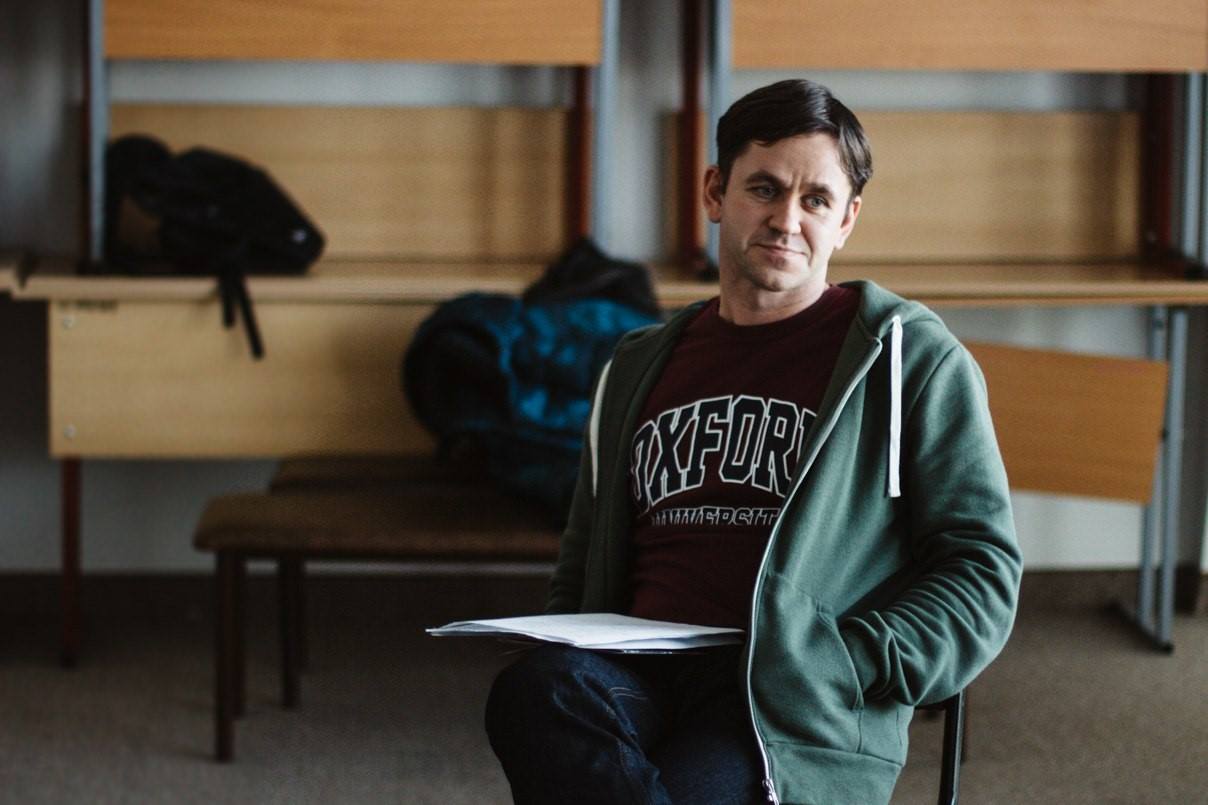
In addition, this is how my life is formed that I often have to observe very colorful personalities. I try to remember their words, expressions. Sometimes I get letters of very strange and funny people to me. I like to record different hohms that happened to me and my friends. Each session one of the students writes something funny on the exam: “booze at the court of King Arthur”, “sharks eat fish from the old man, but he won a moral victory over them” and so on. All this I want to collect and place in the book. That is, it will be something like the "records and extracts" of Mikhail Gasparov, but, of course, not so large.
- It seems that now in Russia there are more people who want to publish a book than readers. The circulation of your Kafka is 300 copies. The circulation of modern novels rarely exceeds five to six thousand. At the same time, everyone writes - on Facebook, on forums, on the sites "Poems.ru" and "Prose.ru", many publish paper books. Popular trainings on "creative raising" - how to write a bestseller. What, in your opinion, is this phenomenon of universal writing?
- I believe that in percentage the same situation was in previous cultural eras. Say, in Europe of the XVIII century, only 10 percent of the population knew how to read. But the aristocracy and the middle class read, wrote and published in very large quantities. And then the time spent everything in its place. You probably know that in the second half of the 19th century, writer Nikolai Leikin lived. He published his works in 10 volumes during his lifetime. But now he is remembered only by experts as the editor of the magazine "Shards", in which the young Chekhov was published.
- That is, nothing fundamentally new in connection with the appearance of technologies such as social networks, for literature, you do not see for creating texts?
- Yes, and I think that the publishing and writing boom is even a positive process. Because in Soviet times, not only large writers were destroyed, but also a large number of small, medium, secondary authors, and this is bad. In order for a high drill forest, it is necessary that there is a shrub. Of course, the majority of what is now being published is not masterpieces. But this will still become the ground for large, serious literature.