Translated material
Alfa-samki
The secret of romantic fantasy: new methods of consumption of text
On the example of numerous publications of female romantic fantasy, the most popular genre of modern naive literature, “bitter” is affirmed in the idea that we have important social texts, and is trying to describe the rituals of reading literature, which has grown out of a fan fiction, dreams and “hidden” feminism, which in Russia is matriarchial. We are talking about the phenomenon of the loving and fantastic novel with Natalia Strelnikova, editor of the Labyrinth.ru bookstore, an expert on the question and the author of the definition of Alfa-Samka, born as a working term during cooperation with Alfa Book, and Julia Zhukova, one of the ancestors of the genre.I became interested in female love fantasy exactly ten years ago, when a Russian translation of the book of Stefani Mayer “Twilight” appeared in Moscow. The book was released for the film premiere; The film "Twilight" turned out to be poetic, but modest in its artistic qualities. It was November 2008, one of the last relatively calm years. The hall of the outskirts of the cinema was full: the film was watched mainly by teenage girls and their mother. The woman sitting next to me wiped her glasses lining her bags. “I’m crying all the time-probably something is missing in the body,” my neighbor said, making excuses (my daughter looked at her evil). But I myself courageously restrained my tears. Actually, half of the hall sobbed, and just adult spectators cried. Later, the women of Soroka (plus or minus) years, passionate about this teenage plot, will receive the nickname "Twilight Mommy." It was obvious that an ordinary film could make an extraordinary impression. I rushed to the book - and got the same effect. A simple (if not to say - modest) text and a difficult story of involvement in it. The pleasure received from reading was difficult to explain to the former text. Yes, the plot associated with the unexpected germination of the unusual in the ordinary, as the effect of the platform 9 and ¾ at Rowling and the wardrobe door near Klava Lewis (Mayer has centennial adolescents-vampires, exhausting from boredom and moving from place to place, year after year they study in ordinary American schools in small towns, and it is in one of these schools that are true-true symbols-true symbols-true symbols-true symbols. The everyday life of provincial America, simple, like Hamburger and Coca-Cola, the main character meets a strange group of the school elite: pale, bored handsome people). But the effect of the unexpected rapprochement of the obvious and secret quickly passes. There were no other finds in the plot. But the secret was found in the very mechanism of the book - the hidden tension of the text. Behind the text there was some kind of human story, some simple and shameless experience-something that managed to make itself felt through the word. Natalia Strelnikova calls it something "magical, fairy pollen."
What kind of pollen? How can you get carried away with a text in which you see so many imperfections? Isn't it so ridiculous as you are happy to look at, say, at an awkward dance? Where does the pleasure come from-unless you are a spectator of the “Minute of Glory” program and do not experience an instant, shameful and simple joy of the opportunity to condemn your stupid sister, some fat woman in a little one. But in fact, there is a situation when dance qualities are not important: if you dance together - and the personal connection, the commonality that has arisen force not to notice the pallor of the choreography. This connection between the author and the reader, which provides the text with value added and excess, smuggled dimension, is what it makes sense to talk about.
Twilight and texts working with the reader according to similar principles, the Egyptian darkness of fans.
And according to similar principles, Russian love fantasy works-this is something about two hundred thousand published and posted on the network of works. Randicked, multi-sized (cosmo opera, city fantasy, steam-punk and diesel-punk, lovingly fantastic detective, etc.) A collection of texts that united a millionth audience around themselves. One of the ancestors of the genre, Olga Gromyko - only on the Litmir portal - three and a half million views. FanBook, Samizdat, Laboratory of Fantasy, Prodoman, Litnet, placing male and female fantasy, are popular.
The mighty, accumulating everything that is sold, Eksmo-Ast publishes several episodes of the LFR: “Fifty Shades of Magic”, “Other Worlds”, “Witchcraft Worlds”, “Love and Magic”, “Fiction. Love novel. Humor ”and so on; The more old and “family” alpha book has been holding the series “Romantic Fantastic” since 2011.
So what is missing in our general social organism, which allows these books to be important?
Construction of love fantasy
Then, ten years ago, for women's love fantasy, I went to Lib.ru: Samizdat magazine is one of the network resources rare at that time on which these texts were posted.
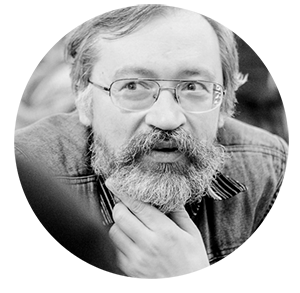 Maxim Moshkov
Actually, they were not placed there - they grew up there. Samizdat was established in 2000 by Maxim Moshkov, a mathematician and a programmer, the owner of the same name by the Moshkov library. It is difficult to imagine now what this library was, one of the first in the network of places where digitized books were flooded. There was a time when the library attendance was the second after Yandex. And the super -poular Moshkov, amateur authors began to send texts for placement en masse; It was not for him to read them - and he came up with Samizdat. The magazine of unprofessional literature is a network space in which any writer could be published under his responsibility. Later, Moshkov said: “Samizdat did not live for six months almost in any way. Then the “kindergarten” period began, when the most noticeable on the site was a group of frank graphomaniacs. I really did not like them, and, frankly, I hardly restrained myself so as not to drive them. And it’s good that he didn’t drive, because some of the graphomaniacs wiser, and some somehow quietly disappeared. ”
So the matter went, and several new literary genres began to grow on Samizdat. First of all, fantasy is male and female. They grew from fanfic culture. Fanfict, as you know, is an amateur literary letter based on elements of popular books and media products (films, television series, comics), on what researchers call "commercially successful text or visual universe." Roughly speaking, continuing or shifting your favorite plots. Here I must immediately say that “twilight”, so magnificent to me, the ancestors of the genre fantasy do not compose part of my backing culture-I started a conversation with this book only because of the similarity of influence mechanisms and personal history. No, the “twilight” is not the primary basis, but the product of that wave of a free amateur letter, which was initiated by the development of the fan fiction. Russian amateur fantasy, of course, began with Tolkien.
“If you look at the first authors of the Russian fanfict,” says Julia Zhukova, “most often, interpomenists, people who were related to the role -free movement. They gathered back in Fido, in this precursure of the Internet: the 1990s, modems annexed to stationary phones. There were conferences, something like a mailing list. And very many texts on the Tolkien fandom were created there. For example, there were transfers of the plot of “two towers” (completely!) In the manner of songs from the KSPENSH party. Or the “diary of one orc”, which can already be considered a full-fledged fan fiction, or the beautiful “drama on the telegraph”, something like the predecessor of e-mail-romance, where the action of “Lord of the Rings” is outlined in the form of telegrams that the main characters send each other. Later, of course, Potterian appeared. ” All this was a school of free literary statement.
Perhaps the cosmogony of the Russian amateur romantic fantasy can be imagined as follows: as a parental couple, a divine couple, tall melons and a flat mother, Tolkien and Ursula Le Guin are acting (Julia believes that Lois Makmaster Budzhold is more likely - it was a serious effect on her as an author). The traditions of love novels were crossed with fantasy-pentosion. Then there was a vaccination of textual emancipation from large Russian -speaking fandoms. And finally, a free platform appeared - “Samizdat”.
Grand construction began. Fantasy - like any literature of escapism: distraction, consolation, escape from everyday life - of course, formula literature, that is, the texts of it consist of cultural stamps, uniform narrative forms, general plot turns, recognizable heroes - collective, communal building material. Culturologist John Cavelti in his book “Adventure, Secret and love story: Formal narratives as art and popular culture” proposed a detailed description of the literary formula, which “represents the structure of narrative or dramatic conventions used in a very large number of works.” Cavelti clarifies: if you want to get a recognizable western, “not only a certain idea of how to build an exciting adventure plot is required, but also the ability to use certain images and symbols, such as cowboys, pioneers, robbers, border forts and salons, along with the corresponding cultural themes and mythology: the contrast of nature and civilization, the moral code Or lawlessness and arbitrariness, etc. All this allows us to justify and comprehend the action. ”
Exactly on the same principle, the construction of romantic fantasy began; The difference is that this construction happened rapidly, before our eyes. The authors invented their universe together-deprived of the canon (fan fictions are based on the canon, on the existing and populated cultural space, the authors of fantasy did not have it), they seemed to write their collective “main text” (above-text) themselves, adopting the most spectacular plot moves, the most successful laws of the fantastic world, the most vivid rituals, customs, customs, customs, customs The mythology and religion of the traditional residents of fantasy-wrap and planets, images of the main characters and the main villains. It was like the opening of a new land. One of the most popular topics took shape - hits: when our contemporary, a city resident, is transferred to a fantastic world and gets acquired by him. The typical character of the heroine appeared - an independent girl, in theory, should hit the natives with his sparkling humor and the reluctance to recognize any authority.
Leaders became obvious: Olga Gromyko - with her text “Profession: Witch” (branded humor, a daring student of a magic school, a sweet, well -registered Slavic Belorye); Elena Zveznaya - with her magic Academy of Curses, the rector of which, a handsome man and an aristocrat, desperately falls in love with a simpleton with problems, but the girl is not without abilities and not without principles (the brand sign of the starry is also that almost all the male heroes of a work fall in love with the rector); Nadezhda Kuzmina - with her dragons and vividly invented traditions and customs of the dragon world. Her favorite plot move is the story of an orphan, which is subjected to numerous oppression, which, due to high learning and remarkable abilities, grows into an outstanding and successful person - offenders for a long unpleasant memory. A few more important names can be called: the world was built by Oksana Pankeeva, Milena Zavochinskaya, Vera Chirkova, Gillian (Ulyana Karsheva), Kira Izmailova (one of the best fantasy detectives), Karina Demina, Thais Soter. Julia Zhukova, of course.
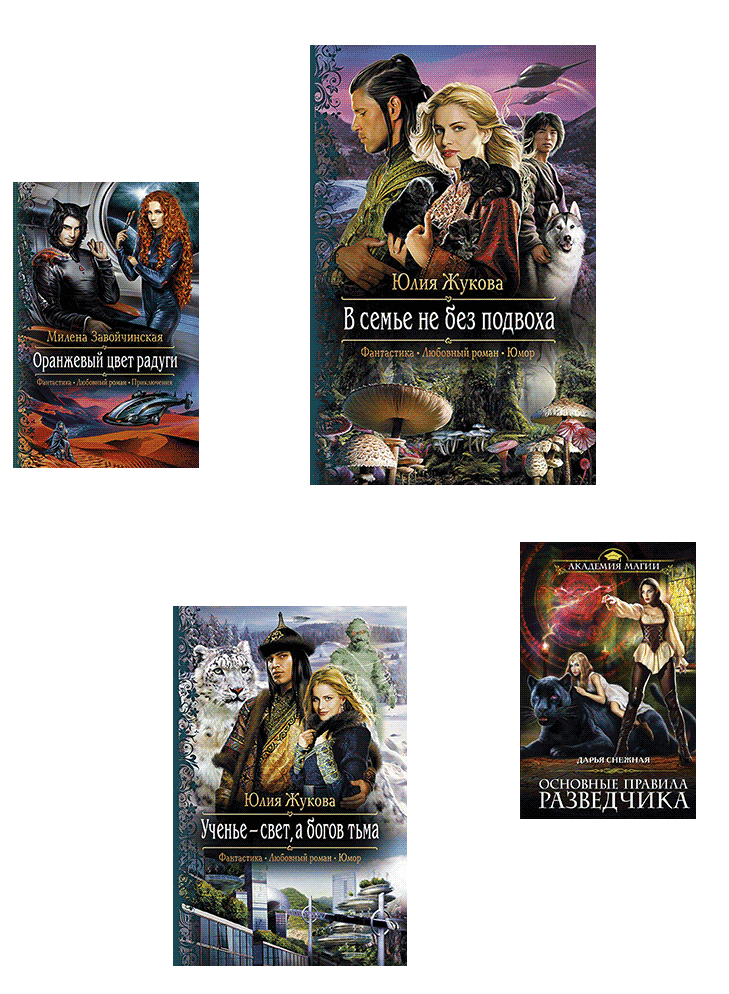
Here it is also necessary to say that the texts on Samizdat were laid out (and are laid out now) as they write - in pieces, chapters, continuations - which again brings the romantic fantasy against the fan fiction. And brings the author and the reader closer - creates a completely special atmosphere of community and common passion.
We can say that readers also participated in construction - and certainly added energy to the work by the power of desire. The terms important in the small language of amateur literary communities are “sales” (continuation) and “couscous” (a piece ”(a piece) - a kind of fan chant that became a motto and symbolic spell“ Sweet Cousing! When else? "; And the most frequent - "Author, Proda!" “Where is my longitudinal?”, “Come, Demon!” Julia Zhukova says that she was even scared, reading the comments: "I wake up every night to check if you have posted a new chapter." Later, resources began to appear that legitimized the magical word in their names - such as, for example, a popular corporate.
As a result, by the time I got to Samizdat, the conventional average text of the female fantasy looked approximately in this way - I sketched the approximate beginning of a typical work:
The sun shone in the sky, round and shining, like the physiognomy of the village innkeeper Borchek after half the wing of the gnome moonshine. The horse fled as smoothly as a cart with square wheels rides evenly - shaking my carcass; And it is still good that unpaired cattle did not try to spread the wings. My horse is not simple - I bought it market for five silverships just because he did not let anyone in to himself. He himself is not a horse, but a bastard-what no one knew. This is horses with dragon blood - they have fangs and wings, and he went to me because he sensed a kinship. He called him Pegasus. “Nothing, the mistress, the tavern, otherwise I would have been hungry again, the swallowed,” said Pegasus and grinned maliciously. Eikhik on my shoulder joyfully rubbed his paws. In fact, he is not a snake. And the bat and a famillar mouse, and his name is his mighty nakrylihnichi. But I reduced it to a terrible - let it not ask. Allow me to introduce myself, my name is Izergilda Disabilier. In fact, I am a thirty-two-year-old accountant from the Moscow Region, but one day the field of a gray work day, when I came home with heavy bags and broken heels, I found in our odnushka a husband’s sofa with her best friend. I poured a bottle of kefir on my head and jumped out of the house, seeing nothing in front of me. It was then that the truck knocked me down. Then there was the darkness in which I floated with a sparkle, and an obscure ethnogenesis of the voice said: “Live, unwashed bright!” I woke up in an unfamiliar room. Tulle dangled above my head. I took a closer look - a canopy. Around - an empire, and my eyes, descending onto a bedspread in a rose, caught on the way beyond the upper ninety. Holy slippers! Yes, this is not ninety, but as many as a hundred with a liner! I rushed to the mirror-I am sixteen years old and I have high cheekbones, chubby lips and bright blue eyes. Not bad! But the man entered the room and said coldly: “Whatever you tried to do with yourself, but you still go out for the Marquis de Sad tomorrow.” From the servants I learned that the Marquis is old, and he had three wives. It is clear why! I cut off my hair, bandaged my chest with a frill from the dress, stole my pants at the cook and ran away on the walk hidden in the wall, the memory of which was preserved in that part of my memory, which belonged to the real young countess Debel. When she crawled around the courtyard, a bag of potatoes, which peasants brought to the castle, fell on me, and from a blow in me, a clan magic blocked by his father woke up. Since then, I have been wandering - where the undead with the rest is, where I will attach a caravan to guard. But this is all just earnings on the way: I am going to the capital to enter the Holy Magician Magic Academy Khitromant of the Trudomny. True, the rector there, they say, is a dark magician and a villain. But we will still see who whom!
Actually, now - although in ten years the genre has pretty matured and have grown strong authors - the texts built on these patterns easily find their reader. And even in them, in all these rollingish beautiful virgins with Disney animals on the shoulder and a smeared horse, you can find the reasons for the reader's love of the genre. The main task of radiant girls endowed with a host of virtues (they are called Mary Sue in fanfic culture) is to help the author realize his dreams. But female fantasy is eighty percent, like a cucumber from the water, consists of a dream. In principle, this is an important feature of any formula literature; Cavelti writes that his interpretation of the formula is useful primarily because “which helps to identify patterns in the development of collective fantasies characteristic of large groups of people, and recognizing the characteristics of these fantasies in different cultures and in different periods of time.”
My God, yes Chesterton defended the “cheap fiction” by the next thought: “The natural human need for an ideal world in which fictional characters are unhindered, immeasurably deeper and ancient than the verified postulates of literary skill. In childhood, we all had to play invented situations, but for some reason it never occurred to our nannies to compare our “creativity” with the work of Balzac. ”
Особенность новой самодеятельной литературы в том, что эти мечты (одна из самых потаенных и мало описанных паралитературных практик) стали более откровенны и оказались массово вынесены на всеобщее рассмотрение. Они не проходят уже оценки «авторитетного сообщества». Сетевая жизнь дала мечте — вымыслу закатного часа — плоть и возможность полноценной жизни.
Тотчас стало очевидно, насколько различны закатные фантазии у мужчин и женщин, насколько мечта — гендерная история. Параллельно с женским романтическим романом растет же и мужское фэнетези про попаданцев; в основном мужской протагонист — офицер, спецназовец, бывший полицейский, пацан, бизнесмен, в крайнем случае айтишник. Он отправляется в прошлое помогать России — исправлять допущенные ошибки и выводить страну на правильную дорогу.
Все же мужчины более социально беззащитны — не видят возможности частного счастья: женщина мечтает о личном апгрейде, мужчина улучшает свою жизнь только вместе со всеми, «со страной». Я думала, в этой разнице фантазий сквозит древнее: у девочки — кукла, у мальчика — солдатик. Метафора женского оргазма — дом, метафора мужского оргазма — выстрел.
А недавно мне попалось бесконечно печальное чтение — письмо Пушкина П. А. Плетневу от 1831 года. Он пишет в нем о том, как будет стареть: « …дочь у тебя будет расти, вырастет невестой, мы будем старые хрычи, жены наши — старые хрычовки, а детки будут славные, молодые, веселые ребята; а мальчики станут повесничать, а девчонки сентиментальничать; а нам то и любо. Вздор, душа моя; не хандри». Вот собственно и все, что нужно знать о разнице мужского и женского в фантазиях и фэнтези: девочки сентиментальничают, мальчики повесничают.
Но как именно девочки сентиментальничают?
«Потаенный» феминизм
В то самое время, когда я сидела на сайте «Самиздат» и приступала к освоению любовно-фантастического романа, Юлия Жукова, тогда студентка филологического факультета МГУ, сидела в аэропорту «Хитроу» и писала первые строки своей книги, которая будет потом называться «Замуж с осложнениями», станет в итоге тетралогией, будет популярна в сообществе и во многом определит традицию «высокого» любовного фэнтези.
«Я начала писать роман в аэропорту, когда ожидала своего самолета обратно в Москву, после 4-х месячного обучения в Лондоне, — говорит Юлия. — Для меня тема обитания в чужой культуре была очень остра в тот момент. Это был мой первый выезд в Англию, и за границей я бывала не часто, и вот так сразу — на 4 месяца. Это была поездка от университета, и получилось, что меня отправили одну. Конечно, я с кем-то познакомилась по ходу, но это были четыре месяца, когда я самостоятельно пыталась устроиться в чужой стране. Довольно тяжелое для меня время — я не хотела бы пережить это еще раз. Тем более что от такого рода поездок много ждешь — представления о стране идеализированы. Я начала писать, чтобы разработать свою историю как-то более оптимистично. То, что не получилось у меня, пусть получится у героини. Естественно, я понимала, что использую простую нарративную технологию — способ через текст улучшить свое мироощущение. Но любая литература эскапизма для того и нужна».
Героиня Жуковой — врач, жительница Земного Союза Лиза Гринберг — летит вместе с группой детей на курортную планету, но по дороге ее звездолет захватывает группа наемников с планеты Муданг. Ох, какие тут могли бы начаться душераздирающие коллизии, начни так свой роман иной автор фэнтезийного сообщества. Но у Жуковой, слава богу, немного о другом — о спасении. Наемники оказываются честными профессионалами и, удостоверившись в коварстве нанимателя, отпускают детей. Лиза же обращает внимание на капитана — двухметрового краснокожего красавца, с косой в руку толщиной и лицом, изуродованным шрамами.
«Образ моего, так сказать, героя-любовника, — говорит Юлия, — был навеян главным героем из „Пролетая над гнездом кукушки” Кизи. Он именно такой — огромный индеец, который застрял в своей ситуации из-за общественных установок». Азамат Байч-Харах — обаятельный образ. Это достойный человек, интеллектуал и воин, человек недюжинных способностей, умеющий своими руками собрать звездолет, но кротко соглашающийся со своим статусом парии: на планете Муданг человек некрасивый или потерявший свою красоту считается отверженным. Азамат получил ожоги, накрыв собой гранату (спасал женщин), но его соплеменники поступок этот не считают подвигом. Раз урод — значит, не любим богами. Уродство позорно. Азамат не имеет возможности вернуться на любимый свой Муданг, потому что от него отказался отец, а жены, которая по местным законам могла бы послужить своего рода пропуском на родину, у него нет. И, конечно, не будет.
Ох, какой тут простор для женского счастья! Самый сладкий феминистический сюжет — «мужчина в беде». Лиза Гринберг, врач и носитель совершенно другого культурного кода, спасает капитана —берет его в мужья. Сказка наоборот: исполин с косой до пола, принц-Рапунцель, заперт в железном звездолете и ждет освобождения. Но книга Жуковой не ограничивается этим поворотом: Лиза возвращает Азамата на Муданг, но и сама оказывается в своем метафорическом «Лондоне» — всем чужая, на планете, где положение женщины удивительно. Они имеют социальную власть, но лишены женской власти, потому как не умеют испытывать оргазм. Жизнь муданжской женщины — это безделье, злословие и нелюбовь; мужчины оберегают их и «одаривают» за детей, но супружеской жизни как таковой нет: муж и жена живут в разных домах. Но скоро все изменится — Гринберг уже прилетела. Пожалуй, тетралогия Жуковой — одна из самых откровенно феминистских книг фэнтези-сообщества.
В принципе, женское фэнтези всегда гиноцентрично.
Женщина стоит в центре этой текстовой вселенной — и если вокруг нее не строится идеальный мир и нет идеального героя, то обязательно имеются идеальные отношения. Это в любом случае эмоциональная утопия. Мужчина в ЛФР может убить, украсть, может вести себя жестоко и непредсказуемо (это особенно приветствуется в сюжетах, где лирический герой — злодей, которого нужно исправить), но он не может изменить. Это такой же немыслимый слом канона, как в вестерне герой, не знающий, как сесть на лошадь, а в детективе (только постмодерна вот не нужно) — следователь, оказывающийся убийцей. Но фемоцентричность и феминизм — разные вещи.
«В своей основе, — говорит Наталия Стрельникова, — фэнтези патриархально. У Толкиена прекрасно выстроенный, чистый патриархальный мир. То есть ты можешь быть в этом мире воительницей, но только потому, что с твоей жизнью что-то не так. Затем нужный мужчина поговорит с тобой, и станет хорошо — ты займешься целительством. В женском фэнтези героиня сама выбирает свою судьбу. Но какая она, героиня? Часто это вздорная и взбалмошная девушка. В ее капризе — ее сила. Она агрессивна. Она строит королей, принцев, демонов, фрейлин и фрейлинских левреток. И есть ведь еще сюжет, когда женщина, попадая в новый, дивный мир, тут же оказывается объектом внимания всех мало-мальски интересных героев мужского пола. Вот она, вчерашняя наша современница-горожанка, пролетает через черный тоннель, и вдруг все ее любят, и желают, и жаждут. И какой-нибудь прекрасный эльф, и орк, и вампир. И читатели — я отслеживаю комментарии к книгам — невольно задают вопросы: „Как? Что же в ней такого, что все эти удивительные существа, эти достойные, в общем, мужчины, привязываются к этой грубой, нервной женщине с трудной судьбой?”
Да, с другой стороны, героиня всегда динамична, она приносит в волшебный мир новый порядок или основы бухгалтерского счета. Это всегда радует. Но самостоятельная или жаждущая самостоятельности дева все равно хочет любви и под венец. Я вижу в этом естественное отражение актуальной в России гендерной установки, в рамках которой женщина должна быть сильной, многозадачной и замужней.
Мне кажется, героиня европейского и американского фэнтези уже немного другая. В серии Патриции Бриггз, скажем, выведена героиня Мерси Томпсон. Она живет в стае волков, и живет, собственно, с альфа-самцом — волком, — но при этом она оборотень-койот. В этом забавном снижении пафоса — завязка интриги, но самое интересное, что она часто спасает своих недотепистых волков от неприятностей. Она полна какого-то внутреннего достоинства, и мне кажется, что именно достоинства не хватает героине российской романтической фантастики. Есть другое: обостренная гордость, обостренное эго. Возможно, обретение достоинства для русской фэнтези-героини еще впереди».
Я бы сказала, российское фэнтези в своей массе еще не добралось до вершин жесткого и чистого феминизма. Патриархально ли оно? Скорее матриархально — что, правда, по сути, одно и то же. Достаточно часты сюжеты, в которых героини вступают в полигамные браки — с двумя и более Леандрами), героиня часто становится объектом всеобщего поклонения, но при этом для авторов важна ее девственность (это добродетель, достоинство — такого количества описаний дефлорации, как в любовном фэнтези, вы не найдете ни в одном корпусе текстов во всей вселенной). Брак в большинстве романов рассматривается как единственно возможное завершение сюжета.
Everything is so. Но важно другое: любовно-фантастический роман может быть патриархален или матриархален, но чтение такого романа всегда феминистский акт. Это время, «украденное для себя» и своего удовольствия, — протестное время, женское время. Феминизму учит не текст — а событие чтения.
Удовольствие и стыд: практики чтения
«Я часто ловлю себя на ощущении, что те или иные фэнтези-тексты — это так плохо, что даже хорошо, — говорит Наталия Стрельникова. — Мне нравится в этих текстах ощущение безнаказанности, у автора нет никаких тормозов, никаких задних мыслей, он свободен. В этом есть завораживающее бесстыдство».
Тут мы подходим к тому, с чего начали, к главной особенности любовно-фантастических романов — к их высокой способности увлекать. Эти тексты предназначены для получения удовольствия, и, если удовольствие от потребления текста обеспечено, читатель сознательно отключает критическую функцию.
В самом лучшем из имеющихся на сегодняшний день исследовании культуры фанфикшна (а эту особенность «существовать ради равноправного удовольствия» романтическое фэнтези, безусловно, унаследовало от фанфиков) — в статье Натальи Самутиной, руководителя Центра исследований современной культуры ИГИТИ НИУ ВШЭ «Великие читательницы: фанфикшн как форма литературного опыта» — проанализирована история «запойных прочтений»: «Фанфикшн как вид чтения в первую очередь связан со страстью, с полным переключением читающего в режим существования в воображаемом мире».
Способность текста захватывать воображение читателя, лишать его еды и сна почитается в фанфикшне за величайшее достоинство. Масштабы погружения в текст, достигаемые при чтении фанфикшна, отражены не только в многочисленных историях «запойных прочтений», но и в изумленных историях «протрезвлений». Читатели нередко признаются, что, немного отойдя от фандомного чтения или сменив фандом, не могут потом вернуться, не способны не только пережить захваченность прежде любимым текстом снова, но и начинают видеть все недостатки, все плохо подогнанные элементы конструкции, которые из этого текста начинают торчать. «Когда мы полностью захвачены текстом, мы больше не способны поместить его в контекст, потому что он и есть контекст, императивно диктующий условия своего восприятия, он нас абсорбирует», — пишет Рита Фелски (американский культуролог, автор книги «Для чего используется литература», 2008).
Писательская свобода авторов романтического фэнтези, внелитературные добродетели текста, в которых основное — драйв, страстное отношение к рассказываемой истории, равноправие автора и читателя и их одновременное желание получить удовлетворение от «справедливо» заканчивающегося сюжета, от наказания всех виновных и раздачи наград героям, и испытать телесное волнение (в канон входят обязательные эротические сцены) — все это делает чтение этих романов практически телесным переживанием. Текст «оживляют» не изобразительные средства, а совместное страстное желание удовольствия — и автора, и читателя.
Это действительно почти не чтение, а иной вид коммуникации со словом — опыт чувственного потребления текста.
Многие исследователи массовых текстов описывают этот опыт метафорами съедобности: еды и не-еды. Камилла Палья говорила, что любовный роман — это метафорическая соска, которую нельзя отбирать у женщины. Фольклорист Сергей Кондратьев сравнивает легкое чтение с жевательной резинкой — сладкая пыльца, «внутри все холодеет», — но перед нами имитация того, что может насыщать.
Наталия Стрельникова вводит термин «фаст-чтение»: «Ощущение, что эти книги берут, как готовый продукт в Бургер Кинге. Ты приходишь и получаешь Бургер-книгу. Но фастфуд мы выбираем еще и потому, что уверены в нем. Ты всегда знаешь, что тебе положат в Макдоналдсе. Это не меняется, и твое разочарование от того, что котлета там резиновая, не меняется. Все неизменно — предвкушение, котлета, разочарование. И, может быть, читатель романтической фантастики, беря очередную „академку” (книжку про магическую академию), берет двойной бургер».
А у Юлии Жуковой метафора едва ли не плотская — она говорит о «безопасном чтении»: «Я, как человек прошедший 5 лет филфака, много обжигалась. Мои коллеги, получившие образование как литературные критики, потеряли способность эмоционально сопереживать персонажу. Ну, когда 5 лет подряд получаешь по щеке, перестаешь лицо подставлять. Невозможно читать книги в профессиональном режиме и при этом держать душу нараспашку. Нельзя представлять себя главным героем: его или убьют, или он окажется главным злодеем. Такие вещи сильно расшатывают душевное равновесие. Когда ты берешься за любовное фэнтези, ты знаешь, что твои ожидания не будут обмануты. Во-первых, хэппи-энд; во-вторых, классный мужик; в-третьих — любовная история, в которой можно себе разрешить сочувствовать главным героям. Это высокая литература может позволить себе начаться готическим романом, а кончиться постмодерном. Фэнтези так не работает. Ты точно знаешь, что главная героиня не умрет, а главный герой ей не изменит. Это безопасное пространство».
Важность хорошего конца
Так какое же простое и бесстыдное переживание, живущее «за текстом», можно обнаружить в «Сумерках»?
Наталия считает, что это тоска о несбыточном: «В этих книгах разлита какая-то печаль — герои тоскуют по несбыточному, и это придает им объем». Для меня человеческая история, спрятанная за текстом, — история уходящей молодости и острой печали о том, что любви больше не будет, неведомо как вмурованная сорокапятилетней мормонской матроной в сюжет о вампирах-вегетарианцах».
Но можно ли считать, что весь корпус фэнтези-текстов стоит на недолюбленности и популярность его вызвана бедностью русской любви?
Нет, в этих текстах сквозит другое социальное сообщение, эти коллективные фантазии ясно показывают, в чем именно есть нужда. Прежде всего — в постоянстве. В устойчивости мира. Нужен хороший конец: мужская верность (в частной жизни) и нестрашное будущее.
Нужда в равенстве осуществляется в самом процессе поглощения текста: когда автор равен читателю и одна мечта бывает разделена на двоих.
И третья нужда — в компенсации: в жесткое наше время всякую девушку уже на первом же рабочем месте научили — чтобы быть равной с мужчиной, надо быть лучше мужчины.
И на пыльную феодальную дорогу выходит альфа-самка в кожаных штанах и корсете — мачехой обижаемая, отцом притесняемая, назгулами пуганная, орками битая, магами стрелянная, для всех желанная — простая непобедимая русская женщина.