
Translated material
Euromonets: What are dedicated

Many readers of this article probably held Euromonets in their hands (and sometimes used them as intended). But not everyone carefully examines the coin of an unusual look, trying to understand where it is and what it is depicted from. Identifying the country - the issuer of this coin is not always easy. Some Euromonets indicate the name of the country (sometimes reduced), on others - no.
One of the goals of this article is to help figure out what coin came from, and also what is depicted on it. Only coins of mass issues of the first 12 countries - participants of the Eurozone will be considered.
On the reverse of the coins of all advantages - from 1 cent to 2 euros - a map of the European community is depicted against the background of transverse stripes crossing the stars of the European flag; There are 12 of them-according to the number of the first participating countries. These stars can also be seen on the obverse of coins - there they are located in a circle (the obverse of their coins for each country). On coins of 1, 2 and 5 cents, Europe is shown on the globe, which emphasizes its place in the world (Fig. 1); 10-, 20- and 50-center coins represent Europe as a union of nations (Fig. 2); Coins with a dignity of 1 and 2 euros depict Europe without borders between countries (Fig. 3).
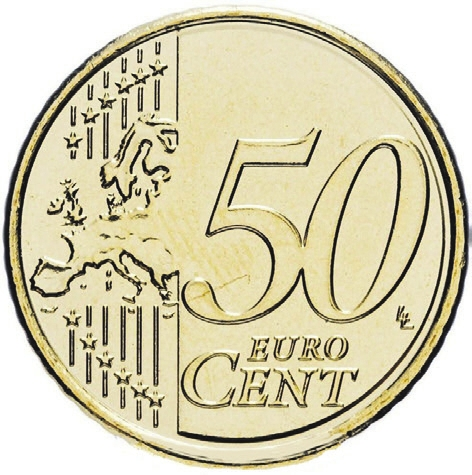 Rice. 2. 50 Eurocentes, reverse
 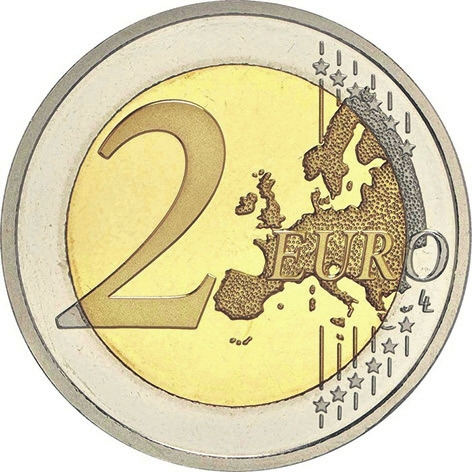 Rice. 3. 2 euros, reverse
On the right part of each coin, a badge similar to the number 4 is visible. In fact, this is a stylized image of two Latin L-by the name and surname of the Flemish designer-designer Luke Luyx (Luc Luycx), who worked at the royal Belgian Mint for 15 years. It was he who created the appearance of the "European" part of the coins. As for the "national" part, here is a significant variety. This is what is shown on these coins.
Austria . 2 euros - a portrait of Berta von Zutner (1843–1914), Austrian writer, Nobel laureate of the world (Fig. 4). In 1890, she founded the Austrian Society for the Protection of the World, which has been her name since 1964. A monument was erected in Vienna. With the activity of Zutner, the history of the pacifist movement in Austria begins.
1 euro is a portrait of the great Austrian composer Wolfgang Amadeus Mozart (1756–1791), the author of more than 20 operas and about 50 symphonies (Fig. 5).
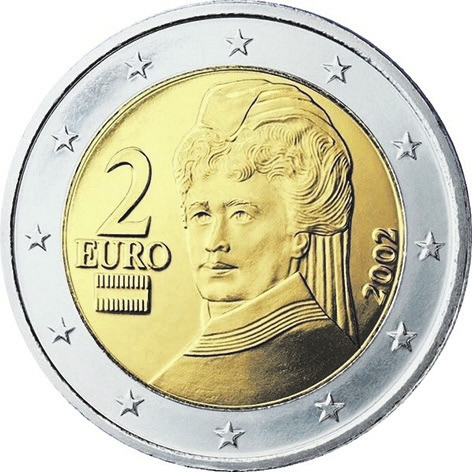 Rice. 4. Austria, 2 euros
 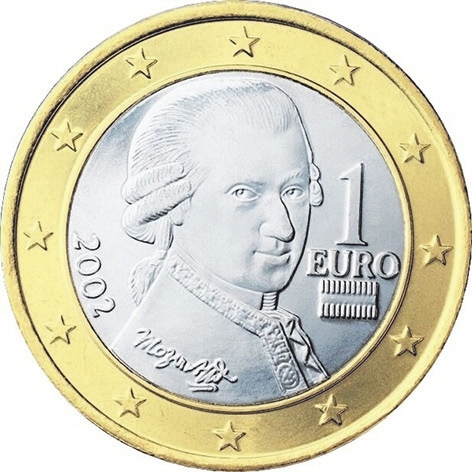 Rice. 5. Austria, 1 euro
50 cents - the exhibition hall of the Vienna Secession, the association of representatives of the Austrian style of Art Nouveau, founded in 1897 (Fig. 6). The building is crowned with deaf, without jewelry, cubes that are adjacent to the central hall, crowned with iron gilded dome. This dome consists of three thousand laurel leaves and seven hundred berries. The Setstarian style (from lat. Secessio - departure, removal, outskirts) illustrates the birth of a new direction in art, and the coin itself, according to its creators, should symbolize the birth of a new era - a single monetary system in Europe.
20 cents - the palace ensemble Belveder in Vienna (Fig. 7). The name comes from Ital. Belvedere - "Beautiful View." It was built in 1714-1722 by architect Johann Lucas von Hilderandt as the summer residence of Prince Evgeny Savoy. The ensemble is considered one of the most beautiful architectural creations in the Baroque style. In 1955, the Austrian independence agreement was signed here, so the palace is also a symbol of freedom. Now it contains museums.
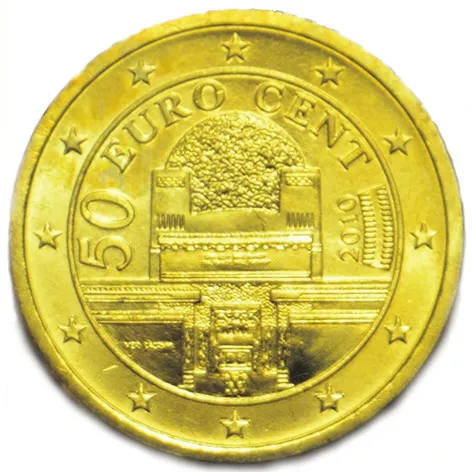 Rice. 6. Austria, 50 cents
 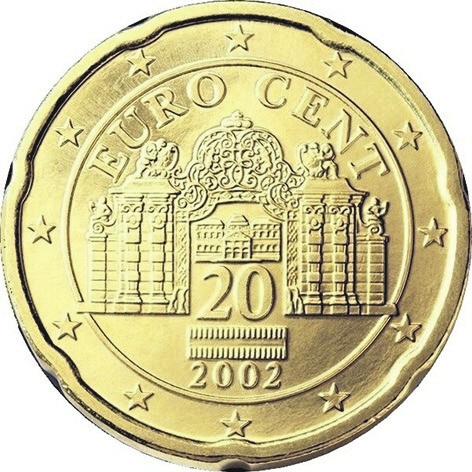 Rice. 7. Austria, 20 cents. Pay attention to the unusual shape of the coin; This is done for the convenience of visually impaired
10 cents - Cathedral of St. Stefan (beginning of the XII century), a symbol of Vienna (Fig. 8). The cathedral belongs to the most significant Gothic structures of Europe; It is unique in that it has not two, as usual, but one tower. There are a lot of historical relics on the walls of the cathedral: marks of the length of the fabric and size of the loaf of bread (buyers controlled the purchased goods on them), the Freinc Ring (i.e., “release”), grabbing which the fled criminal became inviolable.
5 cents - a flower of alpine primrose (primrose), part of the “botanical” series of Austrian coins, which symbolizes the problems of ecology and the desire of Austria to follow the environmental policy of the European community (Fig. 9).
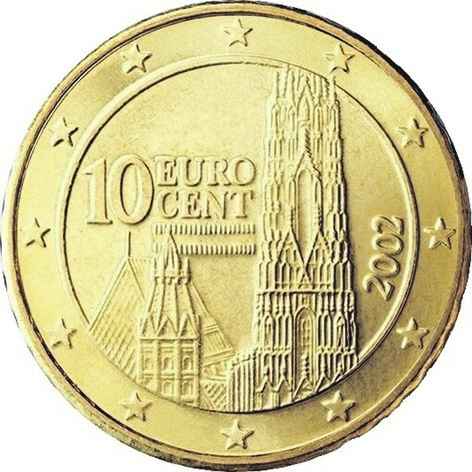 Rice. 8. Austria, 10 cents
 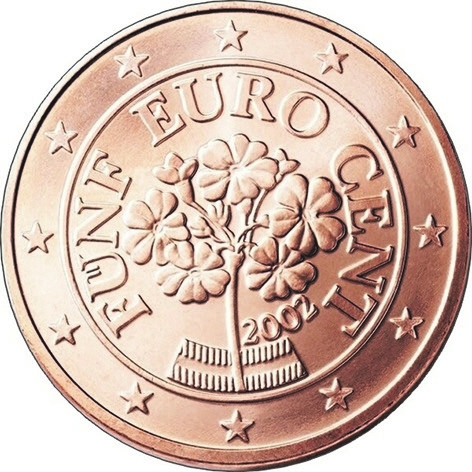 Rice. 9. Austria, 5 cents
2 cents - Edelweiss flower (Fig. 10). The name of the flower is from it. Edelweiß: Edel - noble, Weiß is white.
1 Center - Gensian (bitterness) - a decorative plant with blue flowers (Fig. 11).
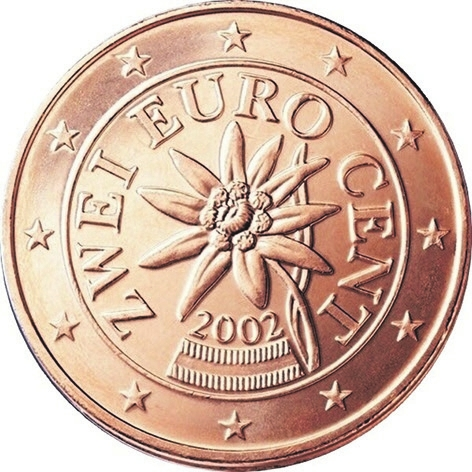 Rice. 10. Austria, 2 cents
 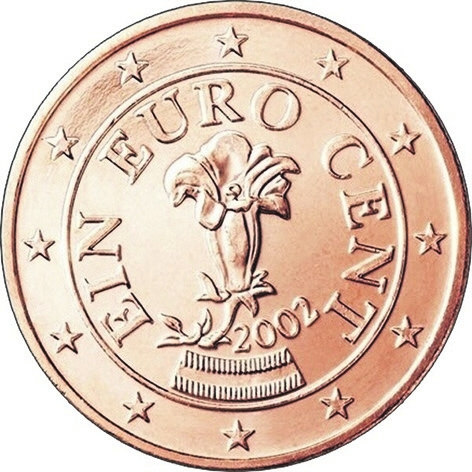 Rice. 11. Austria, 1 Center
On the smallest Austrian coins, unlike coins of other countries (except for the Greek), the face value is indicated in the country's language - German (Ein, Zwei, Fünf).
Belgium. On all Belgian coins that appeared initially in circulation, the profile of King Albert II was depicted (Fig. 12). Designer - Jan Alphonse Coistermans. There are coins variants that differ in the position of the crown and letters “A” to the right of the profile, as well as icons around the date and the position of the date itself. In July 2013, Albert abdicated the throne, and his son Philip became the king of Belgium, which was reflected on Belgian coins (Fig. 13).
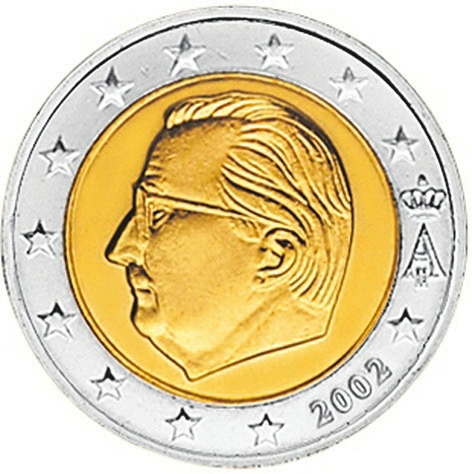 Rice. 12. Belgium, 2 euros, 2002
 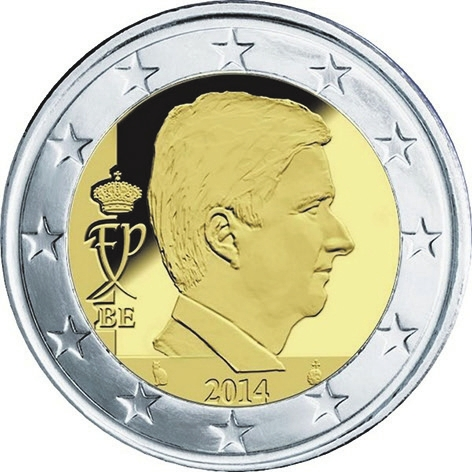 Rice. 13. Belgium, new king on a coin
Germany . On coins of 2 and 1 euros - an eagle, a traditional symbol of German sovereignty (Fig. 14).
50, 20 and 10 cents - Brandenburg gates, a symbol of the separation of post -war Germany and its subsequent reunion (Fig. 15). The author of the drawing Rainhard Heinsdorf wanted to emphasize that the open gate symbolize the unification of Germany with the rest of Europe.
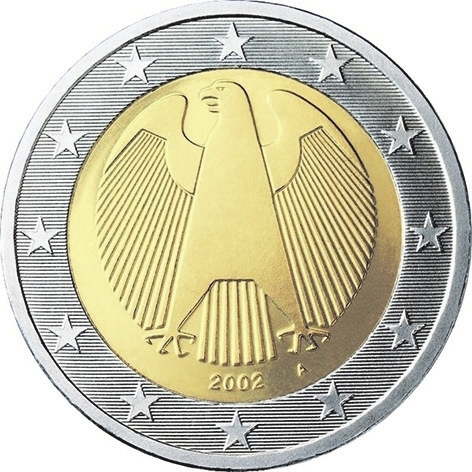 Rice. 14. Germany, 2 euros
 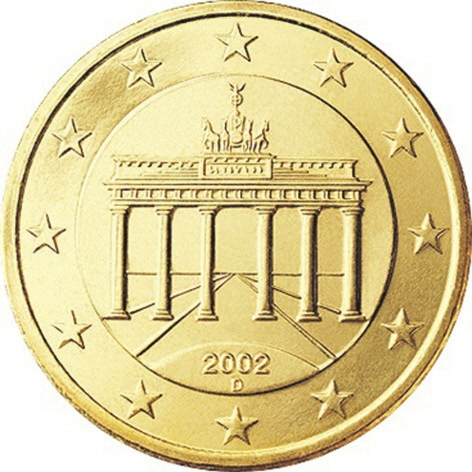 Rice. 15. Germany, 50 cents
5, 2, 1 Center - a twig of an oak, reminding the Germans of a similar drawing on Pfennigs who came out of circulation (Fig. 16). Oak leaves are traditionally a symbol of power.
A distinctive feature of German coins is the presence of additional five options for each face value with this release date, which is associated with the minting of coins in different coin yards of Germany. The monetary yard is historically designated in one letter: a - Berlin, D - Munich, F - Karlsrue, G - Stuttgart, J - Hamburg.
Ilya Lenson,
cand. chem. sciences, associate professor of the Higher Chemical College of RAS
(To be continued)