
Translated material
Jacques Runciere. Great conversation
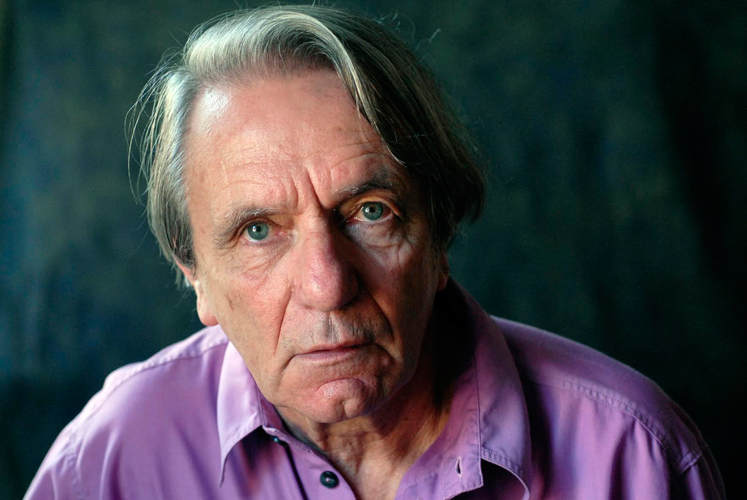
The conversation took place in May of this year as part of the “Kyiv International”-an international forum organized by the Center for Visual Culture and the heritage of 1968 dedicated to this spring.
-In connection with the 50th anniversary of the revolutionary events of 1968, you gave a lecture in which you consider different ways of their interpretation. More recently, the French president Nicolas Sarkozi put forward the slogan "It is necessary to eliminate the legacy of the 68th once and for all." The philosophers Luke Ferry and Alain Renault wrote a treatise “Thought of the 68th”, condemning the thinkers of this time as very dangerous. Where did this rejection come from?
-Initially, the events of the 68th were perceived from a Marxist point of view: students and workers performed, and the workers were the main driving force. This was due to the contradictions of capitalism and the power of the working class, which should become the organizer of the new world. The 68th was considered in this perspective.
But there was a completely different movement that gave rise to their own dynamics. There were people who usually never gathered together, and they began to create something new in universities.
Thus, the 68th had double logic: the old logic from the theory of the class struggle, and on the other hand, something else-the logic of the gap, so to speak, at the scene.
People no longer obeyed, as expected from them, they no longer behaved on the streets as it was appropriate to behave on the streets, they rejected the borders of the university, opened its doors for everyone, began to build barricades on the streets, like in the 19th century. Another form of the emancipative struggle arose, directly attacking the form of time and space of the dominant system. For the authorities there was a “normal” world order, in which students, of course, can boil, workers can arrange a strike and so on. But suddenly something completely different: in a few weeks, all hierarchical legitimacy, all forms of thought propagating the usual world - all came into disorder ... This did not fit into the traditional framework, complete ambiguity arose. That is why this event scared people in power so much. It showed that the old order could fall apart in just a few weeks.
In political science, the idea of complete contingent of the established order is fundamental. Meanwhile, the dominant thought is convinced that the existing order is necessary. And then suddenly there is a complete shock of the foundations. So, the 68th remains the idea of a certain threat, that anything can happen.
- Therefore, the dominant ideology began to criticize and interpret those events. But you also criticize the so-called sociological way of interpretation of May-68, a certain “policy”, which, in your opinion, is behind it.
- It must be recalled that sociology, before becoming a discipline, was an interpretation of modern society as a kind of revelry of individualism that destroys genuine bonds of the community. In fact, the socialist, left -wing thought in a certain sense picked up this sociological interpretation of the world, arguing that modern society is an individual’s society who are no longer able to integrate into collective structures. And all problems, all misfortunes, all revolutions come from this isolation of individuals from the community. Consequently, social riots occur due to a fundamental flaw-a lack of connections within the community.
In essence, from the very beginning, sociology, together with Auguste Comte in France, was indeed a project of complete social reorganization: it sought to think of society as a kind of body in which people are no longer isolated from each other, but united again. It was a peculiar religion of society. How utopia all this disappeared, but remains very strong, because sociology is to a certain extent constituted on this model.
A few years before the 68th, we are observing the celebration of sociology in France. There were official sociology (people such as Aron) and left sociology (like Bourdieu), but they all shared the idea that there was a social system, which was built slowly, but thoroughly, with their own mediations and needs. At the same time, there are people who relate to the minority sectors; They think something to themselves, imagine something, but, in general, speaking in Marxist terms, they belong to the “petty bourgeoisie”, who was divorced from their roots. They imagine that they can change the world, but sociology comes to remind, in fact, who they are - nothing more than people with privileges. And culture, in the end, is based on the exclusion of those who are not integrated into society. And for such a vision, the 68th was a real shock.
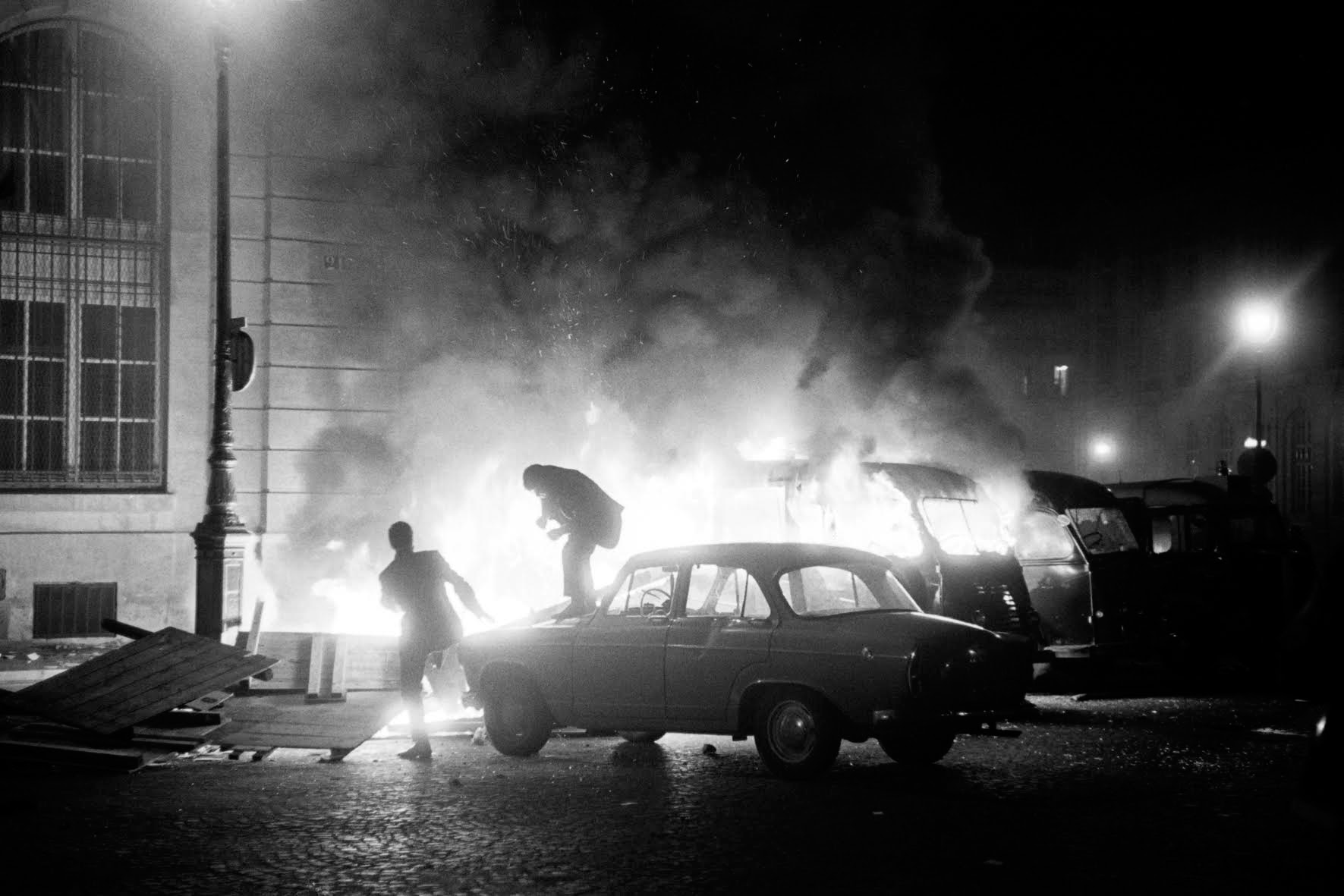 © AFP / East News June 1968, Paris
“You quite critically evaluate the sociology of Pierre Burdieu.” Given the great popularity of Bourdieo, could you explain the essence of your discrepancies?
- The work of Bourdieu and his students always came down to show the differences between the position of individuals and what they imagine themselves: for example, students consider themselves revolutionaries, argue that they defend art, but in fact these are representatives of privileged layers that simply allocate their privileges; People who are defending art and aesthetics actually protect and reproduce social “difference”. Such an interpretation refers any form of sudden occurrence to its origins - inconspicuous social determinations.
Bourdieo tried to prove that all the people who wished to rebel are deceived regarding the true causes of their uprising, they have illusions about the results of their rebellion. Actually, Bourdieus consistently proved that a social look was necessary.
In a certain sense, the “heirs” (1964) Bourdieu is a book that determines that the 68th cannot be that a student riot is nothing more than a joke, it has no weight, no influence, no social power. But then an event occurs - the uprising of students, when at first minor slogans produce a perfect shock.
And what does sociology do next? Sociology after the 68th counterattacks. In several stages. The first counterattack is carried out by Aron, who writes the “elusive revolution” (1968), claiming that all this is a youth carnival: after all, young people represent a modern society in which there are not enough mediation structures between the government and the population, so that the 68th has turned into a kind of illusory compensation for this shortage. Further, already at the end of “Decades of Goshism”, in 1979, a little forgotten by the sociologist-economist Furasty, who was quite important, was now a little forgotten: after all, he introduced the concept of “thirty glorious years”. He argued that this generation, people who considered themselves revolutionaries, were just small bourgeois, nourished the prosperity of "thirty glorious years."
Then the students of Bourdieu come-for example, Boltansky and Kyapello, who, in the New Spirit of Capitalism (1999), argue that the 68th actually approved the values of individualism, creative self-realization in society, a certain illusion of creativity and autonomy, which students spread as opposed to the values of the working class of the working class.
So, there is a kind of continuity of the sociological tradition that sets this interpretation: when something happens that shock public order, this is ultimately a product of a small minority that imagines one thing, but does something else, in fact, the opposite.
The sociological tradition was, as it seems to me, a powerful advanced weapon that brought the reaction to the focus of the left. This is in a certain sense the “left” interpretation explaining why, according to the “left”, social reasons all these movements cost nothing.
“And now, in our time, you are in dialogues with the writer and publisher Eric Azan say that we flounder in the“ liquid porridge of amazing moods ”.
- It was he who used such a characteristic.
“But you are in the book“ The Emansipated Spectator ”, analyzing the fate of social criticism in the West, come to the conclusion that, in general, the“ melancholic version of criticism ”has now reigned among the left.” What does that mean?
- I only stated that a number of topics arose that were clearly the topics of critical, say, acutely tuned to the capitalist system: for example, criticism of the “consumption society”, “society of the performance” or the influence of capitalism and the world of goods on subjects. At one time, starting from the 50s and 60s, all these topics were somehow integrated into the worldview of the left, which claimed that all this was a product of capitalism and it should be fought. Little by little, very slowly, these ideas were widespread, but in the end there was an inversion with them, proving (a little in the style of Bourdieu and his students), why we are no longer just sacrifices of this system, but in a certain sense of its accomplices.
For Gi Deborah, the “Society of the performance” meant not just what people watched, stupid, TV. The Society of the performance is a society in which the universal power of people is lost due to their passivity. This did not mean that everyone became passive idiots, no; This meant that our power was taken away and we must fight to return it.
Little by the critic of the “Society of the performance” turned into such a peculiar motive like the following: all are obsessed, some-those who are deeper-watch TV, others, more smart, surfy in their smartphones and tablets, so that everyone became victims of images, everyone takes part in this; People sitting on Facebook contribute to the existence of capitalism, users who write posts on social networks help the work of the system, therefore, all of them are accomplices. Everything turned upside down, these critical ideas no longer expose the capitalist system - they condemn individuals, saying: it is you for all responsible.
- That is, as they often like to say, "you want to change the world - start with yourself." That was what social criticism has become?
- No, social criticism has turned into evidence that nothing can be changed. Under the guise of awakening in the people of their consciousness, guilt awakens in them. She not only tells people “you don’t know or understand something”, but “you are to blame for everything”.
In a certain sense, we see that the melancholy stage of social criticism is when people say: we are all to blame, we all use the Internet, we are all on Facebook or on other platforms ...
-This is, in general, the very program that you call metapolitics in your work “Disagreement: Politics and Philosophy”?
- I call metapolitics such an approach, according to which there is, as it were, an inescapable need for a social order that imposes itself for individuals, and this need is established at the same time by those who intend to criticize it. A similar view was established thanks to all these studies such as the “new spirit of capitalism”, who claim that these are leftists, revolutionaries, people who wanted to fight against the bourgeois system, in fact created values that allowed capitalism to be updated. But this is complete nonsense. These theses have no real justification. They support people's guilt.
- Is this feeling of guilt also with the complicity of people in electoral rituals? Like, we ourselves chose these leaders. You once defined modern representative democracy as a “compromise between democratic and oligarchic principles”. It seems to me that this is extremely fair in relation to the Ukrainian situation, where oligarchs have real power, but at the same time they declare that we have democracy. Why are you so stubbornly hold on to the concept of democracy?
- Democracy is not a form of state. Any state form, on the contrary, is an oligarchic rule. Our governments are actually oligarchic. The power of all is intercepted by a small minority that reproduces itself. This system reduces a democratic effect only to the electoral process. Democracy is not the power of the people as a "population." In fact, democracy means the power of that people who are an equal people. So, this is not an ethnic people.
I always prove that simply the "people" do not exist. In other words, the people are not something like the existing basis on which institutions develop. The people are what is created by a certain type of institutions and a certain type of functioning. So, the electoral system forms a representative system, creates its own “people”. And this people fundamentally is the "people" of the oligarchy, which calls all this democracy.
It is necessary to separate the idea of democracy from an oligarchic representative system, but you do not need to do this in a traditional Marxist way, arguing that democracy is only an illusion that hides the power of the oligarchy.
For me, democracy is not the name of the political, institutional regime. First of all, this is the name of the principle, that is, the forces inherent in equality. Democracy is the name of absolutely “abnormal” power - the power of those who do not have power, authority to exercise it, but at the same time does not want to obey it. Democracy means the power of equals as equals.
- Yes, you are stubbornly hold on the concepts of equality. This, in fact, is your main philosophical addiction. But there is a paradox. For you, the figure of the "unknown teacher" Joseph Zhakoto , who professes the equality of minds, has become a determining, in a sense, the reference point for your philosophy. But a little puzzles that for Joseph Zhakoto equality is to a certain extent asocial. Later you are trying to justify the equality policy in your “disagreement”, but the paradox remains ...
- Indeed, I am interested in this political paradox. Jacoto says: "You can always emancipate individuals, but you can never emancipate society." It is impossible, because the very logic of society is inegalitarian, it is the logic of the distribution of places, functions, identities. He brings this paradox to the logical ending, saying that it is possible to emancipate individuals from society, but society itself cannot be emancipation itself.
In equality there is a kind of radicality that cannot be translated into forms and systems of social organization. After all, inequality is inscribed in the very structure of society. But at the same time there are people who are fighting for equality in this society. I am trying to keep this paradox, not to brush off it. That is, I am trying to construct equality in the form of a policy, calling myself "democracy"; The democratic principle is always a kind of transgression of certain impossibility.
Equality as the principle of a social organization is something contradictory, and at the same time, I would say that it is the contradictions that create real dynamics, the form of action. I am just interested in the fact that this contradiction exists within the very idea of emancipation, but it is effective, it is not an empty phrase.
We see that this is often the subject of sharp clashes. Egalitarian movements are either intercepted, destroyed by the new oligarchy, or do not reach the goal. I think this paradox needs to be kept. That is, emancipation wishes something impossible and at the same time creates effective transformations in the methods of joint being.
- However, equality for you is no utopia, as for many of its critics ...
- For me, equality is not utopia to the extent that utopia is understood as a distant goal. Equality is, first of all, the principle that we apply here and now. When we say, when we act politically, when we are busy with art. That is, we do this with the thought that it can comprehend and understand anyone, we turn to anyone. Equality is constantly tested and tested in practice. We constantly state that people very well understand things that, it would seem, should not understand.
Say, during the 1995 strike, when the French went against the pension reform system, the government claimed that they simply did not understand that they should explain everything; But people went out just because they understood everything very well. Therefore, equality is a reference point: people decide whether to act in accordance with this equality or in accordance with inequality.
Every time I give interviews to “real journalists”, they always consider themselves representatives of the people who “does not understand”. They are repelled from inequality. They begin with the words: "Attention, this is a big audience, you do not need to use complex words - people will not understand you." But people understand. It is important for me that I turn to equal. Institutional journalists write, think, act as if they turn to unequal. Actually, equality is what is used, verified. This is a way to act, to do. And inequality too.
- Why, then, philosophers often feel fear of the idea of equality? Perhaps this is somehow connected with the tradition of “fear of masses”?
- Oh, this is a big topic of the 19th century. Тогда как раз так называемая интеллектуальная элита вдруг начала чувствовать себя уязвимой из-за невероятного всплеска идей, знаний практически во всех сферах. However, nothing new. В определенном смысле любая господствующая идеология всегда убеждена, что мир идей, мир знания должен быть зарезервирован за небольшой группой. И если кто-нибудь будет владеть знаниями, это приведет к катастрофе. Поэтому тема «страха перед массами» сформулирована лицемерно. Люди говорят: «Ох, массы — это страшно, ведь они насаждают грубость, невежество». Но это неправда. Элиты почувствовали этот страх в модерную эпоху, когда фактически массы индивидов начали самостоятельно мыслить, понимать, осваивать идеи, образы и т.д. Таким образом, у этой темы «страха перед массами» есть двойное дно. Здесь скрыта логика неравенства. Есть люди, которые думают, что они умны, потому что другие — дураки, поэтому им страшна мысль, что ум есть у каждого. Здесь опять же равенство и неравенство — это не далекая цель, а реальный принцип, который определяет, как мы ведем себя ежедневно. Кроме того, есть много типов народа, есть много типов масс. Равенство и неравенство создают ту или иную массу.
На чем основываются все так называемые популистские дискурсы? На идее обращения к определенному «народу», на уверении, что он превосходит другие народы. Они убеждают эту массу людей в том, что они принадлежат к «настоящему» народу, людям, которые понимают, разделяют национальные ценности, а не к тем, которые приезжают неизвестно откуда. Таким образом приходят к выводу, что равенство — это опасно, что это всегда про «массы». Вопрос: о каком типе масс идет речь? Есть же и массы, возникающие из форм неравенства...
— В «Ненависти к демократии» вы пишете, что слово «популизм» превратилось сегодня в оскорбительное в высшей степени, удобную брань. Но этот термин имел и положительное значение: были русские и украинские народники, крестьянские и рабочие движения в Америке, боровшиеся против банков, землевладельцев и железнодорожных компаний. Формировались близкие к популизму литературные течения. Как вы объясняете изменения по отношению к этому понятию?
— В российском революционном движении это слово быстро приобрело пренебрежительный оттенок. Вспомним полемику с Лениным. Довольно рано «народничество» стало означать сентиментальную, немного недалекую привязанность, проявление доброй воли, способ хождения в народ и заговаривания с ним в отсутствие представления, каков он на самом деле, осознания, какие противоречия его разъедают. В марксистской традиции, которая была доминирующей для французских левых, слово «популизм» быстро приобрело отрицательное значение. Новость в том, что эта негативная окраска теперь служит для особых целей — создавать амальгаму.
Правые позаимствовали для себя марксистское осуждение привязанности к ушедшему прошлому, чтобы обратить его против завоеваний рабочего движения. Это суть новой идеологии, широко разделяемой и левыми начиная с 1980-х: говорить, что есть разумный путь (которым следуют наши чиновники и европейские институты), а есть пустые мечтания о прошлом, реакционные и популистские, которые без разбора питают и «Национальный фронт», и крайних левых. Любое движение, стремящееся придать какую-то консистенцию идее «народа», сегодня считается популистским. И эта амальгама удобна для всех: и для старых марксистов, мечтающих об организованном пролетариате, и для правых на содержании у финансовых групп, и для левых на службе у олигархии. Термин «популизм» позволяет поместить в один лагерь всех, кто пусть очень по-разному, но всем им противостоит. Впрочем, вопреки этому среди некоторых радикальных левых существует желание придать популизму положительное значение, например, на основе теорий Лаклау (аргентинский политолог, автор книги «Популистский разум». — Ред. )...
— Но какие это имеет последствия в действительности?
— На практике это приводит к тому, что автономные движения ставятся на службу восстановленному парламентаризму, а также традиции лидера, воплощающего чаяния народа: Варгас в Бразилии, Перон в Аргентине, Чавес в Венесуэле... Такая переоценка представительства стремится совместить парламентскую логику с вождем — любимцем народа.
— Еще вы отметили опасные формы популизма, а точнее, расизма, создаваемого в самых верхах, — так называемый холодный расизм по отношению к мигрантам, иностранцам…
— Всегда было распространено представление о расизме и ксенофобии как характеристике низшей, невежественной народной массы, народа «из низов». Этот образ существует до сих пор. Но помимо этого начал формироваться другой расизм, пришедший со стороны верхушки государства, из интеллектуальной среды так называемых французских республиканцев; я назвал его «холодным». Он формировался вокруг вопроса о мигрантах: во Франции создали такую фигуру «мигранта», которая в реальности не соответствовала ничему. Целая вереница обозначений, образов, административных мер сконструировала фигуру «чужака», «нежелательного лица», так как нежелательная особа, нежелание — это не то, что у нас внутри, а то, что конструируется законом, репрезентацией, стилем, образом, которые часто спускаются сверху. Была создана такая фикция, как «порог толерантности», но она не имеет никакого социологического основания — это чистый фантазм. Но наши правительства запустили его в действие.
Во Франции крайне правые издавна были электоральной силой, но действовало очень мало ультраправой «милиции» (здесь Рансьер намекает на исторические события: la Milice — милиция (полиция во Франции в период оккупации 1940—1944 гг.). — Ред. ), да и то они больше набрасывались на левых, чем на мигрантов. Тогда как официальное конструирование идеи «порога толерантности» основывается на аргументе: если мы хотим помешать крайне правым распространяться, надо внедрять расистские меры. По-моему, такой подход абсолютно ошибочен. Хорошо видно, как правительства, правые политические партии и интеллектуалы, которые считаются добрыми «республиканцами», под предлогом борьбы против ультраправых на самом деле им поспособствовали. Чем больше правили правые партии, надеясь перехватить себе электорат крайне правых, тем больше они освобождали для тех возможностей для действия.
Недавно в Монпелье во время студенческой забастовки в университет ворвался отряд неонацистов, чтобы разогнать студентов на глазах у ректора, некоторые преподаватели университета сами были ультраправыми. Это что-то новое. Мы наблюдаем определенную динамику насильственных акций, в которых провластные партии, партии, называющие себя ответственными, несут за это серьезную ответственность.
«Расизм сверху», стратегия верхов, облегчил акции откровенно неонацистских, откровенно расистских, откровенно насильственных групп.
Раньше люди просто голосовали за определенные партии такого типа, и на этом все. Теперь же видим, что появляются настоящие парамилитарные ультраправые группы, которые развиваются практически повсеместно и которым облегчили активность благодаря этой форме содействия свыше.
— Это приобрело панъевропейский и глобальный характер: процессы подобного рода мы наблюдаем и в путинской России, и в орбановской Венгрии, и в трамповской Америке... В вашей философии вы применяете термин «полиция» для обозначения такого типа политики. Не является ли это новым способом ведения войны?
— Это не совсем война. Проблема в том, что в наше время существует целый ряд форм полицейской активности, одновременно отвергающей саму идею войны. Возьмем, скажем, вопросы безопасности. Это сейчас ключевая тема, но никто, на самом деле, не знает, что такое «безопасность». Никто не может точно ответить, к чему она побуждает, к чему обязывает. Она запутывает соотношение между полицейскими операциями и войной.
Когда я был молод, нам говорили о войне в Алжире: «Мы там занимаемся пацификацией, а не войной». Теперь это стало общей формулой. В мире повсеместно происходят насильственные акты, но нам говорят: «Нет, это не война, а необходимые меры для безопасности. Если мы хотим избежать войны, нужно прибегать к войне».
— В любом случае это очень сильно сказывается на гражданской активности. Сейчас во Франции массово бастуют различные секторы общественной инфраструктуры, в частности, железнодорожные рабочие. Вы публично поддержали забастовку парижских железнодорожников. Не остается ли актуальной и в наши дни старая концепция классовой борьбы?
— Дело в том, что за простым образом борьбы между противоположными силами на самом деле стоит борьба между различными мирами. Коротко говоря, железнодорожники против правительства или рабочие против капиталистов — это мир равенства против мира неравенства.
У нас был исторический период, когда общественная инфраструктура функционировала в стране как коллективная собственность, она не подчинялась капиталистическим мотивам предпринимательства и прибыли. Все так называемые неолиберальные идеологии стремятся разрушить именно это. Неолиберализм — это капитализм, доведенный до предела. Все формы жизни должны подчиняться логике выгоды.
За тем фактом, что люди пытаются отстоять свое положение, свой статус, а правительство хочет его отменить, стоит идея, что этот статус принадлежит миру, в котором каждый может позволить себе передвигаться на поезде. Во времена моего детства вы покупали билет, и цена на него всегда была неизменной. Теперь она варьируется и недоступна в одинаковой мере для всех. Существовал мир, в котором транспорт, образование, здравоохранение и т.д. предлагались всем практически одинаково, и богатым, и бедным. Теперь пытаются сконструировать мир, в котором есть медицина для богатых и медицина для бедных, транспорт для богатых и транспорт для бедных, средства коммуникации для богатых и средства коммуникации для бедных. С учебными заведениями то же самое: повсеместно возникают очень дорогие частные школы «не для всех». Так что классовая борьба существует по сей день, но теперь главным образом ее ведет сам капитал. Инициатива в классовой борьбе перешла в руки капитала.
— Тогда Эмманюэль Макрон, как говорит философ Мишель Онфре, — это «надувная кукла капитала»?
— Да, полностью. Он олицетворяет неолиберальную логику во всей ее чистоте. Макрон отвечает за тот момент, когда во Франции реализуется тэтчеровская или рейгановская программа. Пока у власти чередовались правые, стремящиеся к реваншу, и расплывчатые левые, обращения Франции к тэтчеризму произойти не могло. Макрон же воплощает именно этот момент в истории. Он больше не представляет ни старых правых, мечтающих покончить с наследием 68-го, ни левых, которые туманно оправдываются, что они якобы продолжают идеи 68-го.
— В условиях доминирования неолиберализма мы наблюдаем упадок роли национального государства. Политические решения больше не принимаются местными правительствами, повсеместно преобладает транснациональная логика. Некоторым государствам (в частности, украинскому) диктуют свои условия наднациональные финансовые структуры. Даже левые правительства — например, в Греции — разводят руками, что они, мол, ничего не могут поделать против внешнего диктата. Каким образом народ в качестве политического субъекта может в этих обстоятельствах противодействовать?
— Я не согласен с тем, что государства-нации пришли в упадок, ведь международные институции в то же время активно взаимодействуют с этими государствами. Когда наши правительства утверждают, что они якобы вынуждены что-то предпринимать из-за давления МВФ, Всемирного банка или ЕС, это манипуляция, направленная на то, чтобы обезвредить сопротивление в собственной стране. Поэтому, я думаю, не следует верить правительствам, когда они уверяют: «Мы ничего не можем сделать», — потому что они могут немало.
Если взглянуть на то, что происходит в Европе, то мы увидим, что многие страны фактически не подчиняются правилам ЕС. Поэтому, мне кажется, есть определенная опасность в идее, будто власть не там, где мы живем, а в каких-то удаленных местах, так что и действовать должно в другом месте. Согласно этой логике, например, происходили протесты в Сиэтле или в Генуе. Появилось убеждение, что теперь ничего нельзя сделать в местах, где мы находимся. Думаю, это неправда, причем она обладает деморализующим эффектом.
Когда вы действуете у себя в стране, это имеет отношение и к вашему правительству, и к тому, что местное правительство является частью глобального. Мой тезис в том, что политика всегда так или иначе «локальна». Люди собираются в конкретном месте, чтобы решить конкретный конфликтный вопрос. Когда вы останавливаетесь на том, что политика должна быть международной, глобальной, то это в определенной мере конец политики. Конечно, вы можете устраивать большие протесты во время саммитов той или иной международной организации, но, думаю, это не дает весомых результатов. Куда важнее не наследовать какому-то международному народному движению, но реально усиливать местные движения и, по возможности, создавать между ними альянсы. Что действительно имело смысл в недавних движениях по захвату площадей, скверов и парков — так это их акцент на том, что люди собирались в конкретных местах, чтобы решить конкретную задачу, направленную против конкретного врага. Вот что, несмотря на все ограничения, важно: следует начинать с того, что что-то происходит здесь, вы реагируете здесь, создавая при этом особые время и пространство.