
Translated material
The filmmakers are returning
Samsung, Huawei, ZTE (and maybe Apple!) Work on models with folding screens
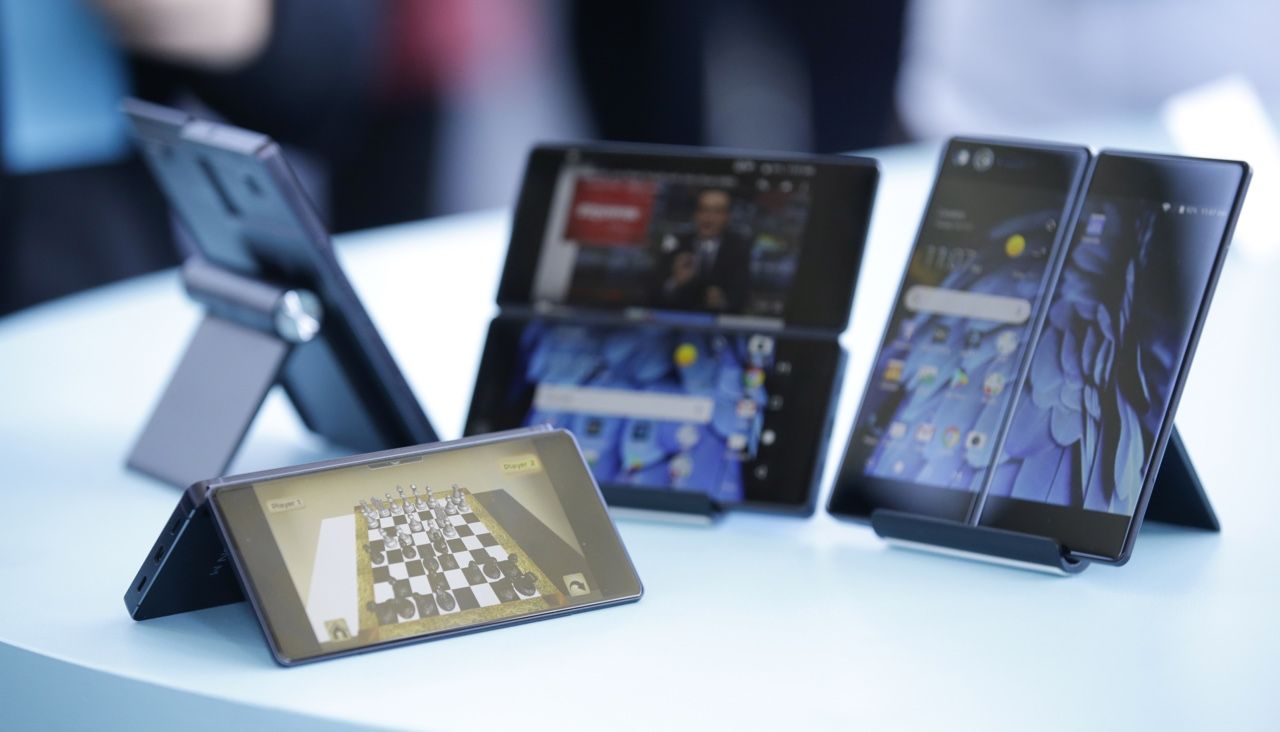
Three and a half years ago, a test was published on Medusa, in which it was proposed to guess the phone model in its appearance (it was very difficult to do it). Since then, the situation has become worse: manufacturers have been trying to stretch the screen over the entire front surface of the phone, hiding the buttons, the camera and other details that at least somehow distinguished one model from another. It seems that we did not have long to miss: the largest companies are already actively working on a new - or well -forgotten old - shape. It's about the clashes.
In the fall of 2017, ZTE introduced the Axon M folding phone. Its main feature is two screens connected as a book: the user can fold them (then one screen is active, and the Axon M is no different from the usual phone), or it can decompose the image in half.
The device from ZTE is imperfect - what are the frames along the edges of the screens that break the image in open mode - but this is a clear symbol of what other companies strive for: a phone that is both compact and equipped with a huge screen for reading and watching a video.
One of the leaders in the field of folding phones is Samsung Corporation. Back in 2011, she talked about the bended amoled screens (these are used in phones, computer monitors and TVs) and fantasized about transparent folding mobile devices of the future. Two years later, the company released the Galaxy Round-the first phone with a curved screen, a step towards the filmmakers.
In 2015, rumors appeared that Samsung plans to release a folding phone. The press in the press called the Project Valley, and in 2017 they “renamed” the Galaxy X. The estimated date of the device was also constantly changing, but Samsung several times officially promised to release a folding phone.
Analysts expect Galaxy X (or how Samsung will call it) will be presented in early 2019, it will have a 4.5 -inch diagonal screen and 7.3 inches in decomposed. The estimated phone price is about 1850 dollars (117 thousand rubles).
In June 2018, photographs of a device appeared on Twitter, which was probably thereby Project Valley - the abolished predecessor of the Galaxy X. The phone in the pictures is similar to the ZTE Axon M: these are two “ordinary” screens connected by loops. Apparently, the Galaxy X Samsung still uses a single folding screen.
In 2017, the company filed a patent for the “artificial muscle”, which can be used on a bend of such a screen to protect the phone components from damage.
Motorola also works on technology for folding phones: in mid -June 2018, the company received a patent for a folding method that can form at the fold site.
The idea of Motorola is this: in the place of the fold there is a temperature sensor and a heating element. When the phone lies in an unfolded form and with the screen off, this element “warms up” the bend and thus straightens the deformation. And although Motorola herself did not declare plans to produce folding phones, in 2017, her maternal company Lenovo showed the concept of a tablet, which is formed in half.
Samsung wants to become the first manufacturer in the world to produce a real folding phone on the market, the media write. But these plans are threatened: Huawei, according to rumors , will release its model in November 2018. It is assumed that the Chinese company uses folding screens from LG on the phone, and theoretically this will allow the device to bend in both directions.
Finally, Apple also thinks about folding phones. Back in 2014, the corporation applied for a patent describing the method of creating such devices (the application was approved in 2016). And although obtaining a patent does not always mean that the company is working on the appropriate product, Bank of America Merrill Lynch reported in March 2018 reported that Apple plans to release a folding phone in 2020. The bank refers to information from suppliers of parts from Asia - Apple allegedly already began negotiations with them.