
Translated material
Money, theft, sausage: why are shuttles ashamed of their past
This year, domestic shuttles could celebrate the 30th anniversary, but will not celebrate. By the mid-90s, the trade in imported consumer consumption gave work to ten million Russians and amounted to a third of imports in the country. Today, shuttles are no longer needed, they all retired and are a little ashamed of their past. Samizdat “Batenka, you are a transformer”, with the support of the delivery service from the USA and Europe, “ Bandera ” talked with former shuttles about the first shopping tours to China, robberies, murders that did not fly aircraft overloaded with goods and a thousand-class margin.
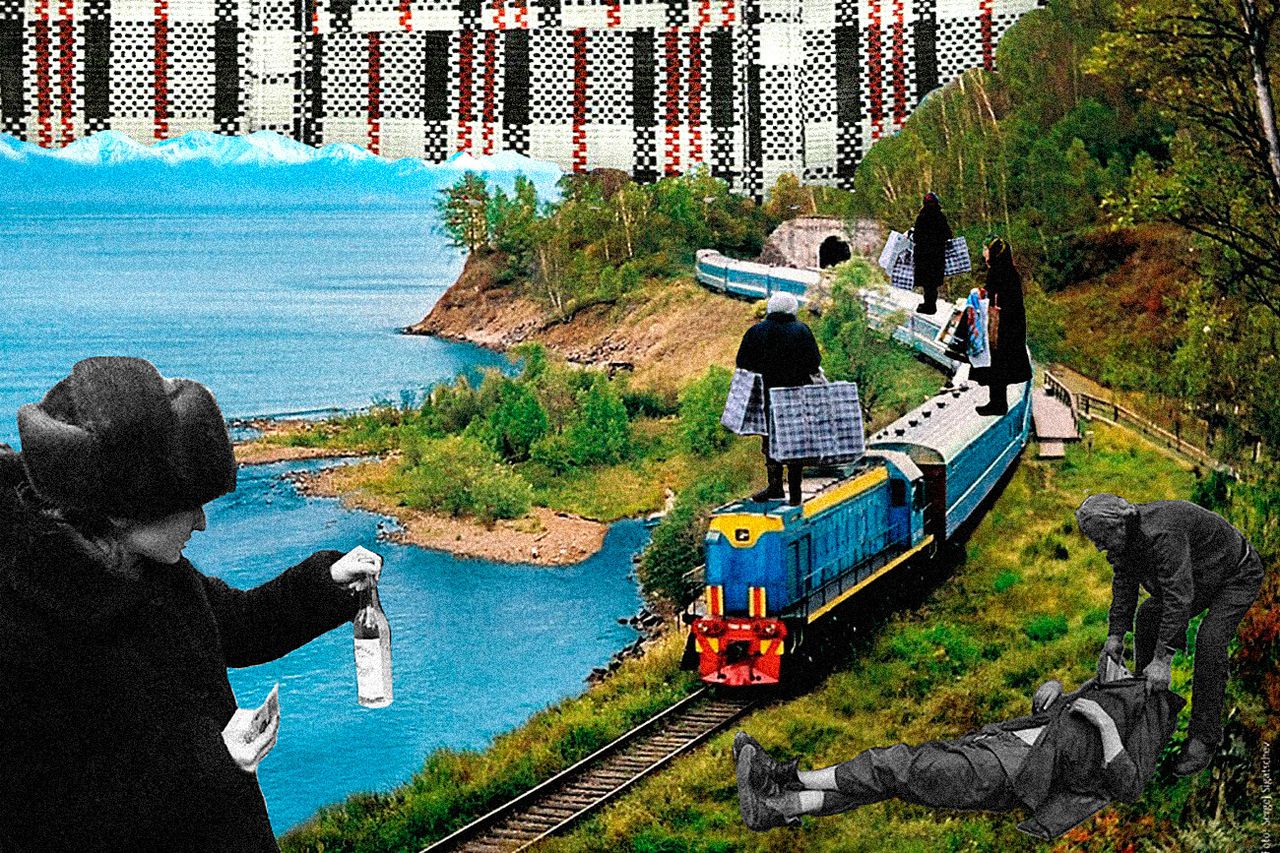
The main tool of the shuttle traveling by rail is the pliers. They dismantled shelves, hooks, and hangers for towels in the compartment. All space had to be occupied with bags, laying them under the shelves, on the shelves, on the floor. Baula closed over the upper shelves, forming a vault. There was only a rectangular cave at the level of the table to sleep in it in turn. Allegedly, it is physically impossible to load a dozen bags in the doll, so the population of each compartment was divided into pairs: two served bags from the platform, two laid them inside. The mutual assistance flourished on the road.
That on Chinese trains crawling Potranissibu, that on the Turkish, crossing Ukraine, the carriage life was the same. In the fall of 1992, my father returned from the Beijing business trip on such a train. Russian shuttles and their Chinese colleagues in the composition were approximately equally equally. The Chinese differed from the Russians only in that they tried to sell more along the road and sold their clothes at all stops right through the windows.
At the Winter station, where the train got up for several minutes, it was raiding the local punks. A dozen and a half young people beat the wagons of wagons with brake pads and grabbed a bag out of a broken window. The only policeman ran and fell into the air along the platform. He could not do anything.
Now almost everyone has already forgotten this, but the first shuttles appeared in 1988. Even with the living Soviet Union, immediately after the adoption of the law on cooperation. The residents of Ukraine and Belarus were primarily involved in this, who could receive simplified border visas with Poland.
- The first thing they drove was sausage. Then cooperative cafes were opened, and they needed good products, and excellent meat was sold in Poland. Then they began to carry clothes, ”says Moskvich Andrey.
Now he is already retired, and in 1988 he worked at the Intourist. In the heyday of shuttle trading, Andrei went for goods to Turkey and China, then he was engaged in a more serious business. Now, moving away from business, he prefers to talk about everything, not calling his last name. Like most other heroes of this material.
Belarusians are daring. Recently, architect Andrei Zhilinsky and his wife, teacher Alina, admitted to one of the Belarusian Internet publications that they turned even their honeymoon on the shuttle trip: “In August 1988, we got married and went to relatives in Poland, to Kolobzheg. There were TVs then, so we took them there, and already dragged video recorders back. As a result, “rose” somewhere. ”
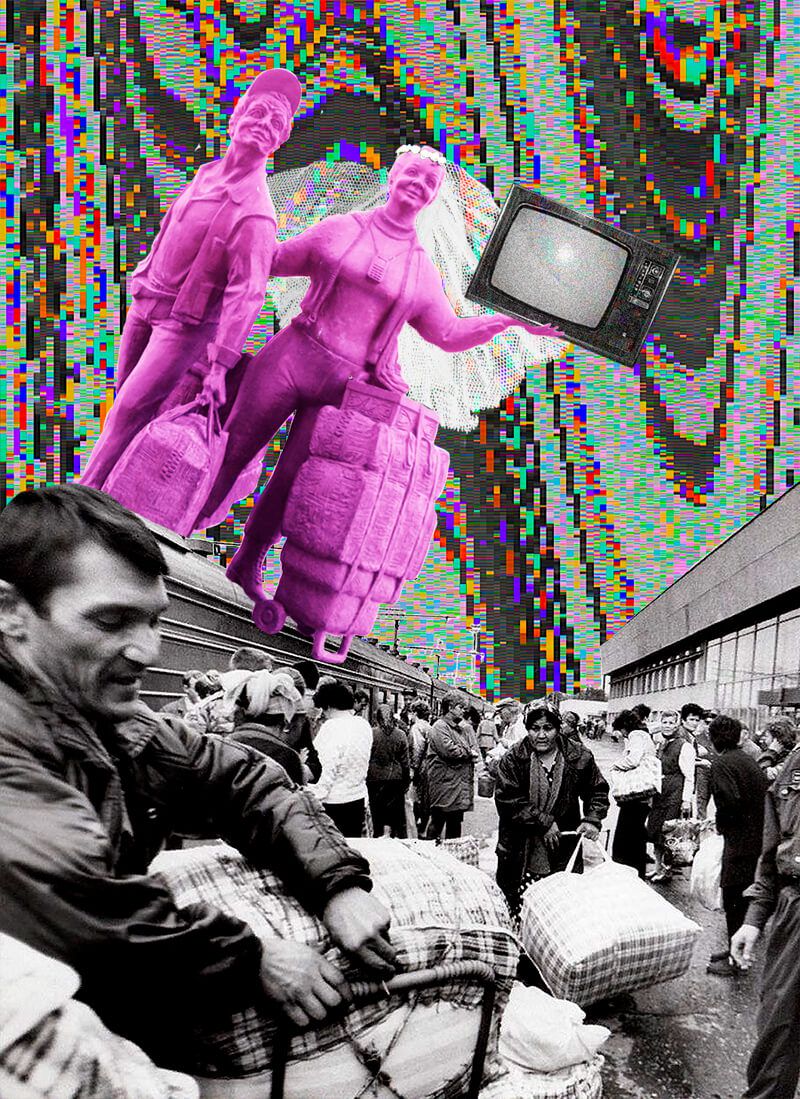
The life of Soviet shuttles was complicated by harsh restrictions on the export of currency-no more than 82 dollars per person, somewhere around 480 rubles when the dollar exchange of 6 rubles. Therefore, the merchants tried to take something with them with the demand from the Poles. Soviet cameras, jewelry went well. And at some point, the Zhilinsky felt for a real gold core-the tablets of dry alcohol. This product in Soviet Belarus was so cheap that in Poland it could be sold a thousand times more. For every trip, the couple shuttles earned $ 200-300. It was possible to live well with the whole family for three months.
By the way, in about the same mode, Belarusian shuttles traded until the mid-1990s. After gaining independence, many trading restrictions in Belarus were never canceled. The country has a card system. Therefore, shuttles took out production products to Poland: needles, toys, gum for linen, and imported food and clothes.
Similar processes occurred at the other end of the USSR. In 1988, the Chinese city of Suifenhe, 150 kilometers from Vladivostok, received the status of the "experimental district of the Border Trade of Haylunjiang."
And a delegation from Hayhe, a Chinese city on the opposite bank of the Amur, arrived in Blagoveshchensk. In the same year, the first shuttles began to run between the Soviet and Chinese shores.
In May 1991, all citizens of the USSR finally simplified travel abroad. And the next year was marked by a real shuttle boom.
Overloaded aircraft
Andrei, not without pride, recalls: “I sent the first plane with shuttles to China. Even in the fall of 1991, the idea arose that since the locals are traded across the border, then you can take Muscovites there. ”
In Vladivostok, Andrei had a familiar captain of the long -range voyage, agreed through him. Having agreed, they gave ads to Komsomolskaya Pravda and Izvestia that they send tourist groups to China. There was no misunderstanding, everyone who called on the phone knew very well what tourism it was. So the whole industry of shopping tours, which flourished all the 1990s, was born.
In early February 1992, Andrei drove the first group of thirty shuttles to China. They reached Vladivostok regularly Aeroflot.
“It was such a collapse that for the whole flight they gave only a piece of black bread in a cellophane packaging and some kind of sardinka,” recalls Andrey.
We spent the night or two in the hotel - and by train they went to Suifenha. A trip to China was organized by the Vladivostok Sputnik, the Soviet Bureau of International Youth Tourism.
“It is clear that in addition to the usual board we also brought them cash,” says Andrei.
Despite the modest distance, the composition was going on, eight hours. They returned back in the same way. The aircraft things were allowed to take a limited amount. But you could always pay extra for the advantage.
“All this continued until August 1992, when the overloaded plane could not fly up to the Vladivostok airport - at Artyom,” recalls Andrei, who himself was on board then. - It was not possible to break away from the ground, to brake too, and we drove into the arable land. After that, the commanders were strictly forbidden to take excess weight to the plane. And those who had a lot of goods sent it by train.
The classic railway route to Turkey ran through Bulgaria.
-There was some crazy number of borders. And for each of them they took a dollar per person. They were still collected at the entrance, ”says Andrei. He, too, once swept for purchases to Turkey.
The shuttles landed in the city of Rus (this, by the way, is the same Rushchuk that Kutuzov once took). From there, a bus was traveling to Istanbul through the pass through the pass.
Special offer The Banderahka online service makes purchases in the USA via the Internet convenient. He will give you the address in the United States, combine the parcels in one, carefully pack it, reduce the cost of delivery and send to Russia.
All readers of the Samizdat “ Bandera ” gives a 7 % discount on the first delivery after registration on the service.
Shame and bribes
All life in such trains took place in the corridor.
- What conversations do we conduct in this corridor! They argued about politics, about the economy, about the fate of the country. Just 1993 was recently. Someone believed that Yeltsin did everything correctly, someone condemned him, ”Andrei recalls.
The audience was intelligent. Many teachers, doctors, even one doctor physical. sciences. There were still many very young people, recent Komsomol activists. And, notes Andrei, no proletarians.
For almost everyone, it was unpleasant and forced work. In 1996, scientists from the Department of Marketing and Statistics of Syktyvkar GU Marina and Vladimir Ilyina interviewed 287 tents-tents in local markets. Only every tenth replied that he began to engage in this out of love for business. The remaining 90 percent said that they became shuttles only from need.
“We were ashamed of this: we took up trading, just to survive,” says the former merchant Olga Rogacheva.
In 1992, she was 20 years old, she only arrived in Moscow from Vladimir. The husband is a Muscovite, with a legal education, but unemployed.
- Friends boasted that they went abroad and earned well. We decided to try, ”Olga recalls. - But I was registered in Vladimir and could get a passport only there. The husband could do this in Moscow, so they decided that he would go. And I explained to him what to buy: good expensive leather jackets and slacks.
Olga's husband flew to Istanbul with a couple of comrades. Those were looking for goods cheaper, and he listened to his wife, bought dear jackets - and did not lose.
- We sold such red -haired Chinese jackets with pigtails at the Izmailovsky vernisage. They were in bulk, eight thousand rubles apiece, but no one took them. And as soon as our jackets appeared, they immediately began to grab 35 thousand each. There was a record - we sold 12 pieces per day. The jackets were called "antelope" and were really high -quality. Not varnished, but soft as if washed, ”says Olga
A shuttle could become and without traveling abroad. So, the 19-year-old poet Dima just abandoned the Literary Institute and went with his brother to Nizhnevartovsk to mount telephone stations. Seeing how northern prices are different from Moscow, the poet decided that he would no longer go north empty -handed. And as soon as a new job turned up in Nizhnevartovsk, he took a friend more with him and bought at the Mitinsky radio market players and headphones.
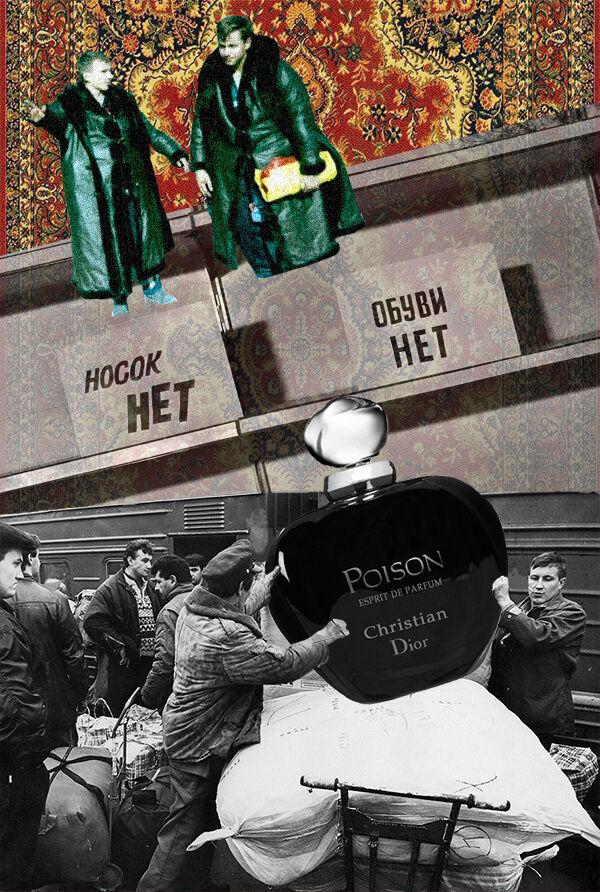
“Bavar from each product turned out to be 200-300 percent,” recalls Dima. - And before the departure, we thought that it would be nice to buy spirits. They took in the stall at the Kazan station a whole suitcase of a fake Poason. Part in our way spilled. Then we just went to the toilet and added the bottles of water.
An even more rare type for Russia is a shuttle exporter. But there were such. The master of industrial training of one of the Moscow vocational school Leonid drove cosmetics three times to Hungary.
- In Moscow, then several stores were opened, where they sold perfumes, cream and lipstick of good firms. Due to the course difference, they were cheaper than in Europe. It was possible to get there only in special coupons, but we gave bribes, ”Leonid recalls.
Then all this had to be taken to Budapest. Spirits were willingly accepted in any store. True, on a third trip to buy from Leonid no longer wanted anything - everything was littered with perfumes from Russia.
- There were many people like me. Always, when some price difference is formed on the market, some window, people are breaking there and quickly fill the niche, ”Leonid argues. - It was hard work. And I received only one hundred dollars from one trip. This is the lowest level that can be.
Hats and camels
Andrei, too, somehow tried to sell French spirits abroad. But since it was in Turkey, where there were enough of their fake spirits, no one believed in the noble origin of the goods - and the deal fell off. But in Turkey, mercury thermometers diverged well. In Russia, they cost 34 kopecks, in Turkey - two dollars.
The main obstacle to shuttles was the restriction on the export of currency. It is no longer as hard as in the USSR - $ 700 per brother. Wealthy merchants could afford “camels”. These are such assistants who dragged bags and helped to take out more money. The “camel” for this compensated for road expenses and paid $ 50 from above. The engineer in Moscow then received seven dollars, so there were enough people. Another way to combat foreign exchange restrictions is barter.
- Many of us drove Soviet hats to China. It cost every seven rubles, and the Chinese willingly changed two hats for a couple of shoes, which in Luzhniki could be sold in two thousand, ”recalls Andrei.
Even old coats could be easily saved to China.
- You go through customs, putting one on the other seven hats and three coats. The customs officer is angry, and you explain to him: I am cold. He can’t do anything, ”Andrei smiles.
But aluminum spoons and forks were not allowed to be exported - they were hidden in things. But they gave a very good fat during exchanging. In Suifenhe at the station there was a patch, fenced with ropes in the manner of a boxing ring. All the Russians who arrived were driving inside, and they could sell their forks and hats under the supervision of the police.
Upon arrival in China, shuttles were populated in a poorly hotel, and then everyone was already for himself. Nobody shared the addresses of sellers, everyone searched for them themselves and carefully hid them from colleagues. The Chinese at the very least spoke Russian.
“I thought my English would come in handy there, but no one understood him in Suifenhe,” Andrei states.
He himself was accompanying the group and earned well on this, but, seeing the difference in the price between China and Moscow, it was impossible to resist the trade. First, Andrei brought five Adidas from the Middle Kingdom. Next time - twenty. So got involved.
Shit
Andrei says that shoes were best sold: “It was terribly profitable to trade shit. We took these shoes two to two and a half dollars per pair, sold two thousand rubles here - two six hundred. And then the rate was about 100-130 rubles per dollar. It was considered a failure if you do not sell everything in one day. I built the second floor in these shit in the country. One pair of 39th size, which you still can’t sell, left it as a souvenir. Somehow the cottage was robbed and the shit was stolen. I was even sorry for them than a tape recorder - such a memory. ”
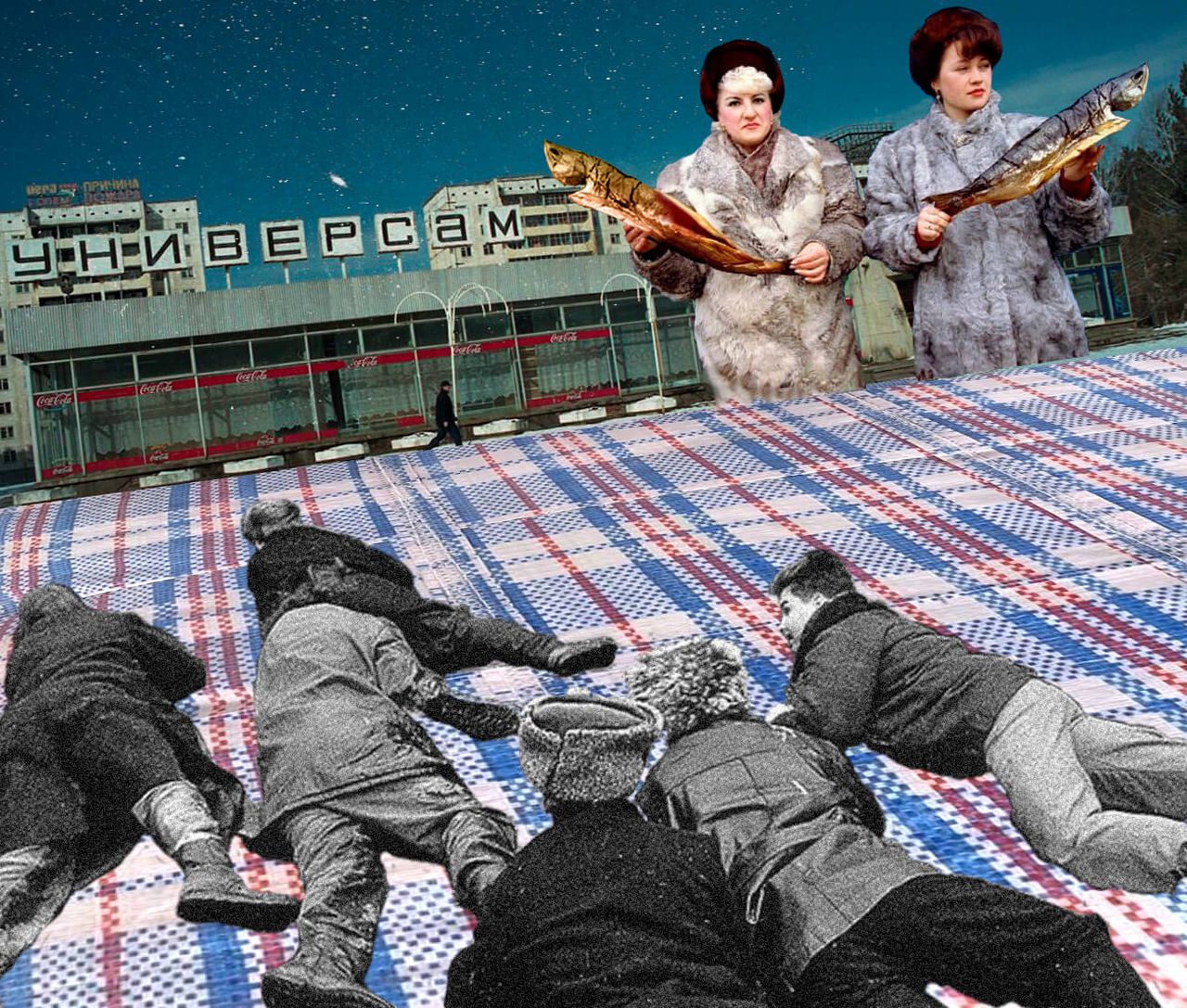
The first shuttles usually themselves sold the goods with their hands. The bags were brought home from the train or an airplane, and in the morning they went to Luzhniki. All rooms under the stands of the stadium were turned into a grand market. To get a place, it was necessary to come to eight in the morning, an hour before the opening.
- The trading place was cheap, but there was no racketeering as such. I do not remember a single case to be attacked by someone, ”recalls Andrei. - I think that the bandits had income from the organization of trips and were interested in the shuttles to feel safe. The first time I was faced with the fact that someone needs to pay, only in 1995.
But in Domodedovo a terrible theft flourished. At first, the movers opened the bags right by the ramp, and then, when the Bauls began to pack in cellophane, they stole them entirely. The shuttles who arrived from China usually were combined from three to five volunteers, who, by agreement with the commander of the aircraft, monitored the unloading of baggage.
Olga Rogacheva does not remember additional requisitions. She recalls 1992 with great warmth:
- Everything then was honest, transparent. Competitors did not try to harm each other. Just approached, watched who sells how much.
At the Izmailovsky Vernissage, they traded differently than in Luzhniki. To take a good place, it was necessary to come there at five in the morning.
“We got up to the light, stuffed the full trunk of goods and went to the Izmailovsky Park,” says Olga. - Trade went until four in the evening. Clothes were sold right from cars. The goods were larger on the hood. And for gloves they put a special stick with clothespins. The gloves in the wind are swaying, and you scream, call.
With these gloves, I had to suffer. When the familiar jacket factory in Istanbul closed, Olga’s husband decided to fly to China. And he returned from there with six bags of gloves from Angorka. Huge - two meters in height and for the most part - white. Then the husband himself could not explain why he took just such.
“Probably, the Chinese sovered him,” Olga believes. - And who needs white gloves in our country?
Then the spouses deployed dyeing production in the kitchen of their apartment. They bought domestic dyes in tablets: black and red, cooked gloves in the basins and dried on ropes.
- Such a stench stood - it is just right to put on a gas mask. I probably painted a million gloves. How long did the paint last? I have no idea, I did not wear them myself, Olga admits.
It was incorrect to trade even in Nizhnevartovsk.
“You come to the market and sell it calmly, without paying anyone, like grandmother by the metro,” recalls Dima. - We saved all days in ten days. We drove back through Tyumen, and we had one sewless player. We decided to sell it in the market, and here a racketeering appeared. Naturally, with a gun. We thought that someone brought them out and they came for our revenue. But, it turns out, they needed a player. We gave it to it.
The end of the era
It is not easy for scientists to analyze shuttle trafficking, because they imported everything uncontrollably and did not report the quantities. But there are some attempts at scientific understanding. In the scientific article “ Russian“ shutters ” - from entrepreneurs involuntarily to integration into the market economy ” such calculations are given. In 1995-1996, shuttles supplied about a third of imports from the countries of the far abroad. They imported goods by about two and a half - three billion dollars per quarter. And all this business gave the work of ten million Russians.
But by that time all the heroes of this material from shuttle trade had already left. Leonid began selling to Russian stores “Mars” and “Snickers”. “He sat on the warehouse,” he says.
Olga and her husband worked as shuttles season:
- Then I would go there and go there. But the husband was scared. Боялся, что скоро из страны перестанут выпускать. Так и закончилась наша работа челноками
Ольга всё равно всю жизнь занималась разного рода мелкой торговлей. Сейчас она продаёт похоронные принадлежности: гробы, покрывала и тапочки.
Дима вернулся в литинститут и начал спекулировать ваучерами. А Андрей занялся импортом из Гонконга. Возил шёлковую одежду и продавал магазинам в Нижнем Новгороде.
— Понятное дело, мне это никогда не нравилось, — говорит он. — Но это были большие деньги. Потом прибыли стали значительно меньше: сначала до 150 процентов, потом до пятидесяти. Появились сертификаты и ввозные пошлины. Ближе к 1998 году заниматься этим стало неинтересно.
В итоге свой трудовой стаж Андрей завершил так же, как и начинал, — в туризме.
А сама челночная торговля постепенно принимала все менее дикий характер. В той же статье «Российские „челноки“ — от предпринимателей поневоле к интеграции в рыночное хозяйств» можно прочесть, что в 1997–1998 годах товары возили уже не торговцы в сумках, а специализированные транспортные фирмы, поставляя товар прямо на склад к заказчику
«Торговые сделки включали систему скидок, товарный кредит, использовались каталоги и образцы, — читаем в статье. — Суммы товарных кредитов, выдаваемых турецкими поставщиками, в 1997–1998 годах достигали 100 тысяч долларов в рамках одной сделки. Норма прибыли по всем направлениям „челночного“ бизнеса уменьшилась в среднем в два-четыре раза, подойдя к границе 30–50 процентов».
В августе 1998 года эти кредиты сыграли с челноками злую шутку. После девальвации торговцы остались с огромными долгами в долларах. По данным учёных, «кризис привёл примерно к трёхкратному падению оборотов и значительному сокращению количества „челноков“».
Всё это имело последствия не только для России. Объёмы продаж на крупнейшем в Стамбуле рынке Лалели в 1998 году упали с 10 миллиардов долларов до трёх миллиардов. Множество турецких магазинов и фабрик, работающих на Россию, вынуждены были закрыться. По прошествии десяти лет челночная эпоха закончилась, на месте стихийных рынков выросли торговые центры, но потребность в импорте никуда не делась.
Фотографии для коллажей: Pastvu.com