
Translated material
"For naum"
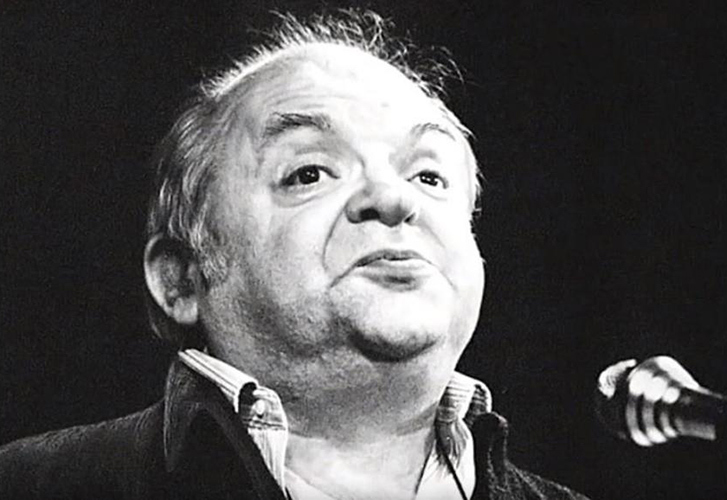
How different people see the same person to several related generations! For my sixties, Naum Korzhavin is, first of all, a “socially dangerous element”, a brave and pure dissident, it is a post-war link, “Tarusian pages”, the case of Daniel and Sinyavsky and, in fact, exile in the early 70s-unconditional respect, admiration, halo. For my silent generation, the author of the ridiculous line “What bitch woke Lenin?”, The person is undoubtedly legendary, but what is the legend - half -forgotten, and there is especially nothing to say about poems - only a handful of early and remains in the sieve. And for the next, energetic and mocking, first of all, the author of his late articles and performances, the exponent of the same odious views (mine is no longer in the know, which ones), Brodin, a convictor of Brodsky’s poetics, maybe a dissident, and now a decent rhino. And all this is true, this is all the same person who died yesterday in a small town in the hills of North Carolina.
We met in the summer of 2000 at the Russian school in Norwich. There was then such a wonderful position “native speaker”-to walk through the even lawn of a gloomy, in the summer of an empty military university who sheltered a Russian school, and if possible to start conversations with students studying the Russian language. I thought that I was simply saving my mother from the New York heat and at the same time I dipped my teenage daughter in pure Russian speech. And it turned out that I met the Korzhavins. This dashed friendship lasted mainly epistolary and exactly what is very polemic, because N.K. Constantly returned to the topic of Brodsky, as well as to different other topics important to me - we did not agree on literally nothing. And it is surprising at the same time that I could not help but listen to him for hours and smile blissfully - just to look at him and listen to phonetically not very intelligible, but always friendly and invariably direct speech.
- You all do not know how to write ... The poem should be like a bullet - from beginning to end ... And you all do not know how ...
His famous antipathy, albeit with reservations, to Brodsky’s poems - the result of an undoubtedly different paradigm of the poem, another era from which he flew into our uncomfortable space, that's all. And he considered his understanding the only possible - and this was also old -fashioned.
Two years after the first meeting in Vermont, I received a long article picked by a huge print by mail, it was also a black option with a thousand typos-about Marxism and the policy of the 60s, about “pluralism in one head”, about how “it is hard to be unripal”, about kinship, as the author expressed, propaganda of the advent of the advent of adventure and totalitarian-but mainly About Brodsky, about the active rejection by the author of his poetics in general and his popularity in particular. This envelope survived by inertia a couple of my moves, but then I still parted with it: this text, especially in that the author understood the glory of Brodsky, was unpleasant for me. But then I wrote the answer, and now it was preserved - now I am restoring the text of the Korzhavin article. “In general, with the main thing - with regard to the poems of IB,” I wrote, “I do not agree - not logically, but simply by the impression that they make on me.” I wrote a little naively that I love Brodsky’s poems, and not “read”. My letter ended with regret that the thoughts of poetry were generally given in the article by a dotted line or on the tangent and that I would like to see a separate work of his poem . And as I liked there about the principle of “a chicken on a grain pecks” (in those years I worked as a teacher in a New Jersia school, and it was not easy).
Reading my answer N.K. now, I am surprised to find this passage with surprise-and I restore one of the original topics on it, I have been forgotten-but this “female” topic was always present in our conversations. “How do you know how you guessed about the self -healing of a woman in love , how do you know about this constant fear of disappointing? I think that he is unusual for men, for beloved women are more or less equal to themselves, so either fascinating or not. But men are very many, they are twisting, like reflections in the pond. All these Dorians of the Grows are inconceivable in female guise. And at the same time, this is not at all about villains - you just think at first: “Oh! Ah!” And then you look: so, wow, but nothing more. The bubble burst, and there is a rather small figure inside. And as you know, a mystery is for me. ” Now it’s easy for me to recall why this part of the article touched me so much and this topic in general, - dropped by the author responded in my own life, as I understood it then.
“You will never become a great poet-you are too feminine for this,” he said in some kind of conversation. In response, I only stared dumbfounded. Not because this funny prophecy shocked me so much, but because it was struck by the adjective: to operate with these terms- greatness -in my circle and in general in my generation it was somehow not accepted. And he continued: “But Akhmatova was. Because she could forget about everyone (it seems that he said "to sink on everyone," but I definitely don’t remember) , but you cannot. " That is, under the feminine, he had in mind this: the absolute concentration of female care, which is not combined with work in poetry. I often remembered this later - of course, without any adjectives, but wondering how I could work, be me, for example, a man. Even family. Because real work requires the opportunity to send everything and everyone in FIG. And this is not everyone can. And not every man, I will add, too.
This topic was breaking through in our conversation with N.K. At his house, in Boston, in July 2006, when I came to interview for our recently appeared magazine.
From an interview to “cardinal points” [1] :
" N.K. : Akhmatova was a great poet and was a very smart person, very accurate. I wrote an article about her, “Anna Akhmatova and the Silver Age”. She was a tragic person, because she was a woman, and it is very difficult for a woman and a poet, a real woman and a real poet, because both of them requires the whole person. She could make a victim, but just be a daily mother - no. I remember a funny conversation, with Maria Petrov. She invited me there, Anna Andreevna. And Maroussia cooked soup. And suddenly Anna Andreevna: “Maroussia, do you paint soup?” "Yes, and you, Anna Andreevna, paint?" - Maroussia asks, although he knows very well (laughs) that Anna Andreevna never painted or cooked soup. "Do you fry the bow?" And Anna Andreevna: “It’s not enough to say - I fry. I burn it!” I burn! She was a great poet and was the lady of the Silver Age too. So I came to Ardov for the first time. She was alone and opened the door. "Have you imagined me like that?" I said that I saw her recent photo portrait, Leo Polyakova, and it was not difficult for me to imagine her ... "Did you imagine me like that?" (Laughs.) We talked about many things. She then read to me the “Requiem”.
THEM. : What year was it?
N.K. : 1960 ... 1961 ... I then came again and said: please read again the part where
And if my exhausted mouth clicks,
To which the Stomillon people scream ...
And she says: “And you can’t read poetry, you remember them!” This also had some coquetry, because she knew very well that poets would remember poetry. A poet who does not remember verses is not a poet at all. (Laughs.) Here. "
(Now it sounds commonplace, but how many could dare to read the “Requiem” in 1961?)
Korzhavin often interrupted himself with a laughter or exclamation (“... and Anna Andreevna knew how to say! ..”). And in general, maybe most of all I remembered in N.K. His funnyness is a quality, the most extremely sweet to me. My most beloved people were funny. For me, this is at once - one hundred points. Because it is somehow always connected with another pretty property: the tendency not to take itself too seriously.
“ N.K.: She treated me well, although it began with the fact that I read my poem“ Tanka ”, which then went on the lists (I don’t refuse it now), but she really did not like it. Then I realized why. There was such an internal problem, the tragedy of people who believed. And for her there was not even such a question, she did not play this game, for her it was just the bayonets who went to her, or fools who did not understand what they did. Rather, the second, it was not a political fighter at all.
Her good attitude towards me was manifested in different ways. Once she told me about her conversation with some foreign correspondents. They asked her about one poet, known, I will not call his name. She said: “Well, there were always many such poets. In my time, his surname was a northerner.” "And what young poets deserve attention?" - asked her. She called me too. Then she showed me that foreign journalists write about her: “Anna Akhmatova wrote erotic verses that were unacceptable for political leadership.” “Look what they wrote! They insulted me.” Of course, she never had erotic verses. But the people who wrote so, they thought in these parameters. They could not understand her.
And there was such an important conversation. Many then told me that Korzhavin had the same thoughts that it was antipoisia. And she answered me quite sharply: "You have a thought." And I then asked her on the phone: “Anna Andreevna, they tell me that this is thought, not poetry.” And she: "Sorry, I'm not saying vulgarities." It really was vulgar, but it was common, it was even such a tone of opposition, high. It began in the Silver Age, but then it was not so frank, not so out of place ... "
In Norwich Korzhavin, absolutely everyone was not just loved, but adored. They were generally impossible not to love and not to appreciate everyone in their own way-his and wife Lyuba Mandel. In the dining room, he wanted to bring his dessert, although he, of course, was impossible. There was, in Vermont, a wonderful baker, Austrian Ditter, who once arrived in these farmer green hills and remained in them (they said-because of unhappy love), a tall, very thin blue-eyed handsome man. They went home to buy hot bread home. I remember the long clean wooden shelves of the bakery and in the corner separately the slide - the bun and the Hala, “ For Naum” covered with a napkin. Ditter adored Korzhavin, although they had little common territory linguistically. On Sunday, Naum Moiseevich, from anyone, went “to the church” - there was not far from a small Orthodox church, into which friends from the Norwich school carried Korzhavins. Therefore, he was not half-surpeded, and without him it somehow became lonely. And there was no one to agree with.
Once, however, I was finally indignant and wrote a polemic poem, which is now ridiculous to re -read - then it got out then! And no wonder. His very understanding of our craft was such a stranger, different from the understanding of the writers close to me - my generation and previous ones: such important things as, for example, the idea of the poem and the complicity of the reader, they were understood in a completely different way, as if we were in different dimensions. And Brodsky, my God, again Brodsky.
In general, as it turned out that the poet, whose poems I don’t remember by heart - except a few separate lines from the early ones, a person whose tastes and literary worldview were so different from mine - they flew back, almost in the Nekrasov XIX century, then ahead, to the peremptory and sharpness of our time (in those days of the future) time - how it happened, that this person turned out to be so sweet for me. Such tenderness? As if he did not say this funny - that Akhmatova did not have erotic verses and did not call the avant -garde and his “propaganda” with new totalitarianism. It was sympathy - in Agrippovsky another meaning, sympathy between very distant things. In general, it began to seem in exile, especially in communicating with people of his generation, which is the further the ideas of a person, his cultural (but not moral!) Paradigms, the stronger the attraction. Nevertheless, I think my sympathy for Korzhavin is simply explained by his human qualities: obvious moral purity, directness and integrity, cheerful inappropriation, courage - a paper soldier, marginal honesty (“I was a Stalinist”), logic (that grandfather and grandfather called a “good head” in my childhood) and a lovely sense of humor). The way he knew how to admire and love (for example, how he idolized Akhmatov and how heedly spoke of Veronica Valley). The fact that he was himself all the time. And she was also explained - since yesterday in the past tense - my trust in my intuition, never in relations with people not leading, and growing awareness - not at all original, of course, how terribly quickly pass these - even 92! - The years, that is, growing over the years, the belief that we are more, much more than that, what we say and write and what we seem to be close and mocking contemporaries.
I, in Norwich, had a small impromptu reading-and suddenly they came and sat down-they were no longer close, somehow from the side, they were poured from the window of daytime new English light-they were beautiful. And then, a few years later, in 2003, the Korzhavins were unexpectedly brought to my apartment in Boston-there was just a video cassette I had recently discovered, on which I was surprised to see in the front row N.M. And Lyubu - and immediately remembered everything: how he spent the whole evening, listening carefully, silently, leaning on a stick, and then asked to read again “simple times” (I have this soldier's quatrain). And then he himself launched him in his characteristic old -fashioned manner, a little with pressure.
I don’t remember when exactly he gave me a black one -volume and scattering generously and sweepingly: he was almost completely blind, and the inscription crawled out of the title page and crawled to others. It seems that it was on the day of the interview. I then came with a friend and her father, also a brave and uncompromising person from that very generation that saw the hero in the cake and treated him with incredible reverence. A.A. And that day I made several pictures and even a small video for 16 seconds on an antediluvian mobile phone. In the pictures, the labyrinth is visible: endless book shelves, some partitions and a collection of jars with the dietary dietary supplements fashionable at that time, which was called the terrible word “dietary supplements”-Lyuba was very fond of them. N.K. Growned in Vinnipukhovsky (“She is stiffen with these jars!”), while we made our way into the room, N.K. - Almost to the touch. And I thought that I had not seen the family happier for a long time.
[1] Journal "Party" , No. 3, 2006