
Translated material
Good to appeal
Western leaders want to sort the refugees saved on the water on "special sites" outside the EU: many liked the idea
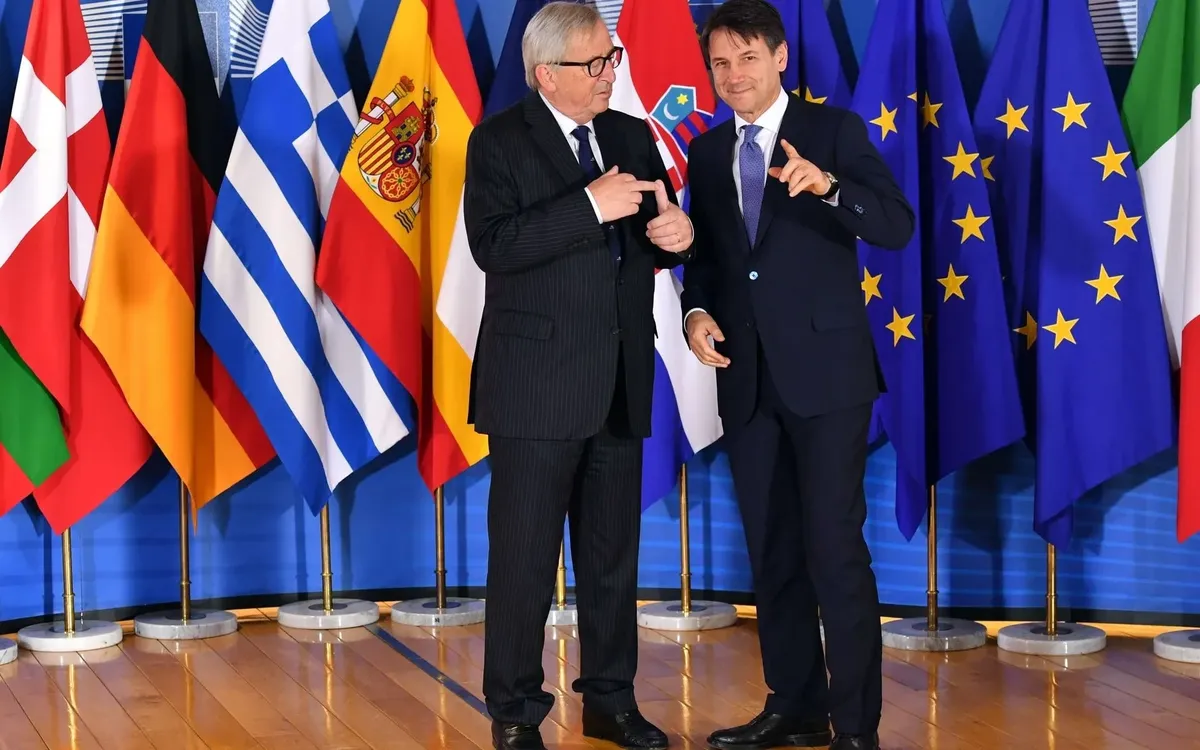
On Sunday, the leaders of the 16 EU countries gathered for an emergency meeting in Brussels, so that the general summit, which will be held at the end of this week, discuss the problem with refugees. The meeting was initiated by an angel Merkel, for whom an unresolved migration issue risks turning into a conflict with the main partner in coalition in his own government. Italy proposed its option to solve the migration crisis, but it is unlikely that the EU leaders will agree with it.
The new Prime Minister of Italy Giuseppe Comte took office less than a month ago, and among his main promises-to achieve a review of refugee reception rules in the European Union. With this agenda, he came to Sunday in Brussels, where he proposed a plan of ten points - "a European multi -level strategy for migration."
The radical proposal of Italy is to abandon the Dublin agreement, according to which migrants can ask for refuge only in the country of entry:
For those who flee from North Africa, Syria or Iraq, Italy, Greece, Spain and Malt are these countries. According to the Dublin agreement, any other EU country has the right to return the asylum applicant to the country of entry.
After the formation of the new government, Italy tightens migration policy. Last week, she refused to accept the Lifeline vessel with two hundred refugees on board, the victims of disaster during an attempt to cross the Sicily Strait. This is the second case over the past two weeks: before that, Italy launched the Aquarius ship, which Malta also refused to let in - as a result of 600 refugees, Spain adopted.
At a meeting in Brussels Com, he said that it was necessary to share the operations of salvation and the procedure for issuing asylum.
If Italy accepts refugees who have crashed, this does not mean the prime minister, she should also give them shelter.
The second important point in the document proposed by Italy is the opening of new refugee resettlement centers, not only in the countries of Southern Europe. According to Comte, Italy, who has adopted more than 600 thousand people over the past four years, simply does not cope with this influx itself - like Greece with Spain. “Those who arrive in Italy arrive at the European Union,” Giuseppe Comte hinted opaquely.
In addition, Italy proposes to create “platforms for landing” refugees and outside the European Union where people saved at sea would be returned, and refugees from economic migrants were further separated.
Italy also offers a new mechanism for the distribution of refugees between the EU countries - depending on their index, compiled on the basis of the size of the country and economic power. It is assumed that if the country's capacities are exceeded (as it is regularly happening with Italy), refugees will be redirected to other countries. If the country refuses to accept its quota, it will face a reduction in targeted financing from the EU budget.
The countries of the Voskhradograd four categorically disagree with the last paragraph -
Czech Republic, Hungary, Slovakia and Poland. In principle, they do not want to participate in the process of distribution of refugees.
On Thursday, the leaders of the countries of the Vsevograd four held their meeting, where the Chancellor of Austria Sebastian Kurtz also arrived. Although on Thursday morning, the Czech Republic, Andrei Babish, promised to take part in the Sunday summit in Brussels, at the meeting the leaders of the Voskhradograd four agreed to boycott the summit.
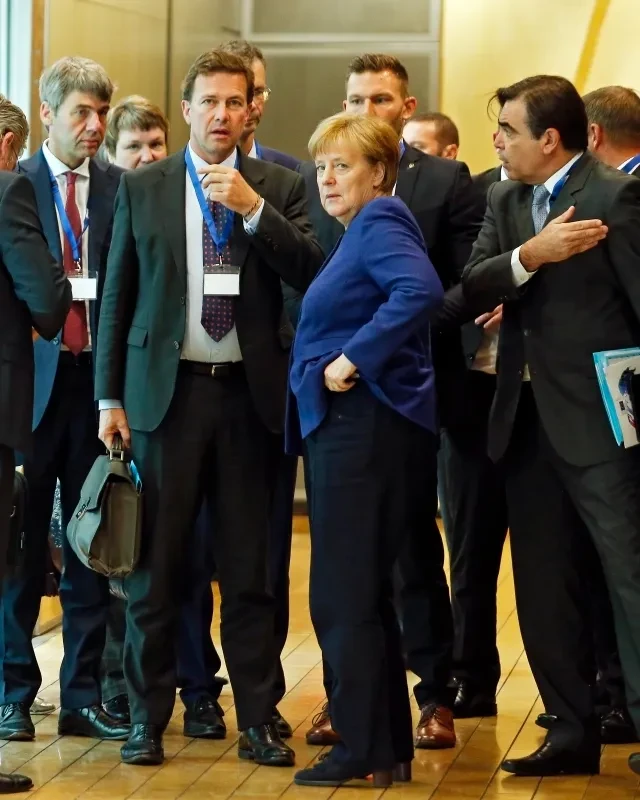
Germany and France, who acted as the main initiators of the meeting, are also far from consent with Italy. For Angel Merkel, the most quick solution to the migration problem is an urgently important issue. Anti -migration sentiments in Germany, where, having received asylum in the EU, many migrants are sent, high: in June, the Minister of Internal Affairs of Germany and the partner Merkel for the coalition of Horst Zeehofer put forward his plan to resolve the problem. He offers to close Germany for migrants who have received asylum in other countries, and send them back - for these purposes, it is necessary to develop a “return mechanism” of refugees. Merkel called the Zeehofer plan contradicting European rules, as well as unfair regarding Italy, Spain and Greece. Of course, the Zeehofer plan called in Italy even more indignation - Giuseppe Conte even threatened to boycott the general summit if the plan remains on the agenda.
It is expected to agree on some single strategy, but this was not supposed-a meeting in Brussels from the very beginning was declared as a consulting.
The meeting participants agreed that it is necessary to develop the rules that will act in the case of saving refugees at sea - so that the saving side does not automatically obligated to accept them at home.
Italy’s proposal to create “platforms for planting” refugees in third countries also caused approval by many participants in the meeting. It is not yet clear where such platforms could be placed, among the options it is called Albania. This option would help at least temporarily, but significantly, unload Italy, Spain and Greece.