
Translated material
The digit and terms
In Russia, a “first criminal case” for cashing bitcoins was brought up? But the law on cryptocurrencies does not yet exist
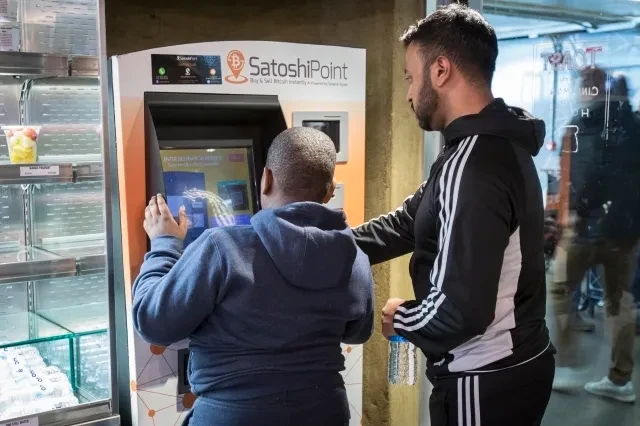
The other day, “FSB officers and police officers of Kostroma detained three entrepreneurs who earned on the sale and cashing of bitcoins. According to the Ministry of Internal Affairs, the detainees managed to carry out illegal operations worth about 500 million rubles. A criminal case was instituted under the fact of offenses under the article “Illegal Banking Activities”. Human rights activists say that this is the first criminal case, instituted on the fact of cashing of cryptocurrencies in Russia, and earlier, "Russian courts blocked Bitcoin-Tarzhi and exchanger sites, but did not persecute individuals."
In fact, to talk about the “Kostroma precedent” in the context of the confrontation “Society vs. State ”does not have to, since the bill“ On Digital Financial Assets ”has not yet been approved.
This means that the detentions were carried out not because of the very fact of cashing of bitcoins, but because of “300 banking and SIM cards, issued for friends and relatives,” through which “the defendants in the case exchanged and transferred cryptocurrency”.
Technically, there is no need to produce AD infinitum bank cards to remove cryptodene - one live bank account will be enough. Whenever “300 cards issued for friends and relatives” arise on the stage, there is no doubt that the goal is not so much cashing, but to crush , that is, crushing and redistribution of cryptocurrency flows.
The people are usually called this high -tech term laundering .
In this gesheft, not a private Kostroma texture interested me, but the transition of the state relations with digital reality to a new quality. The question is most worried: “What to expect tomorrow? What digital sins will arrest us for? "
In order not to slide into the primitive of the agitprop, I propose to readers, firstly, to consider the topic in dynamics, and secondly, to take it beyond the framework of the national state. Moreover, not in Russia it all began and it will not clearly end in it.
A full -fledged legislation regulating cryptocurrencies is absent not only in the Russian Federation, but also anywhere else in the world. The true problem is much wider and consists in the tragic inability of modern civilization to develop an adequate attitude to intellectual property in the era of the digital revolution.
Scattered excesses of straightforward prohibition (either in one country, then in another take bitcoins, arrest cybermen, hack cryptocurrency exchanges, block online stores) create a feeling of conflict locality. Meanwhile, the confrontation between the digital and real world has been a united front and has been going on for the third decade.
Back in 1936, one of the most influential art theorists of the 20th century Walter Benjamin warned humanity about the upcoming upheavals associated with the appearance of a technique that allows you to endlessly reproduce works of art with minimal costs (“Many prints can be made from a photonension; the question of genuine prints loses its meaning”). Digital reproduction technologies brought “minimum costs” to zero, and the quality of reproduction has become indistinguishable from the original.
The lack of expenses for the replication while maintaining the original quality of the original-a book, a musical composition, a graphic image or video-marked the appearance of the world in the 90s of a hitherto unprecedented phenomenon- a digital product .
The conflict of the traditional institution of ownership with the new digital reality reached the level of war with the advent of the Internet, which provided digital sound, image, text and video The possibility of limitless, instant and, again, inextricable distribution.
Since downloading music and films, as well as free wandering over the network, are an integral part of being in digital space , the problem of digital content has quickly grown into the problem of digital rights , which, by definition, include “access, use, creation and publication of digital works, access and use of computers and other electronic devices, as well as communication networks”.
As a result, not only the state, but also the host of human rights organizations, which gave this confrontation between a truly planetary scope, pulled up to the confrontation between the traditional institution of property with a cyber -volter.
In the early stages of the confrontation, the traditional institution of intellectual property made a bet exclusively on repression. In June 1999, the Americans Sean Fanning and Sean Parker launched the first file-bearing peering service Napster, which managed to safely fuel with the judicial claims of the Metallica group, the Dr. Dre, and then a collective claim of members of the American Association of Sound Recording.
In 2001, Napster was closed by court order, and a whole wave of new P2P: Gnutella, Edonkey, Kazaa and so on immediately came to his place.
When Bram Cohen came up with the Bittorrent protocol in the same 2001, it became clear that to prohibit the distribution of digital products-the occupation is useless.
On the second front-crypto protection of digital content-the traditional institution of ownership suffered a crushing defeat at the very beginning of the confrontation: Yon Johanssen, a 15-year-old guy from the Norwegian village, wrote deCss-a program that removed crypto protection with commercial DVDs in 1999.
It is necessary to give the defenders of copying values the due: they had the wisdom to abandon ineffective prohibition and marginalize piracy using audio and video gear services.
On the third front - the struggle of the state with digital cash and cryptocurrencies - today there is a relative lull, but the future storm can be expected by a number of signs. The fact is that digital cash and cryptocurrencies for the state pose a much greater danger than a digital product protected by a copy, since they are attempted on the basis of the economic structure of modern society - state monopoly in the issue of monitoring the issue of payment funds.
With digital cash, the state, at the very least, managed to cope. In Ukraine, webmoney was stupidly banned by the local tradition, in Russia - it seems that they managed to achieve amicable relations (no matter what it means), and in the United States of the digital cache it never took root through the fault of the PayPal service, which created the electronic payments channel convenient for local bank cards.
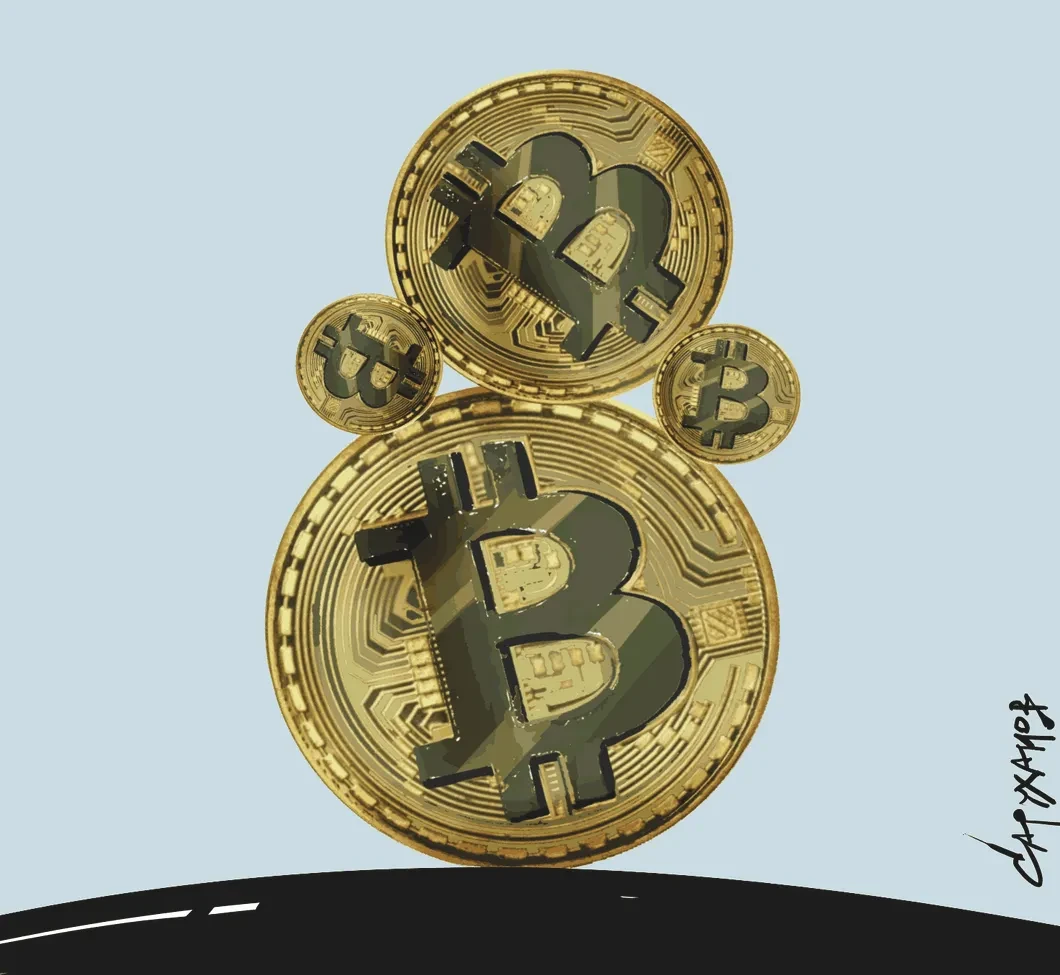
From hand there are bad things to do with cryptocurrencies, since they create a direct threat to the state monopol for emission, and in principle it is not clear how to interact with them.
At first it seemed that there would be no difficulties. In 2013, the FBI managed to block the Silk Road store in Darknet, in which the Bitcoins were brisk trade in psychotropic substances, and Ross Ulbricht, its creator arrested. Ulbrichta sentenced to life imprisonment without the right to release, but thousands of new stores were opened at the site of the Silk Road, in which today they are traded not only by foolishness, but also by the entire htonic paraferia - from weapons to custom -made murders.
If five years ago, having captured the user’s wallet, it was possible not only to assign other people's bitcoins, but also to track their participation in metabolic operations, today this is possible only with the inexperience of the owner of the cryptocurrency: modern anonymous mixing systems hide all past transactions, and storage technologies do not allow you to steal cryptocurrency even during physical seizure of the computer.
Since the state can quite effectively block the channels of the exchange of cryptocurrencies for living money (Kostroma history), there has been a tendency to maximum extension of internal trading turnover in the digital space: everything can already be bought for bitcoins today: from palaces and castles to tropical islands (at the end of last year, part of the Union Island in the Caribbean, more In good hands for 600 bitcoins).
I believe that the reader now understands why such nervousness causes the Ton (Telegram Open Network, open telegram network) with its Gram internal cryptocurrency, based on the third -generation blockchain, in state structures (and not one Russia). If the Durov brothers bring the conceived to the logical finale, the Ton model will create a precedent for a self -sufficient and effective alternative to the central banking monopoly for monetary issue.
It is no coincidence that I focused on a closed model of commercial self -sufficiency like Ton. It would seem: why do incomprehensible Ton are needed, if there has long been “darkn” - “dark Internet”, where criminal shops that have replaced the “silk path” are bent?
The fact is that people of informed have certain doubts about the real anonymity and safety of the “dark Internet”, including the most popular and active part of its part, known as Tor (Onion).
About these doubts, as well as about the key elements of the most mysterious and at the same time the most amusing myth of cyberchism of the 21st century - “Darknet”, I will try to tell readers “New” in my nearest publication.