
Translated material
. . . draft
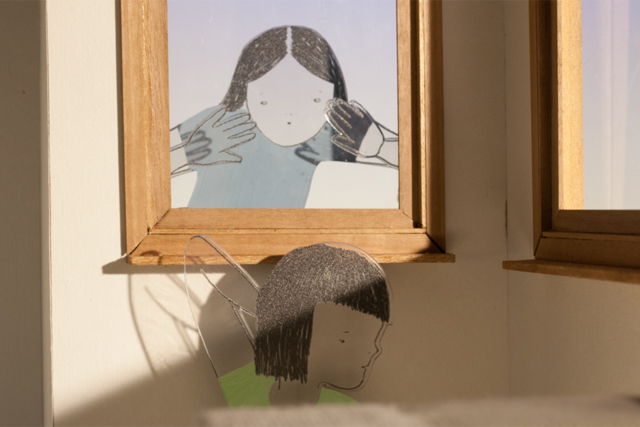
In Ansi, it is always interesting to notice how, out of hundreds of cartoons, unplanned topics and plots of the festival are formed by themselves, which as a result turn out to be central. None of this is not accidental, everything reflects the current state of minds and the current agenda, but perhaps in cartoons they are much more visual and expressive to us: animation saves time and requires lapidarity. This year, such unquenchable central themes became female (with a fairly wide range of options, but mainly focusing on sexuality) and, more unexpectedly, conditionally “Jewish”, where the center, of course, was the Arab-Israeli confrontation. The remaining stories: political and social (mainly related to wars and totalitarian regimes), new technologies (and fear of them), an attempt to deal with personal children's injuries and, of course, a long-standing trend for documentary animation, which captures all new areas-all this not only continues, but also gains momentum.
Layout = "Responsive"
Width = "500"
Height = "300"
Data-Embedtype = "Post"
Data-upner -id = "1"
DATA-POST -ID = "45616"
DATA-HASH = "YC8_z9pnpg8AKMZBVCD-JK45EAK">
However, the most interesting thing is still cartoons, and not necessarily those that receive prizes (about them, as always, full of disputes), and not even necessarily those that participate in the competition: after all, there are a lot of “special events” in Ansi. In my personal five of the favorites, there is only one film that received the jury reward, but the most important one is “Ansi Crystal” in a short competition.
The Belgian-Gollandic “ Bloeistraat 11” Debutanta Ninka Deutz is the story of the friendship of the two girls in that puberty, when one has already begun to turn into a girl, and the second is still a child. Friendship is real, which does not happen in adults, when for two both leprosy and pain, when the two abrasions develop together so that the blood mixes, and suddenly - an explosion of hormones, and irritation, treasure, resentment, resentment - do not immediately understand why. And friendship for life ends, as if it were not there. Ninka Dutz, who studied both art and cinema, who made installations and arranged performances, continues to experiment in this film - now with animated techniques, turning the cinema, as he says, into collage. She builds a very detailed, “real” cardboard house, but the heroes in it are flat, translucent, as if drawn on glass (there really was a rather complicated technique). And this effect gives the whole story a sense of fragility, ghostly, something sad and not fully formulated.