
Translated material
Why choose your parents' profession?
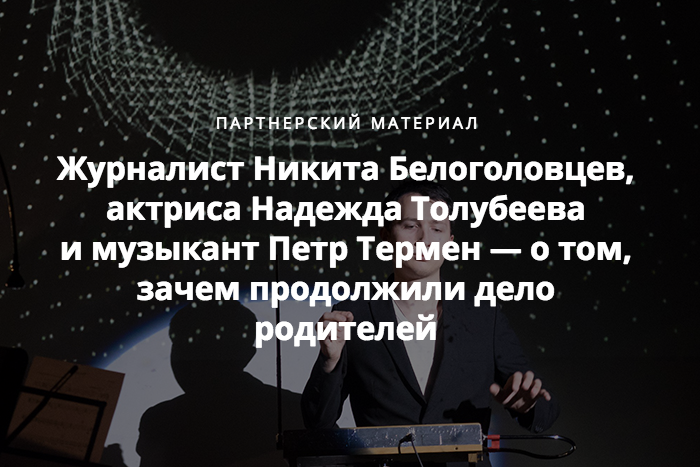
Why are the children of famous people often prejudiced, does a surname help you find a job, and what can childhood spent behind the scenes or on the set teach you?
In a partner article with Beeline , the son of actor Sergei Belogolovtsev, the great-grandson of inventor Lev Theremin - creator of the electromusical instrument theremin - and an actress in the third generation of Tolubeev artists talk about why they decided to continue the family business. And Beeline helped them choose tariffs in which they can change minutes and SMS to gigabytes and vice versa, adjusting them to their preferences.
Nikita Belogolovtsev
“Before social networks, it was easier for children of famous parents not to let anyone into their lives”
To deny [the influence of family on my activities] would be hypocrisy on my part. It is more difficult to say in what proportions my life was influenced by family, school, and a random set of chromosomes.
I was very calm about what my dad did. Even much calmer than many around. For example, when I told my classmates about my family everyday life, my mother upset me a little, because from the outside it could seem like bragging. [But] during my childhood, the life of a person on television was much more modest than it is now. I didn’t read any status attributes into this.
Before the advent of social networks, it was easier for children of famous parents not to let anyone into their lives. Without phones, people couldn't take pictures with their idols, and to get an autograph, you had to get a pen and paper. Technologically, communication with celebrities was more difficult, and it was easier for a child not to notice it from the outside.
“The success stories of people who are not favored by anything are much more beautiful.”
I quite accidentally went to work on television, not counting filming in my early childhood with my dad. I was invited to the casting of a small channel O2TV. The entire socio-political editorial team left from there - to the Mayak radio station. Within a week, it was necessary to find a person who could host a talk show live - conflicting and acute. They found me through acquaintances - in the spirit of: “Oh, I studied with someone at school, he led concerts for us.” By today's standards, this, of course, sounds wild. I came, recorded the pilot, and a week later I broadcast my first hour-long broadcast. My parents were on vacation at that time, and when they returned and found out about this, they were happy. Then I was in my third year of college.
Then I was invited to big television - to the public talk show “Only at Night”: the first 45 minutes were a socio-political discussion, the second 45 minutes were a rock concert.
Hand on heart, I think that my last name was also a factor in my employment. At the same time, I feel a certain burden of responsibility due to public perception. When a person does something similar to what [famous] relatives do or even something completely different, a significant part of the audience perceives him with hostility for a long time. If he screws up, he screws up because he’s a thieves and a dummy. There is no point in taking those on whom nature rests. Of course, the success stories of people who are not favored by anything are much more beautiful: a person appears out of nowhere and achieves something. It looks brighter and more photogenic.
It would be stupid to say that my starting points for working in television were the same as others. I had a certain set of knowledge and skills: at least the habit of being present on set, lack of fear in front of the camera, stories about filming in my family and surroundings. This is 5-10% of success, which can decide the matter in your favor - but provided that there is the remaining 90%.
“I studied with future actors and musicians. Looking at them, I learned to be critical of myself.”
I have a fairly strong nervous system and self-defense mechanisms. I calmly react to all sorts of public stories. But this may be a character trait.
Probably, my wonderful school “Class Center” played an important role (Nikita Belogolovtsev studied there from 9th to 11th grade - approx. “Papers” ). Future actors and musicians also studied there. Watching them taught me to be critical of myself. The ability to look at myself soberly has been very useful to me in life. I realized which of my father’s talents was passed on to me, and which to my brothers. For example, in terms of acting and stage talents, of course, my younger brother Alexander, who has recently become a professional actor, is much more talented than me.
Together with my dad, we appeared in the Headbutt program and hosted the Belogolovtsev program on Mayak. We approached this from different angles. At that moment I was doing radio and managed to win the “Radiomania” award with my colleagues (for the program “First Squad. PODmorning” on “Mayak” - note from “Paper” ), and my dad came on the air a little new, in the role of a “star fan.”
Since [subsequently] there were fewer and fewer projects on TV and radio that I could do without destructive compromises with myself, I had to somehow restart myself, and I took up digital [and media management].
Nadezhda Tolubeeva
“My father and I had silent dialogues: the main thing is to be close”
My attitude towards my parents’ activities was twofold. On the one hand, I was proud of them, on the other, it was their profession that took away their time to communicate with me.
I had a lot of problems at school: I studied poorly, behaved badly; I calmed down only at the academy. Some teacher might sarcastically: “Let your dad come to our lesson and tell us something. We'll listen to everything."
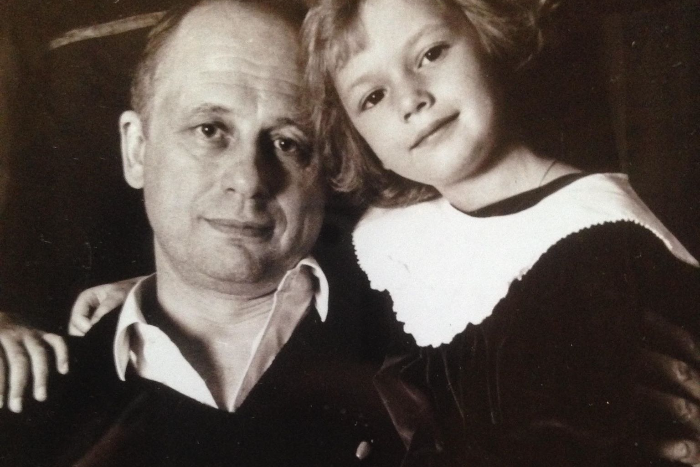
Unfortunately, dad didn’t see any of my theater work. Now I understand that he believed in me and wanted me to do well. My father and I had silent dialogues: the main thing was to just be there.
I became consciously interested in theater when I was already finishing school: my dad was the chairman of the committee at the theater academy and took me with him to graduation performances. For me, they were much more interesting than performances in large theaters: it was about the energy - not faded, but alive. It somehow infected me like a child.
I had no desire to show that I was a worthy bearer of the surname; rather, it caused passivity. Maybe healthy anger could have helped me, but I missed this moment by refusing some opportunities.
“People who are totally unsure of themselves go into the acting profession”
I fell in love with the workshop of Veniamin Mikhailovich Filshtinsky (theater teacher, director, head of the department of acting and directing at St. Petersburg State Academy of Theater Arts - note "Papers" ), he became my idol. Everyone who studied in his course seemed like stars to me. I went to him. I had no fear of not doing it - it’s like falling in love: you believe that everything will be fine. What is most beautiful is that Filshtinsky did not do anything to us; rather, he gave us a school of life, the ability to be honest with ourselves.
My first responsible performance took place at the play “Before Sunset” by Grigory Mikhailovich Kozlov: I had to arrive on time, leave on time, not get my costume dirty, and maintain silence backstage. There was a feeling of some kind of mystery. Now, it seems to me, this concept of backstage secrets has left the theater. The artist takes a selfie and posts it on social networks: “I’ll go on stage now.” I have neither a negative nor a positive attitude towards this, but the mystery is gone. She was the one who attracted me as a child.
I try to be honest with myself. I’d rather sit without work, but at least I’ll go to a rehearsal for a big director; Even without playing there and just watching, I will get more benefits.
In the acting profession, zeroing out is very useful; it would be great if it happened every day. It is simply necessary for the life and work of an actor.
The hardest thing is dealing with uncertainty. Oddly enough, people who are completely unsure of themselves go into this profession. As a child, I lacked attention, and now when I get it, I get lost and don’t know what to do. You can't be insecure on stage. Meanwhile, the very process of acting in the theater is something artificial: you stand in front of the auditorium and pronounce a certain text in makeup. It is very difficult to combine this with naturalness. Unless the role requires it, I generally try not to wear makeup on stage.
Now I'm more interested in watching films about animals. I recently read an interview with animal photographer Igor Shpilenok - he and his brother made an amazing documentary about a bear’s childhood (“ Kamchatka bears. The beginning of life ” - note from “Papers” ). Animals will never go against their nature. Actors don’t need to do this either - neither in the theater, nor especially in the cinema.
I had moments of discovery in the theater. When you go on stage, you gather yourself and fully concentrate - it is in this state that your best sides and capabilities can manifest themselves. Probably due to being strict with myself. On stage you sometimes feel more real than in life. Facing yourself is an amazing feeling.
With the help of tariffs “EVERYTHING!” subscribers can independently adjust the ratio of minutes, gigabytes and SMS. In addition, you can now convert the number of steps taken into Internet traffic when you join the “ Gigs for Steps ” campaign. The conditions are simple: by performing common activities - for example, shopping or walking with friends - subscribers can receive an additional 100 MB daily to their mobile Internet package. To do this, it is enough to walk 10 thousand steps during the day.
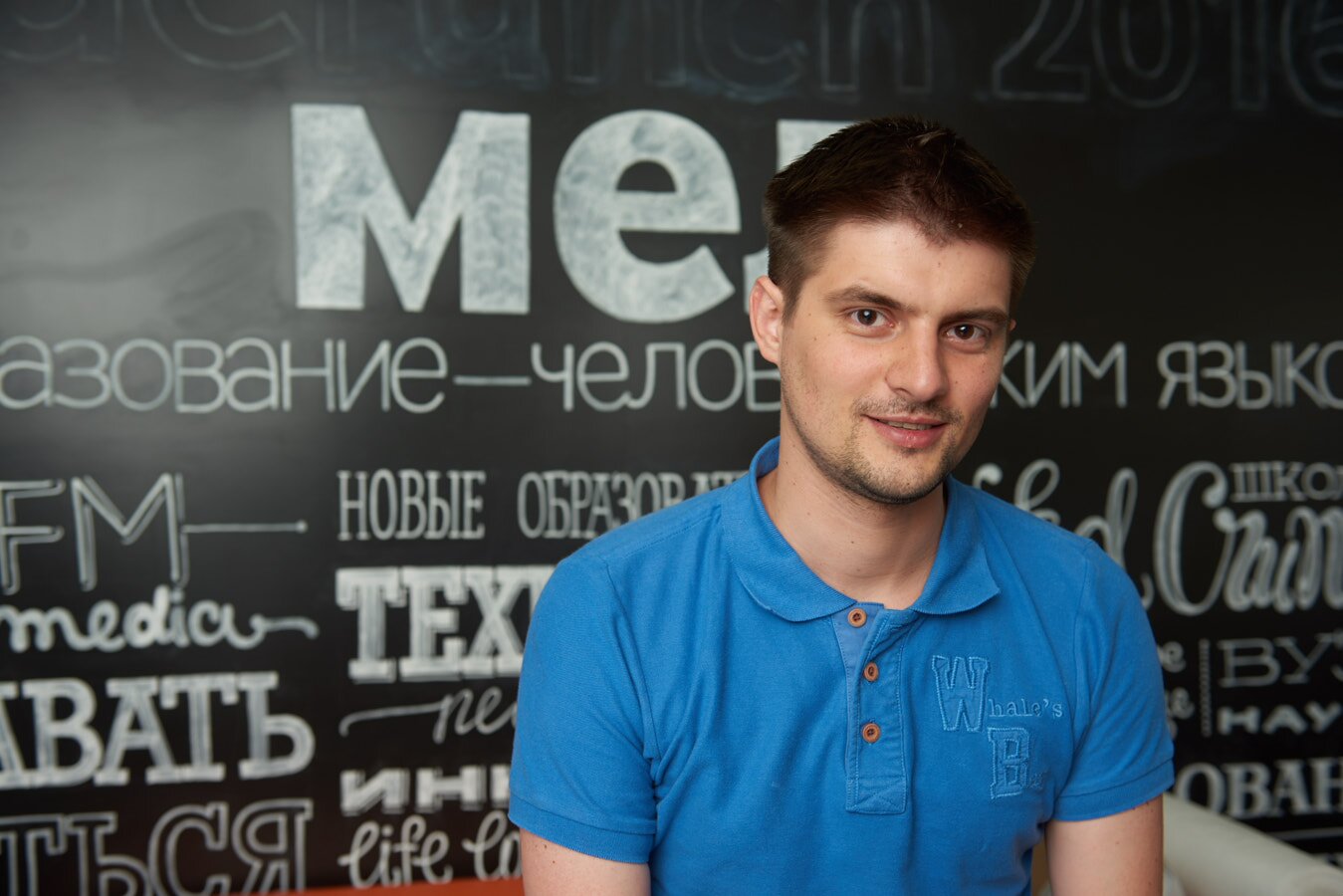
Media manager, television and radio presenter, former editor-in-chief of the online publication “Mel”. Son of actor and presenter Sergei Belogolovtsev
Posted by Sergey Belogolovtsev (@sergey_belogolo) Jan 28, 2015 at 4:33 PST
Posted by Sergey Belogolovtsev (@sergey_belogolo) Jan 27, 2015 at 2:56 PST
“We, people working in the media, are professionally deformed in relation to mobile communications. If someone asked us, we, of course, would cancel calls and SMS. 90% of my interaction occurs on the mobile Internet and all types of instant messengers. Calls are mostly family or incoming. It’s quite difficult for me to remember when I called someone without the wording: “I wrote to you, but it’s faster to discuss it over the phone.”
Beeline invites Nikita to try the “ EVERYTHING 2 ” tariff: 24 GB of Internet and 800 minutes of calls, of which 200 can be exchanged for 4 GB without additional payment. And if Nikita’s loved ones also subscribe to one of the tariffs from the “EVERYTHING” line, they will communicate unlimitedly - without using up the package of minutes. Nikita can also activate the free “#EVERYTHING” service and use social networks unlimitedly even after the end of the Internet package.
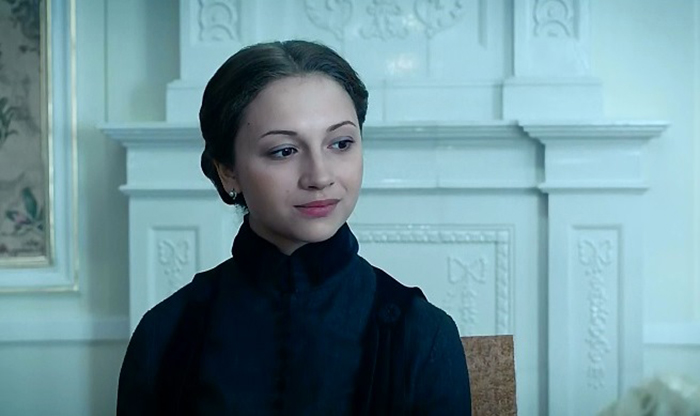
Actress of the Etude Theater, daughter of Bolshoi Drama Theater actors Ekaterina Marusyak and Andrei Tolubeev . Her grandfather and grandmother - Yuri Tolubeev and Tamara Aleshina - worked at the Pushkin Theater
“Unlimited internet on my phone, free in Russia, is important to me. I often go to Moscow and open scripts from my phone screen. I spend the least amount of money on calls and SMS: I only use them for business.”
One of the tariffs from the “EVERYTHING!” line will suit Nadezhda. Mobile Internet and minutes packages will be available in Moscow and other Russian cities. For example, the “ EVERYTHING 4 ” tariff is 30 GB of traffic, 2000 minutes for calls to any numbers and 300 SMS. As with other tariffs, you can change minutes and SMS to gigabytes and vice versa.
Peter Termen
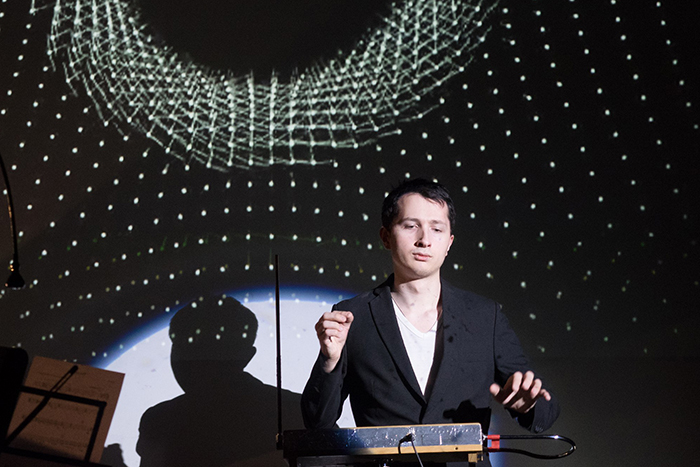
“I wanted the instrument that bears our name to be perceived adequately”
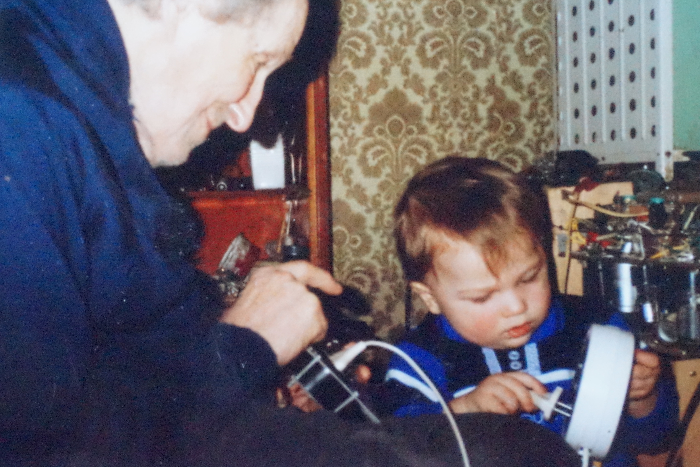
I spent the first three years of my life in the same room with my great-grandfather. In the surviving photographs you can see that since childhood I tried to interact with the devices at Lev Sergeevich’s workplace: turn on, connect, touch something.
The voice of the theremin has accompanied me since childhood. I listened to academic music performed by my beloved grandmother Natalya Lvovna (a theremin is an electromusical instrument created in 1920 by the Russian inventor Lev Sergeevich Theremin; while playing the instrument you do not need to touch - the hands move in the air - approx. “Paper” ). She is not only a pianist and teacher, but also a professional theremin player. Even before I was born and during my childhood, her performances took place all over the world. Thanks to Natalia Lvovna, this instrument has become an organic part of my picture of the world.
I started playing theremin about eight years ago. I can’t say that my interaction with the instrument was a statement in the spirit of “Okay, I’m following in the family footsteps.” Although almost immediately I began to be interested in the context: who is playing now and what is happening [with the theremin culture]. I discovered that there is a catastrophic lack of information on the Russian Internet and the theremin is perceived more like a noise toy or a tool for a magician - I really didn’t like it. This is how the Internet resource Theremin Today appeared, and subsequently a whole series of initiatives such as the theremin festival (the first Termenology festival was held in 2011 - note by Papers ), theremin school or the creation of a series of lectures on the history of the instrument. Of course, I was motivated, among other things, by the desire that the instrument that bears our name be adequately perceived by contemporaries.
I really believe that I am continuing a family tradition - including performing. Probably, someone may have the feeling that I am lobbying for family values, but I really am learning a lot from both Lev Sergeevich and Natalya Lvovna in terms of the sound of the instrument - until now.
There was no such thing in our family where anyone was told from childhood: “You should practice theremin.” There was an awareness that this is a great responsibility, a large layer of work that needs to be done. The theremin is not a toy or a way to stand out from the crowd. And it is better if a person consciously comes to work with a theremin. Or he won't come. I think this is correct.
“Responsibility for the reputation of an instrument strengthens”
Perhaps, if I had not heard the sound of the instrument in the quality, in the performing approach to sound in which it existed in our family, I might not have become interested in the instrument. Modern theremin players are most often inspired by the work of Lev Theremin's student Clara Roquemore - she is considered a virtuoso of the instrument. Many people like the “alien” image of the theremin from Soviet and American films. But, for example, Led Zeppelin uses noise; many are fans of such emotionally incoherent improvisation.
There are very few theremin players in the world now who can not only sound nice, but really interest and inspire people to work with the instrument, and set a certain new bar.
Which musicians inspire me? I have a great weakness for the works of Sergei Rachmaninov and with great pleasure I play both those works that Lev Theremin performed, and some others. This is wonderful, very Russian music that perfectly reveals the theremin, it seems to me.
Am I proud to be the great-grandson of Lev Theremin? Of course, this is a great responsibility for the reputation of the instrument and the legacy of Lev Theremin. It hardens. Is this good or bad? This is both good and bad. Differently. For example, let's imagine a person with the last name Rachmaninov. This does not mean that he should constantly walk around and be happy that he is Rachmaninov, be permanently proud. [He must] rejoice, and be sad, and struggle, and solve certain problems - pleasant and unpleasant. But, of course, I am proud of Lev Sergeevich and other members of the Theremin family.
Now my life is entirely connected with music and theremin - and from very different points of view. I have many plans related to the development of the theremin school in Russia, with research projects, with individual performing work, with the popularization of the instrument. Unfortunately, sometimes there are even more ideas and projects than there are financial opportunities for their implementation, but I am optimistic.
If a person is doing something creative, he should get used to instability. The creative path is never linear, you have to be mentally prepared for it. If a person understands that this is a normal work process, everything will be fine. More likely.
Great-grandson of the creator of the theremin Lev Theremin , musical performer, head of the theremin school.
“It is important for me that the card exists outside of roaming, especially within such a large country as Russia. This is currently not available for all operators, unfortunately. In addition, unlimited Internet and a package of minutes: 500–1000 are important.”
Calls within the “EVERYTHING!” tariffs on the territory of Russia they do not consume a package of minutes and do not require additional payment (starting from the “ALL 2” tariff). Beeline advises Peter to pay attention to the “ EVERYTHING 3 ” tariff: 24 GB of mobile Internet, 1200 minutes for calls and 300 SMS. If desired, Peter can exchange 300 minutes for 6 GB or refuse SMS in favor of a gigabyte of traffic. The “#EVERYTHING is possible” service is free for subscribers of this tariff.