
Translated material
Quench the thirst for reality
Manifesto of hatred of a traditional novel and his followers
To create artistic fiction is how to go behind the wheel in a clown suit: eight years ago, American David Shields published a manifesto of the thirst for reality, in which he declared artistic prose finally outdated. She should be replaced by the full, real, unprocessed reality of the book. Especially for Gorky, Maria Tsiruleva talks about the manifesto and his most famous followers.Attempts to reform the novel are made about once every few decades. And if in literary circles they once again say that the romance died, then most likely he is more alive than all living things, there is simply a search for new forms and soon critics and readers will face something completely unlike all the previous ones-as it was with modernism, postmodernism and as it will be with a direction that has no name yet.
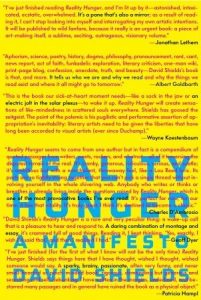 It seems that this process is actively going on in English literature right now, the last six to eight years. And it was voiced by the American writer David Shields, the author of the famous anti-Fixes of the manifesto “Reality Hunger: A manifesto (2010).
“The traditional novel is a boring, old -fashioned spectacle too limited by the plot framework,” says David. The novel does not reflect what it is: to live in the XXI century. There is no speed of modern life in the novel.
A smaller plot, smaller fiction and more reality, intentionally non -artistic, unprocessed, and therefore especially “vital” - this is how to write today, he believes. “Reality” can best be transmitted in the format of the collage (most of his book is quotes from other authors), a lyrical essay or memoir.
Creating artistic fiction is how to go behind the wheel in a clown suit. You are going somewhere, and you are in a clown costume, but you don’t fool anyone. You are just a guy in a suit, and everyone should forget about this fact and go with you, says Schildc. He considers Jonathan Franzen such a clown.
The absence of the plot gives the reader a space in order to think about other things. With a very slight exception, a traditional novel, David believes, sacrifices too much on the altar of the plot. The plot is for the dead. The novel died, long live the anti -Roman, built on his ruins.
The most interesting thing is that Schilds does not speak into the void. It seems that he verbalized a request that was in the air in the air for an “unprocessed” reality: in the last six to eight years in English literature, the hybrid genre of the memoir, text on the verge of fixtures and non-fiction is gaining incredible popularity. These are the novels, that is, their authors have high literary ambitions, but, as a rule, novels that are deprived of a clear plot and often written in an intentionally non -artistic language. David Shilds rejoices and with pleasure writes annotations on the covers of new books. The authors writing in this vein, - Ben Lerner, Shila Hayty, Tao Lin, Jeff Dayer, Rachel Hall and, of course, Norwegian Karl Uwe Knausgor, to which we will return in our text.
Where do the legs grow up from the manifesto of David Shields and all this current? Probably, from the 1990s, from the prose of David Foster Wallace and the direction of new sincerity. Back in the mid-1990s, Wallace said that postmodernism was outdated. From ridicule, cynicism, distances from the reader, refusing to search for meaning, everyone is tired. It doesn't work anymore. What people need (writers and readers) - this is sincerity. In one of his essays, Wallace predicts the emergence of new literary “rebels”, who will fight precisely with this - postmodern ironic distance. What will their tools be? Honesty, openness, sky seem naive or anachronous. And, of course, as soon as they begin, they will immediately tell them that they are old -fashioned, banal, sentimental, too soft and sincere. But that is their path. This was the essence of the direction of the new sincerity, which Wallace headed.
But back to the present-to the Norwegian Karl Uve Uve Knausgor, who took and thundered on both sides of the Atlantic in the 2010s. Karl Uve Knausgor was a common, widely known in narrow circles by the Norwegian author. He wrote a couple of novels, received a couple of bonuses, and then he had the so -called creative crisis. He could no longer write fixation. The only thought of fictional heroes in fictional circumstances caused him a longing for the death and gag reflex. He was disappointed in literature. Wherever you turn, everywhere invented people, invented stories in a fictional, albeit realistic world. In general, he was tired of the stories that happened and carried away, which, in his opinion, did not reflect reality. The only genre in which he saw value was diaries and essays. The kind of literature in which you can hear the author’s own voice, meet his gaze. And what is such a work of art, says Knausgor, if not the look of another person? Not from top to bottom, not from the bottom up, but the eyes in the eyes.
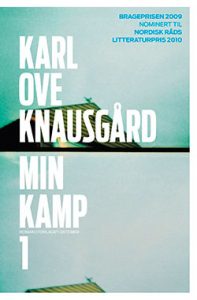
And then he wrote in two years (from 2009 to 2011) a cycle of six autobiographical novels called “My Struggle”. A total of 3,600 pages of text. The name contains a reference to Hitler, and in Norwegian generally sounds “min kamp” (in Germany, by the way, it was translated under a different name). Knausgor wrote ten pages a day, deliberately in raw tongue, did not edit anything. He describes his life, very documented, with a large number of small household details: how he leads children to kindergarten, changes their diapers, drinks coffee in a cafe, reads, says with friends about literature, how she loves his wife and quarrels with her on household issues, how she enrages him at these moments and how he really wants to close from everyone and write without restrictions.
Knausgor admitted that from childhood he tried to be a good boy, to delight his parents (especially his father) - in a word, to be better than in fact. To tell people what they expected to hear from him. When he became a writer, he also tried to please the readership, tried to write “beautiful prose” “beautiful sentences”. But, starting his autobiographical cycle, he stopped taking care of literary quality, stopped pretending to be pretended. He decided to reduce his writing expectations, and he, in fact, did not care about the expectations of the reader.
Karl Uve was sure that “my struggle” would not be fame that no one would particularly read her, because it was boring. He wrote her because he could not help but write, because it was his way to get out of the crisis. But, apparently, in the air some unarticulated request for a boring, unprocessed surrounding reality-and an explosion occurred.
From Knausgoras, they are wandered on both sides of the Atlantic (and in his native Norway his autobiographical cycle bought every 9th resident of the country), among his admirers such writers as Zeidi Smith, Jeffrey Evgenidis and Jonathan Letai. In the year, when Knausgora was transferred into English, Zedi Smith admitted that wherever she went, in all the literary parties of New York, they discussed this Norwegian.
Why did Knausgor take a breakthrough in an autobiographical novel? Because, firstly, in the genre of the memoir novel, it is usually customary to “filter the bazaar”, to conceal something, to embellish something, and Knausgor mercilessly flaunts all the most shameful, petty, hidden movements of his soul. “Here are the facts of my emotional life,” he says, not concealing anything. As you were not a man, when you could not help his pregnant wife visiting the toilet, where the castle jammed, and I had to call for the aid of one of the guests, who was a boxer and a slight movement of the leg knocked out the door. And you stood nearby and felt not very good. How you got angry at your little daughter and threw her on the bed with force. And further in the same spirit. In his cycle, Knausgord did not replace a single name with avented; He turned away part of his relatives and friends after the publication: we, they say, are not at all the same as you described us, and in general you went too far in the story about our private life. And his wife fell into deep depression.
Secondly, he writes in an intentionally not edited tongue, super-realistic and hyper isting-and you seem to fall into a reality show. If he describes a children's holiday, then it will be forty pages of the text, with all the empty conversations of invited parents, with all the cakes eaten and inedible, with all the babies crawling to your feet. Reading is sometimes painfully boring - as boring as it is at the children's holiday. As Knausgor said in one essay, the same Zedi Smith: "You are not just associated yourself with the hero - you literally become him." It is as if you are put in the head to the author, and you see him with your eyes a boring, unprocessed surrounding reality.
None of this, including Knausgor, has not been translated into Russian. And because, it seems, it seems even more curious that Russia also has authors who, not knowing either about Knausgor, nor about Shields, write in a similar manner and, without suspecting it, are at the forefront of the world literary process. Which of modern Russian authors also writes on the verge of fixed and non-fiction about boring, unprocessed reality? Who, like Knausgor, is compared with Andy Warhol, who put a movie camera in his “Factory” in Manhattan on an eternal entry and fixed everything that fell into the frame? Of course, this is Dmitry Danilov.
Each of his books (“horizontal position”, “description of the city” and others) is essentially a fixation of reality, and the very seemingly everyday and inconspicuous. In an interview, the writer admitted: “I feel in myself a certain longing for everyday life, everyday life, grayness, everyday life. Rather, this: I found in myself a clear tendency to look for interesting in uninteresting. I came up with such a paradox for myself: “Boring is the most interesting.” I am really convinced that if you carefully look at the “gray” reality that existed around us, in it you can see a mass of interesting and amazing. ”
David Shields would appreciate this.