
Translated material
The Council of Council allowed the cessation of deutsche Welle broadcasting in Russia
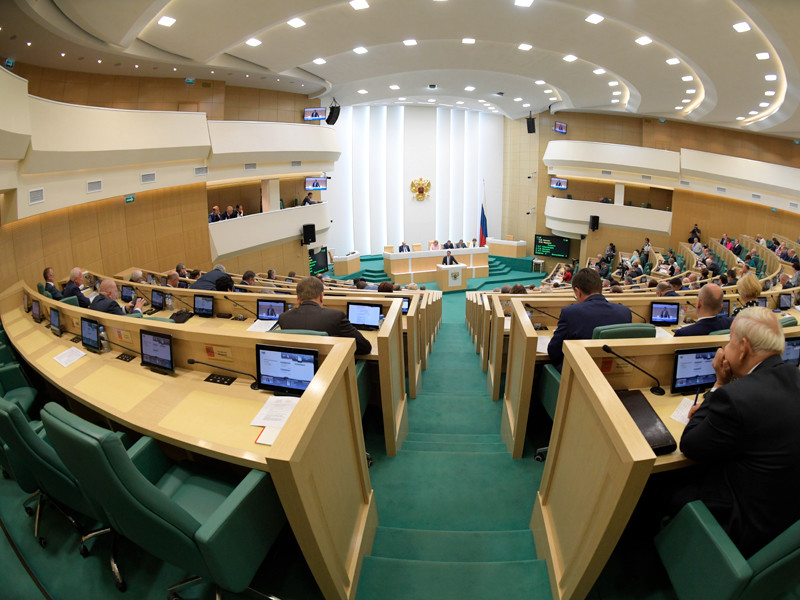
Having barely warned the France 24 channel about the possibility of suspension of its activities in the Russian Federation, the Russian authorities have already reported the possibility of another similar ban. The Federation Council allowed the cessation of broadcasting of the German media company Deutsche Welle (DW) in Russia. The corresponding decision may be made according to the results of the audit, about which the Council of People's Commissars will ask for the control authorities due to the allegedly distributed DW "offensive" publications.
The Commission of the Federation Council on Information Policy will make a request to verify Deutsche Welle, Senator Igor Morozov said in it. “I think the SFR on the information policy will discuss the situation, give proposals to our control bodies to verify the compliance by the German legislation with them. And if there are violations, the license will be withdrawn,” said the member of the Council of Council, whose words are quoted by RIA Novosti .
At the same time, the senator attacked Deutsche Welle, accusing the German company of violating journalistic ethics. "DW has already passed all the boundaries of the journalist of ethics and the culture of bringing information to their listeners and readers, the publications posted by them clearly are offensive in nature," the senator said, without giving specific examples.
According to Morozov, the Russian authorities "receded for too long, silent in response to the spread of Russophobic and anti -Russian sentiments." “We must go forward,” called a member of the commission on information policy.
The impetus for the ardent of Morozov’s speech about the need to combat Russophobia, apparently, was the statement by the official representative of the Ministry of Foreign Affairs of the Russian Federation Maria Zakharova. During a briefing on June 28, an employee of the Russian diplomatic mission called on colleagues from the Federation Council, State Duma and Roskomnadzor to pay attention and evaluate the activities of the German edition of Deutsche Welle, accusing him of propaganda.
As Zakharova explained, the Russian Foreign Ministry noticed the DW paid on Twitter, considered it offensive to Russia and demanded an explanation from the German company. Deutsche Welle did not agree with the assessment of the publication that was given in the ministry. The company explained that the material was “only by the announcement of one of the interviews of the program in Russian and no more”, and the announcement of its publications in social networks is “ordinary business”.
According to Zakharova, the publication contained an appraisal judgment about Russia, and therefore the Russian authorities should carefully understand the situation with Deutsche Welle. What the placement of media materials with assessments of any state and advertising of these materials on social networks may violate the law, the official representative of the Foreign Ministry did not explain.
"I want to take this opportunity and contact colleagues from the State Duma, the Council of the Federation, the Federal Service for Supervision of Communications, Information Technologies and Mass Communications, as well as to the relevant relevant civil society structures to pay attention to this situation, give an appropriate assessment and generally begin to analyze this situation from the point of view of the very standards that German representatives that analyze the situation of the Russian media," the official official media, "called on the official official Representative of the diplomatical union at a briefing (quote for TASS).
Zakharova noted that the Russian Foreign Ministry does not dispute the right of the media to publish critical articles to any state. “We say that the screenshot contains not just the facts or the announcement of the event, it is incorporated with an estimated judgment about our country,” the employee of the ministry explained.
"From our point of view, all these projects - this is not covered by the propaganda and direct impact on the part of the organization funded by the German government on the Russian audience, - Zakharova summed up." All this has nothing to do with journalism at all. "
Earlier, under the threat of the suspension of broadcasting in Russia, the France 24 television channel turned out to be a violation by the channel of the Law "On Mass Media" and issued a warning to it. According to the agency, the editorial activity of the channel controls a foreign legal entity, which violates Russian legislation.
According to the source, the actions of the RKN were a response to the warning of the RT France television channel, which was carried out the day before, due to the plot of Syria, allegedly containing signs of propaganda.