
Translated material
All images of the world
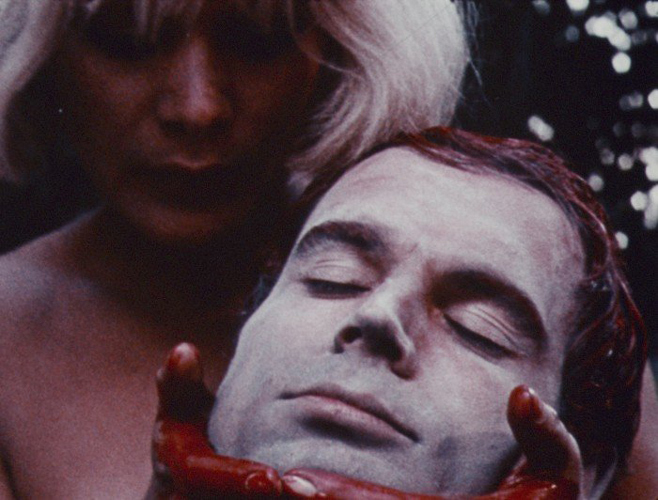
On July 4, the Garage Screen cinema will show the experimental Opus Magnum Fernando Birri “Org” (this session is part of the Experiments program organized by Mieff in cooperation with the Garage Museum of Contemporary Art; “Experiments” are held in Garage Screen every Wednesday from June 13 to September 5). The film was shot for 11 years and since his premiere in 1979 at the Venice Film Festival was shown only a few times. Two years ago, “Org” was restored by the Arsenal Museum of Cinema and presented at the Berlin Film Festival, and now the audience in Moscow will be able to see it for the first time.
“The road of excessiveness leads to a habit of wisdom” - this quote from William Blake serves as an epigraph to a three -hour intensive stream of visual and sound associations. Consisting of 26,000 mounting skeletons and 700 sound paths “Org” mixes the rattlesnous mixture from the paraphrase of early silent cinema and the pop art comic book, magic, focuses, tarot and revolutionary manifestos, monuments of ancient Indian culture and futuristic fantasies of the era of the first cosmic flights. Here Wilhelm Reich, known for his socio-critical ideas of radical sexual emancipation, meets the Ernesto Che Guevaru, who was killed in Bolivia in Bolivia (later Argentine Birri will shoot two films about commandant) and Georges Meles, whose “Journey to the Moon”-one of the ORG leitmotifs-is growing politically, it develops political, sexual and psychological dimensions.
However, with all the visual ecstaticity, this vast stream of images does not merge into the frightening cacophony, but remains clear and open to the viewer. His plot direction is the old story as a world about two men and one woman, borrowed by Birry from the same Indian legend of the XII century, which Thomas Mann formed the basis of the story “Exchanged heads”. In the interpretation of the director, she looks as follows. Black Grrrr and his white friend named Zokomm love one - a beautiful blond Shuik. Zokommm notes that Shuik prefers Grrrr. From jealousy, he cuts off his head, but, having discovered the death of a friend, the second does the same.
Thanks to the magic of Electronic Sibille, Shuik manages to return their lovers to life, but, by chance or not, their heads and bodies are confused. The ongoing dispute for a woman turns into a new contradiction: what is the bearer of human sexuality - the head or body (that is, culture or nature)? In this difficult situation, the heroes turn to an eccentric advice, outwardly reminiscent of the distraught Jacques Lacan by a sage named the whole memory of the world. However, the whole memory of the world testifies that people in all this time have not learned anything - a centuries -old circle of competition leads to the continuation of the worldwide history of violence.
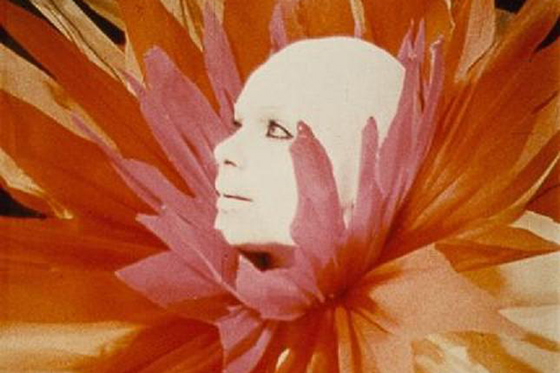 Frame from the movie "Org"
The canvas of a love triangle that encourages friendship and rivalry, the dictatorship of the ego and solidarity, Fernando Birri unfolds in the universal field of reflection not only of the recent history (more precisely, the crisis of revolutionary movements of the 1960s), but also history as such. As an angel of history from the “theses of the concept of history” Walter Benyamin, the whole memory of the world every time finds humanity on the edge of the catastrophe, the only salvation from which is solidarity and communism. In addition, Birri is concerned about the crisis of the cinema language itself - and offers a way out in the radical openness of the film for interpretation.
The associative ranks of “Org” are intentionally naive in places, in some places they are placed, sometimes esoteric. Birri connects the elements of traditional and modern culture. The film is equally equal to the artistic reminiscence of primitivism, surrealism, pop art, rides of silent cinema, futuristic DIY .
The director’s thought is the answer to the old idea of “harmony in contradiction”, but one that would deliberately preserve and even strengthen the differences in the components of the parts. At the same time, it is important for Birry to make the viewer a film participant. Even the name "Org" is only the initial letters of the word that can be freely completed by each. The demonstration of the film was conceived by him as Heppening: at the premiere in Venice, Birri installed on the street (the film, according to his plan, was not supposed to be shown in the closed hall) a giant screen to cut it during the show, and the audience literally “entered the film”. The reflection of cinema (and the reflection of the film about itself) is included in the fabric of the film itself - fragments of interviews of Rossellini, Godard, Mekas, Cuban director Hulio Garcia Espinos, theorist and propagandist of the Brazilian “New Cinema” of Glauber Roshi and other Birry's associates for the release of cinema.
 Frame from the movie "Org"
“The recorded image belongs to the one who creates it, and half of the one who perceives it,” “no one has the right to speak for others”, “perfect cinema = reactionary cinema”, “the new cinema must commit suicide as a cinema”, “each spectator is either a coward or a traitor”, “subversive creativity against the alienated imagination” - Birri gives an expressionist blind The ideas of the revolutionary film vange of his time, deliberately interfering in the sound series and sharply cutting off the frames. But the voices and ideas of the fighters of the past come to us today - the rapidly passing stream of exclamations. It is as if in a pararodal animation, through a stringing effect of microstances in the speed stream of “Org” images, it unfolds as a fleeting, albeit three -hour, reminder of love, tragedy and the struggle of past and future historical moments. And the finale of the film with a torn “International”, which sings the drunk voice of the whole memory of the world, appeals to the future of mankind and indicates the need for communism.