
Translated material
Successor. Other power
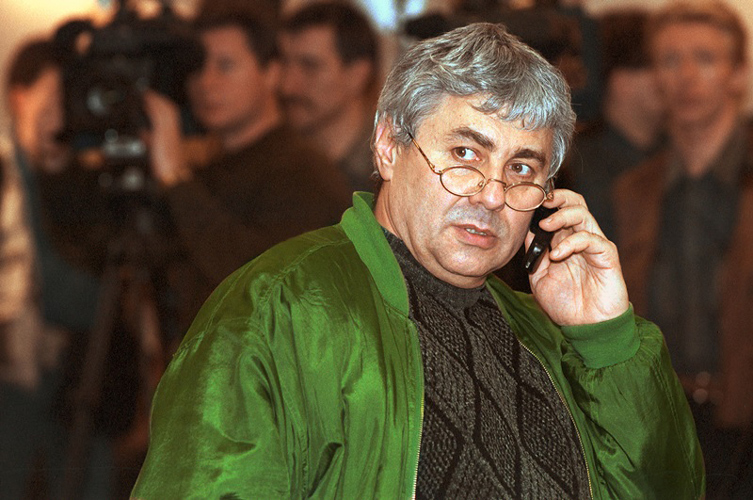
In the near future , a book of conversations of Gleb Pavlovsky and Bulgarian political scientist Ivan Krasthev “Experimental Homeland” will appear at the European Publishing House. The book is dedicated to the biographical and political path of Pavlovsky. For the first time, Kolta publishes two fragments from the book: an excerpt from the preface to her Ivan Krastev and a large piece from the third chapter “Successor. Other power ”, dedicated to Putin’s coming to power.
Ivan Krastev. The story of Gleb
(excerpt from the preface)
In 2003, Russian President Vladimir Putin invited a group of influential liberal journalists, including the editor of the Echo of Moscow radio station Alexei Venediktov. I drank tea and vodka with them. Venediktov in that conversation was struck by his clear distinction between the “enemies” from the “traitors”. “Enemies right in front of you,” said Putin, “you are fighting them, but a truce has come - and the conflict is finished. And the traitor must be destroyed, crushed. ”
When in 2012 I proposed to Gleb Pavlovsky, the most known to the Russian political technologist, who was repeatedly declared “gray cardinal” of the Kremlin, to start a conversation that could lead to the book, I perfectly understood that such a book would cause a discussion of one of the most unloved people in Russia, who was considered a traitor both in power and opposition. The liberals hated him for his contribution to the construction of Putin's Russia. Putin could not forget that in the fatal for him 2011, Pavlovsky violently claimed that President Medvedev should have the right for a second term, that Putin’s return to the Kremlin is dangerous for Russia. But in his version of history, in understanding the nature and goals of the current Russian regime, it was the topic of betrayal. I wanted to understand: did the Pavlovsky intention to help Putin not betray himself or simply made an erroneous bet and lost?
I felt that the situation of Pavlovsky as a former Putinist would help to understand today's Russia. In this sense, the book is not a conversation with the Russian oppositionist and not a sensation book, where the offended courtier exposes the secrets of the Kremlin. These are the thoughts of the Russian intellectual, experiencing Russia as a personal biography. A person who is responsible for strangling the liberal intelligentsia in Russia.
Pavlovsky seems to be a hero from the novels of Dostoevsky. Smart, mysterious, glamorous, self -destructive and cynical. In his personality, an ardent belief is striking that he is personal responsibility for the fate of the world. Talking about the last days of the Soviet Union, he once admitted to me: “In 1991, I was so absorbed in my personal drama, worried the end of passion ... I am sure that if not for this, I would find a way to prevent the collapse of the USSR.” Sounds a madman's speech! Did Gleb really believe that he could save the communist empire? Perhaps not, but this phrase was uttered by a man consisting of too close ties with history. Anyone who knows that the story is not made by depersonal processes, but by the choice of specific people. Who has set their experience, personal and public, in the center of understanding of politics.
Thinking through this book, I did not plan to check if Pavlovsky tells the truth about a particular episode (my goal is not a journalistic investigation and not a fundamental historical study). I was interested in how Gleb was trying to figure out his life and in today's world. I was not afraid that he would sit down or embellish something: after all, I remember Brodsky’s statement that "the true history of our consciousness begins with the first lies."
Already at the beginning of our 40-hour conversation, I realized that in the history of Gleb it is not the decisions that he made, but a desperate attempt to collect the particles of his life, reading them as the history of modern Russia. In a sense, we all wander in search of integrity, and our life is a collection of brief plots that we are trying to pass off for the novel. However, the story that you find in this book deserves to be read. <...>
Successor. Other power
(excerpt from the chapter)
Ivan Krastev: When did you first hear Putin's name?
Gleb Pavlovsky: For the first time I heard this name for a long time, back in 1991, but then missed past ears. Gamesov, returning from the Baltic Congress of informal, talked about interesting people met there. One was a representative of Sobchak, someone Putin. He sat sadly in the corner, Gameov talked with him and said: that’s who could become president instead of Gorbachev! Recently, he reminded that our conversation, and, pushing the notebooks, I really found an entry with a mistake: “President Pu D in?”.
The meeting is more memorable in the summer of 1998. The Kremlin discussed who to strengthen the Kiriyenko government. Putin has just made the deputy head of the presidential administration, only after a couple of weeks he will become the head of the FSB. I repeated my eternal mantra - the reorganization of power is needed, for which the president should introduce a state of emergency. In those years, I pushed humiliating weakness for strength as a panacea in any matter. But Putin suddenly objected: "Only his own power or terrible can introduce an emergency." This thought was unexpected, and I remembered it, although before that I paid little attention to his remarks. However, the discussions ended in nothing, and in August 1998 there was default.
Krastev: And when does the problem of the successor arise? Why is Putin?
Pavlovsky: The word "successor" distorts the goal of what was happening then. Of course, Yeltsin eventually needed a successor, but what and what and what? The successor adopting his power. From 1996 until the end of his presidency, we in the Kremlin spoke not about the “successor”, but about strengthening power . Power, power and once again power! The “successor” was a synonym for this concept, which accepted us the idea of the state and the picture of the country. How to recreate strong and reasonable power after Yeltsin? That's what was in the 2000 project center and what the presidential administration worked for years.
The shift from the image of the country to the image of power was already rushed in the atmosphere. For example, the Gusinsky group, not allowing Chubais after the 1996 elections to maintain a headquarters car, created its PR agency. And what do you think they called him? "Power Technology"! The meritocrates of the “bridge” knew that this is the name of the popular anti-Stalinist pamphlet, that this phrase itself in the 1990s was an allegory of Stalinism. But the former taboos disappear, and the debates come down to one question - how to technically create invulnerable power and how to keep it? It is believed that the country's indestructibility will ensure only the indestructible power of the president. In this equation - the root of many future evils.
At the same time, we were looking for “glue” for the pro -Kremlin coalition in future elections. Then, being a revanchist, I saw her by the coalition of the revenge of the losers. With the groups most affected by the reforms of the 1990s and the destruction of Soviet institutes, doctors and teachers (state employees), the army, FSB, scientists, pensioners, housewives. The losers had to give the right chance of the state revenge, and not just a cute candidate. But what was meant by "power"? Of course, not weak state institutions that existed on paper. The power we talked about was thought of as a new regime, carried out within the framework of the previous constitution.
Krastev: For me it is very important. Because the successor is not the next president after Yeltsin, this is a completely different power.
Pavlovsky: Of course! Only another government could solve the problem not solved by Yeltsin - to separate his personality from the state of the Russian Federation, the state, and in 1999 is still illegitimate for the majority of the population. Otherwise, with the departure of the Creator and the creation will evaporate how the liberal alliance fell with the departure of Mikhail Gorbachev. We firmly knew that just some other person could not replace Yeltsin. Another politician should come and complete the post -Soviet period.
At my request, Alexander Oslon, president of the Public Opinion Foundation (FOM), inventively probed the structure of demand for power. He preferred to talk about the purpose of dominance, which is why Thomas's ballots received the name "dominants". The plan of the project was that, by mixing funds, public policy and mass media, to create an indisputable hegemony of power in the ears of voters as a virtual bridgehead of the future regime. By the end of the 1990s, the purpose of creating a new government became so general and consensus that it was no longer discussed.
Krastev: It was both the position of the "family" and the position of Boris Berezovsky?
Pavlovsky: Perhaps yes. But then the Kremlin was not an agency for protecting the interests of the Yeltsin "family". Be careful with the concepts born of the war of Russian propaganda cars. The presidential administration was a loose club of intellectual, bureaucratic and lobbying groups. Including the media environment with its addictions and interests. Even in the days when NTV was frying the presidential rating of Boris Nemtsov, Zverev, then a trusted man of Gusinsky, visited meetings. There was no rule to delete anyone who "fights against the president." It will be introduced by Alexander Voloshin in 1999. In the days of the death cutting of the election campaign, the rule was born: “strangers” - no interview, they do not call them “our” television channels. Over time, from this innocent rule, the television target will grow “controlled democracy”.
And the project “successor”, by the way, was not secret. Surprisingly, the administration team acted without hiding, and the media did not distinguish anything point blank. Now they often write that “it was clear to everyone” that Yeltsin would leave, that he was old and weak - nothing like that! The press and the elites until the end believed in the dogma that Yeltsin clung to the Kremlin and would go to any way to stay in power. The recollection of 1996, when the President-infarctic, dying, was dancing on the electorals, it seemed, confirmed this version. The formula “Yeltsin clings to power” since 1996 has become a dogma. And once I saw in this illusion a valuable resource of masking the “successor”. While the enemy’s mind is blurred by fantasies about your plans, his blindness is your potential. Allegedly, “clinging to power”, Yeltsin can be stunned by the fact that he himself will refuse the authorities!
Krastev: I read that it was you who suggested that Yeltsin leave until the end of his mandate.
Pavlovsky: I now consider it to be mine, in my working notebooks she appeared in 1998. But the thought was on the surface and could have occurred to anyone. We were in a desperate position and, sorting through the constitutional reserves of the presidency, we were looking for technical techniques. The eternal anxiety of the Kremlin project was a lack of state force among the central government, its instrumental deficit. We constantly search for "unaccounted for". Unfortunately, the main thing we burned in the past elections. In 1996, much was built on the conviction of the Anteltsin electorate that Yeltsin would not go anywhere. But the second time not to enter this river, the game is opened. And although everyone was convinced that the president would not leave the Kremlin, their confidence now worked against Yeltsin. His will to power outraged. She turned into evidence, and there was nothing to build on her.
Then the idea arose to wrap the plot in the mirror opposite. The prejudice of Yeltsin’s plans to stay in the Kremlin (FEP called him a black myth of Yeltsin) to apply the strategy of the authorities to disguise the strategy of the authorities. Back in the 1970s, working in design, I learned the rule: what cannot be hidden, it is necessary to emphasize brighter. We hide the main secret of the successor, namely its finality, in sight, how I hid Samizdat in a pocket sewn to the carpet!
The black myth of Yeltsin could work with a smoke curtain, if the president-target, an object of hatred for enemies, suddenly leave, taking their enmity with him. When in the spring of 1999, on the eve of the decisive elections, the general audit of the small resources that the Kremlin still had was held, it was decided that Eltsin’s early care was a strong scenario move. The instrumental poverty of the federal government pushed to extreme funds. After all, the Kremlin’s experiments with the media policy turned out at first not from an excess of insidiousness, but from the poverty of state instrumentation - the federal center did not have money and authority. The presidentials even governors obeyed occasionally and reluctantly, but the whole country consumed the central press and television. So the weak Kremlin felt for new power, constantly improvising with communicativeness.
Krastev: In my view, the problem is not that Yeltsin had in 1998-1999. There was a weak position, and in the fact that an alternative appeared to him. And this alternative looked strong - I mean the Union of Primakov -Lozhkov. I think the main thing that you managed was to make the “old regime” of them, and from the successor of Yeltsin “new”. How did this happen? And why did Putin mean a “new regime”? What did you see in it?
Pavlovsky: Do not exaggerate the deliberation of any then step. In the end, the decision on the successor, and even more so on early care, could be made only by Yeltsin. We always tracked the correspondence of our scenario ideas to the “BN criterion” - are they acceptable to him personally or not? Yeltsin did not have the strength to rule the country, but there would be enough strength to overturn the unacceptable plan for himself. He knew how to and loved to do it.
After the default, Yeltsin refuses the intelligentsia and meritocrates. He decides that the next president will not be like neither Nemtsov nor Kiriyenko. Not a young reformer, not a technocrat with glasses, but a strong man in uniform. Instead of journalist Yumashev, the head of the Kremlin administration, was Nikolai Bordyuzha, a general who looked intelligently. But by that time, the prime minister was already another intelligent security official - Evgeny Primakov.
In September 1998, I participated in an unusual vote on the candidacy of the prime minister at the old Andropov dacha. Chernomyrdin did not pass - the threat of Prime Minister Luzhkov hung over the Duma. Everyone wrote three surnames on a piece of paper, they threw pieces of paper into the mug of Yumashev. Soft rating vote. Counting, Valya said in surprise that someone called General Lebed-that was me. My three preferences were Primakov, Maslyukov, Swan. Primakov defeated.
And the fact that the president first treated him with confidence scared many in the Kremlin. Yeltsin after the 1998 default is a person disappointed in the ability of smart-journalists to create something state-strong. He believed that with default (and previously the scandalous “affair of the reformers” of Nemtsov -Chubais) intellectuals set him up. He spoke about this to Primakov and aroused the ambitions dozing in that. The word "silovik" became the trend of the season. At the meetings in the Kremlin, the refrain "needs an intelligent security forces."
Krastev: You made Putin according to the Primakov model.
Pavlovsky: Not immediately. Although the Primakov model was often analyzed on brainstorming at Mikhail Lesin at the end of 1998. After Christmas, two models remained on the desktop. One familiar one is a young reformer, a right-legged populist like Boris Nemtsov. But Sergey Kirienko was already unsuccessfully tried for this role.
In the spring of 1998, Yeltsin suddenly removed the height Chernomyrdin and appointed the prime minister of this Nizhny Novgorod Yappy. The finances were in a catastrophic state, the case rushed to the collapse on the exchange. Even Nemtsov lost faith in the project and, considering my political infographics, muttered: oh, gleb, p **** C to all if finance n **** c! But it was important for me that Kiriyenko gained 20% of the presidential ranking in six months. This meant that if you add another 30% with a strong election campaign - here is the president of Russia, gentlemen! We saw such a scheme of future elections: the president appoints the prime minister-successor, the successor pulls himself 20-25% of the power electorate, and the bright media campaign adds the rest. But Primakov himself decided to take advantage of this scheme: after all, he was already the prime minister!
The country has a crisis, and from the prime minister they expect actions. Yeltsin reluctantly provides Primakov with an extensive corridor of actions, which he has not given anyone since the tandem with Gaidar in 1992. So there was another element of the script, its important clarification - the prime minister acts in the role of the supreme regent. Primakov frantically gained a presidential rating, faster than Kirienko, and we see: our model works! One trouble is not ours.
Krastev: What does it mean not yours?
Pavlovsky: “Not ours” he was not for me, ideologically omnivorous, but for Yeltsin and his loved ones. As a technologist, I was indifferent and just waited for whom they would call to promote him. Decide that our candidate is Nikita Mikhalkov? Okay, let Mikhalkov. Primakov? Yes, for God! The emergence of the new government depended not on the personality of the candidate, but on the power of the Kremlin to insist on his election, outplaying everyone else. The Kremlin team was afraid of Primakov, probably not in vain, but this is no longer recognized. Well, the journalistic Moscow hated him directly. For me, this remained a mystery, but the fact that the journalists could not stand the old prime minister, and they looked into the mouth of the rude Luzhkov. In Primakov there was no Luzhkovsky tyranny, he was a smart man, but in 1999 he looked like a guest from the Nogorbachev cosmos. Suffered from the bites of the press, which Chernomyrdin retorted so easily with humor. Primakov always hobbled to Yeltsin with a pack of rejected cartoons against himself - to complain. You can’t come up worse. For Yeltsin, complaints about journalists were a sign of weakness, even when he secretly sympathized with them. The fact that the metropolitan mass-media rejected Primakov will become our important resource.
Belgrade bombing barely began and Primakov’s plane turned in the air off the United States, the Moscow press roared. Хотя в жесте премьера не было ничего, кроме дипломатического неодобрения. Многим в стране это понравилось, даже Ельцин поначалу поддержал. Президент до того разгневался на американцев, что по телефону грозил Биллу Клинтону российским десантом на Вашингтон! В массовом сознании (и в либеральном тоже) война в Югославии вызвала национальный разворот. Прозападный консенсус рухнул, пошла спонтанная реакция на десятилетие неудачных реформ от Горбачева до Ельцина. Реваншу понадобился лидер, и Примаков мог им стать. Начнись бомбардировки Белграда месяцем раньше — и к лету премьер бы стал несвергаемым. А усидев в кресле премьера, Примаков и президентом бы стал.
Свержение его из премьеров было первой задачей и первым успехом нового главы администрации Александра Волошина. Согласие Думы на это искусно добыл его новый заместитель Владислав Сурков. Премьером сделали Сергея Степашина, однако президентский рейтинг будто прикипел к Евгению Примакову. И продолжал расти.
Крастев: Когда в первый раз ты увидел Путина как человека, с которым надо работать? Каким было первое впечатление?
Павловский: Невообразимое облегчение. Кстати, такое же чувство испытал и Сергей Кириенко, когда я ему сказал. Хотя и Степашин выглядел приемлемой кандидатурой, но, пока нет окончательного решения президента, аппарат не пошевелится. К лету из-за оттяжек Ельцина я впервые стал допускать провал. Мы выпали из графика подготовки кампании, катастрофически отставая на месяц-два. Кремлевская машина завибрировала, от Кремля бежали, как из чумного барака. Ушел заместитель главы администрации Олег Сысуев, ушел пресс-секретарь Ельцина Ястржембский. Ушли люди, связанные с Гусинским, и канал НТВ пошел в прямую атаку на Ельцина. Мишенью они сделали его лично и дочь Татьяну, ввели понятие «семья». С их помощью Примаков с Лужковым создавали антиельцинскую коалицию «Отечество — Вся Россия», и губернаторы охотно к ним шли. Колебания Ельцина показались симптомом конца, номенклатура развернулась на запах новой власти.
Только назначение Путина премьером 9 августа 1999 года стало отмашкой . То, что в России именуют отмашкой , — еще не приказ, а право действовать в указанном направлении любыми средствами. С исполнителя снимают ответственность за мелкие нарушения правил, контролируют только верность его. В аппарате развертывается соревнование передовиков верности новому курсу. Таков режим аппаратной мобилизации. Назначением Путина, которого на этот раз президент открыто объявил своим преемником, аппарату дали важный сигнал: Ельцин проснулся. Тот, кто торопится перебежать в чужой лагерь, может сильно проиграть. Участники проекта могли теперь действовать по плану, сложившемуся у нас в головах.
Увы, наш кандидат выглядел неблестяще, и я поначалу смотрел на него лишь как на центральную фактуру сценария. Путин не казался лучшим выбором на главную роль. Над ним и прежде подшучивали на совещаниях. Он был неловок, скрытен, то молчал, то предлагал вовсе несуразное. Первое представление его в Думе было полупровалом, и все-таки Дума его утвердила — как удобного врага, как легкую добычу для кандидата в президенты Примакова. Но мне все это уже было безразлично. Я фанатично верил, что план сработает.
Когда я в августе докладывал план в Кремле Путину — он короткий, две странички главных пунктов, — тот не сказал ничего. Тогда Волошин прямо спросил: «Ну что, не противно?» «Не противно», — ответил Путин, и мы стали работать. Я занял кабинет директора по планированию в избирательном штабе Путина в Александр-хаусе. В этом кабинете я провел затем десять лет.
Разумеется, исключительные свойства кандидата были известны. Его лихость при спасении бывшего шефа Анатолия Собчака от судебного преследования со стороны врагов. На этот пример верности сам Ельцин ссылался как на веский фактор выбора в пользу Путина.
Крастев: Что это была за история?
Павловский: Уголовное дело на Собчака его враги завели еще при подготовке к выборам губернатора Санкт-Петербурга. Incorrect privatization of some apartments, a trifle on Moscow scale. But after the failure of Sobchak in the election, the case was resumed and led to arrest and condemnation. Using relations in the FSB and in business, Putin transported Anatoly Sobchak to France. He did this on his own initiative, as they believe, or at the unspoken request of the Yeltsin family, I can only guess. The departure to Paris seems to have paid for Rostropovich. Для чиновника администрации президента то был карьерный риск, от которого Путина не спасало одобрение уходящего Ельцина. He knew how to be insidious. After his departure, Putin could easily go to the defendants in the “Sobchak case”. Но необычно смелый для функционера-чекиста ход не был забыт. Весной 1999 года фамилия Путина стала первой в ельцинском шорт-листе. Мне сказали, что он «хоть и из КГБ, но парень свой — абсолютно отмороженный!» Что для меня было наилучшей рекомендацией: ведь мы сами были отмороженными парнями.
Крастев: Готовность к высокому риску.
Павловский: Да, та склонность к «чрезмерному риску», что, по слухам, записана в его личном деле в КГБ как профессиональный дефект.
Крастев: Итак, первая кампания Путина, в которой вы не просто продвигали его самого, но и строили идею нового режима. Каковы были ее самые важные концептуально черты? What did you want people to find in the candidate, and which electorate did you want to consolidate? What then were you going to do with this electoral coalition?
Павловский: Меня звали «имиджмейкером Путина», но имиджем я мыслил во вторую очередь. I thought with electoral potentials and their jump when adding the electorate. In 1996, we briefly created the “Yeltsin majority”, temporary and unstable. It lasted two months, but this was enough to give Yeltsin the second presidential term. Теперь, начиная кампанию, я думал: чем склеить путинскую коалицию и нарастить ее до большинства? Then there was a difficulty.
In the previous campaigns, the center of the gluing was the “loyal sector” - the conformal power electorate. Рыхлое электоральное облако с твердым ядром около 5%, легко расширяемое до 15—20%. In 1996, we built a campaign how children build a pyramid. On the core of the electorate, the authorities were planted by small electors-the security forces of General Lebed, the socialist doctor Svyatoslav Fedorov, the Democrats and the Ethnonitional. Now I had to collect not integral electorate, but their fragments. Явление Примакова раскололо провластных избирателей, а остатки демократического электората были распылены. They decided that the Kremlin candidate should partially act as a people's stand. Предстояло продвигать концепт новой власти и образ ее народности параллельно, а затем смикшировать оба образа вокруг темы государства.
That in the center of the campaign will be the idea of the state of Russia, it was decided even earlier, by the end of the 1990s. Nemtsov’s right -capacity process has already transformed into “folk capitalism with the state mentality”. The image of the people here has already become paternalist. Избиратель хотел, чтобы его кандидат ворвался во власть, но со стороны власти же — из Кремля в Кремль, но не с улицы! Russian street did not trust “street candidates”. Она предпочитала найти избранника своим агентом в Кремле — наподобие Штирлица из советского сериала. At the in the spring of 1999, the image of Stirlitz pushed other movie heroes as the ideal of the new president of Russia.
So, our “candidate of a resident” launched among the enemy’s illusions that he himself is nobody, and Yeltsin, who was ready to “cling to the Kremlin”, is dangerous. Then, acting as a power prime minister, Putin begins to apply the powers, according to the current performance, is presidential. Yeltsin does not oppose this that at first they will accept for his weakness. Against the background of weak Yeltsin, a strong style of the young prime minister appears brighter. By the end of the campaign from the protege of the “family”, the candidate turns into the banner of the revenge of all socially lost Russia. Защитника стариков-пенсионеров, вождя обнищалой армии, кумира образованцев и домохозяек, лидера нарастающего большинства. И под конец при досрочном уходе Ельцина в отставку Путин уже — и.о. президента, то есть Верховный главнокомандующий Вооруженными силами России до дня президентских выборов.
Моим ориентиром оставался имидж «русского правого республиканца», созданный ФЭПом для генерала Лебедя в 1995 году. But here it was important to prove Putin's independence from Yeltsin. How to demonstrate independence? Тем, что премьер Путин использует всю полноту полномочий правительства как глава исполнительной власти в России, а Ельцин ему не мешает. Everything should look convincing. Seeing strong power in action, the country itself should want such power.
There was no term “Putin's majority” until October 1999, but its concept was: according to the scenario, the electoral majority was to be a wide “revenge coalition”-a union of groups and classes that lost in the 1990s. Коалиция Кремля была парадоксальной. This included circles of the disappointed, no longer too democratic intelligentsia, who lived in the non -money industry institutions. Те, кого в более сытные времена Солженицын заклеймил именем «образованщина». Doctors, teachers, engineers and techniques of dying enterprises, science city, employees of the military-industrial complex. Behind them are personnel military, lower and medium officers - for security officials, the past profession of the candidate in itself replaced the program. These groups of voters were no longer ideologically incompatible, as in 1996, when there was a lively contrast of the Communists to the Democrats. Для них всех Путин выглядел последним шансом отыграться.
The NATO war, which buried Yugoslavia, screeched the injuries of Khasavyurt and cheered up military enthusiasm. The enemy, however, was synthetic. Его образ двоился от «НАТО против сербов» до устрашающего «Россия будет следующей (за Югославией)». Чеченцы шокировали Россию террористическими вылазками и пытками заложников. And since the summer of 1999, the military expansion of Ichkeria began on the adjacent Dagestan. Who is the enemy in this situation? Anyone who forces Russia to retreat. What should Putin become? Those who stop the retreat will unite Russia and move it forward. The ideological campaign glued with the military and national. The struggle against Chechen expansion symbolically replaced the inconceivable struggle with the West.
Around this, the actual image work was built. Candidate Putin acted against the backdrop of Yeltsin. An intelligent strong man against the background of the outgoing old man is the source of the emotional dynamics of the image. Of the deadly burden, for the author of the authorities, Yeltsin turned into a dramatic plot motor: the old man decreased, but his place was replaced by the young. Как при загрузке нового программного обеспечения.
По сценарию, вера в неизбежный уход Ельцина от власти подтверждалась чудом прихода Путина, собирая нужное ему большинство. Но избиратель все не верил, что Ельцин уйдет! Ельцин же уходить не спешил. У него были основания сомневаться в рискованном сценарии. Прошел месяц премьерства Путина, а его президентский рейтинг еле рос, даже у Кириенко в 1998-м динамика была получше. Впрочем, я уже видел, что наш кандидат превосходен.
Путин использовал любой повод, чтобы выразить активность и подчеркнуть народность. Имиджевые догмы кампании Путина 1999 года — решительность, молодость и спортивность — опирались на штабные подпрограммы «Путин лично руководит страной», «Путин молод и силен» и т.п. Сегодня они вошли в догматику власти, а тогда были внове. Каждый божий день Путин призывал к себе ответственных лиц и перед телекамерой отдавал распоряжения, сверля взором министра напротив. Министры изображали трепет перед «шефом», тогда, впрочем, еще постановочный. Он показал свое отличие от «крепких хозяйственников», за десять лет всем изрядно надоевших. Навестил тюрьму «Кресты» в Санкт-Петербурге и сказал вслух, что большинство там сидит ни за что. (Этим Путин и меня присоединил к своему целевому электорату.) Посетил ПЕН-клуб, гнездо антиельцинских интеллектуалов, и всех там обаял. Пресек вторжение Басаева в Дагестан.
Война на Кавказе фактически началась, но нельзя было предсказать, станет она популярной или утопит Путина. Первая война с чеченцами была крайне непопулярна. Социологические замеры подтверждали нежелание воевать в Чечне — еще в сентябре 1999-го большинство избирателей было за независимость Чечни и против войны с ней. Взрывы в Москве не вдруг поменяли положение, но обозначили вакуум власти в столице. Кому теперь принимать решения? Взрывы жилых домов в первой половине сентября 1999 года из нашего штаба казались электорально выгодными для Лужкова. Ведь они фокусировали внимание страны на властях Москвы, а не на Путине, как может показаться теперь. Подозревая, что мэрия имеет отношение к взрывам, я напечатал злой памфлет. Сопоставил напуганную Москву с Римом при заговоре Катилины. Под Катилиной, конечно, имел в виду Лужкова — хозяина столицы, тогда популярнейшую фигуру.
Как вдруг Лужков растерялся. Он мелочно суетился, а ужасная ситуация взывала к прямому ответу. В том гексогеновом сентябре мэр-хозяйственник упустил шанс всероссийского лидерства. Предложи Лужков после первых взрывов решение, отвечающее страху и гневу России, — это выдвинуло бы его в центр кризиса и сделало бы лидером нового большинства. Его, а не Путина! Что бы Путин ни делал, он шел бы вслед за Лужковым, а со второго места в политике еще труднее выйти в лидеры, чем ниоткуда. Тем более Путин и сам колебался, понимая, что любое публичное решение станет бесповоротным.
Я всегда отвергал обвинения Путина в причастности к московским взрывам. До октября 1999 года никто в России не счел бы новую войну в Чечне удачной идеей. В девяностые годы Кавказ стал кладбищем российских репутаций, там нашлось бы и место для путинской. Кажется, это соображение заставило Лужкова медлить, уступая противнику право свернуть себе шею. Но он лишь расчистил ему дорогу. Путинское решение воевать в отместку за взрывы было спонтанным, но наш сценарий оно не разрушало, сочетаясь с идеей новой сильной власти. Политический спортсмен вступался за русский народ, мобилизуя государство и оживляя его войной. Корректировку кампании вели на ходу, и тут зарождается путинское большинство как концепт.
У меня до сих пор где-то валяется текст сообщения ТАСС от 1 декабря с моей правкой, где я заменил термин «коалиция большинства» на «путинское большинство». Выборы далеко впереди, и большинства у Путина нет, но кампания перестраивается вокруг новой идеи. Отныне Путин не «кандидат Ельцина», а выдвиженец путинского большинства нации. Он идет на выборы как представитель якобы реального большинства, и другим лучше расступиться. Здесь не силовой, а национальный аспект: новая нация входит в государственные права. Кампания облеклась в стилистическую маску национально-освободительной революции — простой парень из ленинградских коммуналок именем народного большинства берет Кремль!
Но только к декабрю решающий эксперимент подтвердил, что план сработал. Это связано с выборами в Думу. Штаб долго держал блок «Единство» в далеком резерве президентской кампании — блок ассоциировался с Березовским, а это имя для избирателя давно было красной тряпкой. Центральным пропутинским блоком назначили «Союз правых сил» во главе с Сергеем Кириенко. Президентский рейтинг Путина рос, а «Единство» не выходило из электорального гетто в 5—6%. Между тем первыми выборами были вовсе не президентские, а парламентские в декабре 1999-го, где уверенно лидировали КПРФ с блоком Примаков—Лужков. Перед Кремлем возникла повторная перспектива — при «своем» президенте получить враждебную Думу. В ноябре я предложил штабу «поженить» революцию Путина с парламентской кампанией «Единства». Ослон и Сурков меня поддержали.
24 ноября 1999 года Путин вышел в эфир новостей. «Как гражданин» заявил, что ему в Думе нужна политическая опора — и вот Сергей Шойгу, лидер блока «Единство», он мой товарищ. До выборов в Думу оставалось три недели, но благодаря этому ходу «Единство» моментально утроило поддержку! Только тут Борис Николаевич поверил в наш сценарий и в то, что «отмороженный» его кандидат победит. И решился уйти. Он признается в этом в своих воспоминаниях.
В декабре 1999 года в оборот пустили выражение «Путин безальтернативен». Оно живет по сей день, но пришло не от нас, этим ценным подарком Путина наградили враги. Они обвиняли его в безальтернативности, когда еще Примаков и Лужков не снялись с выборов и были другие сильные кандидаты. Что означало слово «безальтернативен»? Мы попытались спорить с этим тезисом, но вскоре, оценив выгоду, сами стали применять его в пропаганде.
Крастев: Итак, кампания закончилась, Путин выбран. До того был политтехнолог Павловский, открыто работавший с Кремлем, но все же свободный. После этого вдруг появляется новый Павловский — путинист, голос Кремля и герой телевидения. How did it happen? Это была твоя идея? И как она вписывалась в твое понимание построения новой власти?
Павловский: К концу кампании меня вытолкнули из суфлерской будки на сцену. И опять биографический поворот произошел по чистой случайности. В декабре 1999 года меня позвали на ток-шоу враждебного Путину НТВ. Атакуя «кукловода», враги рассчитывали морально уничтожить преемника как «кремлевский проект». Против меня усадили режиссера Говорухина, кандидата в президенты и участника примаковского списка «Отечество — Вся Россия». Но вышло так, что уничтожал его я. Я троллил режиссера, как чучело старой моды. Под конец крикнул, что он не политик, а клип, плохо отрежиссированный клип! Мной двигали чувство превосходства, наглость силы, идущей властвовать. Был и личный мотив мести за Гефтера. Я не забыл переживаний старика, когда режиссер Говорухин топтал советский идеализм похабной агиткой «Так жить нельзя». В дебатах я победил, но таких «побед» теперь чаще стыжусь.
В день выборов президента в марте 2000 года я ликовал в штабе со всеми. Каждый говорил тост, и Сурков произнес то сакраментальное «За обожествление власти!» Меня это слегка оцарапало, хотя культ власти тогда разделял и я. Но ведь мы уже взяли власть, разве нет? Теперь ее надо использовать, и незачем обожествлять. Там был и Путин. Нас засняли рядом, меня окончательно расконспирировали. Победа преемника стала мировой новостью, а я — популярной медийной фигурой. Телевидение поначалу было враждебно Путину, а я актерски легко отбривал атаки, переводя неясные намерения власти во внятную речь. Это было легко, ведь власть была моей. В те времена, о которых мне почти нечего вспомнить из-за бессодержательности, я стал всероссийски узнаваем. Таксисты отказывались брать с меня плату за проезд.
Крастев: Как менялся режим? Является ли 2003 год границей? Что ты делал, когда началась война с Ходорковским?
Павловский: Начало правления Путина было превосходным. Первые месяцы новой власти с ее шквалом реформ и несомненным лидерством воскресили во мне переживание 1968 года — чувство свободы перед лицом безграничных возможностей. Больно жалящий прогноз старого друга Тома Грэма в названии его книги «Мир без России» не оправдался — Россия снова была мировой. В глобальность мы входили, как спица в торт. Сидя в Сан-Франциско на Fisherman Warf , я расписывал новый государственный дискурс: «Больше не будет ни революций, ни контрреволюций», «Богатая страна бедных людей», «Югославией России не бывать». Стало ясно, что новое государство в новом мире остановить нельзя, и наш ужас 1999-го — призрак «второй Югославии» — рассеялся.
Противно вспомнить, но тогда я носился с мыслью, что Путин обязан пожертвовать кем-то из старых элит, чтобы освободить новую власть от грехов девяностых. Я считал, что Кремлю нужен свой «ХХ съезд» — наказать нескольких грешников и провести водораздел между старым и новым государствами. Отчасти извиняет меня то, что идею высказал публично, на первой же встрече президента с экспертами. За столом сидел и Юрий Левада (и не возражал, между прочим). Но тут Путин меня срезал. Раскрыв блокнот, спросил: хорошо, кого наказываем? Записываю! Естественно, я смутился и дал задний ход, все весело посмеялись. Им и так фамилии уже были ясны — Гусинский, за ним Березовский. Оба оказались теперь вне мейнстрима.
Кстати, в истоке идея атаки на НТВ — не путинская. На этот счет у меня есть ясное воспоминание. Вечером 30 декабря 1999 года прошло заседание штаба перед уходом Ельцина. Все пили водку специального выпуска. Лесин прислал записку «Приятно быть в команде победителей?» Захватив бутылку с пошлой этикеткой («Светлый Путь In The Future »), мы с другом поднялись ко мне в кабинет. И он — очень либеральный журналист, сделавший головокружительную карьеру, — вдруг сказал: «Первое, что мы сделаем, — грохнем НТВ!» Я поразился — кампания заканчивалась, и все думали, что с победой отменятся телевизионные войны. Мой высокий друг не имел отношения ни к Путину, ни к Питеру, ни к ФСБ. У назревавшей войны были старые ельцинские корни.
Надо сказать, поначалу я быстро заскучал на стройке «управляемой демократии» и даже предпринял попытку к бегству. Но дружеские обязательства перед командой держали, не позволяли просто уйти. В 2002-м я попробовал «заказать» себя Фиме Островскому. Предметом контракта была кинжальная кампания против меня в прессе, по итогам которой Кремлю пришлось бы порвать с Павловским по собственной инициативе. Увы, сутки поколебавшись, Ефим мне отказал, а я по сей день об этом жалею. <...>