
Translated material
Everyone cried except babies
The district utopia and things from the past are two books returning you to the USSR
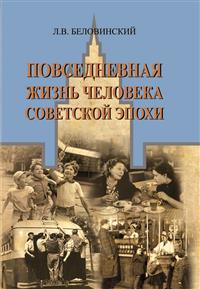
A children's crusade, the first totalitarian flash mob and a queue in childhood: Gorky talks about books dedicated to the Soviet lifestyle.Leonid Belovinsky. The daily life of man of the Soviet era. The subject world and social space. M: "Academic Project", 2017
Daria Dimke. An unforgettable future: Soviet pedagogical utopia of the 1960s. M.: Common Place, 2018
A grocery store on the outskirts of Moscow. The queue for meat. They give precisely the “meat” - beef, the basis, precisely by this word and called. The most unsuccessful pieces remained on enameled pallets, and the line is to persuade the saleswoman to go to the workshop and bring a new portion of the chopped. Sorry intonations are used, but there are carbonarians who want to complain. Suddenly the saleswoman does not withstand. Having lifted up, raising his bloodied hands, the saleswoman shouts: "Every day - meat, meat, give you to you, insatiable!" The line for a moment is calming down, dumbfounded, but then it caught on and crumbles with an informing laugh: “What? And really, we want meat! ”; "We are insatiable, yes!"
In the yard is 1984. I allowed myself to give a personal memory not out of a desire to remind, “how bad everything was,” as opposed to the choir of lovers of the late Soviet paradise; This is completely flat. But in that scene everything that was for me was the contents of my adolescent "Soviet" life. Hard knowledge of the ritual: each of the stood queues knew how to approach and how to integrate, to what extent you can “press” the saleswoman, and when it is better to turn on the “orphans”. A clear awareness that the priestess-distributor can afford with her unexpected ancient pose: it depends on her what piece you get, she is a kind of judge (although, perhaps, her scream was not a break of his powerful power, but by the despair of a tired village girl who hated Moscow for the fact that in her “meat is eaten every day”).
The stuffy interhuman relations that were mandatory at any, even such a simple way as buying a piece of beef, social action (like Walter Benyamin: to get something, we must either love or pay)-did not work in Soviet everyday life and we must “love”. But the main thing is the game. I spent my adolescence in lines - this was my help to the family, and my childish self -esteem was built on the fact that I "can stand", "I can buy." I lived a quasi -layer everyday life, but acutely saw the game structure of this life. To what extent the shameless frankness of this game is a sign of precisely distorted Soviet everyday practice, and to what extent - the usual story of growing up and the inclusion of adulthood in the world? Obviously, a child’s view on an “abnormal” society is valuable precisely because the child under any device is acutely experiencing a period when the gap between the “ideal” and everyday becomes obvious.
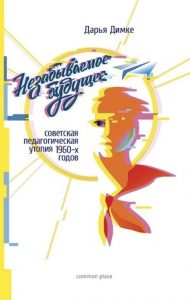 It is about this, partly, the wonderful book of Daria Dimke, describing one of the most interesting in Soviet history of children and adult games-a utopian pioneering commune of the sixties. And at the same time, it was the children's view of the “Soviet” that became the basis of the much more “heavy” academic book - the labor of Leonid Belovinsky “The everyday life of man of the Soviet era”. Belovinsky - professor of the Moscow State Institute of Culture, Doctor of Historical Sciences - specializes in the history of everyday life and material culture, he is the author of the encyclopedic dictionary on the history of Russian pre -revolutionary life and three -volume "Life of the Russian inhabitant"; In 2015, UFOs released another of his encyclopedia - "History of Soviet everyday life." And now - seven -part -time consolidated work with the subtitle "The Subject World and Social Space."
And this work was written by the former boy, like me, who was able to stand in line for hours:
“In the declining years, it seems that half of childhood passed in these lines behind simple bread, from 8 to 14 years old; But this, of course, is an exaggeration, vices of memory. Since the father was busy at the factory, and his mother was farm ..., the daily supply of the family of bread lay on me. Father jokingly even called me a "supplier." In the summer <...> the queue, exclusively from old women and children, less often women of working age, was located in the courtyard of the store. Time stretched slowly, and now some old woman calls the boy faster: run, they say, to the bakery, find out how to do it. After a while, he returns and reports: they begin to load into the van. After, maybe half an hour (no one has hours), a new messenger flies to a not so close bakery. Yeah, they already sign overhead. The old women begin to move closer to the window ... Well, after unloading the bread (a cart in a dirty special forces served bread in a window of several loafs - of course, with dirty hands - but this was not a norm and objections: there was no dirty bread), the first lucky ones left with the coveted prey. "
Actually, this look of the lad who knows that the bread does not happen dirty, and who knows about the fate of the skipper of the factory tugboat, the night and day of the surviving (epic entry) for flour, and did not convey it to the door - in the toll, the package burst “like a bomb”, showered people with a white cloud; The skipper shouted, shaking the scraps of paper: "So for this we fought in the civilian?" And he was arrested - and there is the ideological support of the book. Her goal, according to the author, in opposition to "the disappearance of the little things of everyday life, already forgotten by modern generations."
There are abundantly a lot of books about Soviet everyday life, it is a popular reading and a popular field of research; Many of them are elegantly invented and curatively made effectively - why does this text seem to me important? Well, I would have read the book of Leonid Vasilyevich only because he, with his old -school tradition, has never used the word “narrative” in it. But in fact, this is not only a book of memory, although some numbers and facts given in the text rarely can be found. In Belovinsky, you can find an exceptionally complete collection of all Soviet prices, regarding which they love to argue sweetly on Facebook (“Oh, forgot, and how much did it cost milk?”).
 Its other figures are phenomenological. For example, it gives the number of divorces in "youth" cities (in Togliatti up to 90 percent of marriage) - and this is a rare and important evidence. I first saw a document on the “First Soviet flash mob” - March 28, 1947 (according to the note of the Minister of Internal Affairs of Kruglov, submitted to the members of the Politburo), “from 5 a.m. to 7 a.m., the Moscow police officers found and removed leaflets in the Kuibyshevsky, Zheleznodorozhny and Shcherbakovsky districts of Moscow. Leaflets were on the walls of public restrooms and on houses, past which there is a large movement of the people. The text of the leaflets is as follows: “To everyone! All! Citizens of Russia! Complete your duty-and henceforth on every Sunday of every month. At 12 hours on April 6, a silent demonstration will take place in the center of Moscow. Your safety is guaranteed. Take the bag bags. <...> We demand bread” ”.
The number of documents and evidence given in the book is more than great - this is truly many years of gathering. But not only in them the value of the text. She is in cross -pollination by meanings.
A fair part of the book is a description of the subject world, and it becomes clear that things are ideal witnesses, since they are in their very natural evidence. Each described object or everyday sign is overgrown with an additional plot. The disappearance of funeral processions in cities and the use of buses “not distinguished in the stream of movement” as hearse bafals change the very structure of grief and memory. The story of two classmates, one of whom lived in a factory hostel, in a huge hall, where a corner was fenced by a family, and the second in a poor but separate room, introduces the topic of constraint. The inhabitant of the corner, going into a friend's room, says: "You live so well!" - And he admits that he was always shy of his poor housing. But now - is already shy that he lives "better than a friend."
Three types of constraint at the same time - physical constraint; constraint of the "victim" - the shame of poverty; The constraint of conscience as the shame of wealth. The description of the teapot becomes the history of the road, the berth, the “socialization of boiling water” (the kettle was taken to the train to get hold of hot water at the station) - and, wider, the history of Soviet tea drinking as consolation, as metaphors of need in any warmth. Belovinsky describes “poverty jewelry”, an amazing decor of Soviet village houses: so, in the hut of the Big Vladimir village of Golovino, Christmas toys are suspended to the ceiling of the room - and then the plot of the construction of the social norm, that endless experimentation game that the country lived, is unfolding. This is a plot about the Christmas tree and flickering of a new order. The most interesting in our own way - perhaps, we already know on fresh examples how bizarre, using enthusiasts, with checks and retreats, with “throwing up” completely ridiculous scenarios, can undergo ideological construction.
In 1922, on the first day of Christmas, anti -religious processions and carnivals were held in the cities; The Christmas tree of the Bethlehem star was put on a funeral wreath. Following the results of the Komsomol Christmas, a resolution was adopted on the establishment on January 7 of the “Distribution of the Gods”. But already in 1924, it was decided to abandon the gross forms of anti-religious struggle. In 1930, the carnivals were again held, after the adoption of the Constitution of 1936 it was again ordered to stop. In 1931, the poem “Only one who is a friend of Popov, is ready to celebrate the Christmas tree, appeared in the magazine“ Chizh ”. Komsomol patrols walked around the apartments and checked if there was a Christmas tree. That's why the children are joy! And 1935 in Pravda appeared an article by the Secretary of the Central Committee of the Communist Party of the Communist Party of Ukraine Pavel Pustyshev “Let's organize a good Christmas tree for the New Year to the children!”. She had excellent words: "Some, only" left "benders, glorified this children's entertainment as a bourgeois venture." In the same year, the production of Christmas toys was started. In 1938, Postyyshev was arrested, and immediately “anti-alcohol” public performances appeared-but the actions did not take. Winged swings, not life.
By the way, immediately after the letter of Pustyshev, a newspaper campaign began, where without it. The newspaper, for its happiness, was still the main propagandist. They wrote romantically:
“On December 31 in the evening, in fact, it was really good in the park. A sparkling Christmas tree flaunted at a children's skating rink. The guys were passionate about the guessing of the “main secret of the Christmas tree” - “What is four P”.
“I guessed right away,” one of the joyful pioneers stood at the gate of the park told us, “Four P” is Pavel Petrovich Postystyshev. ”
This enthusiastic pioneer is not a hero of Belovinsky. Leonid Vasilievich does not think about the practice of charming Soviet life. In his “Encyclopedic Dictionary of the History of Soviet everyday life” the first word is “lampshade”, and the latter is “coal box”, in which street children traveled under the wagons. Between the lampshade (an attempt to preserve the common sense of private life) and a coal box (in which not enthusiastic children hid) and the space of his country, silently living a heavy, undivided life.
But he is a boy, standing behind bread, with his 1942 birthday-almost a peer-friend of those teenagers who were written by Daria Dimke, the master of anthropology of the European University in St. Petersburg, a researcher at the Resest Publica Center. In the book “An unforgettable future: the Soviet pedagogical utopia of the 1960s”, it analyzes the case of a successfully implemented utopian project-the Leningrad commune of young Frunzans, which has existed from the late fifties to the mid-sixties. This is a powerful game that confronts the “big public game”, but not aware of this. Real utopia inside the declared utopia.
Look at one of the practices of young Kommunarov: we are talking about the Operation Mirny Morning, which celebrated the day of the beginning of the war. Scene - summer labor camp; It was this type of camp that appeared as a result of the educational reform of 1958 and "became the field on which the educational experiments of the thaw era unfolded, a kind of enclaves in which thaw idealism was reproduced."
The monument was opened at night from June 21-22 - on the day of the beginning of the war. We quote the passage of the article of one of the communities dedicated to the installation of the monument:
“That day we did not have time with his comrades to the evening fire. From the boards allocated by the chairman, we made the obelisk to those who did not return to the village of Klimovo from the war. Before we could return to our own, the horn raised the whole commune in alarm. The silence is unusual. Four in the morning. We are standing on a ruler dedicated to the day of the beginning of the war. Slowly the whole village converges to the obelisk. In old women in black scarves, we recognize the mothers of those whose names brought out a freshlywedn tree tonight. The men are talking about something. Then the chairman. Only the babies that women took with them do not cry. ”
In subsequent years, this ritual was repeated at every summer collection. After the solemn part (the laying of wreaths and reading of poems) ended, the Kommunars went to work on collective farm fields. The work in the morning of the start of the war was especially important for Kommunarov:
“We lay wreaths and hear the voice of the duty commander:“ Volunteers will go to work on the field. Step forward, volunteers! ” The march of silence we go to the fields. Volunteers are all. A fog is creeping over the river. The sun rises. We are wearing furrows. Hour, second, third. There is silence above the field. Between the furrows, inclined banners froze in the guard. ”
Everyone cry except babies; In the observation, the recognition of what is happening is “super -landed”, because in everyday life everything happens just the opposite. In this night vigil, a home -made monument erected by children (“the state of the war to the heroes of the war in the early sixties practically did not finance”), ascetic work after a sleepless night - the whole essence of communal practices:
“Children brought up on the stories about the heroic peers and exploits of adults themselves dream of the same exploits, since becoming a“ real person ”, an adult, in this system of values means to accomplish a feat. Educational technologies invented in the commune of young Frunzans were created taking into account these needs. That is why the communal fees (which took place during the summer holidays and an important part of which were helped by collective farmers) were focused on constant stress (both physical and psychological). ”
Daria Dimke after sixty years, Nanovo opens this amazing story. But how could the communal movement appear?
In 1958, the Law on the Communication of the School with the Life and the Further Development of Public Education in the USSR was adopted; In 1961-the decree "On the joint work of the housing and contributions, the school and the whipping enterprise at the place of residence." All these parts of the famous Khrushchev educational reform (at the same time, the secondary school became eight and eleven years old and received a new name “general education labor average school with production activities”, vocational schools appeared, and a network of pre-school education was expanded), which became a need for several reasons: they needed qualified engineers and, most importantly, workers- growing up the first generation- the first generation- the first generation grew up the first generation. children of the military demographic pit. In addition, women finally went “to work” - the sixties were an era of self -realization and friendship, but not a family. The children had to be occupied, and occupied with a useful business.
At the same time, the air of the sixties itself - with the cult of sincerity, purity and reformation, returning to the “original” revolutionary text, to the “cleanliness” of the twenties, to the present case - contributed to the emergence of new pedagogy and new people, the first conscious “significant adults” ready to engage in children. Finally, on October 31, 1961, at the XXII Party Congress, it was announced that the current generation of Soviet people would live under communism. It is necessary to remember the atmosphere of those years - society was inspired. Children who were the first to enter the communist world should be brought up in a new way.
In 1961, Vladislav Krapivin opened the Caust Clound club (later he writes a “boy with a sword”, a book that has become a kind of new covenant of children's “intransigence”, and unwillingness to live according to “unclean” adult laws). And in 1959, Igor Petrovich Ivanov, the inventor of the KTD methodology (organization of collective creative affairs) and the pedagogy of “cooperation”, becomes one of the founders of the commune of young Frunzens (KUUF).
It was his magical technology that led Kommunarov at four in the morning to the line near a home -made monument. It was he who invented the exploits and told the children that the collective farm field was “burning”, and therefore it was necessary to remove it at night, under the light of the tractor headlight, which could be called a role -playing game if there were no jointly living practice of the utopian.
Дарья Димке умно и тонко анализирует ритуалы и игры утопического сообщества. Так, она обдумывает практику «Откровенного разговора», общего сбора, на котором обсуждался каждый коммунар. Казалось бы, советский ребенок, имеющий опыт «проработки на школьном активе», должен узнать в этом ритуале давно знакомое. Но Дарья доказывает, что «откровенный разговор» как раз противоположен этому опыту: в обычном школьном коллективе проработка или чистка — это имитация искренности. И если в «откровенном разговоре» участвует «сообщество единомышленников, чувствующих групповую когезию», то проработка — формальная репрессивная практика.
Не чистка — но очищение, то есть практика гораздо более действенная и гораздо более опасная, ибо не предполагает отстранения. Своего рода коллективная исповедь наоборот. Но Димке, нужно сказать, не идет по простому пути — не рассматривает коммуну как, возможно, токсичное сообщество. Детская вневременная безжалостность, подстегнутая острыми повседневными практиками и отроческим самоуправлением, не кажется ей важной проблемой коммуны. Никакого повелителя мух — хотя одну из своих статей, предваряющих выпуск книги, она назвала «Крестовый поход детей». Ей гораздо важнее определить коммуну в контексте времени (и в контексте других сообществ подобного типа — кибуца и коммунитарной общины) и описать действующие механизмы сообщества, ставшего для своих членов «лучшим временем жизни» и проведшего их через опыт самоуправления и «эмоциональной» оппозиции. Дарья подчеркивает, что коммуна была не оппозиционна окружающему миру и единственная особость, которую позволяли себе коммунары, — считать себя более искренними, чем иные, и видеть добродетель в переживании «индивидуального» акта веры.
Димке описывает начало и конец утопии: дети исключают из коммуны основателя Иванова, осознав в результате обнародования одного из его смелых проектов, что являются «подопытными участниками эксперимента»; коммуна некоторое время живет без главы; наконец, наступает время, когда вышестоящие организации выключают режим благоприятствования всем подобного рода сообществам. Children grew up. Игры больше нет. Остается только большая, общая для всех, взрослая игра. В наших широтах — особенно причудливая.