
Translated material
Russia was again in the top five most working countries
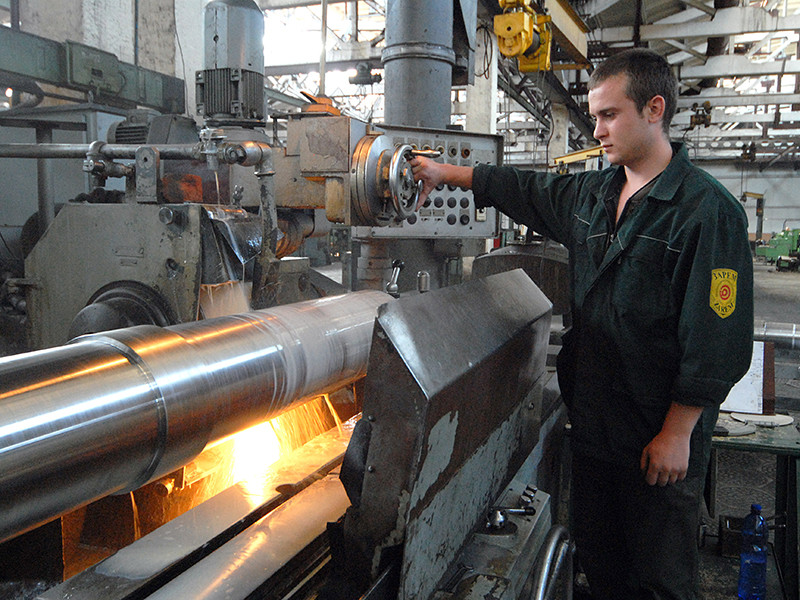
For the second year in a row, Russia has been closing the top 5 of the most working countries of the world. From the report of the Organization of Economic Cooperation and Development (OECD) on work and employment it follows that in 2017 the average number of hours worked by Russians increased to 1980 (six hours more than a year earlier), and this indicator for the first time has grown since 2014, RBC notes. However, in terms of labor efficiency, the country, as before, is located at the bottom of the rating.
The leader of the rating in the report covering the data for 37 leading countries became Mexico (on average 2257 hours worked), then Kosta Rica (2179 hours), South Korea (2024 hours) and Greece (2018 hours) follow. The ten most working countries also included Chile, Poland, Israel, Latvia, Portugal.
Over the past year, Russians worked 221 hours more than on average workers in the OECR countries (1759 hours). Citizens of the Russian Federation worked more only in 2012-2014 and 2000-2008. Pikov on labor load was 2007 (1999 hours).
Rosstat appreciated the actual working hours of workers at large and medium -sized enterprises in 2017 at 1759, in 2016 at 1737 hours, the director of the Higher School of Labor Studies Vladimir Gimpelson told RBC. According to him, such a weak -wing dynamics of the time worked does not mean that the Russians began to work more, but reflects changes on holidays and working days.
As for the "quality of work" in the understanding of the OECD, Russia is noticeably lags behind this indicator from leading countries. In particular, by the quality of labor income, under which the OECR has in mind the total hourly earnings expressed in dollars and taking into account the degree of uniform distribution of income among the population, Russia takes ninth place from the end with an indicator of $ 4.1. On average, this indicator is 16.8 dollars.
According to the statistics of the OECD, in 2016, all working Russians created 23.7 dollars of gross domestic product in one hour. For OECR countries, this indicator is twice as high as (47.1 dollars). Rosstat evaluates the labor productivity index characterizing its time change. According to the agency, in 2015 it decreased by 1.9%, and in 2016 - by 0.3%.
Russian Prime Minister Dmitry Medvedev said last summer at a meeting of the Presidium of the Council for Strategic Development and Priority Projects that low labor efficiency in Russia is associated with the lack of sufficient competition in the economy, technological lag, insufficient knowledge among companies, regions and federal authorities. Then the project was approved to increase labor productivity.