
Translated material
In Austria, they increase the maximum working day to 12 hours. The government says people will become freer
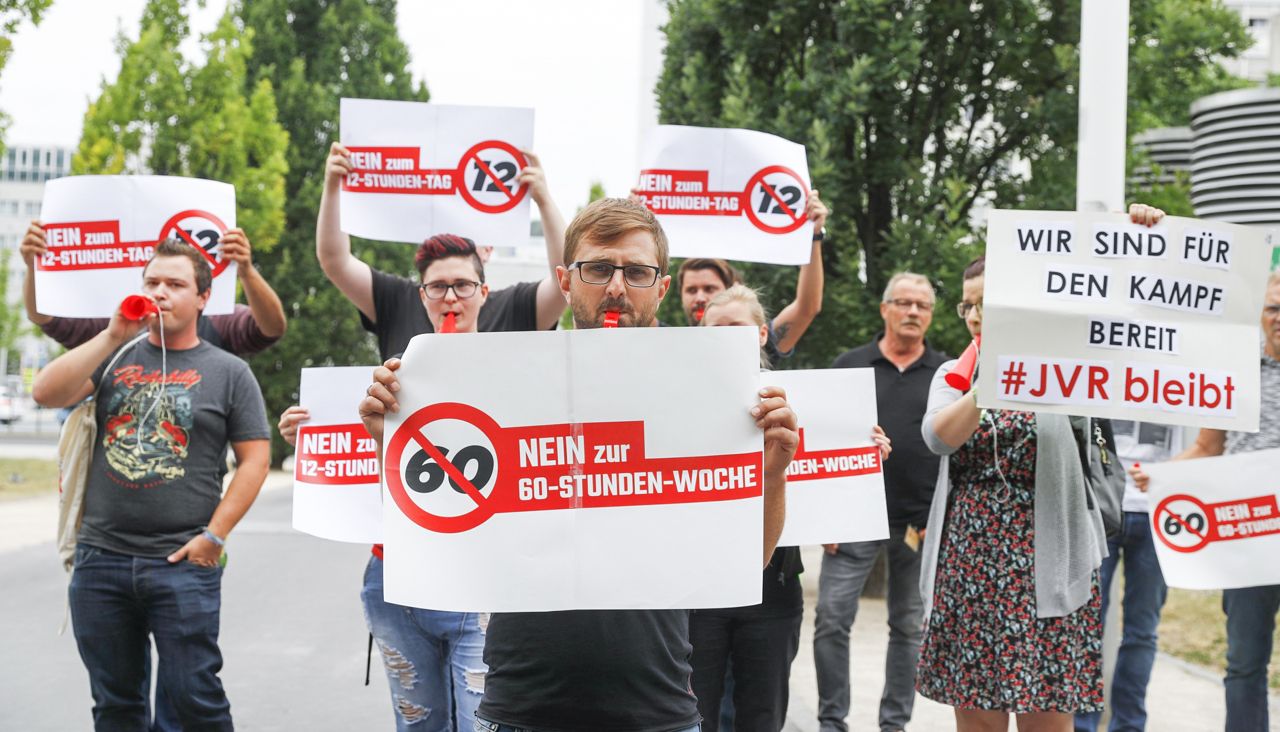
On July 5, the National Council of Austria voted for the law on a flexible organization of working hours. The maximum duration of the working day in the country is increased to 12 hours, and the working week can be 60 hours. The law should still be approved by the upper house of parliament, Bundesrat, but there the majority belong to the ruling coalition of the Austrian People’s Party and the Freedom Party, which jointly developed the law. New rules will enter into force on September 1.
A 12-hour working day will not become mandatory. Its normal duration, as now, will be 8 hours, and all processing must be paid. Moreover, a 12-hour working day could be introduced earlier, but only in the case of a “threat of irreparable economic damage”. But quite often the duration of the working day could be increased to 10 hours. Now - up to 12 and in even more cases.
Now the consent of the trade union organization is necessary to increase the working day. It is no longer required . Whether to increase the working day, the employer and employee will decide among themselves. The developers of the law believe that in this way they make a person less dependent on colleagues and expand his individual freedom. Opponents say that the law stimulates the unhealthy (literally) competition, since those who agree to less comfortable working conditions will receive advantages.
Formally, the employee will have the right, without explaining anything, to refuse to work longer. Because of this, he should not have problems either with remuneration or promotion. Opponents of the law are afraid that it will be extremely difficult to track this in practice, and the rejection of a longer work will become a problem for employees.
The working conditions on weekends and holidays are also changing . Now it is prohibited for all other than representatives of individual professions: doctors, police officers, firefighters. Now the company can decide that four times a year its employees go to work these days.
Any restrictions on the time of work do not concern top managers with whom the contracts are concluded on some conditions. Now they are added to them the category of "workers with special responsibility." But what does this mean, so far no one understands. Some Austrian media even suggest that even nannies or educators in kindergarten can be attributed to them.
The developers of the law claim that it will give additional advantages to Austrian business. First of all, this applies to the sphere of tourism, where a flexible work schedule is especially common. The employees of hotels and restaurants were allowed to reduce rest time between shifts from 11 hours to 8 by individual agreement with the employer. But, again, without a collective agreement with the participation of the trade union, as it was before.
The new law caused street protests. Last weekend, more than 150 thousand Austrians took part in mass shares - this is a record since the election of conservative Sebastian Kurtz by the federal chancellor in December 2017. In the National Council, the main opponent of the law was the Social Democratic Party.
The ruling coalition accused the opposition of non -parliamentary methods of struggle. So, one of the deputies of the People’s Party said that many of his colleagues found cobblestones and tombstones on the threshold of their houses, which light in Catholic cemeteries. Social Democrats said that this is not a threat, but a symbol of hard work that can reduce a person to the grave.
Dmitry Kartsev