
Translated material
A coach who does not explain anything
How Stanislav Cherchesov came to the best in history the result of the Russian national football team
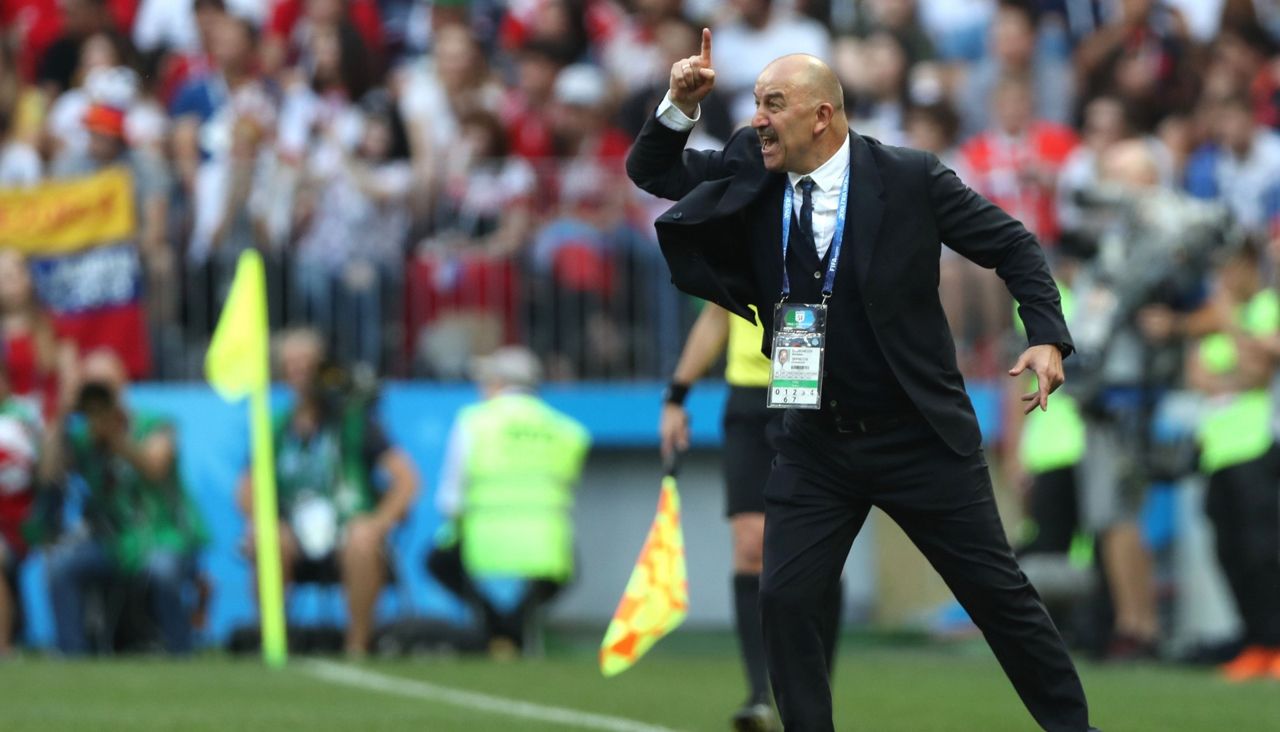
On July 7, the Russian team will play in the quarterfinals of the World Cup with Croatia. Even if the Russians will not be able to pass the Croats, they will still be heroes: the national team never reached the playoffs of the World Cup before. Back in early June, the same team occupied the lowest place in the FIFA ranking among other participants. She could not win seven matches in a row, looking at her performances was boring, and coach Stanislav Cherchesov annoyed his every new phrase at press conferences. Journalist Dmitry Kurkin tells how Cherchesov managed to squeeze the maximum from this team.
Ghost coach
In mid -May 2018, the German football union organized a show dedicated to the show of the show - with the participation of the head coach of the national team Joachim Lev. In the middle of the event, the hologram of his Russian colleague Stanislav Cherchesov in full height “came out” to the stage. Cherchesov himself was in Moscow at the time of the conversation, and his virtual appeared in Germany thanks to a technology that previously allowed to create voluminous images of Tupac Shakur and Michael Jackson . According to eyewitnesses, the dialogue of two long-standing friends-in the early 2000s, the lion was coached by the Austrian club Tyrol, in which Cherchesov slowly ended his goalkeeper career-looked somewhat unusual, but two coaches talked very warmly.
The German national team mentor considered the phenomenon of a ghost coach to him with a bad omen. Then the metaphor was read differently. In the right armchair - a full -blooded coach, world champion, pride of a well -established German player training system, a specialist in which the national team in large tournaments, if it lost, was no earlier than the stage of semi -finals. In the chair on the left is the “virtual” coach of the national team, which at that time seemed neither good nor bad - but literally non -existent. Three weeks after that press conference, the Cherchesov team will fall to 70th place in the FIFA ranking-the lowest in its history-and will encroach on the anti-record: eight matches without victories in a row (this has already happened in the history of the Russian team, but not under the leadership of one coach).
There have not been such underestimated expectations from the Russian national team. Before the championship, the shortage of central defenders was so strong that 38-year-old Sergei Ignashevich was persuaded to return to the national team. Three months before the championship, he was left without one of the best forwards - Alexander Kokorin broke the cross -shaped ligaments and dropped out for six months. Despite the personnel problems and the inexpressive game, Cherchesov convinced the press that his team “took a step forward”: “We are going our own way. The task is to believe in us. With our game, we can give food to the fans. ” Fans only angered such statements, not a single football specialist in the country caused such irritation. Cherchesov was rude to reporters at almost every press conference, made strange personnel decisions like a call to the third goalkeeper of 34-year-old Vladimir Gabulov.
According to the results of the first stage of the tournament, the Joachim Leva team flew out, taking the last place in the group, and the Cherchesov team won two victories and entered the playoffs. In the latest history of Russia, this has never happened; If you add Soviet history, this has not happened since 1986. The national team confidently “buried” the 1/8 finals with Spain, but then the “leg of Akinfeev” happened, and the Russians won.
A couple of weeks ago, the despised, unanimously resigned “Stas” (this familiar appeal was still the mildest of those who used Cherchesov) became a universal favorite. The main word after the games of the national team at the group stage is “change your shoes”, to rapidly change their attitude to the coach. Sports.ru editor -in -chief Yuri Dud, who called on the most authoritative players of the team on the day of the first match, in fact, shifting the coach, shifted literally.
No rise, no falls
Fans, perhaps, was announced by the figure of Cherchesov: it does not correspond to any generally accepted sports archetype. He was good as a player and as a coach, he could not complain about the lack of trophies - but it would never occur to anyone that this or that team lived with him with his golden age. He was never a player - a creator of loud victories.
He does not look like a charming physical school of an old school-such that he sprinkles with strong aphorisms at press conferences. And in the same way, Cherchesov is unconvincing as an effective manager of a new generation, who disassembles tactics with a tablet in his hands. Coach Boris Ignatiev, who made Cherchesov in 1996 the captain of the Russian national team, noted his "ingenuity, character, strict spirit, firmness to field players and leadership qualities." Valery Karpin, who played with Cherchesov, refused him exactly the same: “None of the field players felt this. Understanding the game? One could understand when you are next to the [midfielders] Pyatnitsky, with Ledyakhov - in the center of the field. And Cherchesov was at the gate - what is the understanding? "
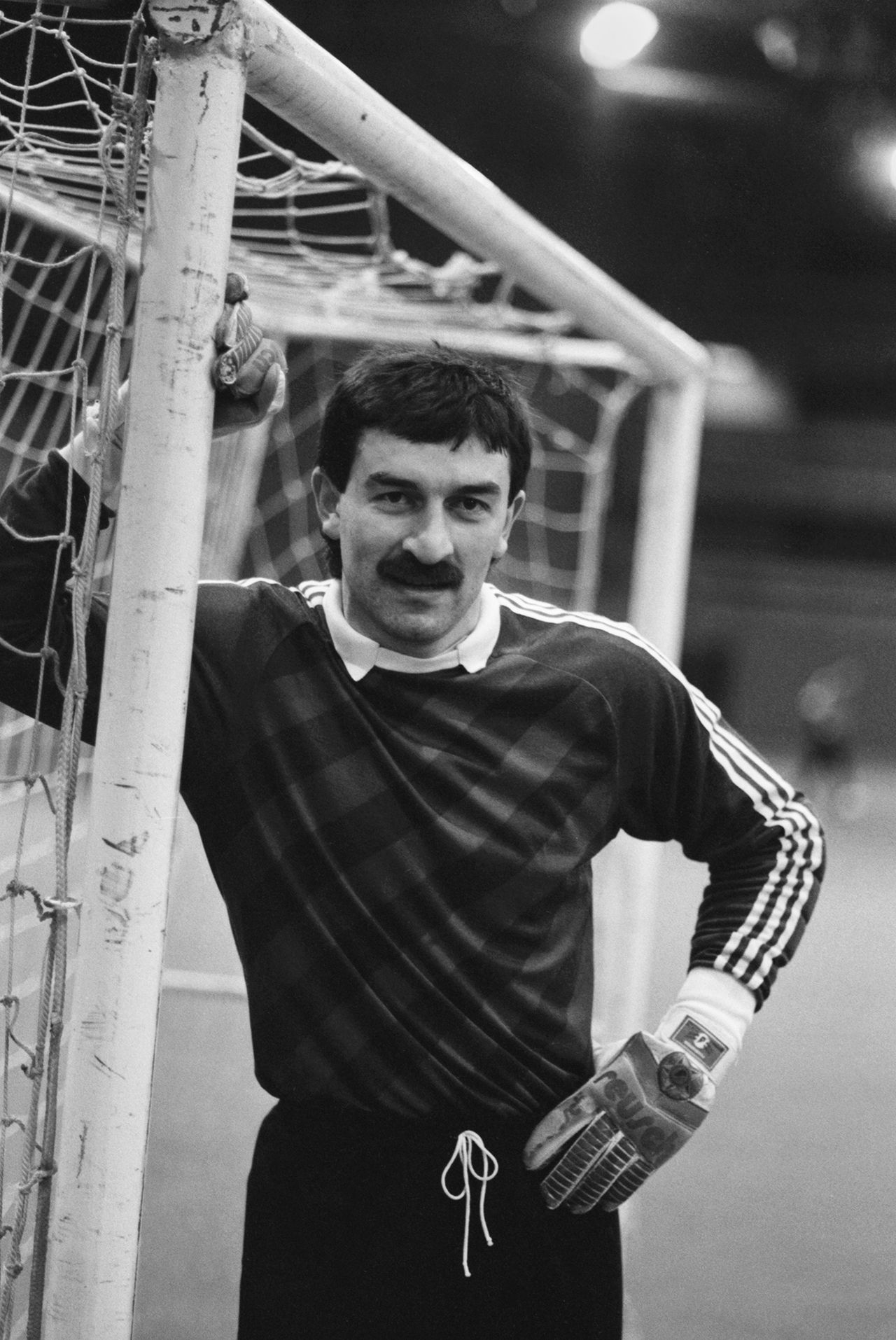
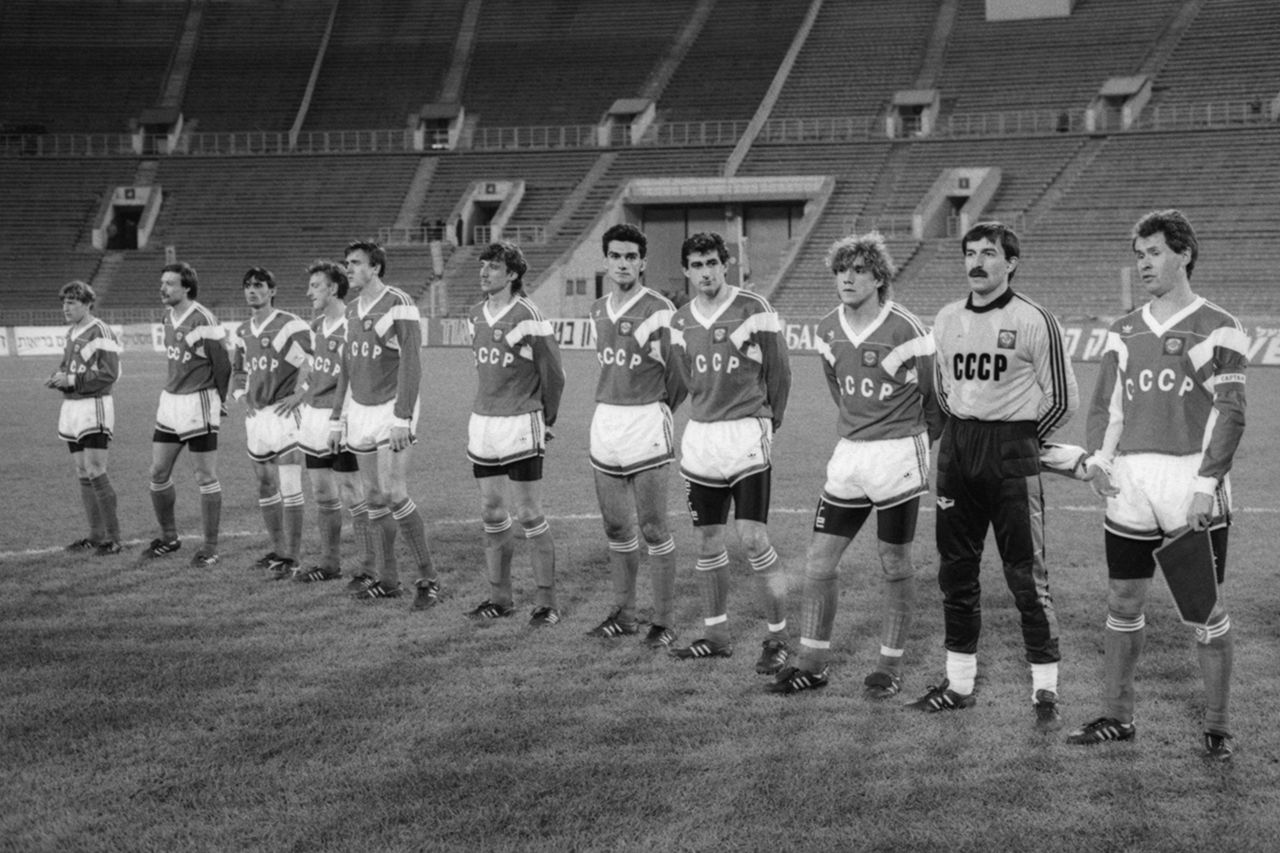
Stanislav Cherchesov is famous for his stubbornness, with whom he exposed the players who did not like him from the club. And the same integrity is adjacent to it with elementary courage. With his arrival at the Dynamo Moscow, one of the leaders of which was Guram Ajoev, and one of the owners was Boris Rotenberg, Stanislav Cherchesov Jr. and Gum Ajoev Jr. appeared in the club, and Boris Rotenberg Jr. began to regularly enter the field in the main composition.
The game quarry of the future coach of the Russian national team took place without bright ups and falls. He climbed the steps of the Spartak pyramid - from the Sports School in his hometown of Alagir to the Republican level to Spartak Ordzhonikidze (future Vladikavkaz Alanya), and from there to the All -Union level, to the Moscow Spartak, to the legendary Konstantin Beskov. The young Ossetian goalkeeper became Dubler Rinat Dasaev and sat on a bench for several years - until the moment Dasaev left for Seville. Then, in 1988, Cherchesov won competition with two other goalkeepers, Alexei Prudnikov and Mikhail Eremin. Over the next four years, he took one championship of the USSR and Russia, even reached the semifinals of the European Champions Cup in 1991. But before the appearance of big money in Russian football, it had been a long time, Spartak sold leading team players every year. Cherchesov chose an offer from an outsider of the Bundesliga - Dresden Dynamo.
In Germany, Cherchesov did not ask. He recalled how, in three starting matches for a new club, he missed “about ten” heads, and in the future things were not going better. Dynamo for four seasons was one of the outsiders and in 1995 flew to the second division.
After that, Cherchesov returned to Spartak twice again - the first time he had a hand in the absolute record of the Champions League for Russian teams - six wins of six at the group stage in 1995. The second time to another absolute record-six out of six in 2001 with a common difference of the balls 1–18-with the direct participation of the goalkeeper, who, for example, brought a goal in the match with Valencia.
Between these two returns, Cherchesov played for a modest - and, as a result, bankrupt - Austrian Tyrol. And in Austria, Cherchesov really settled down-becoming a coach, he often brought his teams there to pre-season fees. The Russian team also trained here in front of the home championship - and this was another reason for the irritation of the fans.
In 2002, Cherchesov went in the status of a reserve goalkeeper to the World Cup in Japan and Korea. There he told the 19-year-old Petersburg striker Alexander Kerzhakov that he would once lead the national team.
Domination. Creativity. Activity
Journalists did not ask Cherchesov about his coaching philosophy - perhaps in doubt that it exists. Meanwhile, the coach has an official website - with an ascetic design and more or less regular updates (there are news about the victory over Saudi Arabia, the site has not yet reported the rest of the matches). Cherchesova’s coaching credo is set out on the site as short as possible: “Flexible game system: 4–4-2 / 4-3-3 / 4–2-3–1. Offensive tactics. A clear distribution of tasks. Organization and tactical discipline. Domination in the game. Kreatativeness. Activity". This set is more like a line from a resume, but he really describes the game that Cherchesov tries to instill in his teams: pragmatic, economical, often based on the abilities of the opponent and almost always - from those resources of the players who are at the disposal of the coach. True, for some reason, the site is not said about the national team of the national team on the site.
Cherchesov is really disassembled by the opponent. He deprived Saudi Arabia - an organized game in the pass when the ball was owned - and outplayed at the expense of simple awnings, which the opponent, inferior in growth, was not able to confront (so Gazinsky and Dziuba scored his goals). In a match with Spain, the coach returned to the scheme of five defenders - without abandoning it even when the not quite healthy player of the left edge of Yuri Zhirkov had to be forced to change to the nominal central defender Vladimir Granat. He deafly concreted approaches to the penalty area, and then reacted to the permutations of the coach of the Spaniards Yerro. For example, his attempts to strengthen the left flank of the attack due to the release of the striker of the Aspas. As a result, Cherchesov did not allow the opponent to do anything super -reference. For the Russian national team in its current state, this was the only chance to replay Spain, and Cherchesov took advantage of it.
The same pragmatism allowed Cherchesov at the club level to squeeze the maximum of his teams, but this always happened on short segments of time. Then the game fell apart, and the coach did not linger for a long time. Of all the coaches of the Moscow “Spartak” of the times of their chaotic shuffling in the second half of the 2000s, he approached gold and lost it literally in the last seconds of the season: in the 90th minute of the match in Ramensky Alejandro , the gates of Zenit, without allowing Saturn to equalize, and “Spartak”-ahead of the Petersburgers in table. Cherchesov was fired from the native club. “Terek” rose with him to eighth place in the League - a record at that time. But then he was fired by the head of Chechnya Ramzan Kadyrov with the wording "made serious tactical errors." The Moscow Dynamo brought to ⅛ the Europa League, winning six out of six matches at the group stage. And from Dynamo, the coach was also dismissed -only because of intrigues, and not because of bad results. Having accepted the “Legia” in the fall of 2015, the Poor Flagman team of the Polish League, eliminated a lag of ten points and made a gold double, winning the championship and the country's cup. And this time he left himself - without receiving money for transfers of football players for a performance in the Champions League.
When the team began to look for a coach in the summer of 2016, they immediately remembered Cherchesov. His qualification was not so important; He has a suitable reputation in order to train not the strongest team: a tough champion of discipline, almost a dictator who communicates with players on the principle of “I am a boss, you are a fool”.
Cherchesov did not endure objections from the players and got rid of the so -called leaders of the locker room without hesitation. Whether he arranged conflicts to survive the team of those who disputed his coaching authority, or simply went to the principle, it is difficult to say, but the fact remains: any hint of disobedience of Cherchesov burned out with red -hot iron - even to the detriment of the result.
In October 2007, Dmitry Torbinsky was late for the installation of Cherchesov before the game of Spartak with the Ramensky Saturn - and, as a player of the foundation, did not even fall into the reserve. “I came to the installation on time, there is no Torbinsky. I closed the door, everything ends on this, ”the coach explained after the game, ending with a zero draw. Two points lost then, as a result, will not be enough for the championship.
Many Spartak fans still cannot forgive Cherchesov a quarrel with Yegor Titov: the club’s long -term captain and the legend of the club, along with the midfielder Maxim Kalinichenko, sent the coach to the double after a humiliating defeat of 1: 5 from CSKA in Luzhniki in the summer of 2008. The disciplinary measure did not help strengthen the fighting spirit - followed by two defeats from another fundamental opponent of Spartak - Dynamo Kyiv in the Champions League.
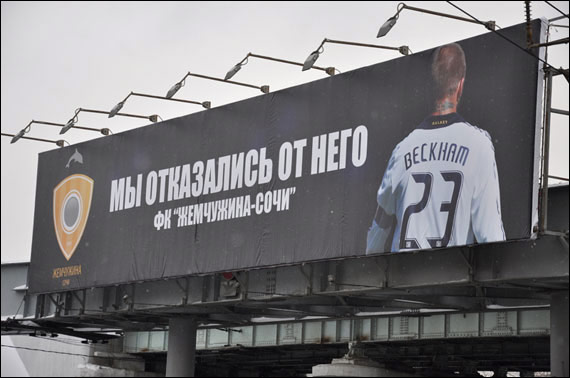
Similar stories then happened in almost all clubs where he worked. In the Sochi Pearls (an adventurous project that was remembered by a billboard with the image of David Backham and the signature “We refused him”), he managed to quarrel with the team leader Maxim Demenko. In Terek, he indicatively punished the Brazilian Maurisio - he seriously thought about leaving the club. In the Perm “Amkar”, club old -timers, Bulgarians of Pue and Sirakov fell under the distribution. True, both after a short -term link made up with Cherchesov and quickly returned to the composition.
Finally, the most loud conflict at Cherchesov took place with Igor Denisov in Dynamo in 2015. The midfielder told about him in detail in an interview with Yuri Dudu - just before the beginning of this world championship. “I'll put you quickly in place. Let's go to the shower - I’ll break your neck there, ” - probably not the most sharp words in the history of football that the player heard from the coach. But this was enough to conflict Denisov to declare Cherchesov unharmed. Under Cherchesov, Denisov no longer played a minute or in Dynamo or in the national team. Before the start of the World Cup, the theme of Nemzov Denisov, who had just held an impressive season and became the champion in Lokomotiv, became almost central to discuss the application of the national team. Deputy Prime Minister Vitaly Mutko, who knew Denisov from a young age, tried to intervene in the situation, but even he did not succeed.
Working moments
Should a coach be a tyrant or a flexible manager who knows how to find his approach to players with a complex character? There was no and there was no only true answer in football, since specialists achieve success in both the first and second type.
For Cherchesov, this question seems to not at all - he simply bends his line. For demonstrative flogging, he almost always chooses the team leaders, and in each case they hear about the same words : “I have to explain anything to you, I am the head coach, and this is my decision.” For Cherchesov, all these are just the next “working moments”, and he seems to be quite sincerely surprised why people pay so much attention to them.
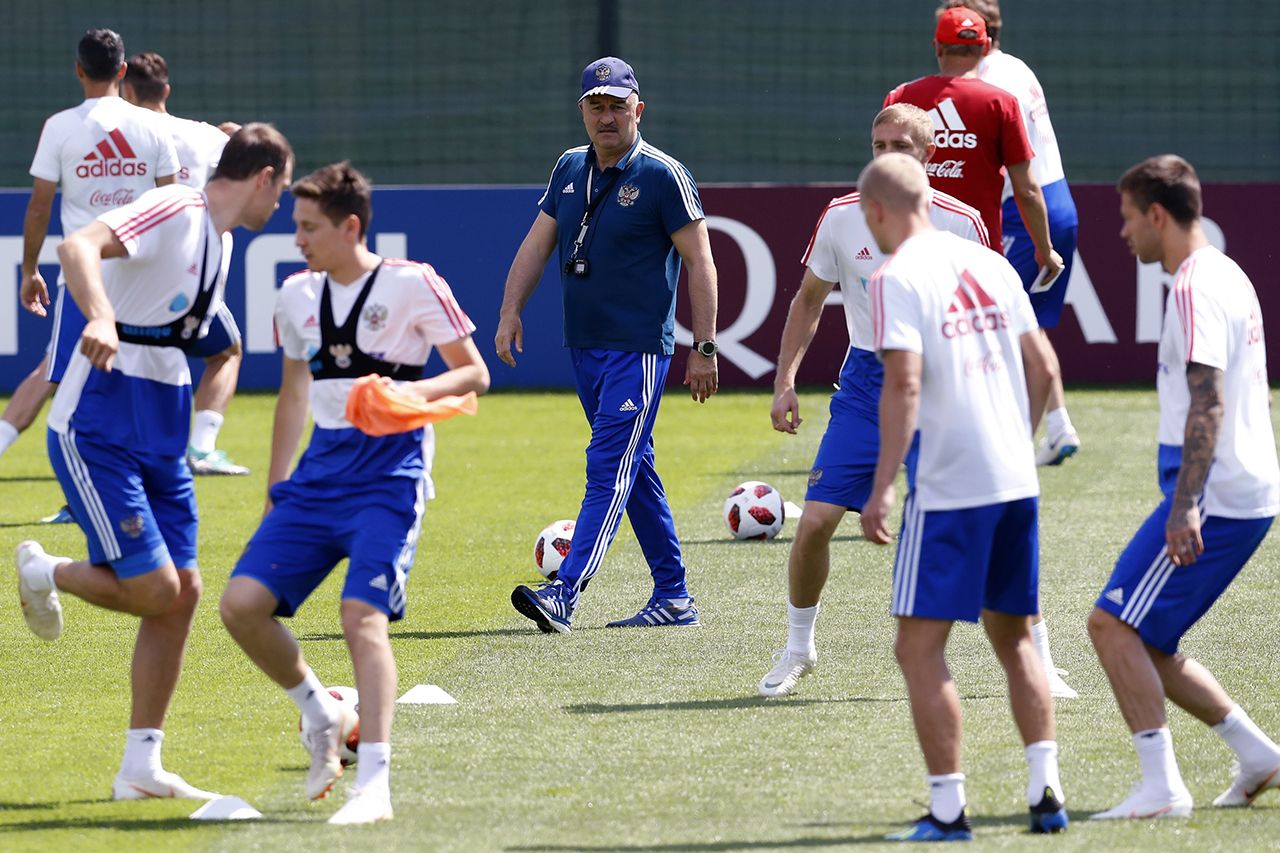
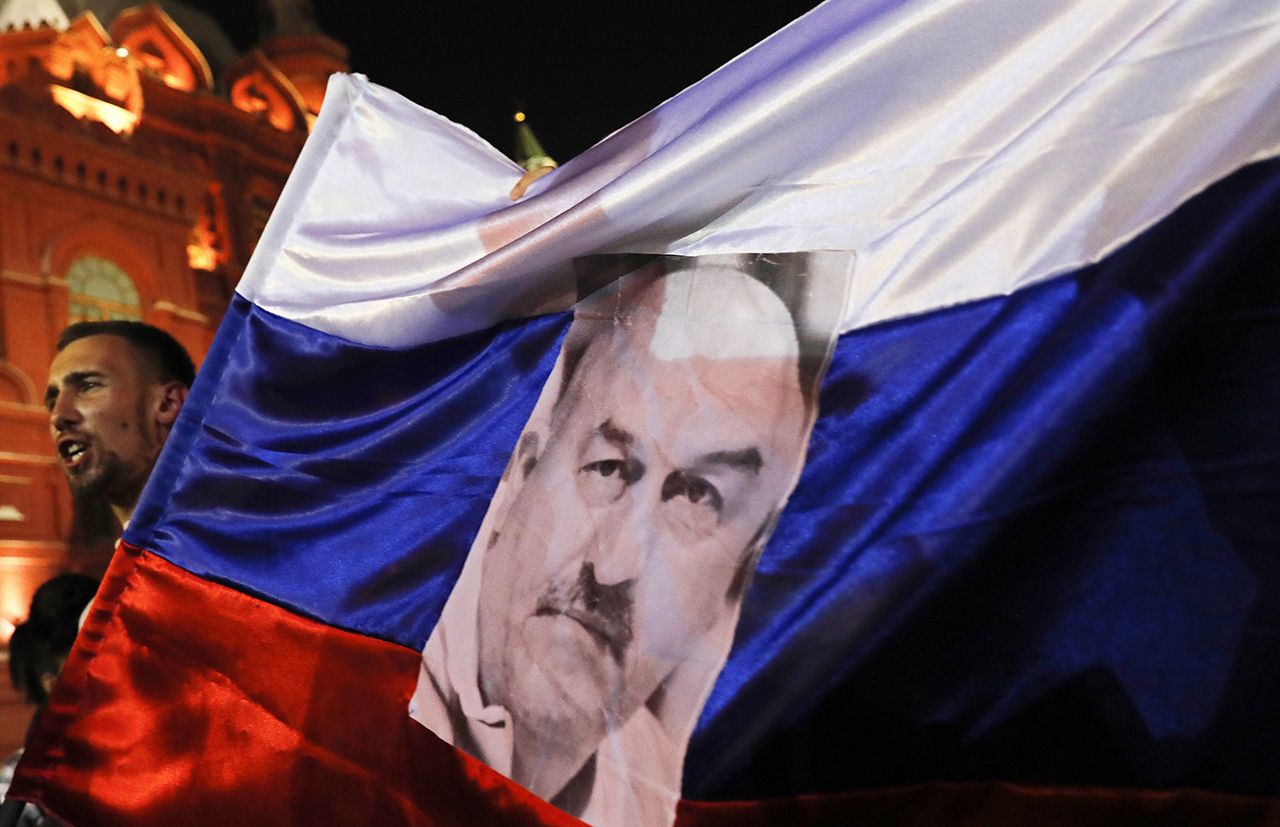
In the summer of 2016, the Russian team quite shamefully flew out of the European Championship. "We are shit!" - It was these words , according to Leonid Slutsky, who sounded in the locker room of the team after playing with Wales.
Changing Slutsky, Cherchesov seemed to agree with this statement and began to rebuild the national team with the usual pragmatism and pedantry: at press conferences, he categorically avoided the word “problem”. He insisted that comradely matches must be called "control". To such a team - playing from an opponent and a solving problem as they arrive - are not used to Russia yet. What else can be expected from her - probably no one understands. And the head coach reacts equally sparingly both to universal irritation and to the universal love that replaced him.
Perhaps the most correct way to perceive Cherchesov as a crisis manager. He accepted the Russian national team in its most unattractive form in thirty years - with a protracted change in generations and many personnel problems aggravated by the limit on legionnaires. The current success of the Russian national team took place regardless of the outcome of the quarter -finals, they have already jumped above their heads - and not thanks to a long -term strategy, rather, contrary to all problems in the football economy.
Cherchesov once again squeezed out the maximum from his team - at a short distance. The next season - after success in the previous one - Cherchesov was usually fired.
Dmitry Kurkin, Wonderzine