
Translated material
In Germany, a member of the National Socialist Underground was put in Germany. The group committed 10 killings, and opened it by accident
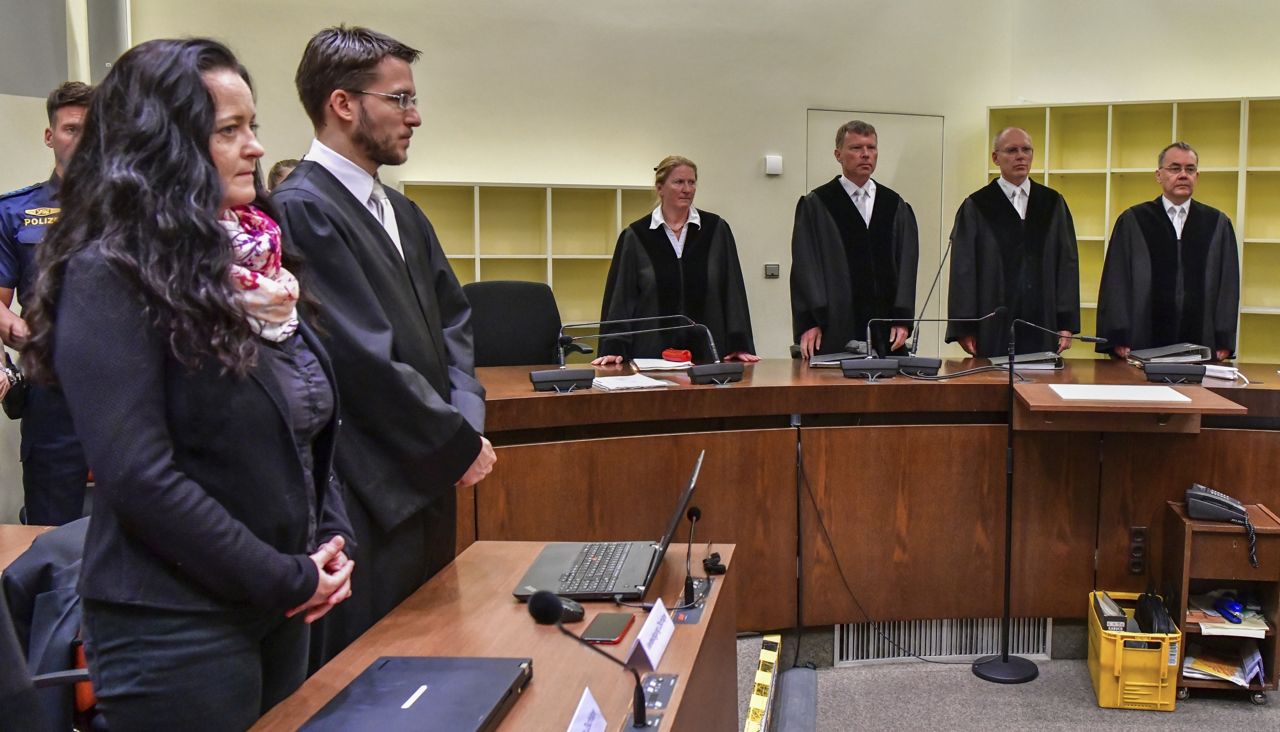
In Germany, a member of the National Socialist Underground group was sentenced to a life sentence. The trial of Beata Tsezhepa was five years old, almost 800 people were interrogated during this time. According to Die Zeit, the total expenses of the German government on the process amounted to at least 28 million euros.
Two other participants in the group - Uwe Mundlos and Uwe Bonhardt - committed suicide in 2011. Together with the Tsezhepe, the neo -Nazis accomplices were judged - four people received different terms for the conclusion that they were permanent assistance to the “underground”, knowing about their goals.
Neo -Nazis committed 10 killings in five and a half years. The first is in September 2000, the latter is in April 2006. Eight dead were Turkish immigrants, one - Greek by origin, another victim was a police officer. The criminals always shot from the same pistol - Cz 83 7.65 caliber - and the police were able to establish a connection between the murders quite quickly. But the motive remained unknown for a long time. On police jargon, a series of crimes was called “kebab killings” - with a hint of disassembling the ethnic mafia in the market of Fastfood establishments. In addition to murders, in June 2004, neo -Nazis staged an explosion in one of the immigrant quarters of Cologne, as a result of which 24 people were injured.
All three members of the National Socialist Underground grew up in the city of Yen on the territory of the former GDR. In the early 1990s, they agreed on the basis of interest in the extreme right ideas, which were particularly strongly spread after the fall of socialism and the unification of Germany. Iena is the second largest city in federal land Thuringia. In the 2017 Bundestag elections, the Law Popopulistic Party “Alternative for Germany” received the second result in the country after Saxony, also located in East Germany.
The group participants went underground back in 1998. Prior to that, they have been in neo -Nazi organizations for several years and participated in different actions. For example, they made a “hanging” dolls with a six -pointed yellow star on the road bridge, and also laid small bombs near various state institutions of Jena. After several such incidents, the police staged a search in garages that belonged to neo -Nazis. Fearing the persecution, Mundlos, Bonhardt and Tsese decided to hide. They wrote to like -minded people a letter in which they promised to "move from words to business."
It was possible to disclose the group accidentally in November 2011. Money for life members of the Underground mined, robbing banks. After one of the raids, Mundlos and Bonhardt set fire to their common mobile house, and then shot themselves. Soon Tsesepe staged a fire in their apartment in the Saxon city of Zvikkaau. A few days later, she surrendered to the police. Only after the searches did it become clear that it was these three people who were behind the murders of immigrants. The decisive evidence was a video in which the Tsepe was recognized in the crimes committed.
There is a lot of unclear in the case. The origin of the arsenal of 20 pistols, revolvers and rifles that were discovered in the apartment and mobile house of the underground participants is still unknown. It is also unclear why Mundlos and Bonhardt decided to commit suicide without resisting the police pursuing them.
One of the main topics for speculation is the role of the police and special services. Soon after the arrest of Tsezhepe, many files that were directly related to the group participants were destroyed - according to the official version, the expiration of the statute of limitations. The dossier for all three "underground" were instituted back in the 1990s.
In a cafe where one of the immigrants was killed, an agent of the Federal Constitution Service was lunch, which, however, did not respond to a crime. In court, he said that he had not heard shots. Meanwhile, the Der Spiegel magazine wrote that the agent did not hide his extreme right -handed views, and in his native village he nicknamed "Little Adolf."
Stern magazine, in turn, published a material stating that several employees of the German counterintelligence and American special services witnessed the murder of the “underground” policeman. The authorities deny this information.
Dmitry Kartsev