
Translated material
Tax authorities will not receive accounts
Corruption will save Russians from total fiscal control
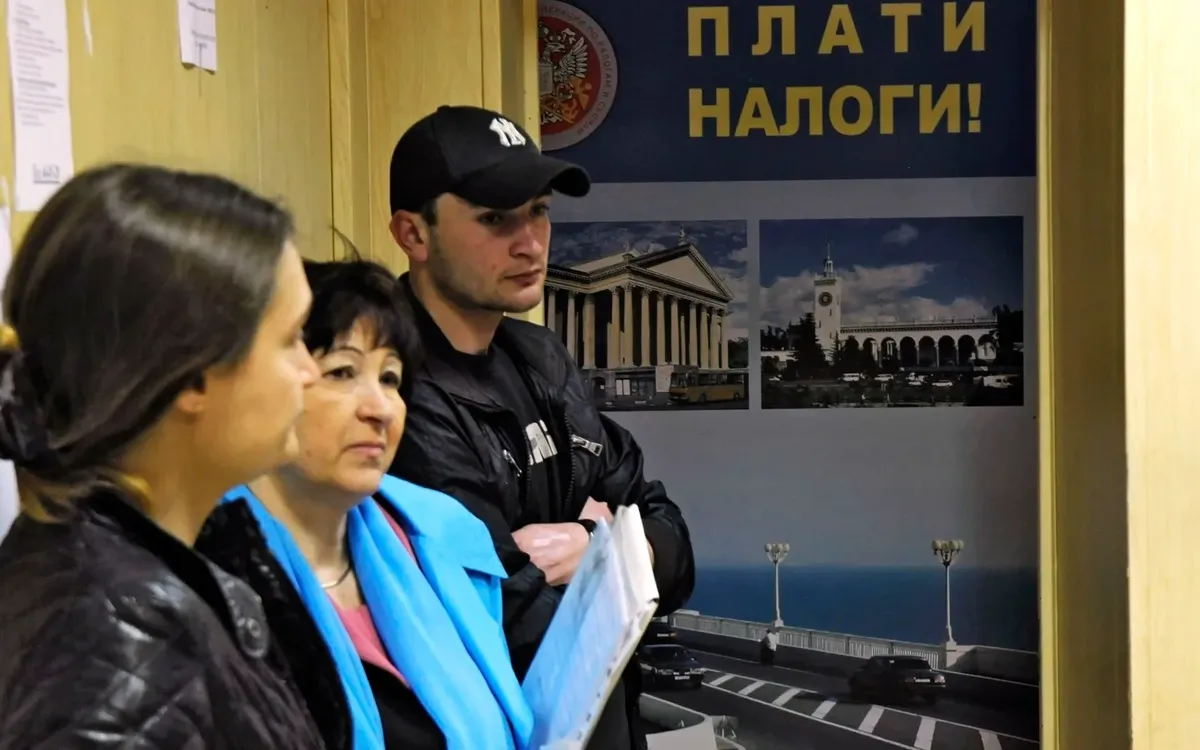
Recently, Russian tax authorities regularly become newcomers. In June, a rumor scattered on social networks that from July 1, the Federal Tax Service will be able to track all the banking operations of Russians to identify undeclared income and add taxes on them. Citizens were scared by the need to pay personal income tax for transfers from card to card, regardless of the amount and purpose of the transfer. The tax authorities publicly disowned this initiative. However, it soon turned out that sometimes viral news is more true than official refutations.
The tax service seeks to get the right to unlimited monitoring of banking transactions of Russians about the origin of the domestic tax system. Now, against the backdrop of general success in tax administration and the campaign launched by the government to legalize the self -employed, these attempts have again intensified. The Federal Tax Service sent a request to the Ministry of Finance with a request to make amendments to the Tax Code, allowing the tax authorities to request information about individuals of individuals outside the desk inspection framework, Kommersant said on Wednesday. If the amendments are accepted, the slightest suspicion of the tax will be enough for the bank to disclose information about the movement of the money of its customers. A new level of financial transparency is needed to combat “illegal entrepreneurship”, said the deputy head of the Federal Tax Service Daniil Egorov.
Formally, the Federal Tax Service can already access all banking information, but only if there is a decision to conduct a tax audit (not counting the operation from 600 thousand rubles and above - banks are notified by the tax automatically). The current trend is that the tax authorities are increasingly resorting to other control measures outside the formal framework of a tax audit - for example, they call and interrogate witnesses, says Igor Shikov, adviser to Russian tax and customs practice in the Moscow Dentons Office.
“The need to receive information about accounts on accounts is due to the fact that the tax authority is initially in a state of information deficit. The taxpayer a priori knows more about his affairs than the tax authority, ”the lawyer explains.
Now the system works as follows. If the tax authority has reason to claim that a person has not declared some income, then he sends an individual to provide an explanation within 5 days. The payer must explain that this is, for example, a loan, and provide relevant documents.
“Now the tax wants to do this in the format of current global monitoring. This goal itself is not illegal, because the obligation to pay taxes is valid for everyone, ”says Shikov.
The new monitoring algorithm will allow the Federal Tax Service to compare the amount of revenues to the expense account with the amount withheld by the employer or declared by the person independently by filing a tax return in the form of 3-personal income tax, and identify possible inconsistencies.
The tax request for the expansion of powers looks like an attempt to legalize self -employed, who, according to various estimates, in Russia up to 6 million people. To this end, from January 1, 2019, a 3 percent tax begins to be valid, which self-employed can pay using a special mobile application. But a new payment will not give a large fiscal effect - in the best case, several tens of thousands of people will register in the system, and is expected in the Ministry of Finance. It is assumed that the tax will be paid nannies, tutors, taxi drivers, nurses and other busy people who provide services to individuals for remuneration (for self -employed, working with legal entities, the tax rate will be 6%).
Recently, Tver tax inspectors, using the control purchase, exposed the home confectioner, who baked cakes to order and sold them through social networks.
People who rent apartments can also be at risk, without declaring the official fact of this.
But if the Ministry of Finance for various reasons does not consider self -employed as a serious fiscal reserve, then the Federal Tax Service seems to adhere to another position. For this, there are at least accounting reasons: in the structure of tax revenues of the consolidated budget, personal income tax takes second place, giving way to only VAT revenues. According to the Ministry of Labor, in the case of a “circumstances” of the shadow sector, the budget winning would exceed 500 billion rubles.
Nevertheless, the tax is highly likely to receive a refusal from the Ministry of Finance, Alexander Zakharov, Paragon Advice Group, told the “new” partner. Deputy Minister of Finance Ilya Trunin soon really stated that tax authorities are not needed by tax authorities.
“This is due to the fact that since 2006 the donation of funds between individuals has not been a taxable operation,” Zakharov said. “And, most importantly, the presumption of the non -profit nature of the translation between individuals acts, if they are not an individual entrepreneur.”
Perhaps the Federal Tax Service is counting on the PR effect from these discussions in the media so that more people will decide to register as self-employed.
Violation of the principle of declaration, according to which individuals must independently declare their income is fraught with a series of side effects. This is, firstly, about the risks of data leakage and, secondly, about the abuse of powers by specific tax inspectors. The same applies to the norm that donation and transactions between family members are not taxed. Oddly enough, here the Federal Tax Service’s ambitions are limited to the corruption of the Russian economy: the transparency of banking operations is disadvantageous to many influential persons who like to execute their assets for close relatives. As long as informal financial schemes remain the cross of Russian society, banking accounts of citizens are relatively protected.