
Translated material
"The criminal community is very happy"
The Law "Day in a pre -trial detention center for one and a half in the colony" is good or bad? Human rights activists, lawyers and former prisoners are responsible
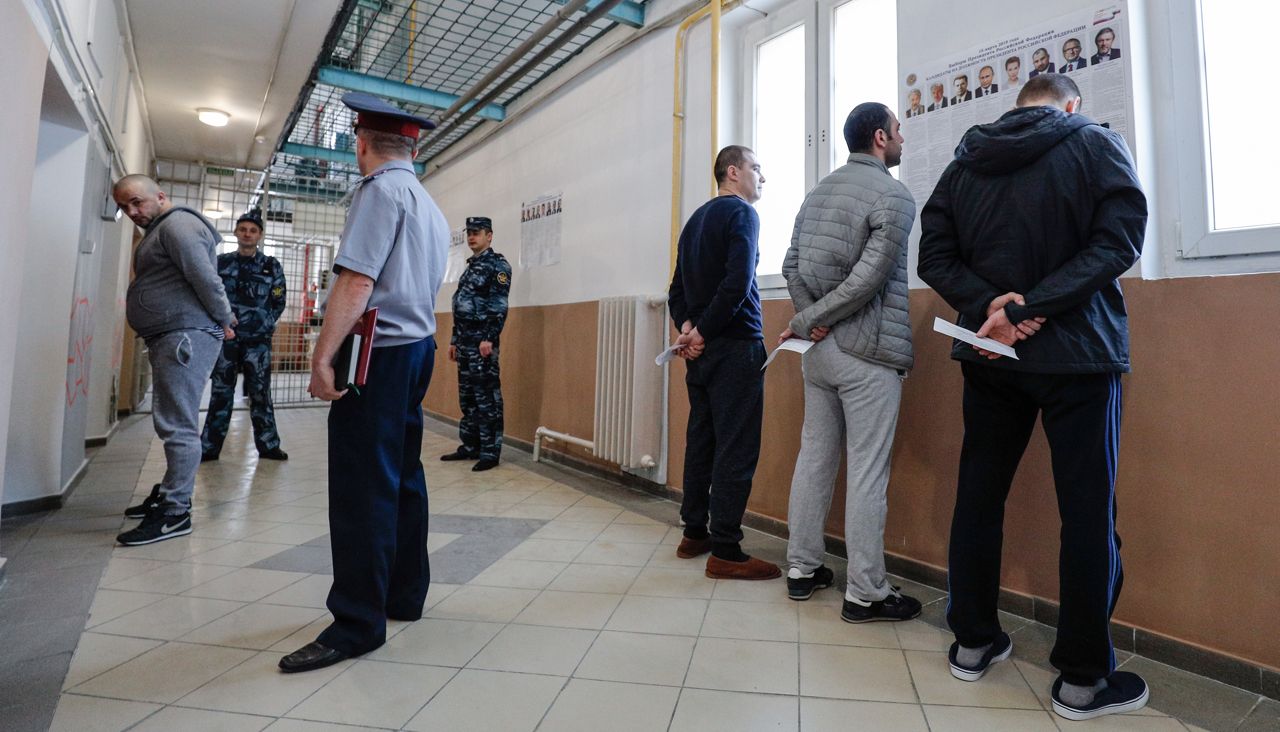
On July 13, the law entered into force, according to which the day of imprisonment in the pre-trial detention center is now counted as a day and a half of the imprisonment in a general regime colony and as two days in a colony-settlement. At the same time, one day under house arrest is now equal to half a day in custody. The new rules apply to those who are already serving a sentence; How many people as a result of this will be released is still unknown . Medusa found out what people who work with convicts think about changes in the law - and those who themselves were in prison.
Valery Borschev
Human rights activist, member of the Moscow Helsinsky Group
We spoke with the [co-author of the Law, the chairman of the State Duma Committee on State Building Paul] Krasheninikov about this law back in the late 1990s. Investigators keep suspects in jail for three years, six years - and this is considered normal. All this time they are achieving their goal: to break the suspect, so that he gives the right testimony. The terms of stay in jail are actually limited by law, but in practice they can be unlimited-as they want, they hold so much. Then they receive the necessary readings and close the punishment.
When we realized that it was not possible to limit the time to stay in the pre -trial detention center, we decided to develop a new law - just the one we have now. A person entering the pre -trial detention center finds himself under conditions that are much harder than in a colony; The incidence and mortality is higher. For a long time the government resisted, but finally, thanks to the stamina of Krasheninnikov, everything succeeded.
This law will limit the vast power of the investigator over the suspect. In addition, this measure will unload our pre -trial detention center. Investigators will become less suspected in jail, because their benefit will decrease. Suppose an investigator will hold a person in a pre -trial detention center for three years, when recounting, this will turn in four and a half years, and in court a person will be appointed, for example, six years of colony. There will be less meaning of intimidating the accused by long time behind bars.
This law also has weaknesses. For example, what was excluded by the 228th article is wrong. We know that this article is rubber. The people who need to be treated, instead, will remain in prison.
Henry Reznik
Vice President of the Federal Chamber of Lawyers
I support the law. The conditions in the pre -trial detention center are harder than in the colony. Stay there should be counted by fairness. I think this law should work quite well. If the judge sees that the person has already left sufficient punishment in the pre -trial detention center, she can give him such a period to let him go. I don’t see any problem in this. Moreover, we are talking about the rights of people who have committed not so dangerous crimes. It is important to consider their condition and the fact that they have already spent a very difficult time for them in the isolator.
Alexey Bushmakov
lawyer "Zone of Law" - an organization that protects the right of convicted
The law was waiting for many prisoners who spent a lot of time in the pre -trial detention center and are now serving a sentence. True, it is unpleasant - both lawyers and prisoners - that the convicts are put in an unequal position with the new law. For persons who have committed serious and especially serious crimes, new rules do not apply.
I can’t exclude that people will now even strive to get into a pre -trial detention center in order to quickly leave the punishment, and the judges will also begin to take this into account over time - and the sentences will grow.
I think that this law will be released about 15 percent of prisoners who sit in the colonies-settlements and colonies of the general regime. This, of course, is good, but I already know in the Russian regions of the odious leaders of criminal groups that are preparing for liberation. In general, the “criminal public” is very happy. Many relatives of customers are already calling me and asking me to start recount.
Olga Romanova
Head of the human rights organization "Rus Sitting"
This law is useful-actually it is a "cheers". Our investigators directly say to the suspect: let's quickly plead guilty and go to the zone, it will be easier for you, and for the innocent, the investigation goes for a very long time.
The same law , by the way, on the initiative [sitting in prison in Russia and Ukraine] Nadezhda Savchenko was instantly adopted in Ukraine. She offered to accept him, even when she herself sat in the [Russian] prison. Since then, the prison population of Ukraine has halved. There were 122 thousand prisoners, and 56 thousand were left - there, plus to everything, economic articles were also decriminalized.
How many people will leave prison in Russia is not completely clear. I think that after the adoption of the law, about a hundred thousand people will leave prison. As for people who are sitting for especially serious crimes like serial robberies or murders, let them sit.
Alexey Fedyarov
Managing Partner in the Law Firm CG Status
I used to work as the head of the investigation department in the prosecutor's office in Cheboksary. And then, on charges of fraud, I stayed a year under house arrest, four months in a pre -trial detention center and a year and three months in a general regime colony. I believe that such a law was needed, but in its current form it is a fake. In Russia, the pre -trial detention center is a special regime colony, a prison of strict content. It would be fair if the day in a pre -trial detention center was counted for two in a colony of general regime and for one and a half - in a colony of maximum security. But they left strict, as he was, day after a day.
Now the day of house arrest will be counted as half a day of detention. This is just absolute nonsense, this is a new, completely unexpected tool for business pressure. They lead a person under house arrest and say: "You will sit now, and you will be credited only for six months." Only the decisions of law enforcement agencies were delighted with this. For them, this is a great opportunity to talk in a special way with businessmen who were under house arrest. You will still see how businessmen will ask for a pre -trial detention center from house arrest, so that the term of punishment goes faster.
From what fright was the 228th article excluded? This is all -Russian trouble, sick people are put to prison as sales, although they were not them. The law is absolutely unfinished, ineffective, and it causes nothing but indignation.
Irina Kravtsova