
Translated material
We scold Europe, keep the Kremlin in the mind
The confrontation of Russia has become the central theme of the NATO summit with the participation of Trump on the eve of his meeting with Putin
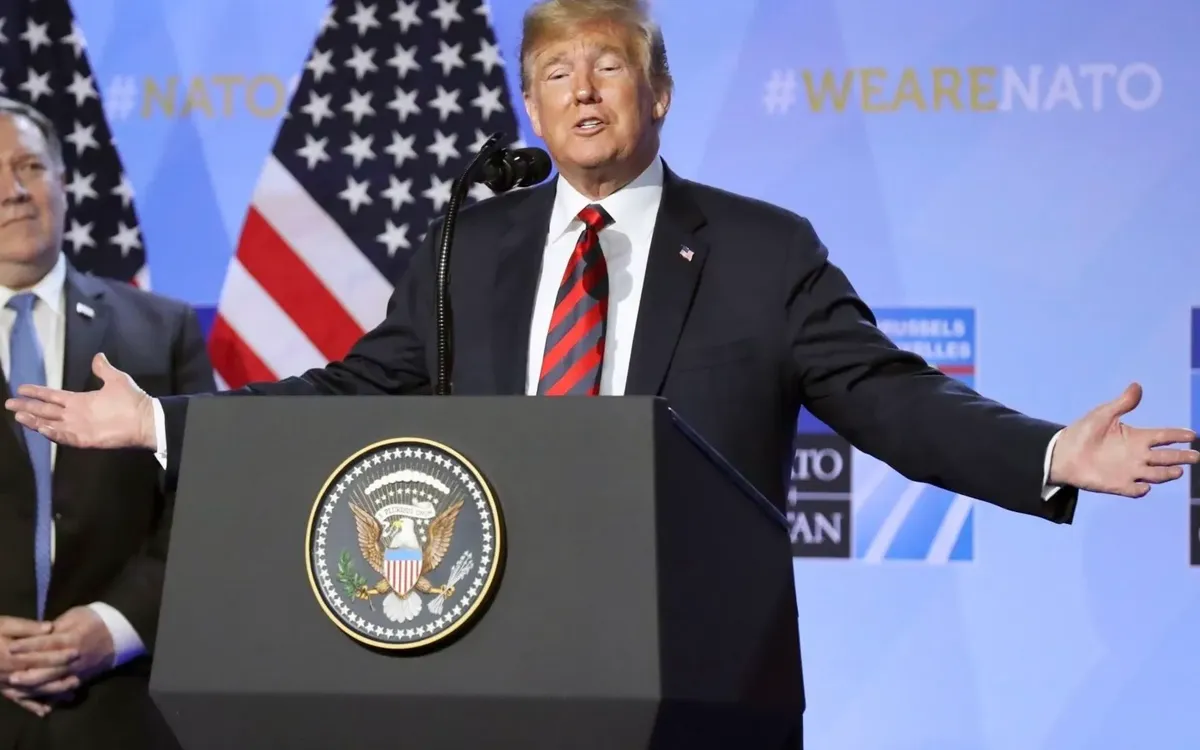
NATO summites are like the CPSU congresses: ceremonial measures for approving pre -worked out documents that determine the life of the alliance for the next reporting period. Now there are 29 member countries in NATO, plus the Secretary General of Jens Stoltenberg, plus the partner chiefs from Armenia, Azerbaijan, Macedonia, Ukraine, Georgia, and Afghanistan arrived in Brussels. In just a day and a half, it is almost impossible to really develop any solutions in such a crowd of VIPs: everyone brought his ministers, generals and other surroundings, each with their own guards, on a string of cars, accompanied by Belgian police officers on motorcycles. If each leader, for example, speaks out on some topic for five minutes (and the bosses rarely know how to speak briefly), then together they will come out for two and a half hours of trep (if without breaks). And this is only so that every member country simply designates its position. It is clear that the discussions here are inappropriate - it remains to sign what was brought from the apparatus.
Strategy and burden
The Western military headquarters and departments were busy with this. They prepared for a long time, worked and approved in advance a plan with a typical for NATO as a sonorous name “30+30+30+30”, or “4x30”: 30 tactical battalion groups+30 combat aircraft squadrons+30 warships, for the most part from European countries, but also because of the ocean, they will be extended and unfolded on the “Eastern Front” of the alliance-primarily in Poland in the Baltic and in the Baltic and in the Baltic The Baltic states to restrain possible aggressive fillings of the Russian Federation.
The military-economic potential of Russia is incomparable with the total power of the member countries of the Alliance. The Russian Federation is a country with a weak and stagnant raw material economy, technologically retarded and with many times the smaller population, but, unlike democratic countries, it can be secretly and relatively fast, as during the “reunification” of Crimea, to mobilize significant military forces with which the small Baltic countries and Poland will not even cope with several battalions of the Western allies, which is already there.
Of course, in Moscow they insist that she has no plans to “invade” somewhere there. But these negations are not seriously perceived. Presidents Boris Yeltsin and Vladimir Putin signed, and the Federal Assembly ratified as many as two agreements that recognized the Crimea of the sovereign territory of Ukraine, which then did not prevent him from “reuniting” using military force.
And now Europe, as in the old days, is important only specific military capabilities, and not agreements or declarations of intentions that may suddenly cancel without warning any day.
However, for a real war with the Russian Federation on the distant eastern flank of NATO, even additional forces according to the “4x30” plan will be not enough, and 30 days to deployment - exorbitant term for a modern mobile war. The 4x30 plan approved at the alliance summit is not for a real war, but for deterrence, so that everyone can clearly understand: any, even random local conflict, will inevitably lead to automatic escalation up to a pan -European or even world war, into which no one in the east or in the West wants to be entered.
Dermination is the traditional basis of the alliance defense strategy, and very successful. Thanks to her in Central Europe, there was no war for more than 70 years. The confrontation with Moscow on the main European front remained “cold”, although on the strategic periphery-in Asia, Africa and Latin America-bloody so-called “proxy-warriors” were constantly going on. Of course, the effective deterrence should be convincing, and for that, in the Western headquarters they developed a set of additional logistics measures to improve roads, bridges, tunnels and ports, to smooth out national legal obstacles, so that additional troops and equipment rolls to the borders of Russia according to the 4x30 plan with a continuous stream. To regulate this stream, they came up with the deployment of additional headquarters, increase the staff of NATO officers by 1,200 people, as well as create a separate command structure for cyberwary. All these plans were safely approved at the Summit on July 11. But in the smooth movement of a large bureaucratic machine, US President Donald Trump intervened.
Before the summit, Trump accused the allies (especially Germany) of parasitism at the expense of America, which spends too much on the defense of Europe.
Back in 2014, at a summit in Wales, the allies promised to bring military expenses to 2% of GDP, but few had fulfilled this promise. During the official dinner on July 11, the problem of the “fair distribution of the burden” of defense expenses was discussed, but it was probably also not possible to agree because each of the 29 sovereign bosses spoke out on the topic, the darkness of time has passed - and they ate everything.
Since serious disagreements between the Americans and their European allies are fundamentally undermined by the principle of effective deterrence, among Western diplomats, military and politicians, both European and American, some panic began. At the initiative of NATO, Jens Stoltenberg, the summith's agenda sharply outplayed, and on the morning of July 12, a discussion of questions relatively insignificant for the Western world - assistance to Afghanistan and Iraq - was transferred to a later time, and the discussion about the “distribution of burden” continued, and now everything was working. Trump announced at a press conference that the Europeans, they say, promised to fork out and that "NATO has become much stronger than a couple of days ago."
Soon it turned out that in reality no one promised anything new to anyone. Trump himself admitted that at first the allies will try to reach the level of military expenditures of 2% of GDP, and then, “in the future,” maybe 4%, but this requires “approval of their congresses” (parliaments). In fact, Trump admitted that the requirement of a sharp increase in the military expenses of European countries is only an invented excuse to provide pressure in order to significantly reduce the level of American obligations in relation to Europe. Trump in Brussels repeated that “NATO is more important for Europe than for the United States,” but also recognized (in order to calm the public) that “NATO is also important to us”.
Will there be a deal?
In Helsinki on July 16, Trump will hold the first full -fledged summit with Putin. In Brussels, the US President announced that he did not know Russian impacts personally, and therefore "he is not an enemy for me, but may become a friend." Both leaders are going to discuss Syria and Ukraine and, obviously, are determined to agree on some mutual de -escalation. Trump “did not exclude” that he could cancel military exercises in the Baltic to reduce the confrontation level: “Let's see what happens.”
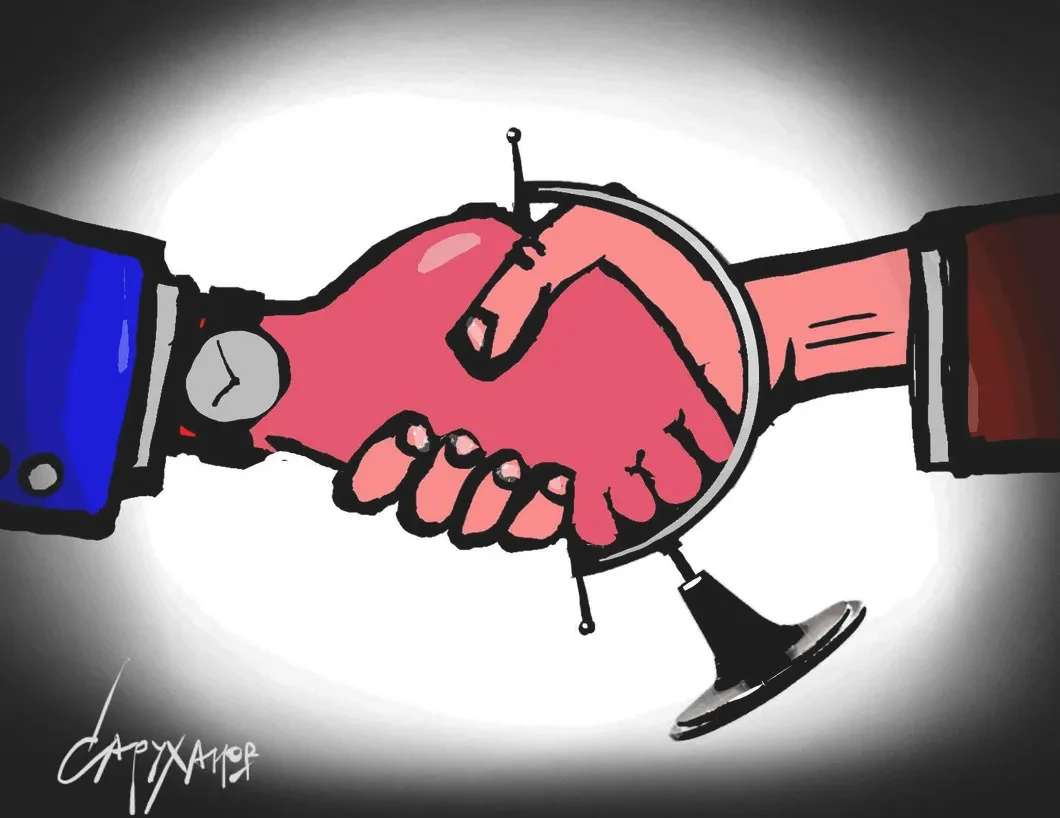
It seems that the parties are ready to seriously try to agree on Helsinki, and if a deal is concluded (a deal, as Trump likes to say), then this will be directly and informally between the two presidents. Hit hands - how Trump is used to making transactions. The expected general declaration of reducing tension in Russian-American relations can be secret applications-such a “Helsinki Pact”. For example, an informal "exchange" of Ukraine for Iran.
The United States plan to sharply increase pressure on Iran, economic and not only. Moscow can be informally standing aside, formally condemning, but not interfering if Washington is informally standing aside, while Kyiv is forced to fulfill the Minsk agreements. In Syria, you can agree to accelerate the withdrawal of American troops, which Trump has long wanted, but only if there are assurances that this will not lead to the expansion of Iranian influence.
At the headquarters of NATO, Trump announced: "We had a wonderful (Great) summit, and Putin will see it." When the horse is sold, it is not sold hungry and sick. Trump, therefore, suddenly replaced anger at mercy in Brussels and declared a “fantastic” summit that the main goal of his European tour is the Helsinki summit, and NATO is only a chip for trade, which it was necessary to make suddenly strong and remarkable, more than ever before.
Brussels - Moscow