
Translated material
The head of VTB asked Putin to support the fight against the dollar. What to prepare for citizens?
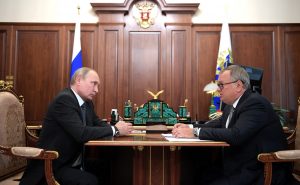
Meeting Vladimir Putin and Andrei Kostin. Photo of the Kremlin
Andrei Kostin called on the dollar and offshores to fight the dollar and offshore last month. “The dollar has already scored everyone” and it is necessary to fight with it on a global scale, noted the head of one of the largest statebans at the International Financial Congress. On Friday, Kostin moved from words to business: VTB handed the president a package of proposals aimed at expanding the use of the ruble in international calculations, and asked them to support them.
Details
- According to Kostin, the bank’s specialists have prepared a draft proposals aimed at further expanding the use of the ruble in international calculations. According to him, such deadllarization will contribute to the development of the Russian market for the placement of Eurobonds, shares and the creation of other derivative tools used today "only in the West." And their own derivative tools will give an impetus to develop the Russian financial sector and help protect it from external factors, the banker emphasized.
- The head of the VTB asked the president to support the course of further deadllarization and deofshorization of the Russian economy and entrust the government and the Central Bank to consider the relevant proposals.
- What exactly is offered by Kostin is unknown.
What does this mean for the economy, population and business?
- Economists do not believe that the state will be able to seriously increase the role of the ruble in international calculations. “With a weak economy, it is impossible to increase the role of the ruble in international calculations. Russia and China tried to use national currencies in mutual calculations, but these agreements have not yet led to anything. You can’t forcefully force the world to pay off in weak currencies, ” says the economist, former deputy chairman of the Central Bank Sergey Aleksashenko.
- You can try to switch to the calculation system in other currencies during import export, but even in this case, the dollar will appear in the calculated chain sooner or later-it will be inconvenient for counterparties and will not protect against sanctions, Oleg Vyugin, chairman of the Safmar Financial Investment Board, the former first deputy chairman of the Central Bank.
- Comments of other economists can be read here .
- It is difficult to assume what the consequences of deadllarization will have for business and the population - it is important what methods the state will achieve this, said in the conversation of The Bell the main economist of Alpha Bank Natalia Orlova. In her opinion, it is important that the authorities act with economic methods, and not administrative: the introduction of prohibitions will harm the economy, various panic scenarios are possible that will be extremely poorly affected by the banking sector. On the other hand, reasonable measures can be proposed that will raise the yield of transactions in rubles.
- For the Russian economy, the deadllarization, which is preoccupied with Kostin, is definitely not the biggest problem, the director of the analytical department of Loko-Invest Kirill Tremasov is sure. This is a natural process for our economy: dedollarization occurs in itself as the ruble course stabilizes. This process will continue naturally while maintaining the current frame of macroeconomic stability, one of the elements of which is inflation targeting, the expert is sure.
Context
- The Central Bank intends to reduce the role of the dollar in the Russian financial system. The chairman of Elvira Nabiullina noted that it is necessary to reduce the share of dollar liabilities and assets in banks in comparison with the ruble.
The course for deadllarization may be an additional risk to personal finances of ordinary citizens. We must not forget that “our economy is imprisoned when two currencies are used” and when switching to ruble calculations, banks can shift their costs to depositors - for example, increase rates on loans and mortgages, says Orlova.
Liana Faizova