
Translated material
Memory. Vasily Zenkovsky
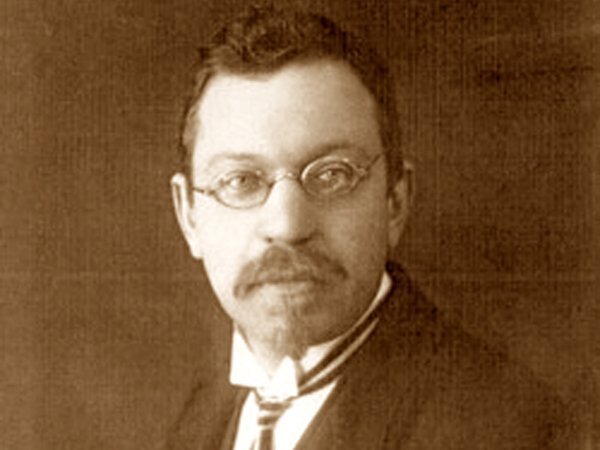
On July 16, 1881, Vasily Zenkovsky, theologian and religious philosopher were born
Personal business
Vasily Vasilievich Zenkovsky (1881-1962) was born in Ukraine, in the city of Proskurov (now Khmelnitsky) of the Podolsk province in a family of teachers. The father was a career of a 2-class city school in Yampol, he served as a church headman. Mother was also a teacher. Parents brought up their son in a traditional Orthodox spirit. “All childhood was lit somewhat with a matte, but bright radiance of the church,” Zenkovsky recalled.
Vasily received primary education at the school, which was led by his father. At the age of 11, he was given to the second Kyiv gymnasium, in which classic and modern foreign languages were taught.
In 1900, after the end of the gymnasium, he entered the Imperial St. Vladimir University in Kyiv and for 4 years studied at the natural department of the Faculty of Physics and Mathematics.
At the age of 15-16, Zenkovsky survived a deep religious crisis, according to his memoirs, related to reading the books of Dmitry Pisarev and Vissarion Belinsky, enthusiasm for the ideology of populism and classes of natural sciences. Overcoming this crisis was facilitated by acquaintance with the works of Immanuel Kant and Vladimir Solovyov (the latter influenced the views of Zenkovsky throughout his creative path), as well as with the works of the great Russian writers - N. V. Gogol, F. M. Dostoevsky, L. N. Tolstoy. Also, the study of theology, reading the works of fathers and teachers of the church contributed to overcoming the spiritual crisis. In 1902, Zenkovsky returned to the bosom of the church. Then he wrote a great work about Gogol, whom he called the "prophet of Orthodox culture."
Since 1902, he took part in the meetings of the psychological seminary (seminar) at the University of St. Vladimir, who prepared a galaxy of philosophers, psychologists and teachers. He made the reports “Ethical System of Herbert Spencer” (in 1901/02 academic), “On monism by Ebbingusus” (1904), “The justification of the ethics of transcendental idealism” (1907).
In 1904, having passed almost all the exams, “except for the state”, Zenkovsky transferred to the historical and philological faculty of the university. Already in his student years he wrote a number of works on psychology and philosophy; A special place among them is occupied by the article “Plato in the interpretation of Nutorpa” (1908) - about the new understanding of Platonism from the standpoint of Kantianism. Together with S. N. Bulgakov, he published a religious one. And at the same time the “left” newspaper “People”.
In 1908, he became one of the founders and deputy chairman, and in 1911-the chairman of the Kyiv religious and philosophical society.
After graduating from the University of Zenkovsky in 1909, he was left to prepare for faculty. In early 1912, he passed the master's exam and, as a privat-Dochent, lectured on psychology at the University of St. Vladimir
I read courses on philosophy and psychology in evening women's courses and in several Kyiv gymnasiums. He was the director of the Kyiv Institute of Preschool Education.
In 1913, Zenkovsky left to continue education in Germany, where he pretended the master's thesis “Problems of Mental Causality”. There he found the beginning of the First World War. With difficulty, after a series of adventures, during which part of the manuscript of his dissertation was lost, Zenkovsky through Scandinavia made his way to Russia and returned to Kyiv.
Upon his return, he conducted courses on psychology and logic at the Historical and Philology Faculty of the University of St. Vladimir. “He read with enthusiasm, in places with inspiration. Special psychological erudition was huge. The peculiarity of his readings was that he read psychology as a philosophical science, ”V.F. Asmus wrote in his memoirs.
In April 1915, at Moscow University, Zenkovsky defended the master's thesis "Problems of Mental causality." In 1916 he became an extraordinary professor of Kyiv University in the Department of Psychology.
Like many representatives of the Russian intelligentsia, Zenkovsky with enthusiasm met the February Revolution of 1917. In the article “On the New Way”, he wrote: “The happy fate fell to the share of our generation to be witnesses to the deepest coup in our country. The old system went forever into the past, broke up in all his scraps. ”
From May to October 1918, Vasily Zenkovsky occupied the Ukrainian Pavel of Skoropad as the Minister of Confessions in the Government of the hetman, which included issues related to the financing of the church and spiritual educational institutions. He considered it necessary that the highest church authorities coordinate its actions with the government and explain its consent to take this post with the desire to serve Christianity and establish Ukrainian-Russian relations. “Then I did not realize how fatal for my life was this step ... I knew that I was making a sacrifice ... But I still could not imagine how great the victim would be ...” he wrote later.
In the difficult church-political and social situation, which had developed at that time in Ukraine after the murder of Metropolitan of Kyiv Vladimir (Epiphany), Zenkovsky was against the election of a new Metropolitan of Kyiv at the diocesan assembly. He advocated the convocation of the All -Ukrainian Orthodox Church Council, on which, in his opinion, he should have elected the high priest of the Ukrainian Church, and also consider the issue of its autonomization as a measure that was supposed to prevent the “autocephaly” of the Ukrainian Church.
Upon an election at the diocesan assembly by Metropolitan of Kyiv Anthony (Khrapovitsky), he tried to prevent the statement of this decision by Patriarch Tikhon. And even after the positive resolution of the Patriarch, he considered this election illegal. In turn, the letters of Metropolitan Anthony Getman Skoropadsky with a complaint about the oppression of the church by the Minister of Confession became one of the reasons for the resignation of Zenkovsky. In this post he was replaced by Lototsky, who introduced the autocephaly of the Ukrainian Church.
In 1919, Zenkovsky emigrated to the kingdom of the Serbs, Croats and Slovenes, where he received the position of professor at the Theological and Philosophy of the University of Belgrade. I read the courses of general psychology, logic and theory of knowledge, the history of ancient and new philosophy. Since 1921 he was a member of the Belgrade circle of St. Seraphim.
At the end of 1922 he moved to Prague, receiving the post of professor of experimental and child psychology at the Higher Pedagogical Institute in Prague. Over time, he became the director of this institute.
In 1923, at a general emigrant pedagogical congress, he was elected chairman of the pedagogical bureau for foreign Russian school affairs. In the same year, he participated in the first congress of the Russian Student Christian Movement (RSHD) in Psherov, at which he was elected chairman of the RSHD. He was a member of the Brotherhood of St. Sophia.
In August 1925, the long -term cooperation of Zenkovsky began with the journal "Path" published in Paris in Paris, in which he published a number of important theoretical articles and reviews.
After the closure in 1926, due to the lack of means of pedagogical intitet in Prague, Zenkovsky moved to Paris. Having received the scholarship of the Rockefeller Fund, he went from there for 9 months to Yale University (USA) to familiarize themselves with the experience of religious education.
Upon returning to Paris in 1927, he became a professor of the Orthodox St. Sergius Institute of the Monk Sergius of Radonezh, in which he worked for 35 years. He taught the history of philosophy, psychology and pedagogy. Since 1944 he served as the dean of this institute.
In the same 1927, he created in Paris the “Religious and Pedagogical Cabinet for Work with Orthodox Youth”, which existed until the beginning of the Second World War.
In March 1942, Zenkovsky was ordained a priest and appointed assistant to the abbot of the Vvedensky Church in Paris, became a member of the diocesan assembly. In January 1944 he was erected to the rank of Archpriest.
He became the founder of the highest female theological courses at the St. Sergius Theological Institute. In 1949-1952 he was an ardent of parishes of the Paris district.
In 1948-1950, two volumes of Zenkovsky’s books “History of Russian Philosophy”, eventually translated into many languages and gained world fame, published. The first one of this study in June 1948 was presented to him as a dissertation for the degree of Doctor of Church Sciences. The dissertation was successfully protected.
In 1952, he published the philosophical sketch “Our Age”, the most important thing for understanding its attitude to modern culture. In 1955, Zenkovsky’s completely redesigned book “Conversations with Youth about Paul’s questions” was published with the new name “On the threshold of maturity”, in which he, under the influence of psychoanalysis, wrote that “there is the only way to master the game of unconscious forces in the soul is to cover them with calmly and soberly, to understand the meaning and hidden dynamics of these phenomena.”
For five years - from 1953 to 1958 - Zenkovsky served as chairman of the Western European exarchate of Russian parishes, and in connection with which in January 1955 he was elevated to the rank of Protopresoviter.
He collaborated with the magazine Orthodox Thought, in which he published a number of articles of theological content: “The basic principles of Christian cosmology”, “On the participation of God in the life of the world”, etc.
At the end of his life, he worked on the work of the “Fundamentals of Christian Philosophy”, the first volume of which was published in 1961 in Frankfurt. The second volume was released only in 1964 - after the death of the author,
Vasily Zenkovsky died on August 5, 1962 in Paris after a long and serious illness. He was buried in the cemetery of Saint-Genevo-de-Bois.
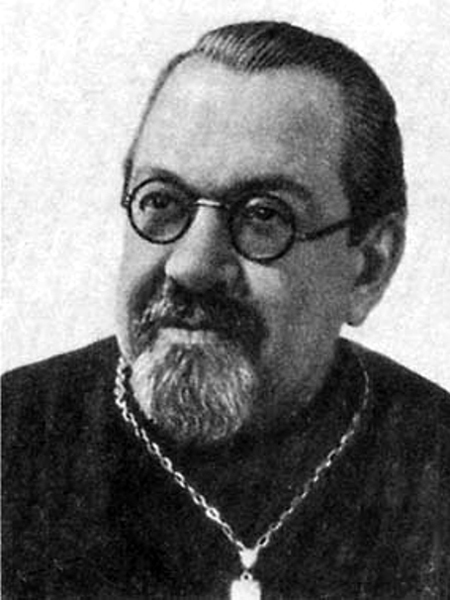 Vasily Vasilievich Zenkovsky Wikimedia Commons
What is famous
The main work of the life of Vasily Zenkovsky is “the history of Russian philosophy”, dedicated to Russian thought of the XVIII - XX centuries. The basis of the book was his lectures, given at the St. Sergius Theological Institute in Paris.
Zenkovsky believed that Russian philosophy is a unique national experience in creating Christian philosophy. In his opinion, the Russian philosophical tradition, despite the dissimilarity of forms, retained a kind of unity at all stages of its development.
At the same time, he paid great attention to the topic of influence on the Russian philosophy of Western thought. According to Zenkovsky, "joining the philosophical culture of the West, Russian people seemed to reduce the path of their own ascent to the heights of philosophical thought and quickly entered the complex philosophical problems of their time."
However, this was the reverse side - Russian philosophical thought often found herself in captivity of Western ideas. In the program “Russia and Orthodoxy”, written during the First World War (1916), Zenkovsky associated this captivity with the relevant from the era of Peter I, with the unpreparedness of Russia to perceive Western culture and with the origin of the intelligentsia in nature, in nature. “The abyss between Russia and the West,” Zenkovsky wrote, “was so great, the charm of the West was so much that the emerging intelligentsia, which felt like the baseless and alien to Russia, went all my heart into the interests of Western culture.”
According to Zenkovsky, Russia reached the path of independent philosophical thought in the 19th century.
What you need to know about
Zenkovsky has a significant contribution to the approval of the principles of religious. Orthodox education and education in Russian schools abroad. He took an active part in the publication of a number of pedagogical magazines published in the Russian abroad (“Russian School abroad”, “Bulletin of the Pedagogical Bureau for Medium and lower Russian schools”, “Scientific works of the Russian People’s University in Prague”, “Bulletin of the Religious and Pedagogical Cabinet”); wrote for them a large number of articles affecting theoretical and practical problems of education and education.
In 1924, his book “Psychology of Childhood” was published in Leipzig, which presented a systematic presentation of the main problems associated with the study of child psychology, with dividing childhood into periods, the social role of the game in raising a child, the development of speech, emotional and rational life of children, the formation of the child’s personality and the characteristics of the religious life of children.
Direct speech
About Russia (1916): “If the genius of Russia does not lead it out of a historical impasse, if the powerful forces that are inherent in us in the near future do not unfold, then, apparently, for a long time Russia will be convicted of a dim historical existence.”
On the destruction of the family institution : “The 19th century gradually pulls out a woman from the family and this destroys the main basis of the family as a labor unit: in response to the development of female labor, leading the mother from the family, life will give a number of significant changes in the formation of family life.
Family work is becoming less and less necessary, gradually going to such an insignificant minimum, at which it is ridiculous to talk about the family as a labor unit. The technique of modern life has reached such a height at which very little work needs in the house. Very wealthy people can now do well without a servant - this quite characterizes the technical organization of life. The products are delivered in such a way that you need to work minimally to work on them to eat them, you don’t need to drown them, the washing of the linen is not needed at home ... All these technical convenience of modern life bring the family to consumer, not a labor unit: they consume together, but do not work together.
This process is still in full swing, but it has tendencies to expand and capture more and wider layers. There is nothing to be surprised that the modern family often resembles a hotel, and not that former family house in which a continuous life has been going on all day. ”
About religiosity: “I want to say that not everyone is“ capable ”to religious life. After all, there are people who do not like painting or do not enjoy poetry, etc., in accordance with this, we should not state a significant group of people who remain alien to the religious world? These people can be faithful sons of the Church, fulfill all the rites, but their soul is silent, they do not entail, do not worry, does not fill God, they are not given to know joy in prayer, the quiet light of gracious insights.
They, as it were, by their nature, are in a certain “insensibility”, which is not a “petrified” insensibility at all, because the latter implies the fossilizing of the heart. There is simply insolvency here. And whether it will simply be fair to establish by eye approximately such a distribution of religious types:
Religiously gifted ………………………… ..25%
Religiously medium .................................. 50%
Religious insensitive ................. 25%. ”
Theologian S.S. Verkhovskaya about Vasily Zelensky: “ He knew better than many all the shortcomings of the church hierarchy and church society, but he believed in the Church as in the kingdom of God on earth, although hidden under the worldly shell. In the church, he saw the resolution of all issues of life and knowledge. Hence his hot love for the design of the deaths of life in all its forms. ”
4 facts about Vasily Zenkovsky :
- During his life in France, he was in the jurisdiction of Metropolitan Evogy (Georgievsky).
- In 1946, during the division of the decay of the deceased Metropolitan Elogy into Prospect and Pronsotanopolskaya, he chose the jurisdiction of the Patriarchate of Constantinople.
- In 1939, the day before the announcement of the war, Zenkovsky was arrested by the French authorities among other Russian emigrants. He spent 40 days in a single chamber, then for 14 months he was in a camp for interned in the south of France, after which he was released.
- The final work of the Zenkovsky “Fundamentals of Christian Philosophy” was to include three volumes in its plan: the 1st - Christian doctrine of cognition, the 2nd - Christian doctrine of the world and the 3rd - Christian anthropology. However, he did not have time to write the third volume.
Materials about Vasily Zenkovsky:
Biography of Vasily Zenkovsky in the "Orthodox Encyclopedia"
"The 130th anniversary of the birth of Protopresbyter Vasily Zenkovsky" turned 130
Article about Vasily Zenkovsky on Wikipedia