
Translated material
Red cards "Reformers"
As a deputy of the Legislative Assembly pursued the police after rallies in St. Petersburg
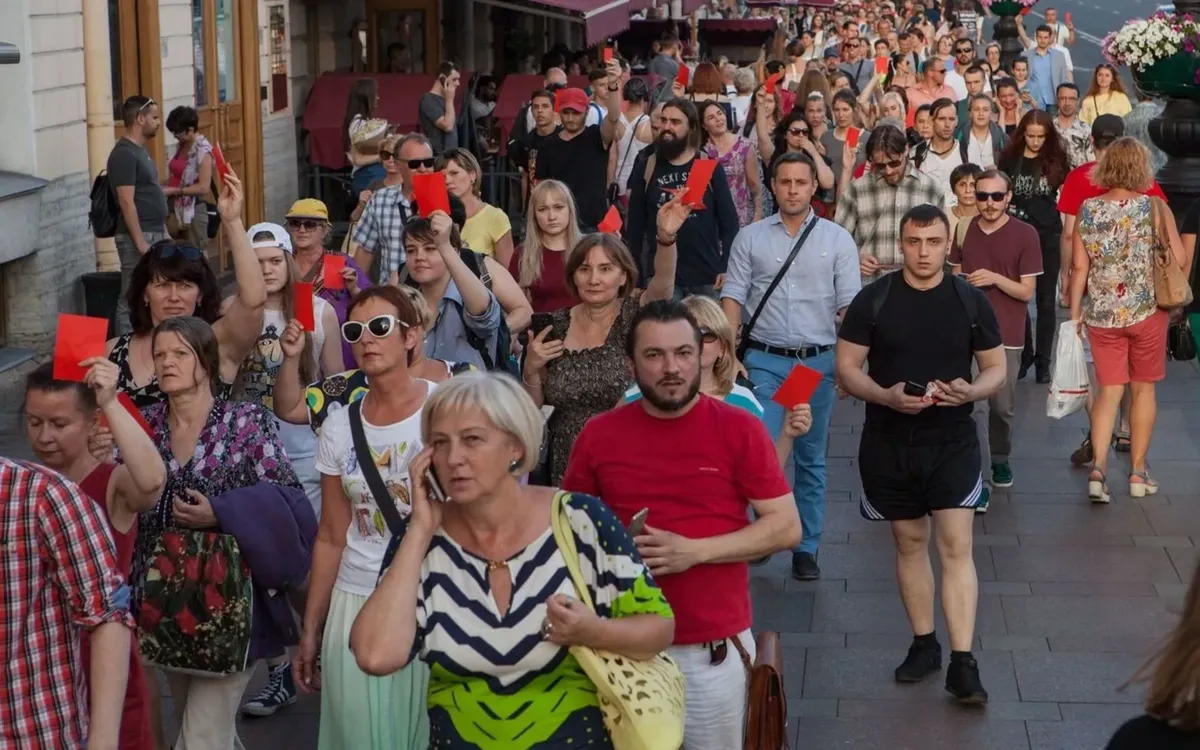
Several hundred people went on Wednesday in St. Petersburg on a popular gathering on Malaya Sadovaya Street in protest against the impending increase in retirement age. They had no flags, no posters, no slogans - only red cards for officials and deputies who supported raising the retirement age. They did not give the coordinated rallies to the Petersburgers, referring to the presidential decree and “special security measures” during the World Cup. True, the World Cup has already ended, and the rallies were declared precisely in those places that were agreed with the FSB for public actions during the World Cup, but this did not prevent the administration from refusing coordination, and the court to recognize this refusal legitimate.
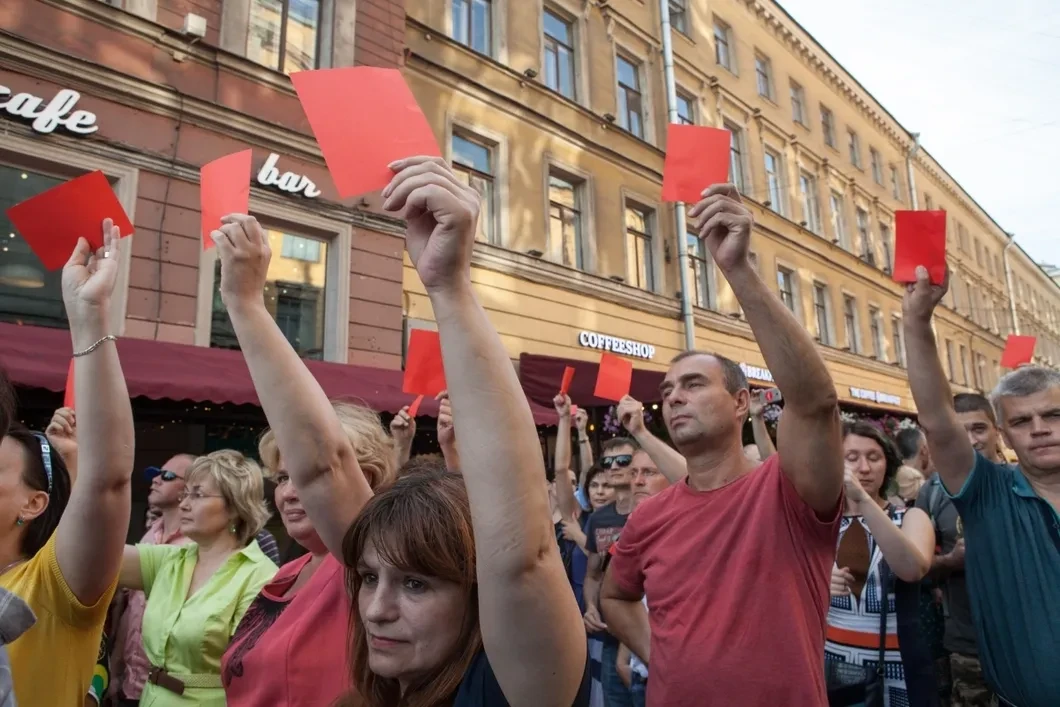
The gathering on Malaya Sadovaya (and the subsequent “walking tour” on Nevsky with red cards) formally did not violate anything, but this did not prevent the delay of a dozen participants. Nevertheless, unlike previous situations, no one (with one exception) was left in the police at night, and no one was accused of disobedience to the police with subsequent arrest.
Most likely, because it was on this day that two of the most important decisions of the Supreme Court were published regarding the practice of applying legislation on rallies.
On June 26, 2018, a resolution of the Plenum of the Armed Forces was adopted, where paragraph 33 recorded: “Failure by the participant in the public event or orders of government representatives, as well as obstructing the performance of their official duties related to ensuring public order, security of citizens and compliance with the legality during the public event, is subject to qualification under part 5 of article 20.2 of the Administrative Code of the Russian Federation, which is in this case, which is in this case, which is in this case. special in relation to Part 1 of Article 19.3 of the Administrative Code of the Russian Federation. ”
On June 29, 2018, the Decree of the Supreme Court for a particular case No. 78-AD18-5 was adopted, and it was directly established that a participant in a public event cannot be liable for non-compliance with the legal order of a police officer under Article 19.3 of the Administrative Code of the Russian Federation. We quote the decision: “The responsibility for this offense is covered by the disposition of part 5 of Article 20.2 of the Administrative Code of the Russian Federation, which has been established by administrative responsibility for violation by the participant in the public event of the established procedure for holding a meeting, rally, demonstration, procession or picket.”
Now we will transfer all this from legal into Russian.
Over the past six years, starting from the first protests against falsification of the 2011-2012 elections, the police, delaying participants in protest speeches, issued protocols on many of them at once on two articles of the Code of Administrative Offenses: 20.2 (violation of the rules for rallies) and 19.3 (disobedience to the legal order of a police officer). At the same time, “disobedience” announced the refusal of citizens to fulfill the command “Dismiss!” And leave the place of a rally or picket. Moreover, “disobedience” was often accused of those participants in the action that the police did not even turn to.
Why was this done? But why. Punishment under article 20.2 (if this is not a repeated violation) is only a fine, although it can be large enough. This means that the detainees cannot be kept in the police for more than three hours - then they are required to release them by drawing up a protocol.
But article 19.3 admits as a measure of punishment both a fine and arrest, and therefore detainees can be held in the police until 48 hours, and then bring it directly to the court.
Hundreds of such cases have occurred in recent years only in St. Petersburg. And although back in 2012, the Prosecutor General’s Office stated that the refusal to “disperse” is not a separate violation that falls under Article 19.3, the police and the courts confidently ignored this position. As a result, for example, after the mass action on June 12, 2017, more than 200 people were arrested on the Marse Field (with preliminary maintenance of a day or two).
Now, after the decisions of the Supreme Court - and all the courts are obliged to be guided by the decision of the Plenum of the Armed Forces - the point is set, as I want to hope. Now it turns out the obvious:
Hundreds of court decisions to arrest participants in protest promotions are illegal. All cases when these people were held in the police for a day or two (instead of releasing after 3 hours) are also illegal.
I’m not sure that the previous decisions about the arrests will be able to challenge - but now there is a hope that the detained participants in the protests will stop holding the police for two days and will stop arresting.
Events in St. Petersburg July 18 - this is the first example.
Several hundred people gathered on Malaya Sadovaya. We, a member of the human rights Council of St. Petersburg, Grigory Mikhnov-Vyatenko, before the start of the national gathering, handed the police and the Russian Guard both decisions of the Supreme Court, saying that now it is impossible to impose the Code of Administrative Offenses with the detained “arrest” article.
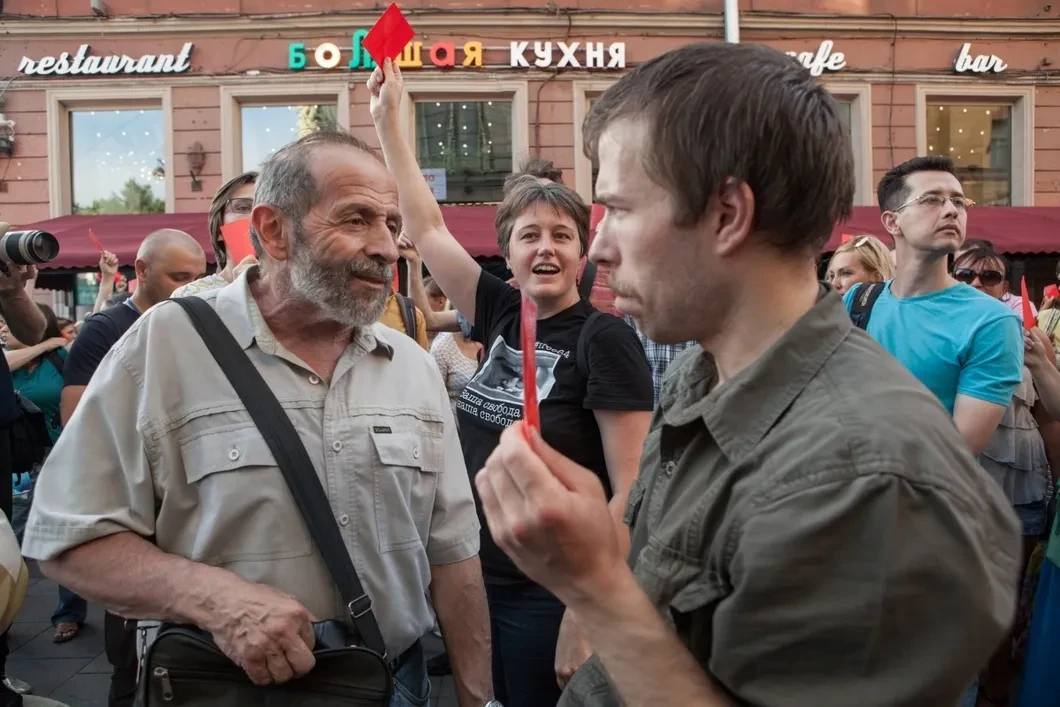
Major General of the Russian Guard Elkhan Nagiyev grumbled: "Everyone can print it." To which I replied: "So everyone can buy a form in the military." The general did not doubt the documents anymore, he only asked everything: why don't you sit at home? We would have waited until July 25 (the expiration of the president’s decree on “special measures”). The explanations that July 19 was the first reading of the law on raising the retirement age, he was not enough.
At first, the police and the Russian Guard did not interfere with the audience, but when people with red cards decided to start the “excursion” on Nevsky, the Russian Guard blocked them, and Grigory Mikhnov-Vitenko, who took off her on the camera, was detained. People went to a small garden - blocked her.
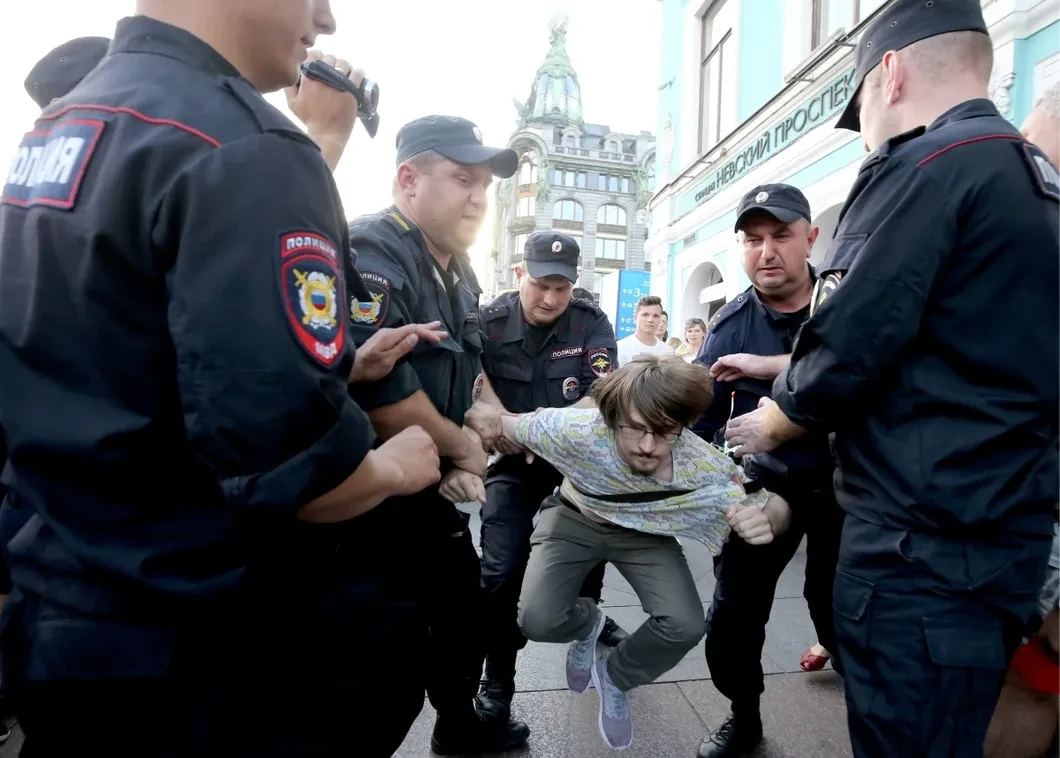
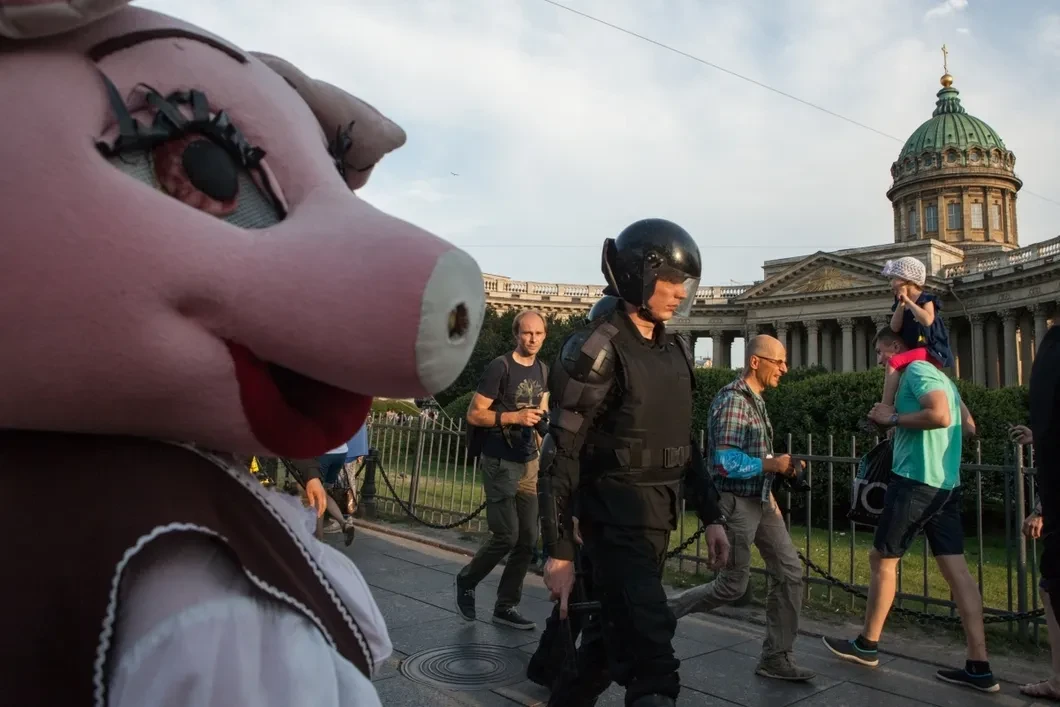
When the red cards were removed, the “security forces” moved away, and those who went along Nevsky in the direction of Isaakievskaya Square were not first touched. But then, when the participants raised red cards again, about 30 people detained about 30 people on the corner of Nevsky and the Griboedov channel, including random passers -by. Some of the detainees were immediately released, and 14 people remained in the auto -zaks. About a hundred participants reached Isaacievskaya Square, where they walked around the square for a long time, while the police behaved peacefully and detained only one person. Moreover, I must say that the detentions themselves passed quite softly. Apparently, the task of the police and the Russian Guard was to scatter the audience (especially since the vast majority - and this was very noticeable - were at the rally for the first time), and not to arrange mass Vincelovo before the first reading of the law in the Duma.
The five detainees (including two minors) were taken to the 76th police department on Metninskaya Street, and the activists of the “Assistance Group for Detained” and colleagues from the St. Petersburg “Yabloko” went there. Immediately faced with the problem: it was necessary to transfer the water and food we bought by the detained by us, but in order for one of the policemen to leave the duty unit and take the program, we must wait long, then call the duty prosecutor and demand the bosses. The same, I note, then repeated in another-the 78th police department on Chekhov Street.
Having passed everything that is necessary, and finding out that the parents are going to minors to take them away, we left part of the “help group” in the 76th department, including the lawyer found by the Yablokniki, and began to look for the remaining nine detainees. And then the real, as they say, Trash began.
Autosak with them came to the 76th department-and went somewhere further. Where? The police did not report. The detainees call us and say: "We stood on Starorusskaya Street." We are with the activists in my car (who knows what kind of driver I am, he will inevitably smile) we rush there. A new introductory comes on the road: "We are at the Ataman." We fly to the Ataman, along the way we are informed: "We are at Mirgorod." And so on…
It would be funny (not the police pursue a deputy of Vishnevsky, but he pursues the police), if it weren’t sad: 30-degree heat, it was stuffy and hot in the car gut, and we are trying to pass water to the detainees and cannot catch up with them.
Finally, on Mirgorodskaya Street, we intercepted a stopped car carrier. Seeing us, the police immediately tried to leave, and only the desperate scream of the wife of Gregory, Natasha Sivokhina: "I have a husband in a car gut!" - I made them wait half a minute so that we could pass at least water ...
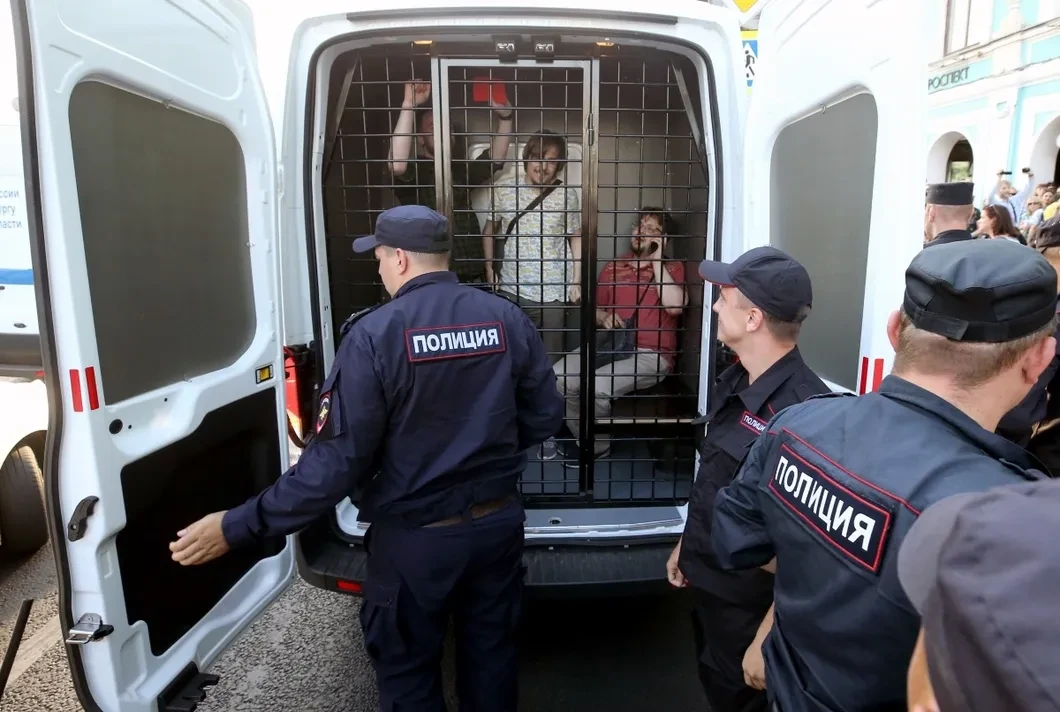
Finally, the Second Avtozak arrived in the 78th police department, where a large support group rushed. They handed over water, food, brought “foams” - they suddenly leave them overnight. But, fortunately (I think, nevertheless, the transmitted decisions of the Supreme Court were affected), in the end-at the end of two in the morning-they released, drawing up protocols only under Article 20.2. And Grigory Mikhnov-Vyatenko was released without a protocol at all, although it is not clear why he was detained.
In the mentioned decision of the Plenum of the Supreme Court there are still many useful requirements.
For example, what is unacceptable (which has become a mass phenomenon) refuse to agree on rallies under the pretext of holding cultural events or fairs at the same place.
That the proposal of the public authority to change the place and (or) the time of the public event cannot be arbitrary, unmotivated and must contain specific data indicating the obvious impossibility of holding this event in the declared place and (or) in the declared time in connection with the need to protect public interests.
That the inconvenience caused by the holding of a public event for citizens who do not participate in it, as well as the assumptions of the public authority about the possibility of these inconveniences, cannot be a good reason for changing the place and (or) the time of the public event (again, the refusals for such pretexts have become massive).
I would like to hope that now administrative and judicial practice will really change.