
Translated material
Demand the impossible
Since 1993, not a single referendum has been held in Russia since 1993. He will not be now-due to the law on pension reform
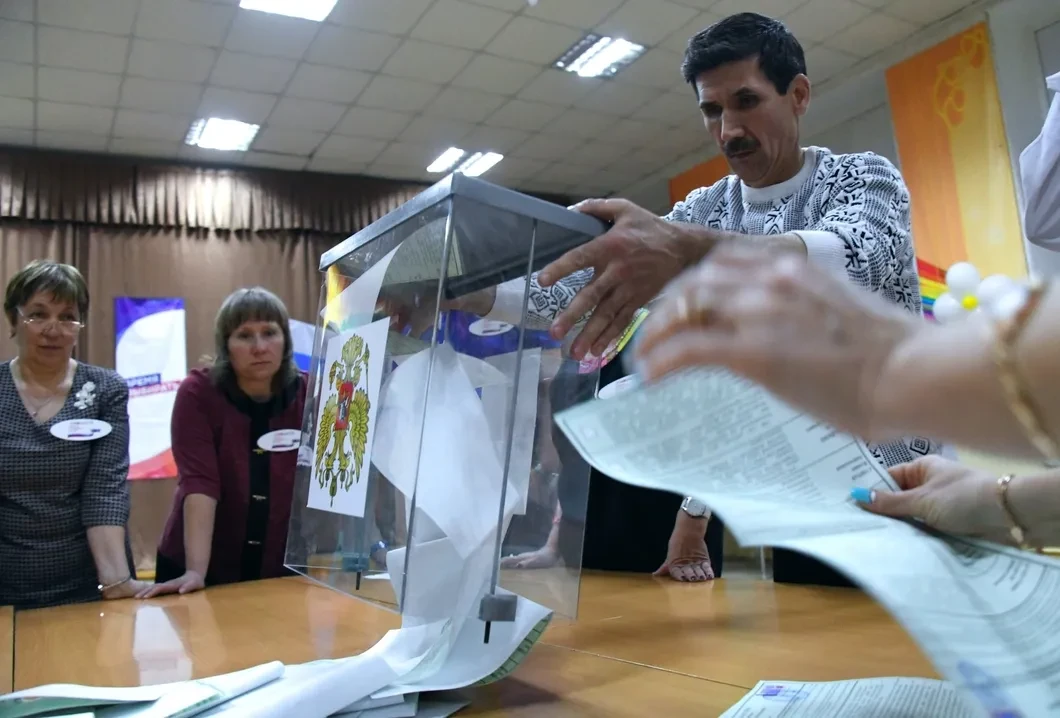
On July 23, the CEC received documents of the Communist Party to initiate the All -Russian referendum on the prohibition of raising the retirement age.
The first regional meeting necessary to launch this procedure was held in Moscow. The referendum is proposed to make the question “Do you agree that in the Russian Federation an age that gives the right to appoint an old -age insurance pension should not increase?”
According to the law, within 10 days, the CEC must report whether it is possible to submit this issue to a referendum. If the answer is negative, the topic is closed, and meetings in other regions can no longer be held.
If it is positive, it will be necessary to hold meetings in more than half of the regions. But this does not guarantee that the referendum - for the first time after December 1993 - will take place.
Lawyers and "Saperer Principle"
The topic has two measurements: legal and political.
In a legal dimension, the holding of all -Russian referenda is an extremely complex quest where “mines” are in wait at every step.
At the same time, the referendum initiator, like a sapper, is mistaken only once. Any mistake is fatal, and entails the cessation of the procedure.
In accordance with the Federal Constitutional Law “On the Referendum of the Russian Federation”, there is no initiative group of referendum to “launch” the procedure, but a group of citizens who put forward a proposal for the formation of this initiative group. This group should notify all regional election committees of intention to hold meetings to create “regional subgroups” of the initiative group.
At the meeting of the regional subgroup, at least 100 people who have a place of residence in this region should be present. The meeting should create a regional subgroup, approve the wording of the issue (or issues) of the referendum, make a decision on the formation of an initiative group for holding a referendum and appoint authorized representatives of the regional subgroup from their composition. At the same time, what is the most significant - the law requires that the signatures of the meeting participants be notarized.
Which requires both decent expenses and a whole group of notaries - one notary will certify one hundred signatures for a very long time.
Next, the application for registration of the regional subgroup (for signatures of authorized representatives) is sent to the regional election. The protocol of registration of the meeting participants, the protocol of the meeting itself, the power of attorney drawn up for authorized representatives of the regional subgroup, and the list of members of the regional subgroup and authorized representatives “in printed and machine -readable form established by the CEC of the Russian Federation” are transmitted there. Finally, in the regional election commander, it is still necessary to submit “written statements of members of the regional subgroup about the consent to be members of the referendum initiative group.”
In general, a bunch of papers, which the election commissar for checks for compliance with the requirements of the law, either registers the subgroup, or refuses it. There are two grounds for refusal: either the documents are incorrectly executed, or the question that is proposed cannot be submitted to the referendum.
As for the documents, it is the “sapper principle” that works here.
As the practice shows (in particular, St. Petersburg, where referendums were repeatedly proposed, but they didn’t give it to you), any mistake in the documents - for example, in the addresses, dates of birth or passport data members of the regional subgroup or authorized representatives given in the corresponding list, is interpreted by the ex -saving as the basis for refusal.
The mistake of a hundred people will crept in a list of a mistake. And everything will have to be started again: a meeting, a protocol, certification of signatures, the transfer of documents in the election room.
If we talk about the verification of the CEC, then the commission, by law, checks the compliance of the referendum issue with the requirements provided for in Article 6 of the FKZ “On the referendum of the Russian Federation”. What cannot be taken to a referendum?
Questions about changing the status of the regions enshrined in the constitution, about the early termination or extension of the term of office of the president or parliament, about the early elections of the president or deputies of the State Duma, the election, appointment, early termination, suspension or extending of the powers of persons replacing the state posts of the Russian Federation, on the adoption of extraordinary and urgent measures to ensure health and ensuring health and urgent measures to ensure health and ensuring health and urgent measures to ensure health and secure population safety, and some other issues. And, finally, “issues classified by the Constitution of the Russian Federation and federal constitutional laws to the exclusive competence of federal bodies of state power”.
The latter, we note, if desired, allows you to declare almost any question forbidden for referendum.
In addition, the question brought to the referendum should be “formulated in such a way that the possibility of its multiple interpretation is excluded so that only an unambiguous answer can be given to it and that the uncertainty of the legal consequences of the decision made in the referendum.” What, as St. Petersburg practice shows, gives almost unlimited possibilities to “tremble” almost any question proposed to the referendum, saying that it can be “multiplied” or “uncertainty of legal consequences”.
Thus, the capabilities of the CEC “block” the adoption of any issue undesirable for the authorities are very wide. Meanwhile, as soon as the CEC gives a negative answer, meetings in other regions can no longer be held.
If the CEC nevertheless gives a positive answer, the referendum initiators must hold meetings in more than half of the regions within two months, then-hold a meeting of authorized representatives of regional subgroups and send a request to the CEC to register a referendum initiative and a referendum issue. After that, the CEC checks the documents within 10 days, and registers or does not register the initiative group.
In the case of registration, the group goes to collect 2 million signatures of citizens for the appointment of a referendum within 45 days, and in one region you can collect no more than 50 thousand signatures. These signatures enter the CEC, and if in signature sheets no more than 5% of the marriage (this condition is difficult - usually, due to the human factor, marriage is at the level of 10%), the referendum must be appointed.
Politics is a matter of money
Now - about the political measurement of the topic of the referendum.
The fact that the Russian government has been blocking any referendums in the country for a quarter of a century (except for those that are carried out “from above”, for example, to enlarge the regions), is well known. Prepositions are any: from improper paperwork, and to the inability to submit the proposed issues to the referendum.
As a result, with the rarest exceptions - not a single initiative group of the regional or federal level was able to reach even the collection of signatures of citizens.
Why? Yes, because usually “from below” to a referendum, it is proposed to make a question that power, contrary to the opinion of citizens, does not want to solve in their favor. So, the referendum should be prohibited.
If we talk about the “pension referendum”, then its result - taking into account the data of sociologists and observed public moods - does not cause doubts. No state propaganda will help here: people understand very well when they climb into their pockets.
This means that most likely, the authorities will try not only to allow the referendum (which will become a huge political gift from the Communists), but even to collect signatures for its holding - which in itself will turn into a serious “anti -Crelevo” action.
The arguments that you have to hear - they say, the Kremlin will not dare to refuse the Communist Party in a referendum, this will cause a big scandal - it seems that they are not very justified: it will be very decided very much.
Too big money is put on the card to risk their loss because of some kind of popular will.
However, another option is theoretically possible - the referendum procedure is allowed to be brought to a certain stage - for example, to the collection of signatures, and then solemnly announces that the authorities listened to the people and cancels or significantly corrects its plans. For example, pushes them for ten years. Those that, as the president recently stated, can be lived without raising the retirement age.