
Translated material
A real old writer
Denis Dragunsky - About Vladimir Voinovich
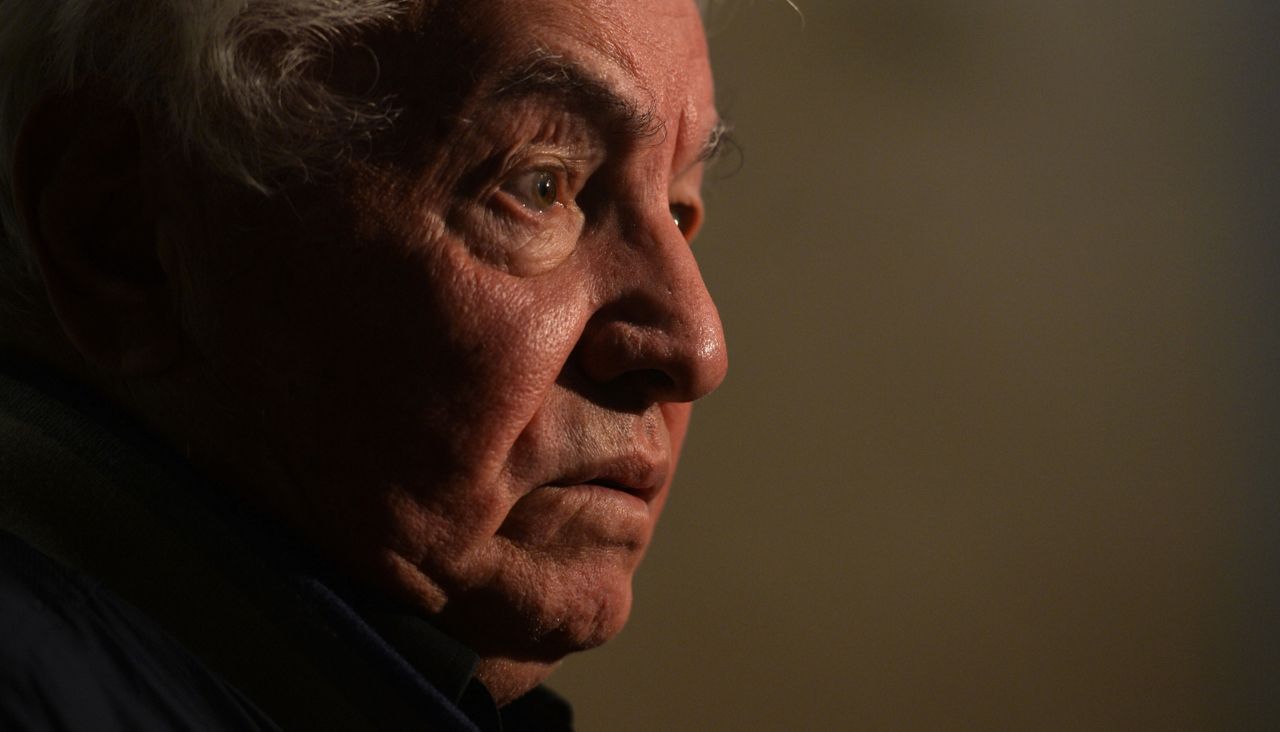
On the night of July 28, it became known about the death of Vladimir Voinovich. He was 85 years old. At the request of Medusa about the author of “Life and Extraordinary Adventures of the soldier Chonkin” and his literary reputation, the writer and philologist Denis Dragunsky recalls.
Vladimir Nikolaevich Voinovich died, and my own grief is that I never met him personally. Although we lived in a summer village in the neighborhood, literally three minutes, four fences. On walks, it used to be bowed. I thought: "Well, I will come to him next time." Not fit. I did not have time. Sorry. So it has been with me many times. But it's not the point.
Voinovich died, this is a huge loss, loss and pain - but similar words are now saying, probably.
Another real old writer left us.
Old - that is, living as many as 85 years; Of these, 67 - in the last century. Published since 1955. He saw the war, victory, Stalinism, a thaw, stagnation, a race on carriages, acceleration, restructuring, the collapse of the USSR, a liberal revolution, mature Yeltsinism and what followed it. Born in Soviet Central Asia, who lived in the province, who served in Poland, who conquered Moscow at the age of 28 (the author of the anthem of the cosmonauts “on dusty paths of distant planets”), aloud protested against everything that was outraged by normal people (but 99% of normal people were indignant at the whisper, and he was loudly), who lived in the citizenship that lived in living in living Emigrations in the USA and Germany, and then returning to their homeland - and all this missed through his works.
I remember how in one of the last numbers of the “New World” for 1964 on the rear page of the cover the announcement for a year was printed. Among other things: “ Vladimir Voinovich,“ The Adventures of the Soldier Ivan Chonkin, ”a novel about the everyday life of the Soviet Army .” Like this. I admit, I thought it would be something like “I want to be honest” on army material. Who knew what it would be for weekdays! Of course, the novel was not printed. I read Chonkina in Samizdat, like the “hat”, “Ivankiada” and “Moscow 2042”. Only the “portrait against the background of myth” I held in my hands as a legally published book in solid binding.
But what is a real writer? This morning I saw three types of responses on the Internet. In the vast majority, people mourn in Voinovich as a holistic phenomenon, according to the patriarch of insightful satire and civil honesty. This is a statistical majority, a pot of a Gaussian hat. But on its fields, along the edges of the distribution, other voices are heard. Some say that Voinovich is a writer, here is a writer, an artist - frankly, ordinary. Good but ordinary. A professional who owns a word, a specialist in terms of paradox and humor. But his impeccable honesty and political courage, plus a huge human charm, simplicity, lack of any vague, self -irony - all this overlapped his strong and worthy texts, as if he made him not only a large person, but also a great writer. Others say completely different. That it was Voinovich’s civic position - expressed in his satirical books, and in direct statements, in letters of protest - as it were, his literary gift was overshadowed, and that Voinovich remained underestimated precisely as a writer, artist, master without any political increments and benefits.
And here we have a forehead with our forehead against the wall, on which some ugly (Sartre, it seems) was sweeping and fatly wrote: “So what is literature?”
Don't know. And I don't want to know. But I philologically remember the plan of expression and the plan of content. How nice it is to write something highly deep or excitingly interesting in content, but at the same time expressed in a highly elegant, extraordinary, inventive in the sense of metaphors and internal rhythm. So that the reader would say in a whisper: "Ah, how smart ... but how beautiful!" But so few people did, even the most classics. Unless Gogol and Proust. Usually they turn there or here. Either in the beauty of the words (“yes, no matter what, but how great it is written”), or in a bare reality (“Yes, it is written so -so, but this is life, and how boldly”).
However, there are other relationships between content and expression. Gorky recalls how, in his early youth, he read the story of Flaubert “Simple Heart” - and from time to time he grabbed the book and looked at the pages. It seemed to him that there was a secret in the paper itself: everything read alive stood before his eyes. The best writer is the one who is not visible, who disappears for the reader as a component of words, and remains as a carrier of meanings. That was Chekhov, that was the object of Chekhov’s hostility Dostoevsky. Believe me, this is not for the mourning praise. I do not put Voinovich in this series, especially since this is not a row at all. I just designate the writer's type. The one where the thought leads the word, and not vice versa.
The Soviet Union has long been gone for a long time, and it will never, despite all the efforts of restorers (the maximum that restorers can succeed is the abbreviated version of Moscow 2042). But “Chonkin” and “Ivankiad” will remain. How forever “Schweik” and “man without properties”, surviving Austria-Hungary, and retaining its arrogant nonsense. How the stories of Taffy and Averchenko remained, having survived a senile piece of Russian history, for some reason called a silver age.
It never occurred to anyone about Voinovich’s books to ask: “How is it written?” Because it is written exactly as it was necessary to write about our Atlantis with you - to remember, laughing and horrified. Therefore, Voinovich is a writer not only old, cheerful and honest, but also real. Farewell, Vladimir Nikolaevich.
Denis Dragunsky