
Translated material
Our traces will remain
Vladimir Voinovich left
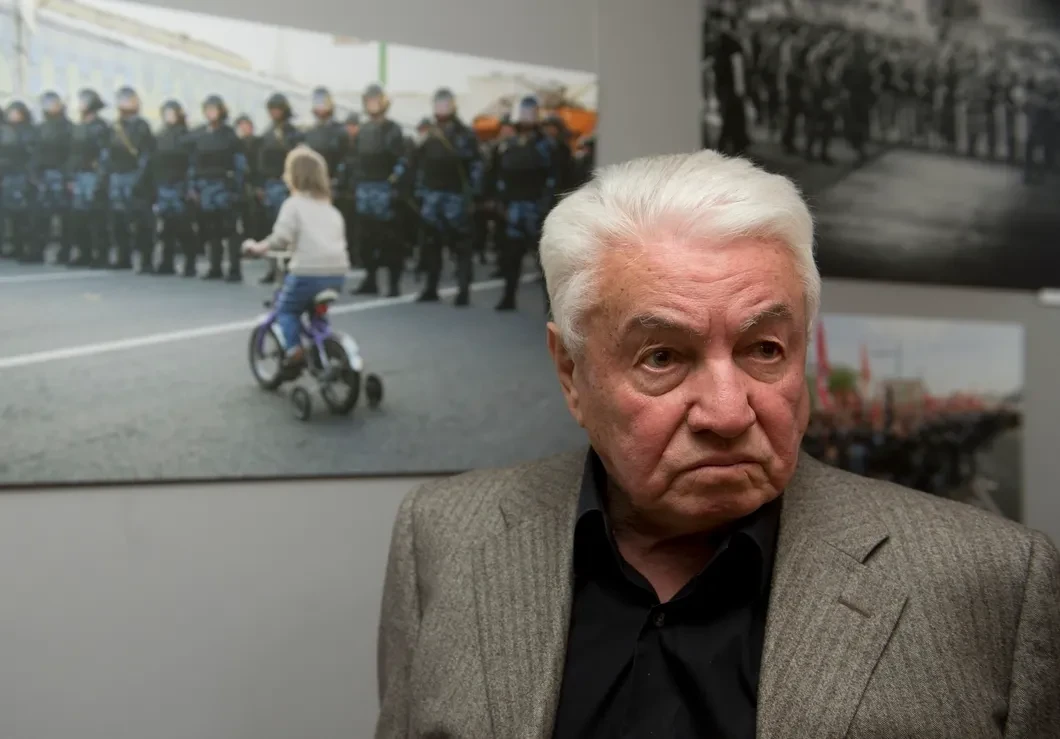
On the night of July 28, in Moscow, at the 86th year of his life, writer Vladimir Voinovich, the author of the famous novel and the Extraordinary Adventures of the soldier Ivan Chonkin,, the tough anti-utopia “Moscow 2042”, the informal anthem of the Soviet cosmonauts “Fourteen minutes before the start”, the laureate of the state State Property of the Russian Federation-the mocking critic of the state, the Gerod, Gerah free literature and samizdat of the 1970s-1980s, the brightest prose writer.
Vladimir Nikolaevich Voinovich was born in 1932, in Stalinabad (Tajikistan). In 1936, his journalist father was arrested, in the mid-1950s two attempts to admit to the Literary Institute failed: the surname of the beginning prose writer seemed to be the vigilant contemporaries too much ... cosmopolitan. (In fact, the surname of this comes from the Russified branch of the ancient Serbian noble family. Vladimir Nikolaevich wrote for decades: “In our family ... generals and admirals of Austrian, Italian, Russians. There were even Venetian lashes ...”).
Nevertheless, the young editor of the radio woke up famous in 1961, after N.S. Khrushchev quoted his song “On the dusty paths of distant planets ...”, meeting the astronauts.
There were more significant literary victories: the novel of Voinovich “We live here” (1961) was published in the “New World” of the legendary era of A.T. Twardovsky.
The main book of his life is the salty and bitter epic about the soldier Ivan Chonkine - Voinovich began to write in 1963. The publication in the USSR was unthinkable: the novel went to Samizdat of the 1970s, was first published completely in 1975 in Paris. A year earlier, Voinovich, who had already taken an active part in human rights in the USSR, was expelled from the Writers' Union. In 1980, Vladimir Voinovich was expelled from the Soviet Union.
The very funny and completely hopeless story “Ivankiada”, the novel-antiopia “Moscow 2042” (1986) about the strange variety of great-power totalitarianism in Russia of the 21st century, the book of essays “Anti-Soviet Soviet Union”, plays, and novels were written by him during the years of emigration. In 1990, Soviet citizenship was returned to Vladimir Voinovich. And the writer returned to Russia - while maintaining independence, skepticism, the spirit of the mockery, rebel and human rights activist. In his version of the "new anthem" of the country to the previous music, Voinovich wrote:
To a free market from the life of shit
Going down from the heights of communism, the people
Under the flag of tricolor with a two -headed eagle
And the Anthem of the Soviet is walking in a wagon.
And in the 21st century, Vladimir Voinovich wrote letters of protest against the war in Chechnya, against the acceleration of rallies in Moscow, in defense of Nadezhda Savchenko.
“I have seen many peoples in whom rulers constantly ask for permission for everything. And those who are not asked, they are unlikely to call them and the people, ”wrote Voinovich.
And in this, perhaps, is his credo. And the internal engine of his anxious vigilant sarcasm.
In 2000, he completed the novel “Monumental Propaganda” - about the heritage of the Soviet period, sitting in the subcortex of almost every citizen of free Russia, about the phenomenon of mass Stalinism. And it was for this novel that in 2000 he was awarded the State Prize of the Russian Federation: the times, you see, were completely different ...
In the expanded edition, the “Documentary phantasmagoria” “Anti -Soviet Soviet Union” was published. In 2010, the novel “Self-Portrait” was published.
In adulthood, Voinovich began to engage in painting. Bright, slightly grotesque canvases carried, perhaps, a fingerprint, freedom-loving and alarming painting of the 1910s-1920s.
Vladimir Nikolaevich was a laureate of the Bavarian Academy of Arts, the Triumph Academy, the A.D. Sakharov Prize "For Civil Courage" (2002), named after Leva Kopeleva.
The New Gazeta brings deep condolences to the family, relatives, to the writer's colleagues.
Department of Culture
PS
Farewell to Vladimir Voinovich will begin at 11:00 on Monday July 30 at the Central House of Writers. Entrance from Bolshaya Nikitskaya Street. The funeral at 15:00 at the Troekurovsky cemetery.