
Translated material
Superhero from a teenage novel
Mikhail Zygar - memory of journalist Orhan Jemal, who died in Central Africa
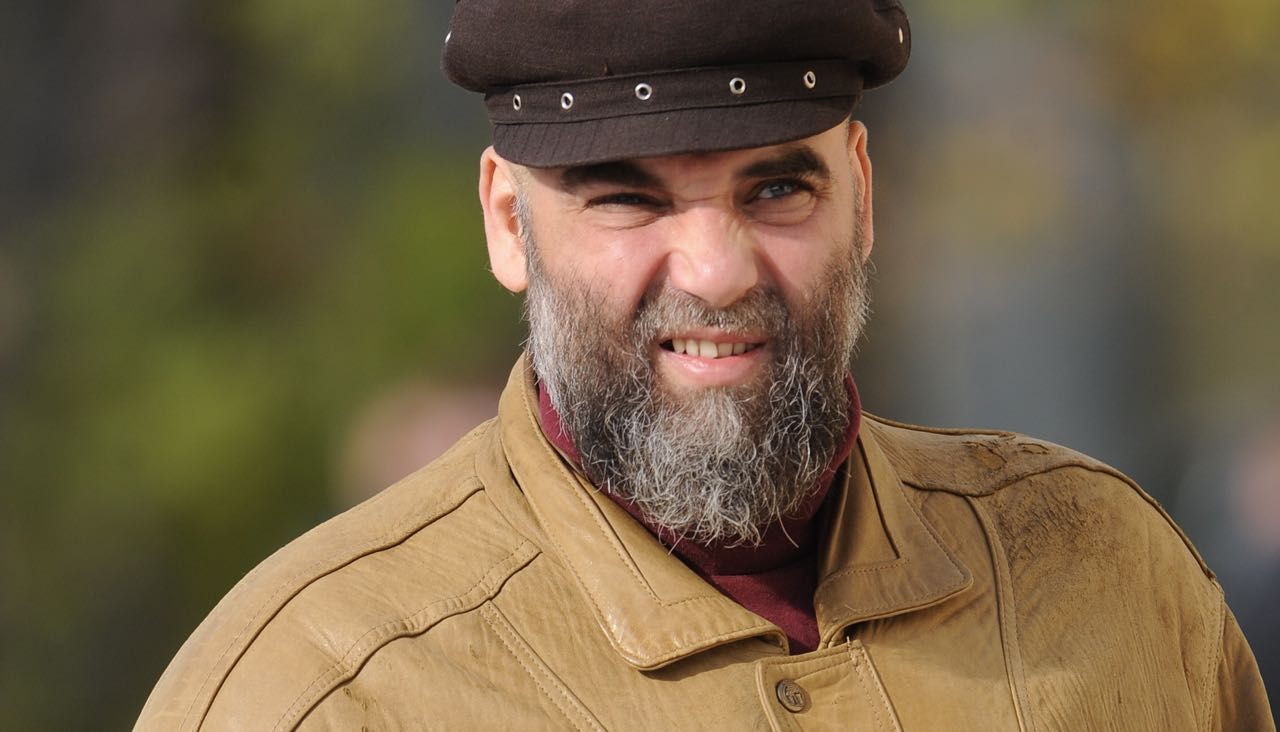
On July 31, it became known that three Russian journalists were killed in the Central African Republic who came there to shoot a documentary about mercenaries from Russian private military companies. The car in which the journalists rode was shot at one of the checkpoints; Local authorities believe that participants in one of the local rebel groups could do this. Director Alexander Rastorguev, cameraman Kirill Radchenko and journalist Orhan Dzhemal died - the last many years he worked as a military correspondent in different publications; In this capacity, he visited Libya, Somalia in the east of Ukraine. Medusa asked to tell his colleague about Jemala, the founder of the Story of the Future Studio Mikhail Zygar, who himself was a military correspondent for many years - and worked with Jemal in the Russian Newsweek and on Rain.
About Orhan Jemal, you need to write an adventure novel. For children. Not because in his life or his work there was something frivolous-on the contrary. Just so honest and reckless are only heroes of children's books. In adult literature, it is already believed that busting is actually not.
Orhan was a very strange journalist, because he always forgot that he was a journalist. He began to help the heroes of his reports. He was friends with them, cared for them, saved them. You probably can hardly believe it, because you know - journalists do not save people. But Orhan was an unusual journalist - like a superhero from a teenage novel.
Like any hero, Orkhan seemed to have many lives. Perhaps the first time he was supposed to be killed in October 2005 in Nalchik - then he worked in the newspaper Version. He arrived in the city after the so -called Wahhabis attack, - however, Orkhan suspected that many “destroyed militants” were actually accidentally dead civilians. At one of the checkpoints, they began to search him, looked into his notebooks, read the decoding of his interview - and decided to kill. “Let's take it to the forest and we will finish it ...” said one opera to another. But Orhan miraculously saved colleagues, Anna Bokshitskaya and Fatima Tlisov, who began to call all possible phones of all possible bosses in Kabardino-Balkaria. Orhan spent 17 hours in the department and went out.
After the “version” he went to work in “Russian Newsweek”. In 2008, he went to the war in Georgia - and, of course, did not look at it from afar. He asked for the fighters of the Chechen battalion Vostok and drove to Georgia on their armor. He fell under fire - along with the soldiers hid on the basements. In one of the reports, he described how, hiding from the shells, he, along with the new comrades, found three cans of pear compote in the basement. The soldiers drank them and left a hundred rubles - so that no one would accuse them of looting.
Having traveled all possible hot spots nearby, Orhan decided to go to Somalia to the pirates. The editors of Newsweek, of course, did not want to let him go there - several journalists of the publication died in Georgia and Iraq, no one wanted to take risks anymore.
But Orhan firmly decided that he would go. He found the so -called Somalia embassy in Moscow (it was a three -room apartment in a panel high -rise building on the outskirts) and asked to give him a visa. A man who called himself a Somali ambassador (in fact, of course, he had not been in his homeland for many years and had no connection with the current Somali regime), demanded an invitation from Orhan. Orhan, apparently, painted an invitation - and the “ambassador” in response painted Orhan an accompanying letter.
Orhan arrived in Somalia through Kenya - and he was arrested right at the airport. All because of the sandals that he bought in Moscow, local Islamist militants went in the same sandals. He spent one night in prison, and then lived in the office of the head of the local police for another week. A week later, he was sent back to Kenya: the police chief said that if he was released into the city, the militants will definitely take a journalist from Russia hostage and receive a million dollars of ransom. And the police chief does not just want to enrich the militants for a million dollars.
Orhan returned from vacation terribly pleased - with a report .
Then Newsweek closed - and Orhan came to work on the rain. He seemed twice as old and twice larger than any other employee - the average age of the channel journalists was around 23 years. This difference was noticed by everyone except Orhan. The kids were first shy about an adult uncle, who came to them in the sandbox, and he was normal.
Then the war in Libya began, and it could not be released. He burst out there - and sent a video, which showed how he buzz. These were very strange videos-he erupted somewhere all the time. He shot himself on his outstretched hand, sitting in the back of the truck at full speed, armed Libyan militias sat nearby. With burning eyes, he poured names of cities, which were either taken or repulsed back. As if boasting, he told how they first tried to enter the city, but they were ambushed, then fired, then retreated, then made a hook, and then went from the other side. “This is how our positions look like ... We also get it,” he said on the air. It was clear that he met people there who needed to help, whom he considers his own and whose war he considers his own.
Orhan has said many times that the journalist is not neutral, he always takes someone's side-the one that seems fair to him.
The business trip from the “rain” was short -lived - Orhan returned to Moscow and soon left the channel, because he had to go back to Libya. He went to work in Izvestia, to Gabrelyanov - if only he was sent there. And he was sent.
The second trip was more desperate. They say that Orhan then, leaving for Libya, was ready to die. On August 22, 2011 he was wounded in a shootout and miraculously saved. He was operated on by the Egyptian surgeon, a Russian woman-doctor came out, whom he met back on the previous business trip. Then his friend Maxim Shevchenko came after Orhan and took him to Tunisia, and Aram Gabrelyanov paid for treatment in Austria. Orhan then grieved that he did not fall on the storm of Tripoli and did not see the victory.
The sewn leg took root poorly, Orhan was limping, angry, all the time said that "it would be better to cut it off right away." It seemed to him natural that it was better to be a one -legged pirate from a children's book than a lame old man with a wand.
Orhan suffered until there was a new job - and when the war in eastern Ukraine began, he forgot about his leg and went to the Donbass. This time - for Forbes. There he immediately became the leader of the gang of Russian military correspondents: the rest were much less experienced than he. With young colleagues, Orhan behaved like with young Jim Hawkins from the “Treasure Island”: he taught lives with a slight grin, but always very respectful.
On September 1, 2014, Orhan and the correspondent of Rain Timur Olevsky were captured by the fighters of the Azov battalion. They put bags on their heads, put them in the basement and interrogated for several hours. And then, finding out who they were released. And Orhan continued to work as if nothing had happened.
Ordinary journalists, and ordinary readers did not understand Orhan - why did he climb there all the time. And he probably did not understand them. The war still happens - in very many places of this planet. Of course, you can pretend that it is not. That she does not concern you. But she will not disappear from this. You will be like ostriches that hide their heads in the sand.
Orhan was a very reliable friend - and never carefully. His text about the death of Natalia Estemirova ended with these words:
“In the family village of Estemirova, where they took her to bury her, the gathered glorys discussed the release of local television news:“ The president of the Chechen Republic Ramzan Akhmadovich Kadyrov ordered to make every effort to find the killers. ”
“It is probably difficult to look for yourself,” was heard from the crowd. ”
Orhan was closely friends with Anna Politkovskaya and loved her very much. He called his text about her death "lived as a soldier and died as a soldier." Orhan, probably, also considered himself a soldier. And he was such a soldier that are found only in good books about very honest and very real people. And which are no longer in this world.
Mikhail Zygar