
Translated material
"Why do you have a child?"

Reception parenthood looks like a marathon, and even with obstacles. Why take a child in return for the deceased blood is a bad idea, what expectations lead to the return of children to the orphanage, how to prepare for the Marathon of parenthood and not get out of the distance, says psychologist Elena Kondrashkina
Help the family to help childrenRun, go, lie down
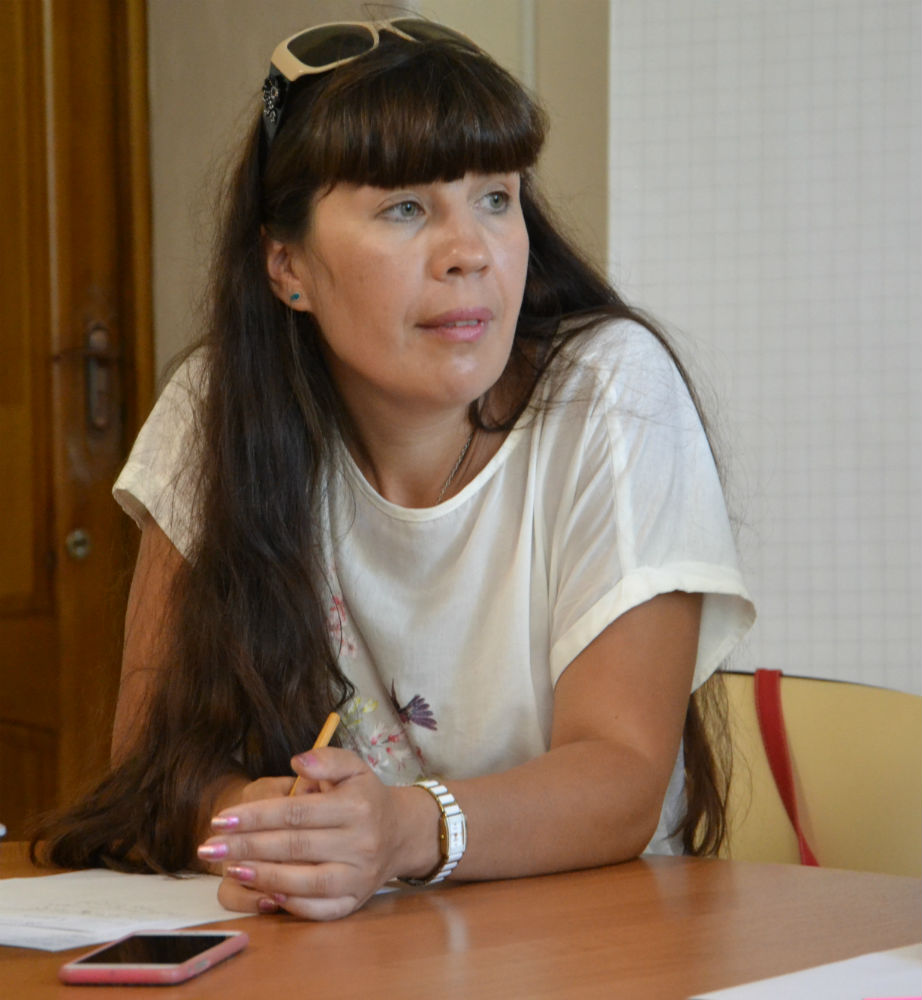 Elena Kondrashkina Photo: provided by ANO "Family Children"
- If I offer you right now to run a marathon, will you agree? - the Yekaterinburg family psychologist Elena Kondrashkina asks me. She has an amazingly calm voice and attentive eyes.
“No, of course, I'm not ready,” I answer.
- It's good that you soberly evaluate your strength. Most often, people do not understand, do not know what awaits them in the way-and agree to run, especially if they represent something valuable personally for themselves at the finish. But you can not get to the end of the distance - if it is so difficult that the value will lose all its attractiveness.
- Would you run? - I want to plunge me, but Elena seems to guess my question.
“In the past, I am a candidate for master of sports in athletics,” she says. - So I would have run a marathon, but subject to certain conditions: if I had time to prepare, if I had comfortable clothes and shoes, if I could postpone the start, for example, in the case of a sudden deterioration in well -being. And most importantly - I must understand that I really need a prize that will be at the end. And I realize that sometimes I will go, and sometimes - just lie towards the finish line.
Based on real events
Elena compares the life of a foster family with a marathon after a child from an orphanage appears there. This is one of her favorite metaphors.
For those seven years that Elena has been working in the field of family structure, she has accumulated a lot of similar figurative comparisons. As well as different stories that could illustrate the task for potential adoptive mothers and dads. And to call it: “It is based on real events”, and better, “bought by a road.”
She very well remembers the first return of the child from the foster family, which happened before her eyes. The woman took a boy from the orphanage. Nine months before that, she visited the child in the hospital, controlled how he was treated. Three days after she brought him home, she refused: “Everything, take it, I can’t, not mine.” A man who was against the adopted child left the woman.
It seemed to her that she could, like a kitten, bring a little boy to the house - and the man will take pity. I did not take pityElena teaches at the school of foster parents in Yekaterinburg and is engaged in supporting foster families. He has meetings in three clubs for mothers and dads who have already taken a child from the orphanage. Participants individually and at group sessions are divided by the joys and difficulties of foster parenthood.
Just the number of difficulties in families can reduce, and the number of joys can increase. The saving accompaniment, about which the professionals of the family device speak of as a method, including getting rid of children's return to an orphanage, begins with determining the motivation of a potential foster parent.
Why do you need this?
“Why do you need a foster child? What is your resource for its adoption and education? " -These are the first questions to which future adoptive parents would be good to answer for themselves before thinking about an orphan.
“My task is not to give advice to a potential adoptive parent whether or not to take a child to him and which one. Do not give assessments. My task is to ask parents questions so that they can find answers to them themselves, ”explains Elena Kondrashkina.
In the SPR, where Elena conducts classes, she gives the candidates a task called "ether". People who think about foster parental parental anonymously answer the question: "Why do you need a child?" Then the answers are discussed jointly - this gives the answer to the answer to look at his goal from the side and adjust it. For example: "I have a business, I want a successor."
The psychologist's question: "And if the child does not want to follow in your feet?"Or: “We already have a blood son, but we would like to take a girl. When she becomes an adult, her son will have a support in life. ” The psychologist’s question: “Why are you sure that children will be friends and communicate after growing up?”
Or: "I need a two -year -old boy, because I do not want to change his diapers and feed him from a spoon." The psychologist's question: “What will you do if the child suddenly gets sick, and the story with diapers will be forever?”
Child and emptiness
“Definitely destructive motivation is when the child is taken to the place of blood,” says Elena.
In her practice there is such a story: the only daughter died in the family, the light in the window for parents. Less than six months later, the husband and wife decided to take a girl from the orphanage.
“We did not have the right to refuse them when they came to the SPR. It was hoped that during their studies there would be a state of acute grief, ”says Elena. “But this did not happen.” We said in unison that they did not need to become foster parents yet, but this did not stop them . ”
This family is very unhappyThe foster parents expected that a girl from the orphanage would replace the blood daughter for them, will become her copy, but this did not happen for obvious reasons. The marathon, in which they settled, became for them a heavy burden. There is no more motivation, but you have to run, erasing the legs in the blood, falling and suffering. At times, foster parents are on the verge of a return. And they do not refuse to move “in distance” only because they are afraid of condemnation, guilt.
“We work with this family, work with a girl, try to support her. I must say that she does not complain, she is a fighter. We are waiting for her to become an adult, ”says Elena.
Attempts to fill the void in life do not lead to a child, according to the observations and experience of a psychologist, or to anything good.
"My business is not to be killed"
One of the clubs for foster parents, which Elena Kondrashkina is leading, works at the Yekaterinburg orphanage for children with mental retardation on Lyapapina Street. Moms who took care from this institution of mental disabled people come there - and many of the children do not have the prospect of legal capacity and independent life.
“When they called me there, I doubted very much that children with such health problems would be in demand,” says Elena. “But time showed that I was mistaken.” The psychologist saw many parents who do not imagine their life without caring for someone. And this is the motivation to take the child - albeit with intellectual disorders.
“The question that I ask these parents:“ What will happen next? ”Says Elena. Most often, she hears the answer: “Let's see, we have relatives, in the end.”
The most important thing in adoptive parental, Elena believes, is not a love for a child at allIt is often not enough. Cr . and adopted child is not the same. Easier and easier adoptive parenthood is formed by those who treat him as professional activity. What do professionals do? First study, and then perform certain tasks. They have no high expectations and unreasonable claims to the child.
“I recently asked the parents who came to the group meeting:“ Are your expectations to be justified about adoptive children? ” - says Elena. - One of the mothers answered me: “My task is so that they do not kill at school, because they are hyperactive. To have time for classes to get a profession. What kind of profession it will be - it is not very important to me. " This woman solves certain “here and now” current problems. And it does not expect that the adopted child will become, for example, a reliable support in old age. ”
Green, yellow, red
Elena emphasizes: every foster family needs escort. Only with the family, it is initially necessary to agree on the degree of immersion of a specialist in her life: “Trust should be formed, understanding that accompaniment is not control, nit -picking and punishment for misconduct, as the adoptive parents may seem after communication with guardianship officers, but support, assistance.”
In the charity organization "Family for Children", with which the psychologist has been cooperating for several years, the program "School of Conscious Parenthood" is working. It is important to immediately motivate everyone who comes to school for escort. Gradually, psychologists build a trusting relationship with the family and make it clear: they can be addressed in any crisis situation.
Kondrashkina and her colleagues developed a scheme: all families passing through the Sprus are divided into three groups into three colors of traffic lights. In the green sector - those who do not have special difficulties, more precisely, are, but they are ordinary for foster families. Families where communication with the child does not bring pleasure.
Where parents begin to think: "Isn't it better for us without him?"To track this first call to return, and you need to be accompanied. “Our task is to track this moment, to start working with the family in advance. Not every family will understand that she already had the initial stage of rejection of the child - and we can give such an understanding, accompanying her, inviting her to meet the school of conscious parenthood after the child appeared in the family. ”
If the family in the red sector, if the adoptive parents come and say: “Take it up, help make the parting less painful for everyone,” specialists begin the process of minimizing the negative consequences from the return of the child to an orphanage or moving to another family.
“Support and assistance in solving emerging problems is a long story. Even a sick tooth is treated in several suits, but it may turn out that pain is a consequence of the destruction of the jaw and prosthetics are necessary. But this will become clear only after a person comes to the dentist and agrees to the examination. So it is with family accompaniment, with conscious parenthood in foster families. ”
In order for the project “School of Conscious Rodistence” of the Charity Organization “Family for Children” to work long and fruitfully so that parents and children from foster families could receive timely assistance of qualified specialists, including Elena Kondrashkina, our financial support is needed.
Any amount that you donate will be invaluable help at the marathon distance of the reception parent.