
Translated material
Hunting for "bison"
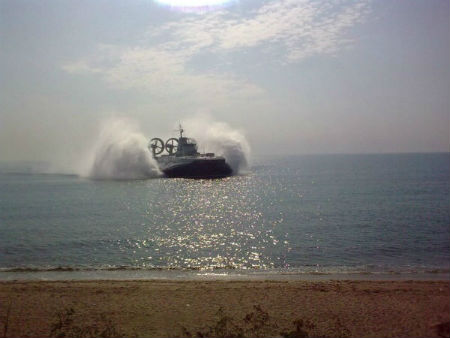
Testing "Bison" near Feodosia, 2012. Photo: Militaryphotos.net
Sovereign ambitions, accusations of espionage, terrible accidents, painful deaths in prison - the history of the construction of landing ships in Crimea is full of riddles and tragedies. "Zubble" is a tidbit of the Soviet military -industrial complex, which Russia could not miss. The struggle began long before the annexation, and after the capture of the peninsula, the project participants replenished the Kremlin hostage list.
In May 2009, Ukraine signed a contract with China for $ 315 million for the supply of “bison” - airbaging air pillings by the Soviet project “Zubr” modernized by Ukrainian specialists. A whole bouquet of criminal cases has grown from this transaction.
The first of them appeared before the annexation of Crimea. According to various sources, in 2010 or in 2011, the Security Service of Ukraine accused the businessman from Sevastopol, the owner of the Technical Committee, Vladimir Gorelikov, under Article 111 of the Ukrainian Criminal Code (Gosimen). One of the areas of businessman's activity was ship repair. He was charged with the transfer of the PRC of some information about the "bison". Almost nothing is known about the progress of the investigation in this case, as well as about the role of Gorelikov in a deal with China. It is unclear whether the businessman was elected by the Ukrainian authorities any measure of restraint; At the time of the capture of Crimea by Russia, Gorelikov was free, although he was accused of a particularly serious crime. There is reason to assume that the pursuit of the businessman could prevent influential forces in the then leadership of Ukraine.
The entrepreneur continued to conduct business under the Russian authorities: in August 2014, he registered four LLCs in Sevastopol with the general name of the Techkom. Two of them, as a profile of activity, he who is a wholesale trade, the third - “Techkomstroy” - the construction of residential and non -residential real estate, for the fourth - “Technical Committee -Sevastopol” - rental and management of real estate. One of the trading firms - the “tech -Internet” - judging by the name, led trading abroad. In the capital of India Delhi, Tekhkom-india Private Limited is registered on Gorelikov.
In the spring of 2007, Gorelikov participated in a property dispute. On May 3, 2007, the owner of the Sevastopol maintenance station of car and car wash, Auto-Blick Vladimir Kulchitsky announced a hunger strike , accusing Gorelikov of the raider seizure of a car service. According to Kulchitsky, on the night of April 17 to 18, 2007, unknown in masks under the leadership of Gorelikov seized a car wash, and when its owner with supporters in the presence of the policemen called by him tried to get to the object, a fight occurred, several people from Kulchitsky suffered. "Auto-Blick" and "Technok-Sevastopol" since 2003 have been conducted by a judicial dispute for ownership of the placement of a car wash.
After the annexation of Crimea, the Russian authorities ceased the "Ukrainian" case of Gorelikov for the lack of corpus delicti. However, when the representative of the businessman came to the city department of the FSB to pick up the documents that served as material evidence, it happened strange: he was first given them, and already at the exit from the special services building they stopped him and took him again.
On April 24, 2016, FSB officers came to a search in an apartment where Gorelikov and his wife Marina lived. The entrepreneur was detained and then arrested, imputing his article 276 of the Russian Criminal Code (espionage).
Like the Ukrainian prosecution, Russian was related to the transfer of documentation on the Zubr project in 2011. At the same time, in Russian case, according to Gorelikov, it was a question of legal transmission within the framework of the transaction. The Russian investigation, as you know, is very voluntarily addressed over time and space: a citizen of Ukraine was declared a criminal for the actions that he took on its territory before the Russian authorities came there.
On the day of detention, the Ukrainian was taken to St. Petersburg and placed in the controlled FSB SIZO-3 "Sparenaya". Presumably the investigation took place in the northern capital, since the Almaz Central Executive Committee is located here, in which in Soviet times the Bad project was developed. The following year, Gorelikov was transferred to Simferopol pre-trial detention center-1. On June 7, 2018, the city court of Sevastopol controlled by Russia sentenced him to 11 years in colony. The 66 -year -old businessman remains in Simferopol in anticipation of the appeal - the Supreme Court must consider the complaint in the sentence in August.
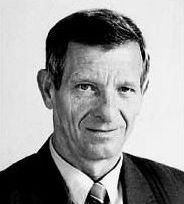
On May 28 of this year, the Lefortovo District Court of Moscow arrested a new suspect under Article 275 of the Criminal Code (state treason), which provides from 12 to 20 years of colony, 70 -year -old Viktor Prizorov. Nothing was reported about the personality of the arrested and the essence of the matter - it has the vulture "Top Secret". On June 7, the Moscow City Court rejected the appeal of the lawyer Prozorov Anna Bukharova to arrest.
A man with the same name and surname in the past was the director and chief designer of the Sevastopol Central Design Bureau "Chernomorets". This enterprise, as the sources explained to the "faces" close to the Ukrainian military industry, was the subcontractor of the transaction with the PRC.
In 2000, the Chernomorets developed a project of an autonomous immersing TP -400 platform for transporting the "bison" - the company acted as a subcontractor as part of the transaction for the supply of two ships by the Greek Navy, on this platform one of them was delivered to the customer. It can be assumed that in the implementation of the Chinese contract the Central Design Bureau played a similar role.
A copy of the pillow is a small airplane airbag "Zubble" with a displacement of 555 tons for the first time in the service of the Soviet fleet in 1988. "Zubrov" is the world's largest airbag, it is able to take on board up to 140 paratroopers, as well as 3 tanks or 10 armored personnel carriers or 8 infantry combat vehicles. A 70 percent of the coastline of the seas and oceans of the world is available to the ship for landing landing, the ship can move along the ground. It is armed with two MS-227 launchers for missile shells with a caliber of 140.3 millimeters and two AK-630 automatic anti-aircraft plants with a caliber of 30 millimeters.
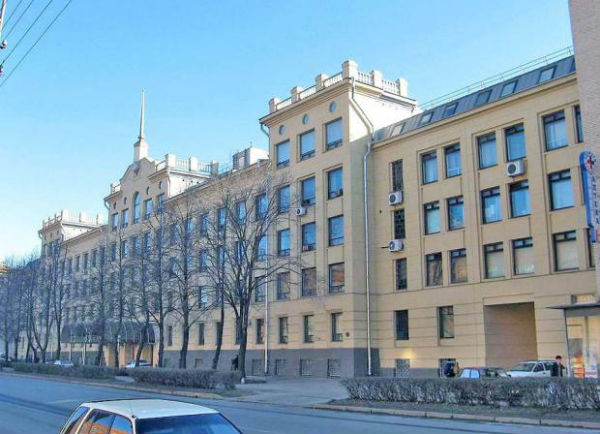
CMKB "Almaz". Photo: spb.ros-spravka.ru
In addition to Feodosia, the “bison” was also built at the Primorsky shipyard in Leningrad (in the early 1990s it was renamed the Almaz shipbuilding company; the design bureau of the same name - another enterprise allocated in Soviet times from the plant). After the collapse of the country, Ukraine inherited three whole and two unfinished ships at Theodosia shipyards, Russia - five drill ships. Now two "bruises" remain in service with the Russian Black Sea Fleet, the Ukrainian Navy does not have such ships. After 1991, Moscow did not build ships on this project, but planned to return to their creation in the future, and Kyiv began to export the "bison". The first foreign buyer of Bison was Greece: in 2000-2004, Athena acquired one such ship for their Navy, three more from Russia.
In the second half of the zero years, the interest in acquiring air pillow ships began to show China. In 2007, the Ministry of National Defense of the PRC appealed to Rosoboronexport with a proposal to order the construction of ten "bison", but it was refused - the Russian Ministry of Defense had already worked out by the time of the resumption of the construction of "bison" for its own needs, and the "diamond" was planned to be used under state defense orders. This forced the Chinese to turn to a more accommodating supplier.
Especially for China, a modernized version of the Bison ship was created. Under the terms of the agreement with Ukraine, China received two “bison” without weapons - it should have been installed on the spot (in particular, instead of the Russian AK -630, China installed its Type 730 anti -aircraft gun on the ship, created using similar technology), two more ships were later planned to be built in the PRC with the participation of Ukrainian specialists. Beijing transmitted all the documentation on the project and a license for the right to build new "bison" in the future.
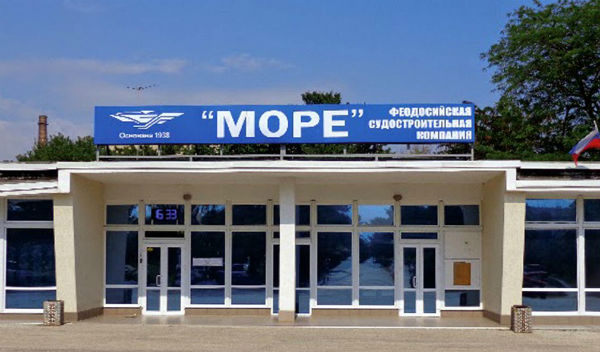
Passing "Sea". Photo: Wikipedia
The contract with China gave a chance to the Sea plant, which all the 2000s was in decline and suffered from the outflow of specialists, to restart production. Since 2008, the enterprise has been on rehabilitation. Thanks to the contract in 2011, the net income of the "sea" increased 32.7 times compared to 2010.
The Russian authorities sharply opposed the Ukrainian-Chinese contract. Moscow did not want Beijing to receive the design documentation of the "bison" and the license to build new ships, even for a similar Ukrainian project. Rosoboronexport insisted that the transfer of documents that were allegedly “on responsible storage” in Feodosia violates the copyrights to the “dentist” project owned by the Almaz CMCB, and therefore Russia could at least count on part of the transaction income. In July 2011, the representative of Rosoboronexport Oleg Azizov publicly accused Ukraine of violating the rights of Almaz to intellectual property and added that his department "informed" Russian executive bodies about this.
Kyiv rejected the accusations of plagiarism, insisting that the "bison" (Soviet project under number 12322) and "Bison" (Ukrainian project, which was assigned number 958) - various developments. The military experts interviewed by the “faces” dispersed: according to the Russian expert, the Soviet and Ukrainian ships are “twin brothers”, which differ only “in certain elements” of electronic equipment produced in Ukraine.
In turn, the Ukrainian weapons specialist indicated that Bison became the result of a fairly significant modernization of the “bison” - the Soviet project developed back in the early 1980s, by the time of conclusion of the contract with China, had already seriously obsolete. The main difference between the two projects is the new Flora-958 vessel management system, developed at the Simferopol Engineering Plant “Fiolent”, as well as in other electronic components that were mainly developed in Ukraine, and other “filling” of the vessel. According to the Ukrainian expert, the Sea plant possessed the entire production documentation (it can be compared with the assembly instructions) - this was enough to make a ship according to the initial project. However, Ukrainians lacked part of the original documentation of the project to complete the order. Whether Ukrainian designers were able to independently make up for this gap, the interlocutor of the "faces" found it difficult to answer. According to a Ukrainian expert, some of the components for the construction of “bison” for China were purchased in Russia.
Kara for "Spies" 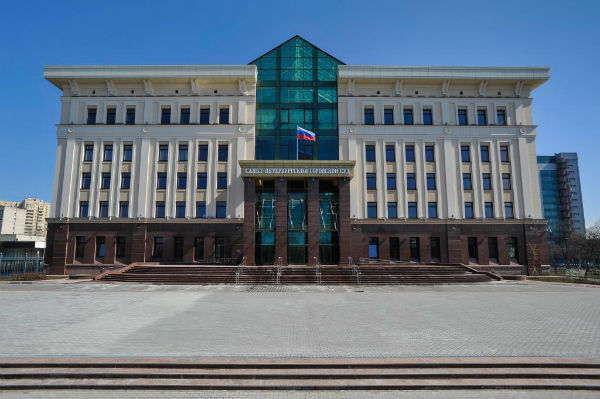
Petersburg City Court. Photo: sankt-peterburgsky.spb.sudrf.ru
In 2014-2015, the courts in St. Petersburg sentenced the two Russians, which, according to the FSB, transferred the “TsMKB” DISTRIZ ”documentation in 2011, allegedly stolen from the 51st Central Design and Technology Institute (Central Committee) of the Russian Navy by“ digitizing, loading into electronic boxes to the electronic boxes Free mail services yandex.ru and mail.ru and transmission of login and passwords to the "representative of the" sea ". In January 2014, the Vyborg District Court sentenced the 6 years of conditional deadline on charges of smuggling the head of the technical documentation of the Central Committee of the Central Committee of Vyacheslav Rodionov, and in December 2015, a former researcher of the 1st Central Research Institute of the Ministry of Defense, retired captain of the 1st rank Vladislav Nikolsky on charges of smuggling and Gosmen was convicted of the St. Petersburg City City to 8 Years of a strict regime with a month and a half restriction of freedom after liberation.
It was claimed that Rodionov handed over to Nikolsky the necessary drawings, he digitized them and loaded them into e-mail boxes, which were then viewed from Ukrainian IP addresses. Both pleaded guilty: Rodionov - at once (his case was considered in a special order), Nikolsky - already during the court. A retarded sailor was assigned a term below the lower limit of 10 years, provided for by the 275th article of the Criminal Code, and retained the title, scientific degree and pension to him. Another person involved in the case (possibly a citizen of Ukriana) - Vasily Black, called the representative of the "sea" in St. Petersburg, - died under arrest, not having survived before the sentence.
Initially, the investigation did not believe that the documents whose transfer was charged with Nikolsky contained data assigned to Gostaine. Later, however, the FSB discovered among these documents a catalog of standards of warships, classified in the mid-2000s. It was claimed that the captain in the post could not help but know that the stamp "secret" was applied to this catalog.
Meanwhile, the former colleagues of Nikolsky under the 1st Central Research Institute of the Ministry of Defense noted that many developments performed by the Almaz design bureau in the 1970-80s are morally outdated, and NATO countries have a complete set of documentation for the Zubble. Thus, military engineers concluded, the actual damage to the security of the state, which reversed Nikolsky, did not cause.
Previously, Nikolsky entered the Russian Thought Club, led by a publicist-anti-Semit, Konstantin Dushenov. In 2008, the captain received the year of the colony under Article 282 of the Criminal Code (excitement of hatred or enmity), for ordering the printing of a 16-page brochure in the printing house, "what to do now (a minimum program for a Russian person)."
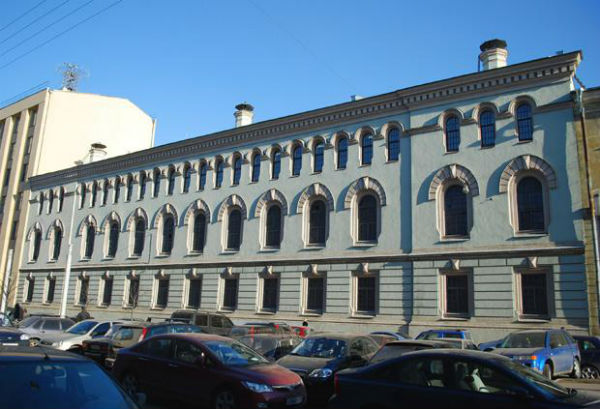
SIZO-3 "Sparenaya". Photo: Citywalls.ru
Apparently, the Ukrainian participants in the transaction with the PRC, being in the FSB insulators, faced very serious pressure. As Gorelikov claimed in an interview with a member of the St. Petersburg Public Supervisory Commission Yana Teplitskaya, they tried to poison him in a pre -trial detention center (he himself was poisoned at first, and then a neighbor in the cell entered the hospital, eating by the Ukrainian an employees of the food isolator) and often transferred to different cells with the "strange" prisoners who attacked him, and also refused to treat the operation: Ukrainian endured the operation: Ukrainian endured the operation On the heart and treatment of kidney cancer, at that time he found malignant neoplasms of the 3rd clinical stage, he needs constant medical care and must take special medicines for life. The defense tried to achieve the mitigation of the preventive measure, however, the court found that the neoplasms discovered in him are not included in the list of diseases with which the content in the insulator is prohibited.
In St. Petersburg, the Ukrainian consul tried to get to Gorelikov, but he was not allowed, referring to the Russian citizenship of the prisoner -he had two passports. During the stay of Gorelikov in St. Petersburg, it was reported that the FSB officers object to his transfer to the Crimea: in the northern capital, he was afraid of his life.
In the Simferopol SIZO Gorelikov, they continue to contain in unbearable conditions without the provision of drugs, despite the repeated complaints of lawyers (Sevastopol - St. Petersburg, after transferring to Crimea Gorelikov, for an unknown reason, they stopped defending for an unknown reason). Gorelikov needs an urgent heart surgery. Given the conditions in Russian pre-trial detention centers and colonies, the 11-year term appointed to the Ukrainian actually means a death sentence for him.
The death of the Black Fontanka reported that he died at the St. Petersburg Military Medical Academy. Kirova, before that, "having lost health" in the "Sparenaya".
Prozorov, located in the controlled FSB of the Moscow pre-trial detention center of Lefortovo, on July 26, in a conversation with a member of the capital's PMC Evgeny Yenikeyev, answered the question of his health state: "So far alive."
In fact, the Russian authorities, purposefully or simply allowing such a development of events, bring to the death of former Ukrainian shipbuilders, while relatively loyal to the Russians convicted in the same case.
The bloody trail even before the annexation of Crimea and Russian repressions against the Crimean shipbuilders, two serious incidents occurred, which could disrupt the construction of the “bison” for China.
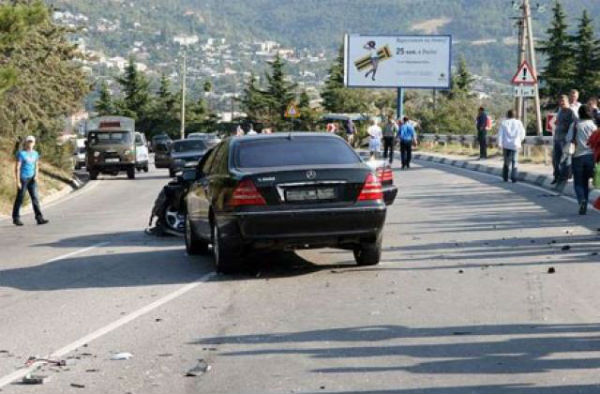
In the place of an accident. Photo: tsn.ua
On September 23, 2009, under Yalta, a motorcade of a senior Chinese delegation, who arrived in the Crimea with an introductory visit, fell under Yalta in a car accident. The delegation was going to visit the Sea plant. It was headed by a member of the Politburo of the Central Committee of the Communist Party of China Yui Zhenshten. The VAZ-2107 car, which drove into the oncoming lane, collided with the motorcade-he hit the car of the head of the delegation and the Chinese Vice Consula in Ukraine Zhou Singay. The driver of the vase died on the spot. Six people were injured from the Chinese side, including Zhou Singei and Chinese military attache Xun Chan. Six days later, it became known that the vice-consul, who received a fracture of the base of the skull, died in the Simferopol hospital. The accident was accused first of the deceased driver of the VAZ, then the driver of the Mercedes Vice Consul - his lawyer called the accusations fabricated and demanded repeated technical examinations. As a result, the Dipomat driver received 8 years in the colony.
Building Bison at the Sea factory began in the fall of 2010. On May 27, 2011, in the "Sea" workshop under unknown circumstances (it was only reported that the structure could fall due to overload; according to other information - the brake was denied the brake mechanism), one of the two giant bridge cranes, on which the "bison" was raised. The crane driver and another worker died, several more people were injured. The ship, hanging on a surviving tap, was seriously damaged, and work in the workshop became impossible due to the deformation of its supporting structures. A video of the crane fall, taken to the phone by one of the workers, got on the Internet. It was reported that at the scene of the accident, the SBU officers immediately appeared and began to demand from the factory employees to remove the video crab crane crawls from the phones (several people were shot). For three months, the plant employees were able to repair the damaged ship, clean the shop from blockages and resume work in it.
Both accidents were then associated with the irritation of Moscow about the Ukrainian-Chinese cooperation and the desire of the Russian authorities to subjugate the Ukrainian defense industry. Владимир Путин еще в 2010 году предлагал включить "Море" в состав российской Объединенной судостроительной корпорации, однако украинская сторона это предложение проигнорировала.
КИТАЙЦЫ НЕ ВНАКЛАДЕ Тем временем работы по контракту продолжились, и 25 мая 2013 года Китай получил первый из двух заказанных "Бизонов". Однако закончить работы в Крыму помешал начавшийся захват полуострова Россией. 1 марта 2014 года второй "Бизон" в большой спешке отправляют в Китай в недоделанном виде - без корпуса и силовой установки, на него успели установить только "юбку" (гибкое ограждение) и вентиляторы.
Между тем Москва после аннексии Крыма резко изменила позицию и выразила готовность выполнить обязательства Украины по контракту при условии перезаключения договора. В 2015 году Рособоронэкспорт сообщал об идущих по этому поводу переговорах с Пекином.
Тем не менее Москва и Пекин по состоянию на март 2016 года так и не заключили соглашения о передаче технологии строительства "Зубра". При этом Укрспецэкспорт - украинский государственный экспортер вооружений - потребовал от Пекина около 20 миллионов долларов в качестве неустойки за сорванный контракт.
В июне 2016 года Европейский суд по правам человека зарегистрировал иск украинской госкомпании ОАО "Феодосийская судостроительная компания (ФСК) "Море" против России о "национализации" оккупационными крымскими властями судостроительного завода.
В течение 2015 года Китай завершил предварительные работы по достройке перевезенных из Крыма "Бизонов" и приступил к их испытаниям. В 2016 году военный журнал Kanwa Asian Defence сообщал , что Пекин испытывает сложности со строительством еще двух "Бизонов" по лицензии без помощи российских или украинских специалистов и поставок комплектующих. Однако к нынешнему времени и эти работы завершились - сейчас Пекин обладает четырьмя "Бизонами".
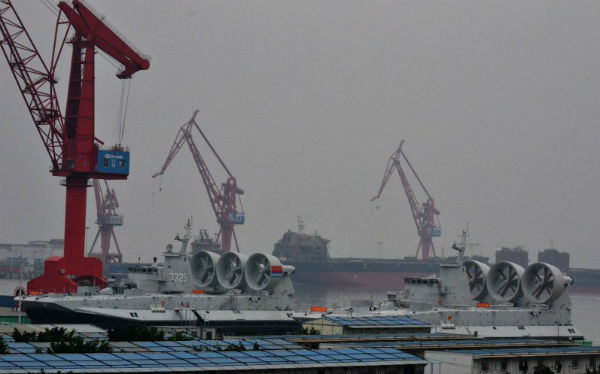
Достройка "Бизона" на верфи в Китае, 2014 год. Фото: russiadefence.net
В марте прошлого года в российском Минобороны пообещали вернуться к выпуску "Зубров" на заводе "Море". 30 июля 2018 года вице-премьер правительства России по вопросам оборонно-промышленного комплекса Юрий Борисов сообщил, что строительство "Зубров" предусмотрено госпрограммой выпуска вооружений до 2027 года - их будут производить на Хабаровском судостроительном заводе. При этом в 2011 году российский ВМФ отказался закупать "Зубры" у "Моря" в пользу десантных катеров меньшего размера.
Фактически единственной проигравшей в этой истории оказалась Украина, потерявшая и деньги, и часть инфраструктуры военно-морского кораблестроения и соответствующей конструкторской базы. Китай получил желаемое - технологию строительства своих кораблей на воздушной подушке, что существенно меняет в пользу Поднебесной, наращивающей активность в Восточно-Китайском море, баланс сил в многочисленных территориальных спорах с соседями: с Японией по поводу островов Сэнкаку, с Тайванем в случае гипотетического силового захвата острова, который КНР считает своей территорией, и так далее. В свою очередь Москва, хоть и не смогла предотвратить попадания к Китаю чувствительной технологии, избавилась от опасного конкурента на оборонном рынке и получила шанс за счет захваченных предприятий усилить свой флот.
Главная и невосполнимая потеря от военно-политических игр крупных держав - человеческие жизни. Сейчас это касается как минимум одного, а скорее всего двоих украинских заложников. Они могут погибнуть в любой момент, если им никто не поможет.
При участии Дмитрия Борко