
Translated material
Counter to the revenge
Tens of thousands of residents of Chechnya gathered at the funeral of the killers of Yuri Budanov, among them - Ramzan Kadyrov. "New" analyzes the anatomy of the feat of Yusup Temirkhanov
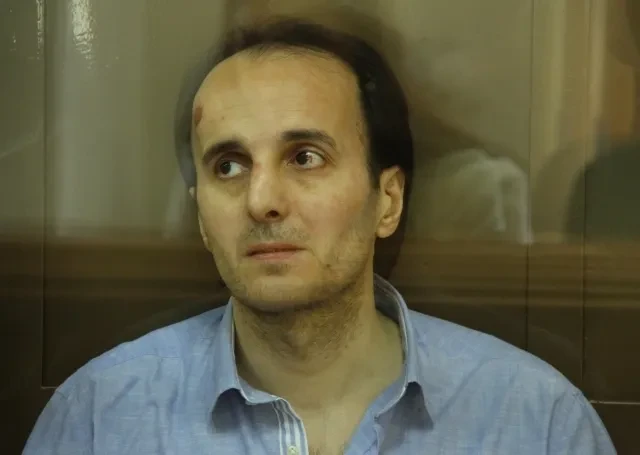
Yesterday it became known that the Chechen Yusup Temirkhanov died in the Omsk colony, convicted of the murder of Colonel of the Russian army Yuri Budanov.
In March 2000, the commander of the 160th Guards Tank Regiment, Yuri Budanov, was arrested on charges of kidnapping, rape and murder of an 18-year-old resident of the Chechen village of Tangi, Elsa Kungaeva.
In 2003, Budanov was sentenced to 10 years in a strict regime colony, serving a sentence in Dmitrovograd of the Ulyanovsk region, whose governor was then the former commander of Budanov, General Vladimir Shamanov. Human rights activists and journalists also repeatedly accused Shamanov of war crimes against civilians of Chechnya, but he always denied these accusations.
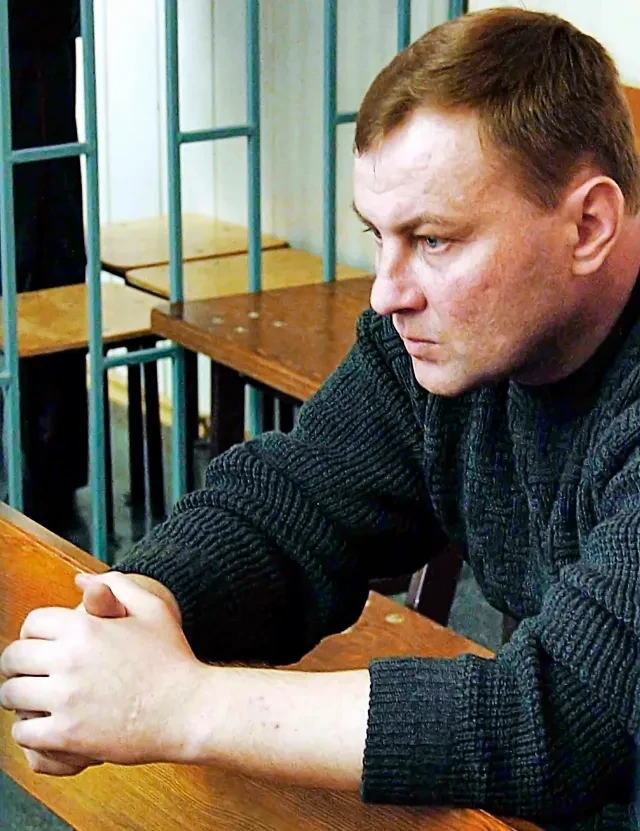
In 2004 (a year after the sentence), Colonel Budanov wrote a petition for pardon in the name of Governor Shamanov. He satisfied the petition. This news caused a huge resonance. In Grozny, there was a thousands of official rally against pardon. Ramzan Kadyrov then said:
“If this pardon of Budanov happens, we will find the opportunity to give him deserved.”
On September 21, 2004, Budanov withdrew his petition.
In 2009, Yuri Budanov freed himself at Udo, his former commander Vladimir Shamanov also helped him with work and housing. Literally immediately, Ramzan Kadyrov recalled that he had not forgotten about Budanov. In an interview with Reguem, Kadyrov said:
“Budanov is a schizophrenic and a killer, a recognized enemy of the Chechen people. He insulted our people. Every man, woman and child believes that while Budanov exists, shame is not removed from us. ”
And two years later, in June 2011, Budanov was shot dead in Moscow. He was buried with military honors at the cemetery in Khimki next to the alley of the heroes of the Great Patriotic War.
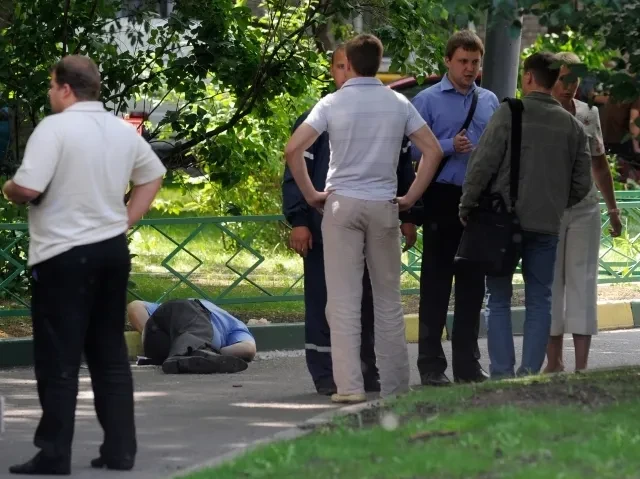
A month later, Yusup Temirkhanov was detained on suspicion of killing Budanov. He never admitted his guilt. Temirkhanov was defended by Chechen Murad Musaev, one of the best lawyers in Russia, a man close to Ramzan Kadyrov.
Friday news about the death of Yusup Temirkhanov was a big event for a huge number of Chechens. Both the residents of the republic, and those who left Chechnya in exile, posted on social networks on their pages photographs of Temirkhanov, calling him a "real hero of Chechnya", who "avenge his people."
“Nokhchi Kongs” (Chechen, who lives according to the Code of Honor and puts serving all the people above his personal interests) - it was these two words that could most often be read in the posts of Chechen users.
This, in fact, is the highest public greeting the hero, a man who committed a noble act.
None of the past and current Chechen figures received such popular recognition in my memory.
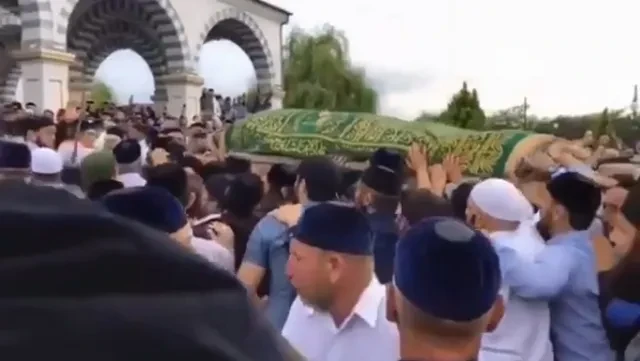
In social networks, videos from the village of Geldagen began to spread, where the relatives of Temirkhanov live. On these videos there are huge crowds of people who spontaneously came to the the Thezet (a memorial rite that lasts three days among Chechens). Hundreds of cars parked along the road to the village of Geldagen - this folk motorcade stretched for several tens of kilometers.
The first residents of the village of Tangi-Chu, the villagers of Elsa Kungaeva, a girl who brutally raped and killed the former colonel of the Russian army Yuri Budanov (he was deprived of the title and all his awards) brutally arrived in Geldagen.
“I wear a heavy shame for us
Budanov brutus put on his shoulders
and 10 years went free on the ground
Yusup Hero of the Chechen people
Budanova killed in Moscow
the control in the forehead was allowed him
And the verdict of the judge with a smile Yusup accepted you
We are proud of you are a worthy son of Chechnya "
- Brushly made videos with similar texts sung on the Arab motif, virously spread on the Internet and gain a huge number of views.
Sources of Novaya Gazeta, tracking the flows of messages dedicated to this event, testify
About the incredible surge in activity among Chechen youth, who enthusiastically responds about Temirkhanov as "a shahid who gave his life for the honor of his people."
The official Terrible did not react to the event on the day when it became known about the death of Temirkhanov. Not a single Chechen television channel arrived on Friday to the village of Geldagen, which, incidentally, is a generic for Hero of Russia, the speaker of the Chechnya Parliament Magomed Daudov, whose name is the rural school here. All representatives of the Chechen government in their personal accounts on Instagram, Milistory (Chechen analogue of Instagram), Facebook and VKontakte bypassed this news with complete silence. The main news on this day was reports that the 28-year-old nephew Kadyrov Ibrahim Krriev, appointed a month ago by the mayor of Grozny, was leading in the media rating of the heads of the North Caucasus capitals, as well as the birthday of Ramzan Kadyrov’s mother, Aiman Kadyrov, who heads the Akhmat Kadyrov Foundation.
Presumably, the violent reaction of the Chechen society to the death of Temirkhanov found the Chechen authorities by surprise. They first encountered such a distinct and, most importantly, mass expression of the people's opinion about true and false heroes. And they could not interfere with this phenomenon: not to disperse, in fact, the wake?
The very next day, the Chechen television channels gave stories about the crowding in the village of Geldagen and that the the Thezet was transferred to the rural mosque, since the courtyard of the Temirkhanov family simply does not accommodate those who want to express condolences.
But is it possible to join the first person of the republic and participate in the funeral of the “Chechen Konach”?
This is a political question that Ramzan Kadyrov was supposed to answer. And he answered, having arrived at the funeral in the village of Geldagen.
This whole situation put the Chechen leadership in a very difficult position.
The reaction of the people to the death of Temirkhanov is cut against Russian policy on the assessment of the Russian-Chechen conflict, which poured into two military campaigns.
The federal leadership did not recognize the numerous facts of war crimes committed against civilians of Chechnya by Russian military personnel. Only a few cases reached court and sentences, the most famous ones-the case of the Khanty-Mansi riot police Lapin and the case of Colonel Budanov. Both criminals were convicted only thanks to the efforts of the Memorial human rights center and the journalist of Novaya Gazeta Anna Politkovskaya. The support of Ramzan Kadyrov, Akhmat-Haji Kadyrov, also provided support in these matters.
But the investigation was still extremely difficult and was politically limited: in fact, the investigators received “good” only to identify the most obvious, recorded by human rights defenders and journalists of crimes committed by Russian military and police. The court even removed the accusations of the rape of Elsa Kungaeva from Budanov, although the fact of rape was fully proven. And none of the Chechen politicians protested against such “half -measures”.
There is a simple explanation why Moscow did not seek to investigate and properly punish war criminals, and Chechnya agreed with this and in exchange received hundreds of amnestied Chechen militants, whom Moscow also refused to prosecute. It was a deal, one of the conditions for the end of the war. And at that time, both sides of the conflict were interested in it. The cases of Lapin and Budanov Akhmat-Haji Kadyrov bargained at the Kremlin only to demonstrate at least some legitimacy of this unlawful and unfair, but extremely necessary agreement-to establish, albeit thin, but peace.
After the murder of Kadyrov Sr., all questions about bringing Russian military personnel were raised only by journalists and human rights activists of the Memorial.
The Memorial created a huge database in which all war crimes in Chechnya were recorded in detail and data on all Russian military units, units and military personnel involved in these crimes were collected. Little is known about this work, but it has been going on every day for many years and will someday give a result. Too many criminals are still alive. Too many Chechens who were killed without trial and investigation are considered "missing."
Ramzan Kadyrov wrote off this issue from the agenda at the very beginning of his leadership by the region, and he began to actively rewrite the recent bloody history of his people. Today, Kadyrov constantly states that during the two Chechen wars against the Chechens, Western intelligence agencies fought, who paid the “thirty silvermen” traitors to the Chechen people. So there is nothing surprising in the official silence of the Chechen authorities at the moment when they experience emotions in solid with the people about Temirkhanov’s death.
But such a violent reaction of the Chechen society on the fact of this death makes us think about a lot.
What do we know about the hero, “Nokhchi Konah” Yusup Temirkhanov?
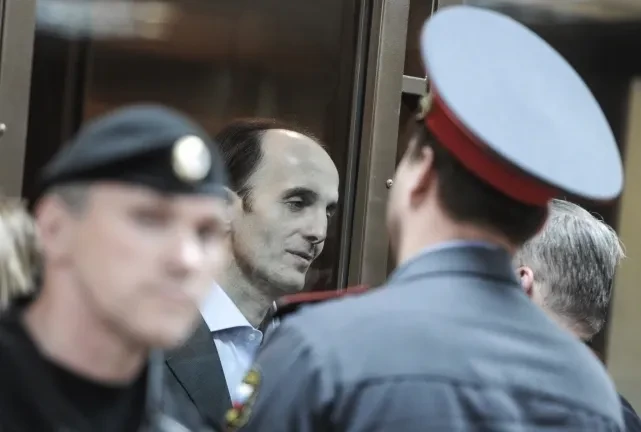
The biography of Temirkhanov is covered with darkness - only general information: where he was born, who parents. What he did and what he did, where he lived in both Chechen military campaigns, how exactly suffered from Russian troops, what has Elsa Kungaeva, who was killed by Budanov, (after all, according to Chechens, he took revenge for her scolded honor) - nothing is known. He was detained with fake documents, which are often used by Chechen killers. Temirkhanov always categorically denied his guilt in the murder of Budanov.
The prosecutor Semenenko was charged with Temirkhanov, “a sense of hatred and enmity to all military personnel who fulfilled their duty and took part in a counter -terrorist operation, [guided by which, he] decided to commit a murder. His choice fell on Budanov, whose name received a wide public outcry and who was the most vivid representative of the social group to which he had hatred. ”
This accusation was a grandiose stupidity from the General Prosecutor's Office, disgracing the entire Russian army.
Logically, a definite conclusion flowed out of this position: all Russian military personnel who took part in the Chechen wars are rapists and killers.
The inadequacy of the prosecution migrated to the sentence to Yusup Temirkhanov. If Budanov for a crime of exceptional cruelty, aggravated by his status of a “Russian officer, leading a constitutional order in Chechnya,” received 10 years in a strict colony, of them left for 8 and was released on Udo, then Yusup Temirkhanov who committed murder of revenge, which is considered a mitigating circumstance around 15 years.
He had a lot of chronic diseases, but on parole, of course, he would never have come out. Nevertheless, Yusup Temirkhanov served his term in much more comfortable conditions than ordinary Chechen prisoners. He was provided with qualified medical care, including with the involvement of paid specialists and with exporting for examination to commercial medical institutions, which he himself talked about in an interview. His state of health was officially recognized by FSIN as the basis for softening the regime. In the natural death of Yusup Temirkhanov, there is no reason to doubt, at least his lawyers did not express any versions that contradict the official one. Such an attitude to a prisoner Chechen, who was sitting for the murder of a Russian soldier who became a cult for many security forces, can be explained only by one circumstance:
Yusup Temirkhanov was enforced by the patronage of very influential people.
The media, who followed the process, surfaced fragmentary and unconfirmed information about Temirkhanov’s connections with Chechen crime, who is not at all autonomous from the Chechen government. At the same time, Ramzan Kadyrov never lost sight of Budanov, repeatedly expressed threats to him.
After a number of political murders of the enemies of Ramzan Kadyrov, including the murder of Boris Nemtsov, we already know quite a bit about how Chechen killers work, which can be civilian, and can also be police officers sent to Moscow to serve political and business interests of the republic’s leadership. A similar situation is traced in the story with Temirkhanov. But if this is so, and Temirkhanov was just a hired killer, then Yusup, it turns out, got alien laurels. And the true avenger cannot open his face for obvious reasons.
The absence of an attempt to find in this story the “second bottom” or at least think about these issues, speaks a lot about the displaced ideas of Chechens about honor, about their ability to be grateful to those who really serve the people.
I will give an example. In 2002, a plane crashed over the Baden lake in Switzerland by mistake of the dispatcher. The whole family of the Ossetian architect Vitaly Kaloev died on this plane. In 2004, Vitaly Kaloev tracked down the Swiss dispatcher and killed him (12 stab wounds). Then he voluntarily surrendered to the authorities. He never denied his guilt-he followed the Code of Honor, which is not a Chechen know-how at all, but is typical of all traditional societies. Kaloev was convicted of 8 years, in the verdict the murder motive was taken into account as a softening one, he was released ahead of schedule by the Swiss authorities, as he was considered non -hazardous to society. Even the Swiss understood that his crime was justified, albeit wild for the 21st century, but with good reasons. When Kaloev returned to Ossetia, for Ossetians he became a national hero.
If you compare these two stories - Kaloev and Temirkhanov, the inferiority of the second immediately becomes obvious. Temirkhanov never admitted his guilt in the murder of Budanov and, moreover, he never spoke in court about the crimes of federal military personnel either in relation to Elsa Kungaeva, nor in relation to other civilians of Chechnya. Then what did they move? Clarification of the real motive - revenge or money - was extremely important during the investigation. Not only and not so much from a legal point of view as from the point of view of the non-healing Russian-Chechen conflict.
If the prosecution proved that Temirkhanov, having killed a war criminal, acted out of a sense of revenge, and would ask, as the Swiss prosecutors, to take into account the factor mitigating guilt in the sentence, this position would contribute to the reconciliation of Chechens with Russia more than Chechnya rebuilt after the war.
If the prosecution proved that Temirkhanov is just a killer, then the grounds for his heroization among the people rushing about the moral guidelines of the Chechens would have disappeared. Especially what is important, the Chechens of the post-war generation. After all, young people in Chechnya have really worthy examples to follow, and you do not need to go far into the forest in search of real “konakh”.
This is Anna Politkovskaya, who served the Chechen people, who killed immigrants from this people and for the funeral of which almost none of this people came.
This is Natalya Estemirova, who made an incredibly a lot for the crimes of Yuri Budanov and the “Cadet” of Lapin to be disclosed. Natasha was killed in 2009, and even half of her native village of Koshkeldy did not come to her the Thezet.
This is Oyub Titiev, who is judged today in the Shali Court of Chechnya, including for the fact that he recorded the circumstances of war crimes in Chechnya for many years and helped relatives of victims to achieve justice. These are all those whom they are called today “enemies of the Chechen people”, and the Chechen people either very quietly expresses their solidarity with these heroes, or is generally silent.
Until yesterday, the cause of this silence could still be understood and accepted. It is extremely difficult to do this after the folk tsunami on the occasion of the death of Yusup Temirkhanov.
PS
“There is good evidence of Temirkhanov’s non -involvement in the murder of Budanov. We consider Yusupa a victim. We will seek justice. We urge you to comply with the law and the Constitution and treat us as citizens of Russia. He was illegally condemned, imprisoned, and he died his death by the will of the Almighty, ”Ramzan Kadyrov said to reporters during the funeral.
Thus, he leveled the value of the act of Yusup Temirkhanov, who acted as a reason for the consolidation of the Chechen people these days.