
Translated material
Solo on a strange pipe
The United States wants to master the European gas market and promise not to introduce new duties on this occasion
On July 25, the head of the European Commission Jean-Claude Junker and US President Donald Trump held negotiations in Washington. There were trade relations at the stake: after Trump raised duties on steel and aluminum by 25% and 10%, respectively, and the EU in response increased duties on a long list of American goods, many started talking about the beginning of the trade war. The negotiations were successful: Trump and Junker agreed to work on a decrease in existing duties, and new ones were not introduced. In exchange on behalf of the European Union, Junker promised to import more American liquefied natural gas (LNG).
What does “more” mean, neither Trump nor Junker explained. Some clarity appeared a few days later, after the meeting of Trump with the Italian Prime Minister Giuseppe Conte. Speaking at a press conference, the American president said that negotiations are already underway on the construction of 9-11 new terminals in Europe to receive liquefied gas. The costs will pay, according to Trump, the European Union itself. Trump confirmed the words of Trump, however, noting that during the meeting they discussed gas supplies to southern Europe, and not to the European Union as a whole.
The fight against addiction
The fact that dependence on Russian supplies is bad, and individual leaders of European countries, and at the level of the European Union as a whole, have repeatedly stated. In 2015, the EU was earned by a special body - the energy union responsible for security in the energy sector. Its strategy clearly states: reduce dependence on Russian gas, switch to other suppliers from Azerbaijan and Turkmenistan to the USA and Canada, and return to the revision of energy relations with Russia when "the conditions are favorable."
It is unlikely that since 2015 the conditions have become more favorable, but Gazprom is in no hurry to leave Europe. Moreover, it concludes new large-scale contracts: in the spring of this year, Germany finally approved the construction of the North Stream-2 naval gas pipeline. For this, the Chancellor of Germany Angela Merkel listened to Trump's rebuke, who called Germany the "hostage" of Russia.
According to the European Commission, now Gazprom accounts for a little more than 40% of the total European gas import.
In quantitative indicators, delivery is growing year from year and in 2017 amounted to a record 194 billion cubic meters.
Two factors help to hold good positions in the European Gazprom market: gas consumption in Europe is growing (in 2017, growth was 6% compared to the previous one), and its own production falls. So, since 2014, the production of natural gas has been reduced in the Dutch Slachteren - the largest gas field in Europe, and by 2022 it should almost stop. As a result, the total import of gas to Europe in 2017 increased by 10%.
At the same time, Europe has alternatives. The second after Russia, the largest natural gas supplier remains Norway with a share of 27%.
In third place is liquefied natural gas, which is mainly provided by external suppliers and still the same Norway.
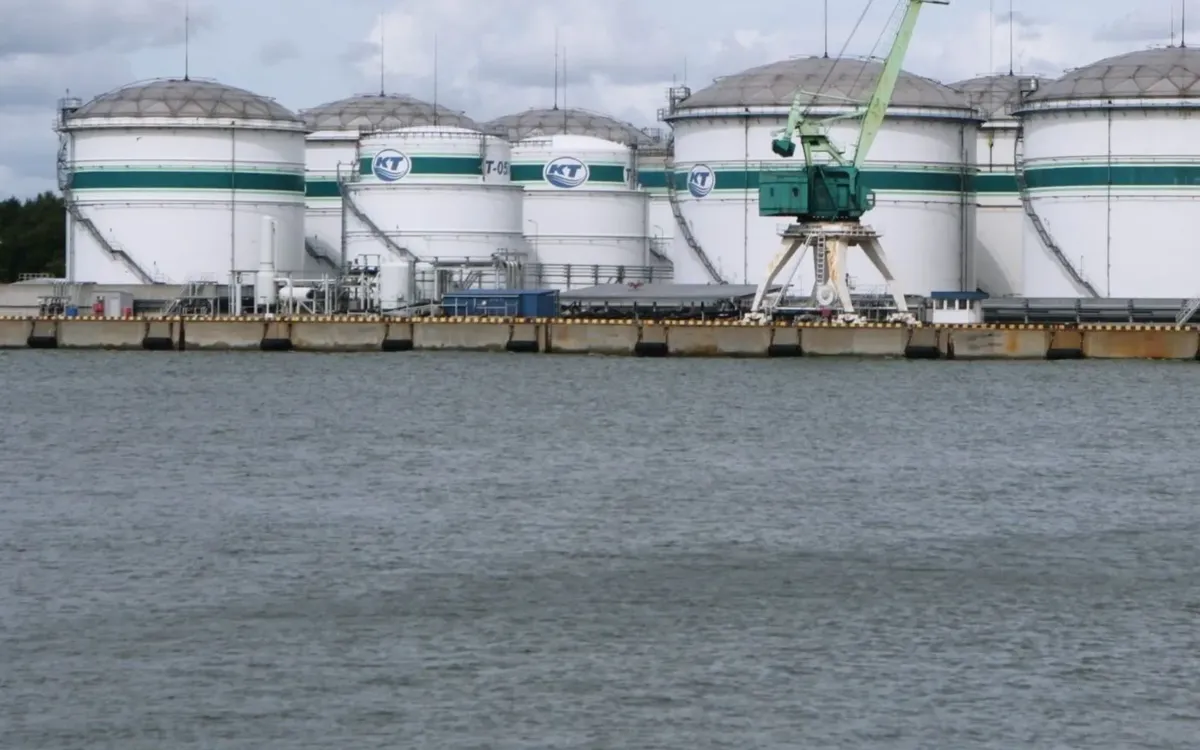
Some countries have been actively moving to LNG in recent years. The first of the countries of the Baltic region launched a terminal for receiving liquefied natural gas in Klaipeda, and due to this significantly reduced its dependence on Russia: in 2017, 45% of imports fell on LNG from the USA and Norway. Liquefied gas is actively mastering Poland, which launched the terminal in Pig in 2015. Even before the end of construction, in 2012, Poland signed a long -term contract with Qatar: by 2020, it undertakes to buy 2.9 billion cubic meters per year from this country. After the discovery of the terminal, Poland has repeatedly stated that since 2022, when her contract with Gazprom would end, she intends to completely abandon the supply of Russian gas.
In addition to Lithuania and Poland, LNG reception terminals work in eight countries of the European Union: Spain, France, Italy, Belgium, Portugal, the Netherlands, Greece, as well as in the UK.
At the same time, Germany is the largest natural gas importer in Europe (it accounts for almost 20% of total imports) - so far only boughts classic, pipeline gas and is the main client of Gazprom in Europe.
How much gas costs
Criticizing Merkel for cooperation with Gazprom, Trump was unlikely to have in mind only European energy security:
Germany is a large sales market, while closed for American liquefied gas, which Trump really wants to master.
Until recently, the United States imported natural gas more than exported. The so -called shale revolution - the active introduction of gas production technologies from shale breeds - sharply reduced the cost of production and, as a result, the price of American gas. In 2016, two export terminals were earned, four more should be completed in the next couple of years. In 2017, more than 760 billion cubic meters of gas were obtained in the United States (for comparison: the Gazprom indicator is 471 billion for 2017), and the plans are active in the increase in production. By 2019, Americans plan to increase the throughput of terminals to 270 million cubic meters per day and become the third exporters of liquefied natural gas in the world, second only to Qatar and Australia.
So, new markets are needed. Now the main importers of American gas are Mexico (this is close, and transportation is cheaper), South Korea and China (there is higher gas prices, and selling there is more profitable than in Europe).
In this, explains the senior researcher at the Oxford Institute for Energy Research Thierry Bros, the main difference between liquefied gas and pipeline: “Expenses for the production and transportation of LNG are always higher than that of pipeline gas. But it gives more space for maneuvers: delivery can always be redirected to where the profit is higher. ”
In this sense, it is more profitable for Americans to deal with Asia than with Europe, which is used to cheaper pipeline gas. For comparison: at the beginning of the year, the average price of imported LNG in the UK was $ 7.1 per mBTT (a million British heat units - a standard unit of thermal energy), and in China - 9.3 dollars. “Gazprom” can profitably sell gas in Europe for himself for $ 5-6 per mbt.
“Gazprom will remain a company that can sell pipeline gas to Europe with minimal costs,” says Thierry Bros. “Accordingly, the rest of the suppliers need to reduce costs to be competitive in the European market.”
New terminals
It is clear that the issue of price is directly related to volumes: the lower they are, the higher the cost of transporting LNG. And while this is a problem in the "gas" relations of the United States and Europe. Although LNG accounts for 11% of the pan -European gas import, these are mainly supplies from Qatar, Nigeria and Algeria. The American liquefied gas at the beginning of this year amounted to only 1% - too little to make it beneficial.
According to Thierry Rus, the growing need for the European Union for imported gas is partly solving this problem. “Our consumption is growing, since 2014 it has grown by 16%,” he says. - At the same time, our domestic production continues to decline quickly. And we will have to import more and more gas - both pipeline and liquefied. As the basket will ultimately look like, depends on prices and competition. ”
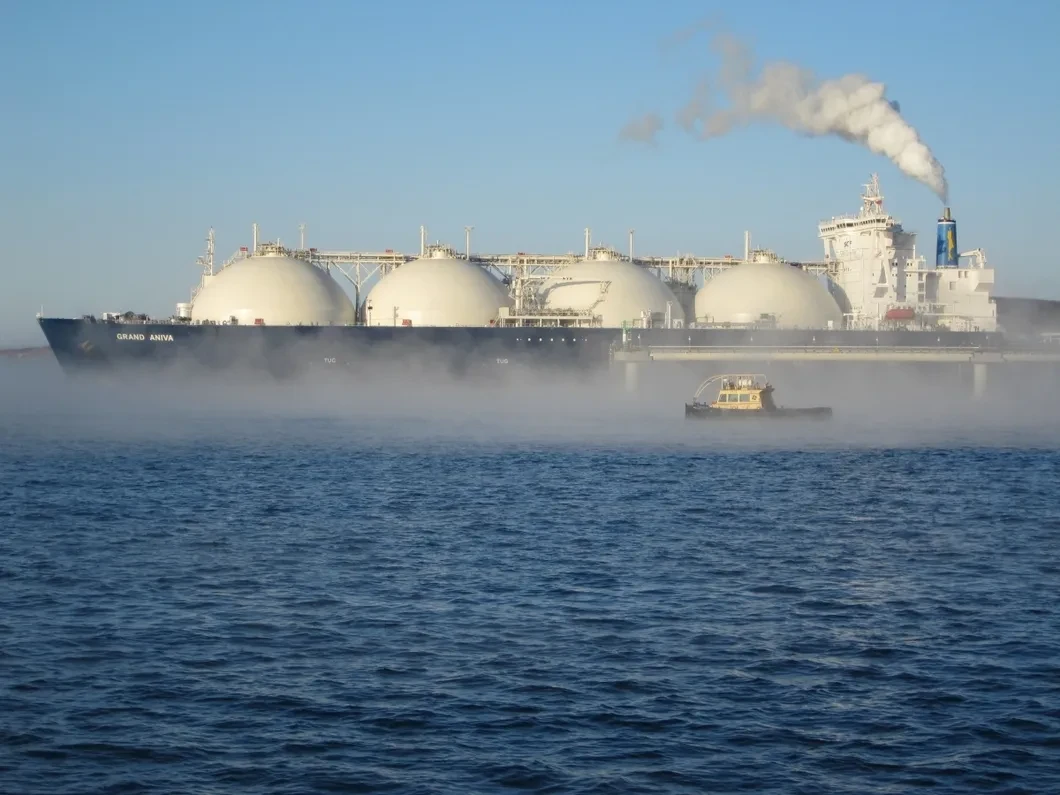
You need to integrate into growing imports now - therefore, Trump spoke about new terminals. What kind of projects are in mind, it is still unclear. Commenting on Trump's statements, the European Commission noted that 278 million euros have already been allocated for the construction of new terminals in Croatia, Greece and Cyprus. It is important to understand that we are talking about means and projects that were planned before the meeting of the junker and Trump - and these will be terminals with a relatively small throughput in the property of private companies, which are unlikely to be interested in political agreements of the European Commission and the USA.
Another region where new terminals may appear in the near future is the Baltic Sea. The Prime Minister of Estonia stated the plans for the construction of his own terminal a year ago, periodically this issue rises in Latvia, where the terminal can be built on the basis of a large ventilation port. In 2020, Finland plans to launch its terminal, the construction has already begun.
A more important project in terms of market volumes for the United States is the construction of LNG terminal in German Brunzbuttel, a town near Hamburg. The company German LNG Terminal, which is engaged in the project, plan that it will begin in 2019, and the terminal will be able to accept the first batch of gas in 2022.