
Translated material
"Hell Sanctic Law"
In the United States, it has submitted a tough bill “On Protection from the Kremlin’s aggression” and for the first time in history imposed sanctions against Turkey - an allied on NATO: what is known?
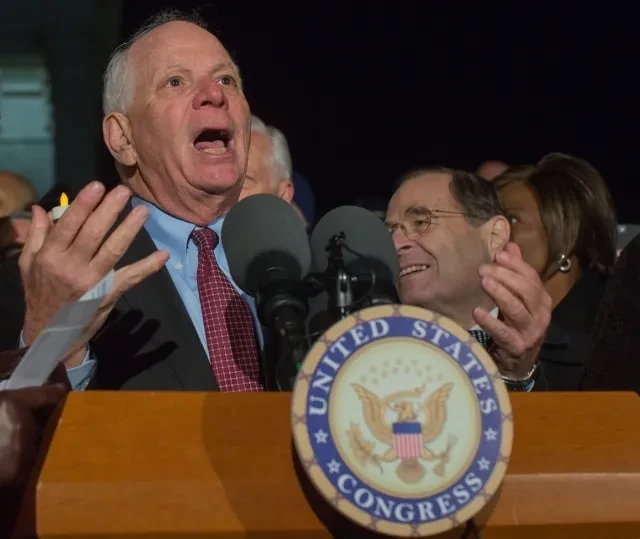
The initiators of the bill “On Protection from the Kremlin’s aggression” were veterans lawmakers: the resort-republican Lindsay Graham, who tried to participate in the presidential race-2016, but who had come down from the distance before the start of the “primaries”, and the Democrat Senator Robert Menendes. The initiative was supported by the Republicans John McCain, Kory Gardner and Democrats Ben Cardin (one of the authors of the Magnitsky Act) and Gene Shahin.
“The current sanctions regime did not stop Russia from interference in the upcoming elections in 2018,” Graham said.
“The Kremlin continues to attack our democracy, support a war criminal in Syria and violate the sovereignty of Ukraine,” said his co -author Menendes. - With the adoption of this legislation, the Congress will again take steps to establish a clear US policy in order to attract Russia to answer, sending it a direct message:
Kremlin aggression awaits the consequences that will shake the Putin regime to the base. ”
"What are your evidence"?
At the same time, at a press conference in the White House, American special services lips of National Intelligence Director Dan Cowts, director of the FBI Christopher Ray, Minister of Internal (National) Security Kirste Nielsen and Director of the National Security Agency (NSA) Paole Paul Okanna called Russian attempts to intervene in the 2018 election, “large-scale, real and uninterrupted”.
“We continue to observe the ubiquitous campaign of propaganda from Russia, the purpose of which is to weaken and split the United States”,
- said the director of national intelligence uniting 17 special services and agencies. Dan Cowts noted that Trump instructed intelligence services to make the problem of hacking in the election “main priority”. “Russia is trying to influence the elections in many ways - through the media, social networks, bots, hired figures,” he said.
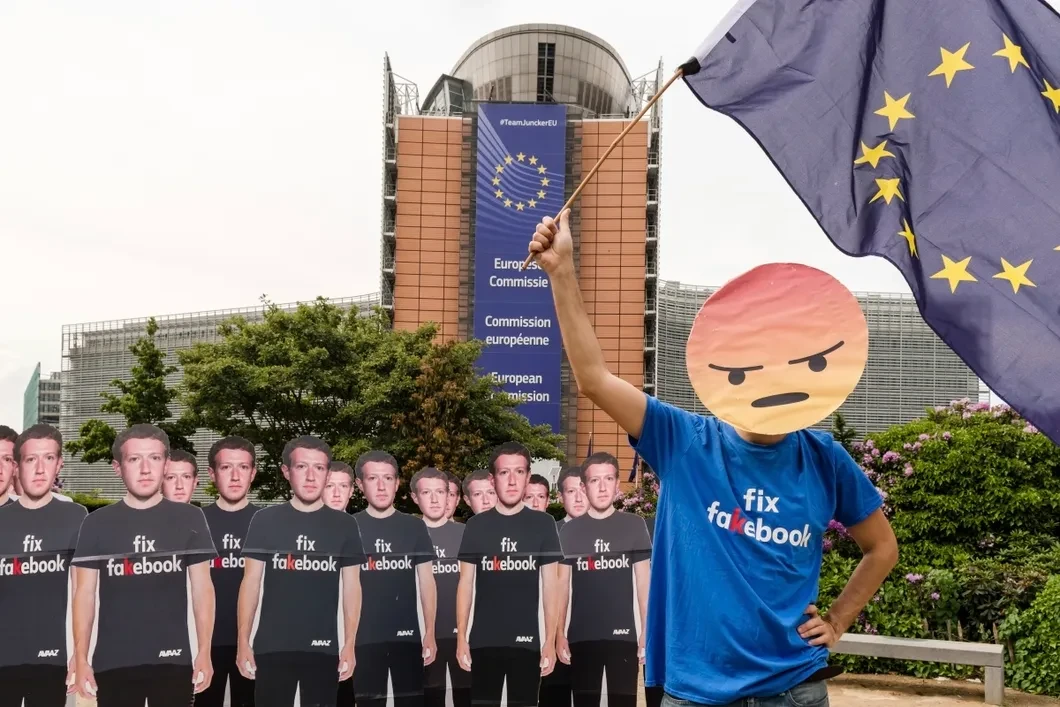
Two days earlier, Facebook announced that he discovered and closed 32 “fake” pages and profiles created in the interval between March 2017 and May this year in order to conduct the “disinforming” of the Americans on the eve of the intermediate elections.
Manipulation of public opinion with the help of the Internet in the company was called the new "arms race".
290 thousand Americans fell on the Internet policy of political advertising: messages on the topic of fascism, racism, feminism and calls to visit various rallies and processions, during which supporters of opposite positions should have encountered. This set of receptions was already exposed by the American intelligence services after the 2016 elections indicating the names, positions, facts and details. In the lists made in two stages in the United States, representatives of the private agency of Internet research from St. Petersburg and GRU officers. The story is repeated, but there are differences.
FBI Director Christopher Ray said that the US intelligence services have not yet recorded “efforts aimed at the election infrastructure”, which Moscow made in 2016, hacking the databases of registered voters. The efforts of Russia are currently concentrated on “harmful operations of influence” - i.e. "Information War." Before closing the fake pages last Tuesday, Facebook sent information about them to law enforcement agencies and Congress.
There, in total, 9,500 messages were placed. The most famous were the pages of the “warriors of the Aztlan (mythical city of the Aztecs)”, “Black climb”, “Conscious Being” and “Ancient Wisdom”. On the most popular page, 18 thousand followers were registered, on the least popular - only 16. 32 fake -tied accounts were placed 150 ads, the total cost of which was 11 thousand US dollars. Advertising was also paid in Canadian dollars. On fake sites, 30 different events were reported, the largest of which collected 1,400 registered users who were about to visit him, and another 4,700 people wrote that they were interested in visiting.
Facebook connects new fake pages with the activities of the Russian Internet research agency (the famous "Troll Factory")
At least in two cases. One of the popular resisters pages for a short time - only seven minutes - had a co -administrator with the account of the Troll Factory account, then the record disappeared. In another case, the AII website talked about the same event as Resisters.
Last year, Facebook announced at the hearing in the Senate that he discovered 470 fake accounts. The first records dated May 2015, 126 million Americans could read these messages. Some of the advertisements were paid in rubles, and some of the Internet addresses were traced and discovered in Russia. In February of this year, the special prosecutor Robert Müller made charges of interfering in the elections 13 to Russians, based on their manipulating Facebook, Twitter and other social networks.
After calling to Congress, Facebook hired and transferred thousands of employees to detect fake accounts and political advertising.
The Minister of Internal Security Kirsten Nielsen welcomed the closure of the fake (propaganda) pages. “This threat (intervention in the intermediate elections) is very real, and the Americans should know about it,” she said in an interview with Fox News.
New sanctions
Senator Graham promised journalists the "hellish sanctions law in order to punish Russia."
The bill imposes sanctions on any operations related to Russian energy projects and new sovereign debt of Russia,
prohibits the issuance of licenses to American individuals and enterprises striving to participate in Russian oil projects,
And requires real estate insurance companies to submit reports on the beneficiaries of large transactions. (American media notes that the acquisition of elite real estate in the United States, including in housing complexes belonging to Donald Trump, has become a “favorable asylum” for rich Russians associated with the Kremlin).
The bill provides for the creation of a national integrated center for response to hybrid threats, as well as the management of cyberspace and the digital economy under the State Department.
The Secretary of State should consider the question of whether Russia should be called "the state - sponsor of terrorism."
The bill provides for the provision that the United States can quickly supply excess military property to NATO countries in order to reduce their dependence on weapons from Russia.
The President is forbidden to make a decision to withdraw from NATO without the support of two -thirds of the Senate.
The competent authorities (financial intelligence and the Ministry of Justice) must assess the status and assets of Russian President Vladimir Putin.
The sanctions will be imposed against “politicians, oligarchs, relatives and other people who directly or indirectly contribute to illegal and corruption in the interests of Putin.”
Russian TV introduces this bill to its audience as the next “manifestation of Russophobia” “hawks” from the Capitol Hill and “Politicians who are a past”. In fact, several large bills on Russia and a dozen legislative initiatives are ready in the bowels of the Congress.
Other bills called to limit Russian influence on the areas of life
“Defense of America from Russian intervention” - the bill is submitted in the lower house of Congress by one of the leaders of the steni faction of the Steni Khoyer on July 19, 2018. It includes: a ban on recognition of the Russian annexation of Crimea, the introduction of sanctions against any country for interference in the elections, a ban on issuing licenses of the US Treasury for American citizens for participating in joint energy projects Oil in Russia, monitoring of subversive actions of the Russian Federation, etc.
“The act of protecting the elections from threats with the help of“ red lines ”, or an act of deterrence,” was originally submitted to the Senate on January 16, 2018 by senators Chris Van Hellen and Marco Rubio. On July 19, the bill supported 8 more senators from both parties. The purpose of the bill is to protect American elections from foreign intervention by countries such as China, Iran, DPRK, Russia, etc.
“The act of cooperation in the field of energy safety with allies and partners in Europe” - represented in the Senate by Republicans John Barrasso, Coria Gardner and Steve Dainse on July 18, 2018
It is curious that most of the documents were submitted immediately after the meeting of Trump and Putin in Helsinki and the Great Seven summit - the recognition that their results and the actions of Trump by Congress were met with bayonets.
In order for the bill to become the law after approval by both chambers and the compilation of the general text requires the signature of the president. And what about Trump?
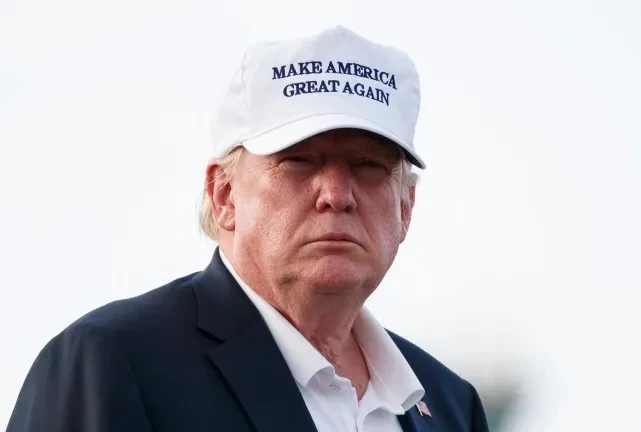
A few hours after the press conference in the White House of the heads of special services, which announced the “large-scale intervention” of Moscow in the upcoming elections to Congress, the president once again at the rally called the “hoax” what the American media write about him and the Russian threat.
And last week, the president called on the Prosecutor General to close the investigation of Robert Muller. “If you fire Müller, we will fire you,” promised Congressman-Democrat Eric Suwell. In Washington, serious passions boil.
Congress goes on a summer holidays, and then before the November elections there will be little time to discuss and adopt a bill on new sanctions against Russia. It seems that the question is only in time. They will return to him.
In the meantime, last Friday, the US administration imposed sanctions against the Russian Agro-Union Bank-due to violation of the regime in relations with the DPRK. According to the American Ministry of Finance, the bank conducted a “significant” transaction for the DPRK citizen Khan Jan Su, who represents the interests of the large Bank of North Korea.
Turkish "Magnitsky"
A much greater resonance caused the order of Trump to impose sanctions against the Minister of Justice and the Minister of Internal Affairs of Turkey, who “played a leading role in the detention and arrest” of the American pastor Andrew Branson, who has been in prison since October 2016. American accounts and assets of the head of the Ministry of Justice of Turkey Abdulamit Gul and the head of the Ministry of Internal Affairs of Suleiman Soil are frozen, US citizens are prohibited from concluding transactions with them.
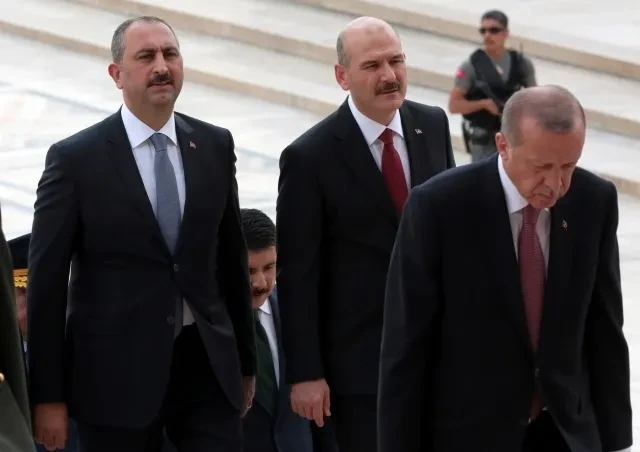
The Turkish authorities accuse the American pastor of cooperation with the preacher Fethullah Gulen, who in Turkey is considered responsible for trying to try the coup in 2016, as well as in support of the Kurdistan working country banned in the country.
Relations between the two countries are at the lower point.
The Turkish authorities are unhappy with the US refusal to give Fethullah Gulen and the fact that Washington cooperates in Syria with Kurdish militia. Earlier, in conversations with Erdogan, Trump demanded that the pastor immediately release the sanctions. In response, the Turkish president said that threats do not scare him, and the United States risks losing a “strong and reliable” ally in the person of Turkey.
American sanctions against Turkish ministers were introduced as part of the Global Law of Magnitsky, the initial version of which was directed against Russian officials guilty of the death of a lawyer, and now the law applies to human rights violators around the world.
Trump critics note: the president easily creates problems in relations with allies and neighbors, Türkiye is another example. For Trump “America is higher”, but enemies can take advantage of the once unified ranks of the US allies.