
Translated material
Islands for oligarchs
Internal offshores create in Russia for those who run from classic under pressure from American sanctions
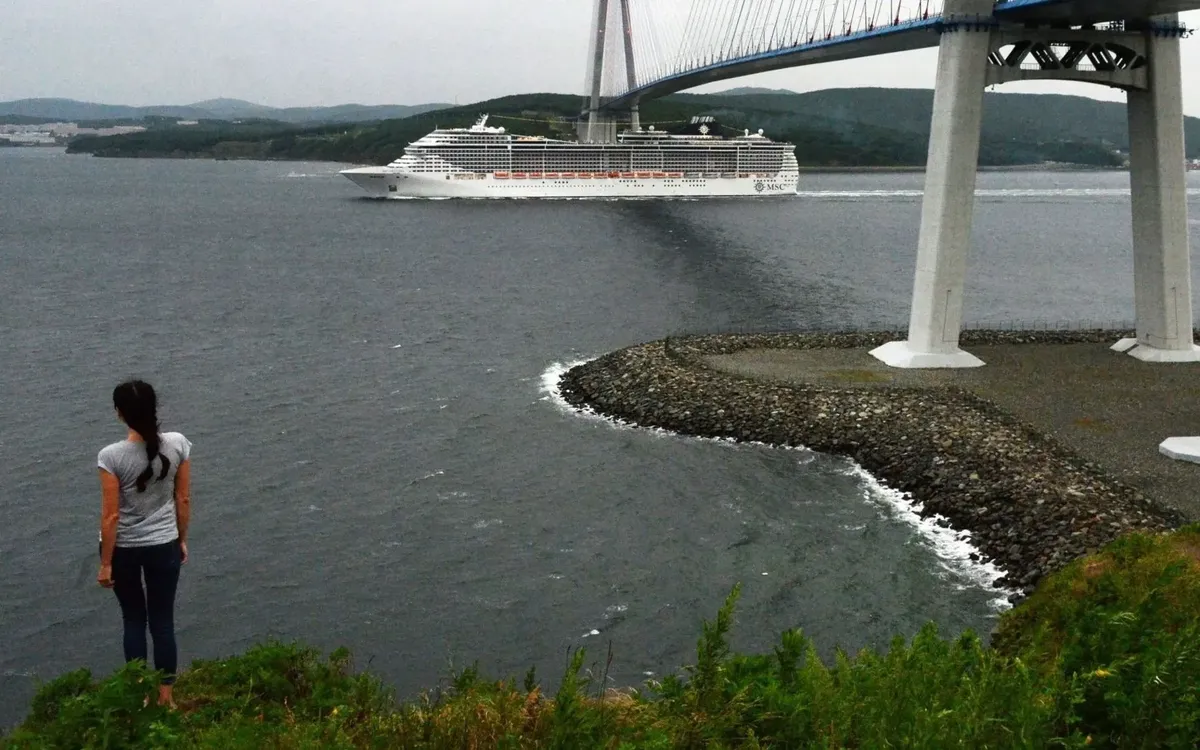
At the end of July, Vladimir Putin signed a package of laws establishing two zones on the territory of Russia with preferential conditions for the work of foreign companies - on Russian islands in the Primorsky Territory and Oktyabrsky in the Kaliningrad region. We are talking about special administrative areas (SAR) with flexible rules of tax and currency regulation, which will begin to work this fall.
The mechanism of special services allows foreign companies to transfer their business to Russia, retaining a convenient legal form and the opportunity not to pay taxes on foreign income. Companies that own more than 15% of the authorized capital registered on one of the islands of the organization will also be able to avoid taxation. In order to become a resident of the specialist, a foreign legal entity must open an office on one of the islands and take on the obligation to invest in Russia at least 50 million rubles within six years from the date of registration. According to estimates of State Duma deputies, the influx of investment in “internal offshore” may exceed $ 1 billion.
The idea of creating special modes with signs of offshore on the territory of Russia has existed for several years. In 2013, against the backdrop of financial problems in Cyprus banks, Prime Minister Dmitry Medvedev proposed to think about the establishment of “regulatory sandboxes” in the Far East, in which new legal practices could be tested, mentioning as possible locations of Kurila and Sakhalin. In 2015, the project of the Free Port Vladivostok was launched.
However, these initiatives did not meet enthusiasm in business circles.
Classical offshore territories are primarily necessary for access to the Anglo -Saxon contractual law, independent courts and special financial instruments, but all this in Russia.
“Many of our fellow citizens who establish offshore firms want to bring corporate relations to the zone of more comfortable jurisdiction, and not to escape from taxes,” explains the executive director of Mikhailov & Partners Evgeny Workshops.
Only serious threats from the outside, which would not leave other options, could force large capital to return to the country. Such risks appeared after a foreign policy conflict with the West and the accession of Russia to an agreement on the automatic exchange of tax information, which has already been signed by more than 90 states. The fact that the attractiveness of the possession of foreign assets has recently decreased markedly marks the demand of the Russian business for deofshorization: if previous capital repatriation programs were idle, then in December 2017 the entrepreneurs themselves asked the government to create an instrument for returning assets (this is the idea to release “secret” bonds of the federal loan). The second wave of the amnesty of the capital, which began this year, turned out to be many times more successful.
The need for more serious operational measures arose after the entry into force of the April package of American sanctions, which greatly hit a number of Russian oligarchs. In business circles, there are even rumors that the bill on “internal offshores” was prepared directly under one of them. However, experts interviewed by the "new" express doubts about the professionalism of the authors of this document. “The bill is not written very well, it is difficult enough to understand in the complex. It can be seen that he was accepted in a hurry, ”says the workshops.
In the course of the readings of the bill in the State Duma, the functionality of preferential zones, which were originally conceived as full -fledged offshore jurisdictions, was significantly limited. SAR in Kaliningrad and Primorye will be available only to re -register companies created in other offshores, while Russian legal entities will not be able to become residents of the islands. This restriction is necessary so that Russian companies do not start mass migration in “internal offshore”. The same applies to any financial and credit organizations that, according to the requirements of the financial transparency of the Central Bank, do not have the right to apply for a special status.
The limited nature of the regulatory experiment is explained by the fact that it is focused on a narrow target audience - defendants in US sanctions lists with Russian citizenship - and solves a very specific task: the salvation of the capital of these persons from sanctions pressure in Western jurisdictions. A striking example is Rusal Oleg Deripaska, whose shares on world exchanges after the introduction of sanctions collapsed by 70%. At the same time, EN+, which owns Rusal, is registered on the island of Jersey. Therefore, Deripaska is called one of the first candidates for residency in Russian offshores - negotiations on this subject have been going on for several months.
This is not the first time when exclusive norms for Russians affected by sanctions appear in Russian legislation. The bill on special radions is a continuation of the trend during which the defendants in sanctions lists previously received the right not to pay taxes in Russia, even if they are by all criteria the country's tax residents, and state -owned companies were provided with special conditions for attracting funding. Thanks to the new bill, sunsances will be able to transfer their holding companies to Russia to own them here. But the task of attracting wider groups of investors, it seems, does not yet put the authorities in front of themselves.
Moreover, immunity from the actions of American congressmen, Russian oligarchs are not guaranteed even in the Far East. “The SAR will not save from the sanctions: when the Congress decides to include special zones in the SDN list, any person registered in these zones will essentially be a person in the Western business world, and taking into account secondary sanctions-and in all foreign banks,” says Paragon Advice Group, Alexander Zakharov. It will not work to optimize taxes as effective as through international offshore. Companies that want to become residents of special zones should be prepared for the fact that most partners of Russia, under an agreement on avoiding double taxation, refuse to apply reduced tax rates from a source of income in relation to them, the expert adds.
Another problem clause of the bill is the minimum standards for disclosing information provided for specials. The registered on the islands of the legal entity will be accountable only by Russian tax authorities. Such a departure in the shadow that violates international agreements will cause discontent among most financial regulators. “There are great doubts that foreign banks will open accounts to such companies. All Russian offshoring can end there, ”says the workshops.
Given the absence of obvious advantages and a whole heap of possible problems, does Deripaska and other oligarchs converts their business into Russia? At first glance, no, but we can talk about some hidden agreements with the authorities. So, according to Vedomosti, re -registration in Russia may be one of the conditions for the provision of state support to Rusal. The government will be able to demonstrate the successes of its violent activity to counteract anti -Russian sanctions, and Deripaska in return will receive infusion from the budget.
Another possible beneficiary of “internal offshores” is the authorities of Kaliningrad and officials who overshadow the Far Eastern Federal District. True, according to economists estimates, the territories themselves will not be able to bring significant benefits.
“It is very strange that the territories on which the SAR will be created actually win nothing,” the PWC partner Kirill Nikitin is surprised.
- Take a look at the story of Cyprus or Estonia: there are special tax regimes there, but in exchange you must remove the office, hire employees and so on. In the Russian case, we are only talking about investments in the territory of the Russian Federation as a whole. ”