Date
Author
Наталия Савоськина, Анна Артемьева
Source

Preserved copy
Translated material
The lesson of the tract
For the second year in a row, the days of memory of the executed in Karelia are held without Yuri Dmitriev
“Dmitriev is sitting behind Sandarmokh,” - friend and co -author of Dmitriev Anatoly Razumov (historian, editor of the Leningrad Martyrologist, head of the Center “Returned Names”) brief, although when he talks about searches and Solovetsky stages, the rain begins outside the window. He lived with Yuri Alekseevich a week on the eve of the second arrest. Five months of Dmitriev’s freedom is a job, but they did not manage to finish the second book with biographical certificates to the shooting lists.
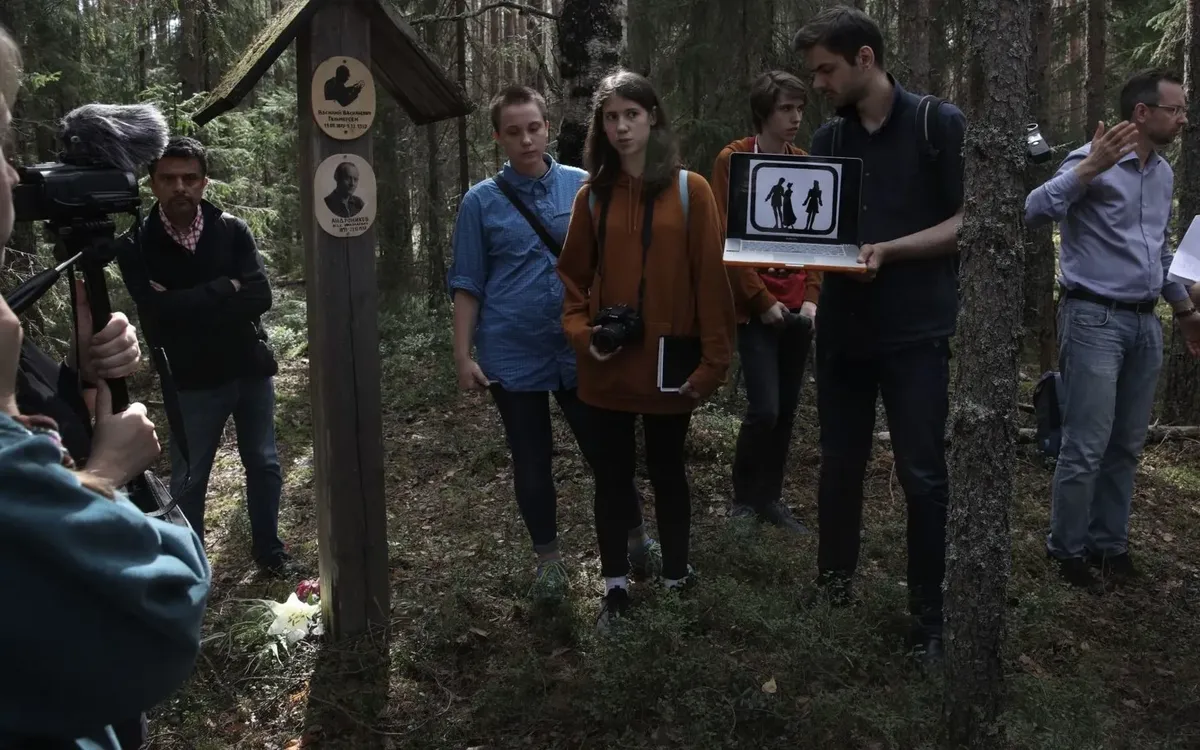
“Oh, as if dad is calling,” Dmitrieva Katya Klodt’s daughter answers the purring ringon of the pop Caver, the grandfather’s mobile phone now has a 9-year-old granddaughter Sonya. Even from the stairs from Dmitriev’s apartment, church singing is heard, these are students of the Moscow film school with Regent Sasha (and so he is a programmer from a physical education) rehearse lithium for the second week: non -professionals.
The filmmakers living here for a week (Katya: “Dad welds everyone, everyone always calls, do not live in fear now”) is painted by ordinary banks for lamps and finish signs with photographs and names that during the excursion, journalists, writers will hang on grave pillars with sharp roofs-the “Golbits” in a native. On the table, the blue volume “Memorial lists of Karelia” (the list of names lies with the eve of the chapel in Sandarmokh). There are many books in the closet, under the feet of a three -color pathetic to caress the personal cat Dmitrieva Dasha. In the absence of the owner, she faces sterilization. Dmitriev’s search dog Gesti on a friendly overexposure in a private house, but, according to Katya, "howls constantly." The grandson of Daniel, a little older than the adopted daughter of Dmitriev Natasha, ends the drawing - the boy next to his grandfather.
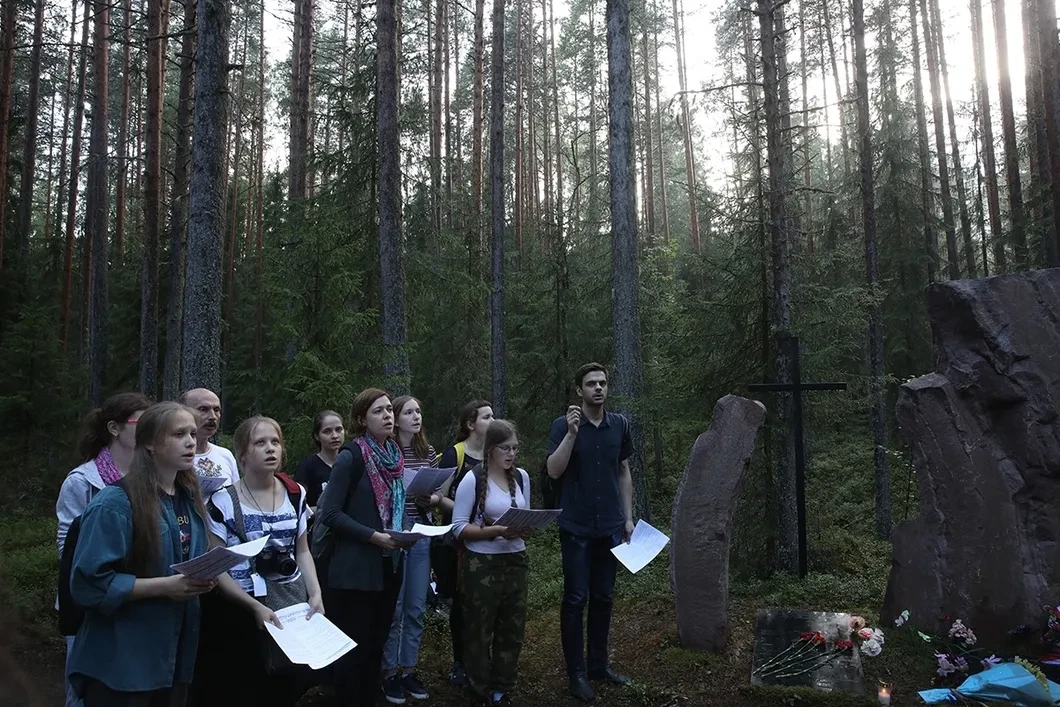
In the Red Bor, people with cameras seem to be more than with flowers and family history. After laying wreaths and lithium, names are read out. We read with the Swedish writer from the sheet, the unusual Finnish surnames do not lie on the rhythm of the chant. A lot of it creeps over bright moss, mixes with the voices of playing children, eat mosquitoes. It seems that around the family who came to bow to their dead. In fact, the neighbor Dmitrieva Natasha with her husband and child. Spouses Maxim and Sveta, former orphanages, from the expedition of October 1997, began Sandarmokh:
“We rested in the camp in the camp, Yua arrived, called for the opening, closer to the cold, in the fall. I remember how he thanked us. And we, children, were glad to remove the branches in the forest, help. School teachers then complained that the prosecutor's office had hysterical of our director: why they released children. There, two camps rested: ours and next to another, there everyone refused, intimidated them. We don’t know if someone is buried here or not, the main thing is to live and wait for him ... ”
On the morning of August 5, Maxim and Sveta are facing the local history museum of Medvezhyegorsk: is there enough money for a ticket? Today the entrance is free. Here is the history of the region from carved Old Believer icons and crosses to the same size of the board from the Gulag with a pencil pattern and inscriptions, on the contrary, a leaflet with a list of executioners of the NKVD. The director of the museum Sergei Ivanovich Koltyrin was first forbidden (from above) to go to the rally in Sandarmokh: supposedly you need to personally meet visitors. (“His lips trembled in the morning when he confirmed that he would not speak, but he was on the whole museum, and he was a member of the election commission ... such meanness.”)
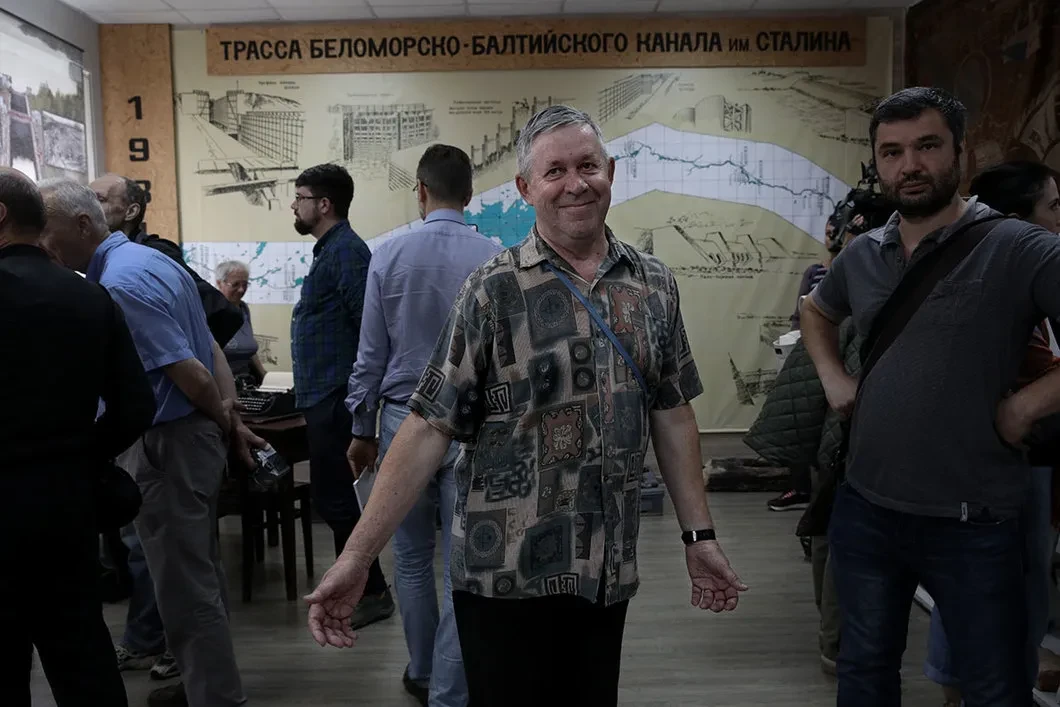
On the way in the sightseeing bus (travel and participation in events for all free), the minds talks about the technology of the Karelian and Leningrad terror, about the formation of “Troek” and “doubles”, about the awards and premiums of shooting - “household”! - Brigades. Popamilly calls the killers.
“These were not executions, but a mass murder, without a prosecutor and a doctor, under the pretext of a medical examination, the prisoners were stripped, they selected values, then - a room for connecting their arms, a room for connecting their legs, 25 people were worn in cars, and then worn to the pit. They were afraid of a rebellion. They stacked with stacks (how to hear the “girls” beaten from thawing now?), Covered with tarpaulin. There are two escorts in the car: one with an iron peak, the other with a wooden block, shot in a pit or pierced the skull with a block, pierced through and through, then “shot”.
Petrozavodsk Chekists laughed at the “feudal” methods: they used “ties” - they strangled with ropes, then shot. If a person demanded a court, if hysteria, they shot right away. Among the 7600 (you can’t say for sure) Sandarmokh’s souls are the best people of generations (clergy, scientists, the whole intelligentsia) and ordinary residents of Karelia and Pomerania (“Limella”, “Bench”, “Accountant” - inscriptions on tablets). These are Solovetsky stages, and Belbalt Plant, and Vetvatlag, and surrounding villages. In the so -called “second stage” not yet discovered by Dmitriev, Father Pavel Florensky. ”
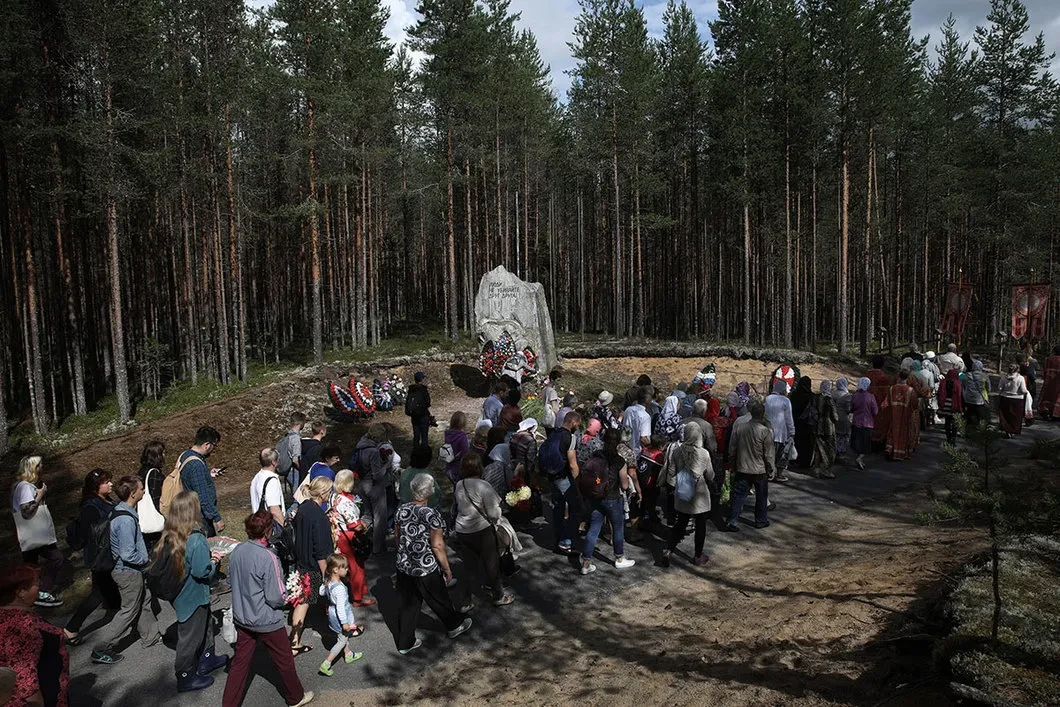
Grandmother with calendar icons in her hands walk along the sandy road. Immediately, the Cossacks - a hat in the hand on the departure. A minute of silence-the sun, candles and incense, shades of moss, hum, hum and smell of a living forest, butterflies-chocolates, sitting on grave “holbits”, bright inanimate wreaths and Katya with a colored portrait of Dmitrieva.
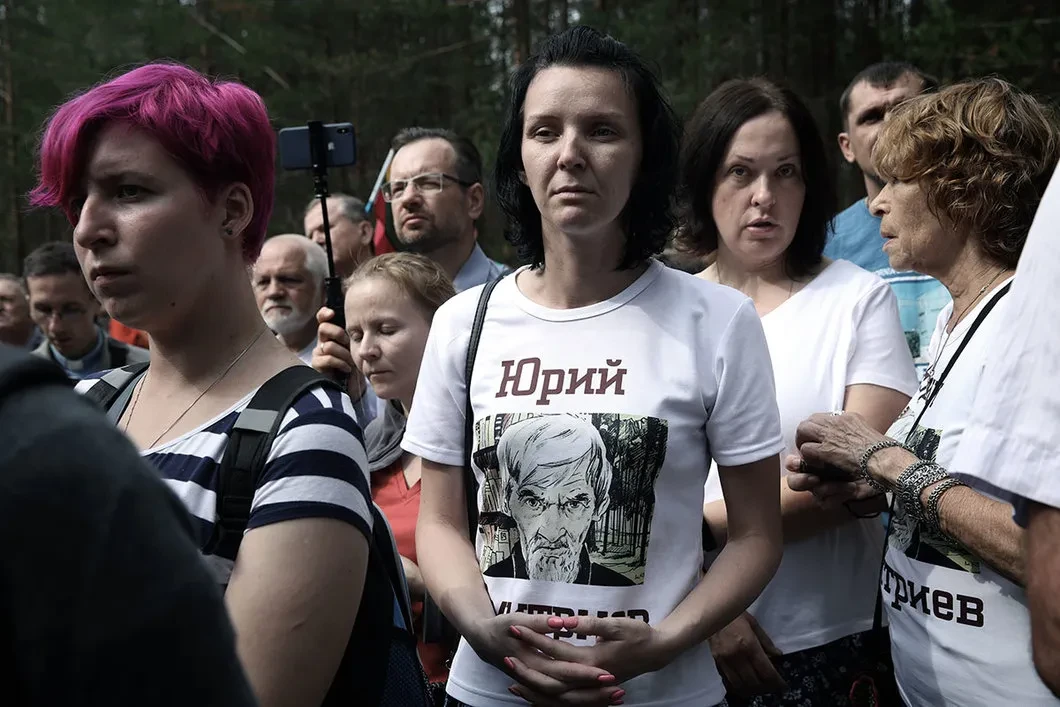
Alexander Daniel - at the microphone, private, no one gave the other. "Louder, louder!" - The rally begins. When Irina Fliga from the Memorial, together with Dmitriev, opening all these unthinkable burial grounds, said that there is no historical memory, there is an inheritance of the past, the Cossacks were indignant: “What are you saying! What repressions! Why are you political here? " The organizers called them to the dialogue, recorded Esaul Alexander Yakovlev - “Friend of the Ataman” - in line to the microphone, but Esaul did not go out of the chieftain.
But later, the Cossack with Nagayka, behind his belt, swung a caricature -looking and, it seems, even with his fists rushed at the oppositionist Trunov, who approached him with a newspaper about Dmitriev.
I thought, a provocation - and there is an interview about the adoptive daughter that you can only teach a child through love and a personal example. As if on a parade ground, a wall on the wall, the lines of Cossacks and human rights activists tensed, at some point it began to seem that it would now be ugly. But no brawl happened. The Cossacks were ridiculously defiled in one direction, then in the other, served a requiem at the Cossack memorial, accused Yakov Sverdlov’s genocide, and calmed down. They came last year, despite the absence of the administration.
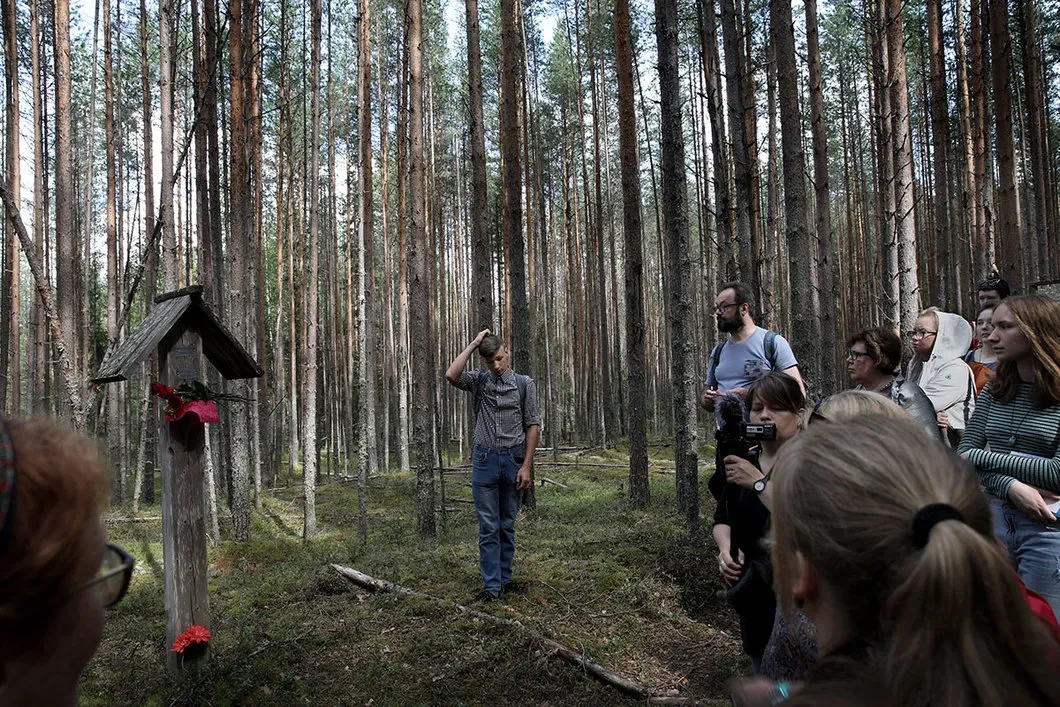
The sound of a screwdriver (the signs on the "holbits" were screwed), as if symmetrical sound of a shovel (no, of course). The accidental proximity of the tablets seemed to be related to the people lying under them. Made them neighborly.
Alexander Arkhangelsky said about the unifying memory. (In Sandarmokh, the memorials of the Cossacks and Tatars, Georgians and Ukrainians, Estonians and Germans ...) Panichid and Patriarch Kirill served here. His grandfather in his father was one of the first Solovites and lived in prison for 30 years. The deputy of the City Council of Medvezhyegorsk, music teacher Valentina Evseev, spoke about the absorption of evil by good. She said that the Government of Karelia (officially at the rally were only diplomats of foreign consulates), the restoration should finance - the bas -relief “People, do not kill each other” for 12 years showered. Now international significance is a monument on the balance sheet of the district.
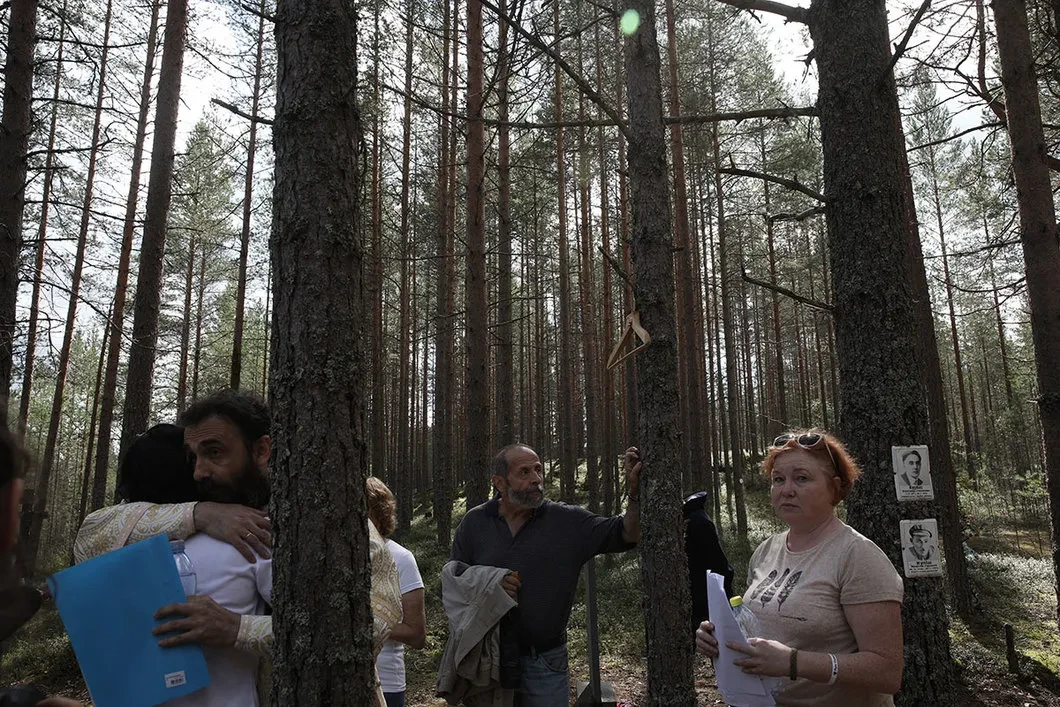
“There is no one to take their eyes,” says Razumov, “from shame”: August 25 will come here to look for a military-historical society (with budget money) the remains of the Red Army soldiers allegedly killed here by the Finns in the Second Soviet-Finnish War. Finns (says the artist and galleryist Maria Yuf) always threw flowers into the water of Onega. For the first time, Dmitriev was arrested about this unjustified version about this unreasonable version in the spring of 16. The round table for the Red Guards took place on the same day and hour as the presentation of the book of Dmitriev and Razumov.
The war is the usual way to explain any large burial (the story with the Kolpashevsky Yar on the shore of Ob is very clear, where the mass burials of the executed KGBSHNI in 1979 explained the mass deserte of wartime). And today, historians are afraid of the falsification and repetition of the recent fate of the Katyn memorial, where the Medinsky department decided to change the profile of the museum and place portraits of the Red Army soldiers killed during the Soviet-Polish war.
PS
From the speech of the New Vishnevsky observer at the mourning ceremony in Sandarmokh:
“Why are Yuri Dmitriev pursuing? Because the current Chekists cannot forgive him for the exposure of the crimes of the former Chekists - those whose heirs they consider themselves. And because today, in Russia, a Stalin state is being built with a shock pace - where a person is dust underfoot, where the interests of the state are immeasurably more important than the interests of a person, where anyone can become a victim of repression and where “organs” are never mistaken. That is why the regiments of bookstores are filled with "works", glorifying Stalin and justifying Stalinist repressions. That is why the words “enemies of the people” and “traitors” sound again. And that is why the authorities pursue those who do not allow to forget about Stalinist crimes. But you can’t forget. For the one who does not remember the past is doomed to repetition. ”