
Translated material
Goodbye, roaming

Russian cellular operators gradually cancel the fee for incoming calls in intra -seating roaming. On the one hand, this is the result of a long pressure of the antimonopoly service for operators and, in general, a victory of common sense. On the other hand, it may turn out that the rest will now pay for those who love to travel.
Beeline (Vimpelcom company) has been canceled on the incoming calls to intra -column roaming from August 20, that is, when the subscriber uses communication services in the operator’s network, being outside the region where the contract was concluded. About this writes RBC. Until now, subscribers have paid for incoming calls when finding 5 rubles in internet roaming. In a minute of the conversation, if the call came from another region.
“Since April, all our subscribers, traveling outside their region in Russia, are calling, sending SMS and using mobile Internet at home,” Irina Lebedeva explained the executive vice president of marketing and the Vimpelcom brand. - The next step is to cancel the fee for any incoming calls on traveling around Russia on the Beeline network. Thus, taking into account the wishes of our subscribers and listening to the opinion of the FAS, we finally formed simple and understandable conditions for the tariffing of "at home" of any services throughout the territory.
All MegaFon subscribers by mid -September will be able to travel around the country without additional costs for incoming calls from any numbers. The statement of the telecom operator says that "the guest region will be equated with home, and the tariff conditions will not change on trips." “We have already changed the conditions of more than 5,000 archival and current tariff plans. Thus, we eliminated the last echoes of the so -called intra -meter roaming, ”the Megafon said. The company clarified that for most subscribers, the changes will enter into force until September 1, for the remaining - in the first half of September.
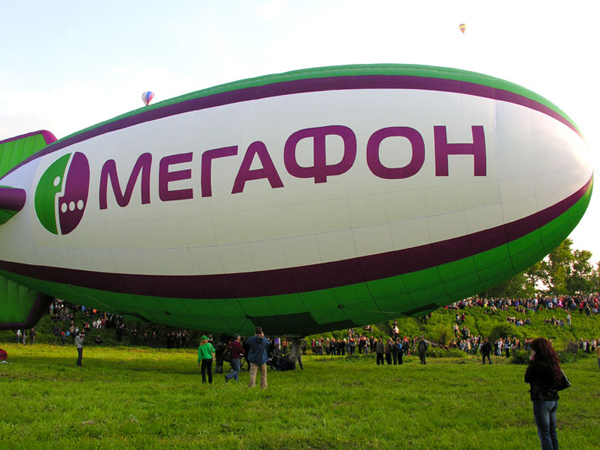 Stanislav Fedorov and Russian Aeronautical Society Aeronal
The representative of MTS told Kommersant that the operator was going to enter free calls throughout the country in the near future. “MTS has carried out all the necessary preparatory work, and in the near future incoming calls on trips around the country will become free for our subscribers. When moving around Russia, MTS subscribers will be able to use tariffs as in the home region, ”the company said.
Recall that the Federal Antimonopoly Service (FAS) prescribed MTS, Megafon, Vimpelkom and T2 RTK Holding (TELE2 brand) to change unreasonably high tariffs when traveling in Russia back in July 2017. According to the service, the operators' tariff policy violates the law “On Protection of Competition”.
Initially, the requirement was released to eliminate the difference in tariffs until December 15, 2017. However, later the relevant departments, together with communication operators, came to the conclusion that this is impossible to do in 2017, and the operators received a delay. For MTS, Megafon and Vimpelcom, Dedal was extended until January 31, 2018, for the T2 RTK Holding - until May 2018 (later - until August 31).
Officially, mobile operators do not disclose what share of their revenue they receive by providing subscribers with intra -meter and national roaming. In 2017, the deputy head of the FAS, FAS, spoke with reference to the information provided by the service by operators that the income from intra -sore roaming is “these are unambiguous numbers”, and the income from national roaming is “even less”. At the same time, the revenue of MTS, the largest mobile operator in the country, in 2016 exceeded 400 billion rubles.
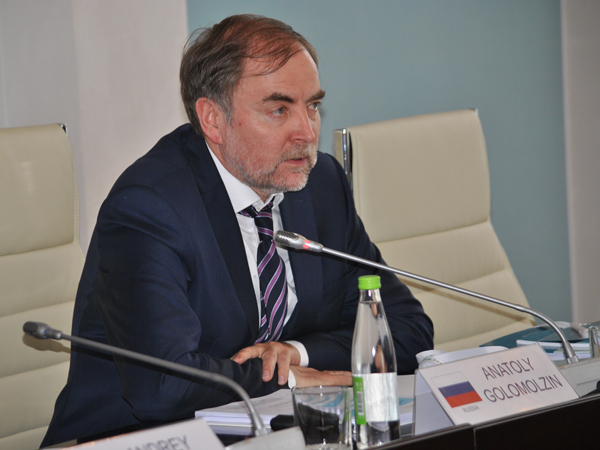 Anatoly Golomolzin Fas.gov.ru
The representative of the company Yulia Dorokhina noted that “it is quite difficult to equalize the cost of calls in roaming with calls in the home region”, and a different approach to tariffing allows mobile operators to maintain a low price for the least secured subscribers.
FAS and communication operators share the concepts of intra -meter and national roaming. National roaming is when the subscriber inside the country is outside the zone of the network of its operator and connects to some other network. Intra -network roaming is when the subscriber leaves the limits of his region, he still uses the network of his operator, but services are more expensive than if he stayed at home.
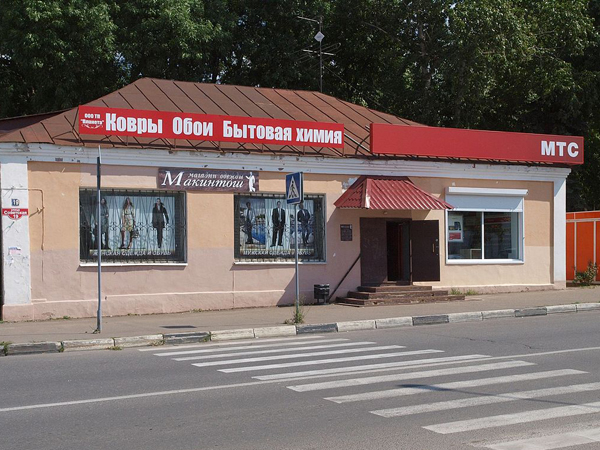 MTS office in Kashira NVO/Wikimedia Commons
The most common example of national roaming is Crimea. Due to the threat of sanctions, many companies are in no hurry to build their networks on the peninsula, as a result, their subscribers, coming, for example, in Yalta, find themselves in the area of coating of local networks.
Earlier, representatives of the FAS, the Crimean and Sevastopol officials have repeatedly stated the need to reduce tariffs for cellular communications on the peninsula. The “big four”, in turn, indicated that tariffs for the end subscribers depend on what percentage they are forced to pay local operators.