
Translated material
"Samurai decided that night ..."
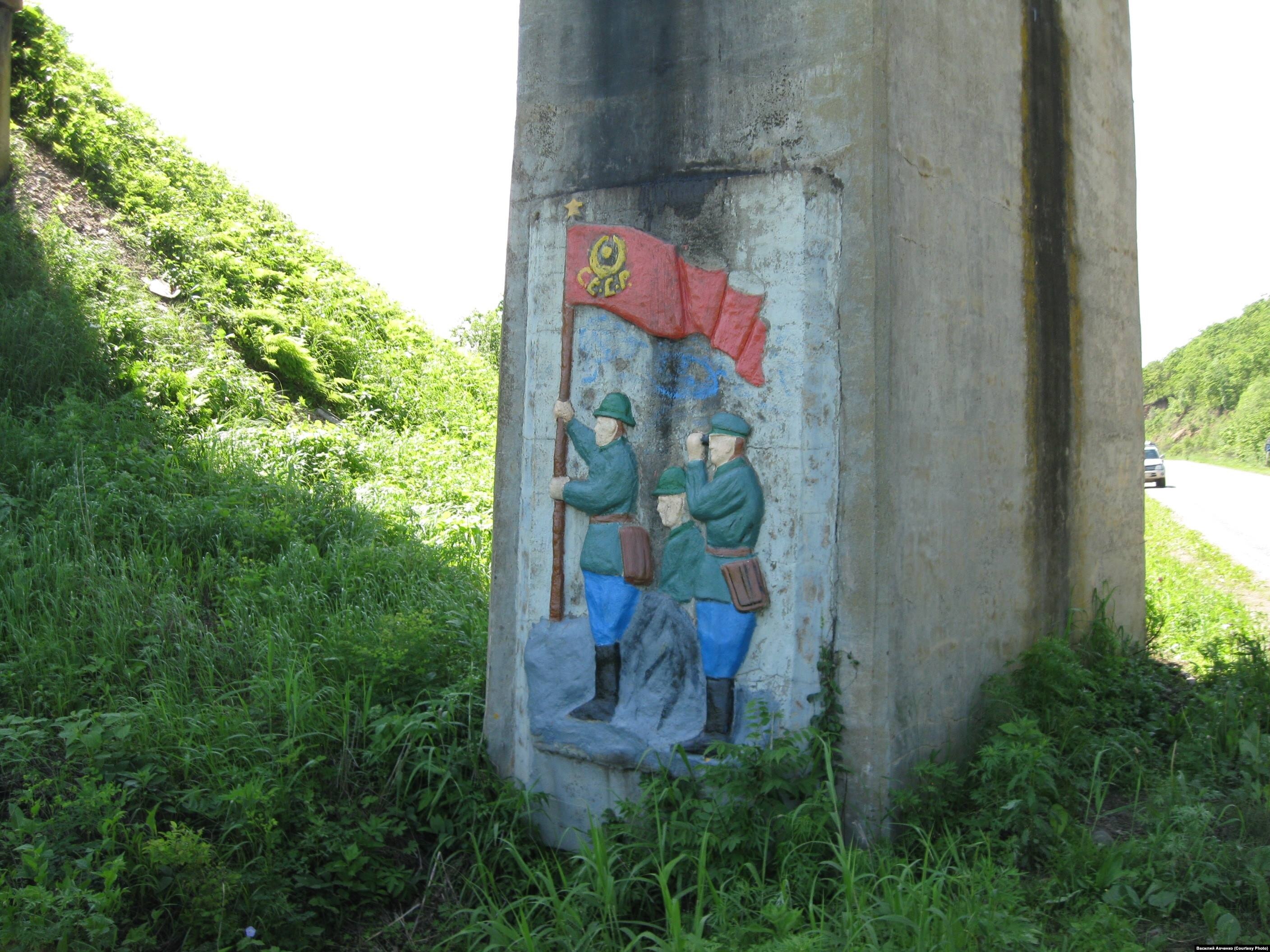
On August 11, the 80th anniversary of the end of the armed conflict, which included in our historiography as "the defeat of the Japanese invaders by Lake Hassan," and the Japanese - as "the incident at the height of Zhangufen" marks.
SR in mobile SR on Instagram Wed FacebookIn the 30s it was expected that a large war would begin here in the east. In 1931-1932 Japan occupied the north-east of China and created the "puppet" state of Manzhou-Go along the borders of the USSR. On the border for several years, clouds "gloomily walked" and shootings flashed.
The summer of 1938 turned out to be culmination.
On June 13, Henry Lyushkov, head of the NKVD of the Far Eastern Territory, passed to the Japanese.
On June 13, Heinrich Lyushkov, the head of the NKVD of the Far Eastern Territory, the Yagoda nominee and the Favorite of Yezhov, who was part of the "regional three" and led the mass repressions of the 1937-1938, moved to the Japanese. In exchange for the provision of political asylum, Lyushkov told Japanese counterintelligence everything that he knew about the deployment of Soviet troops in the Far East and the border protection system. This information made a great impression on the leadership of the Japanese General Staff.
"In the information received from Lyushkov, we were struck by the fact that the troops that the Soviet Union could concentrate against Japan possessed, as it turned out, overwhelming superiority ... before that we believed that the Soviet and Japanese armed forces in the Far East correlated with each other as three. However, the actual ratio turned out to be about five or even more to one. Military operations against the USSR ... " - the memoirs of one of the officers of the General Staff of Japan are quoted by the researcher Hiyama Yoshiaki in the book" Entertaining on Stalin ".
Nevertheless, on July 11, the Japanese side announced a protest due to the fact that the Soviet border guards equipped a trench and a wire fence on the Zaozernaya Subka. On July 15, on this hill, which the Japanese considered the Japanese intelligence officer Matsushima, who belonged to Manzhou-go. The People’s Commissar of the USSR Litvinov told the Japanese ambassador that, under the Hunchunsky agreement of 1886, Zaozerny and Bezymyannaya hills belonged to Russia.
The fighting began on the night of July 29 by a raid by the reinforced company of the Japanese on the nameless hill. Of the 11 Soviet border guards who defended the hill with rifles and a light machine gun, five, led by the head of the outpost, Lieutenant Alexei Makhalin, died.
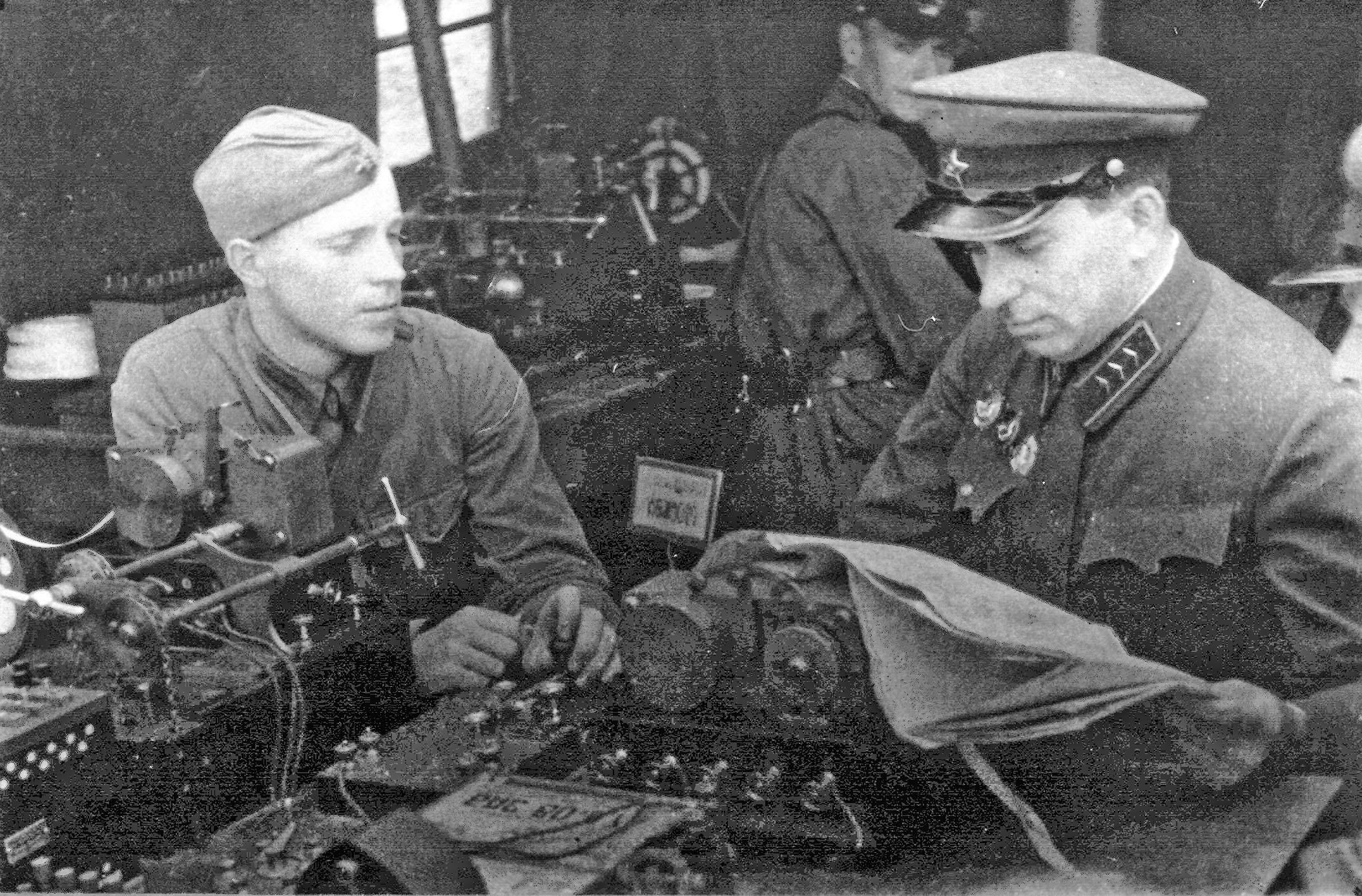
The task of reflecting aggression was laid on the 39th Rifle Corps, commanded by Grigory Stern, who simultaneously held the post of chief of staff of the Far Eastern Front. The general leadership remained behind the front commander Marshal Vasily Blucher - the hero of Perekop, Volochaevka and the CCH. Tanks, planes, fleet, artillery were used ...
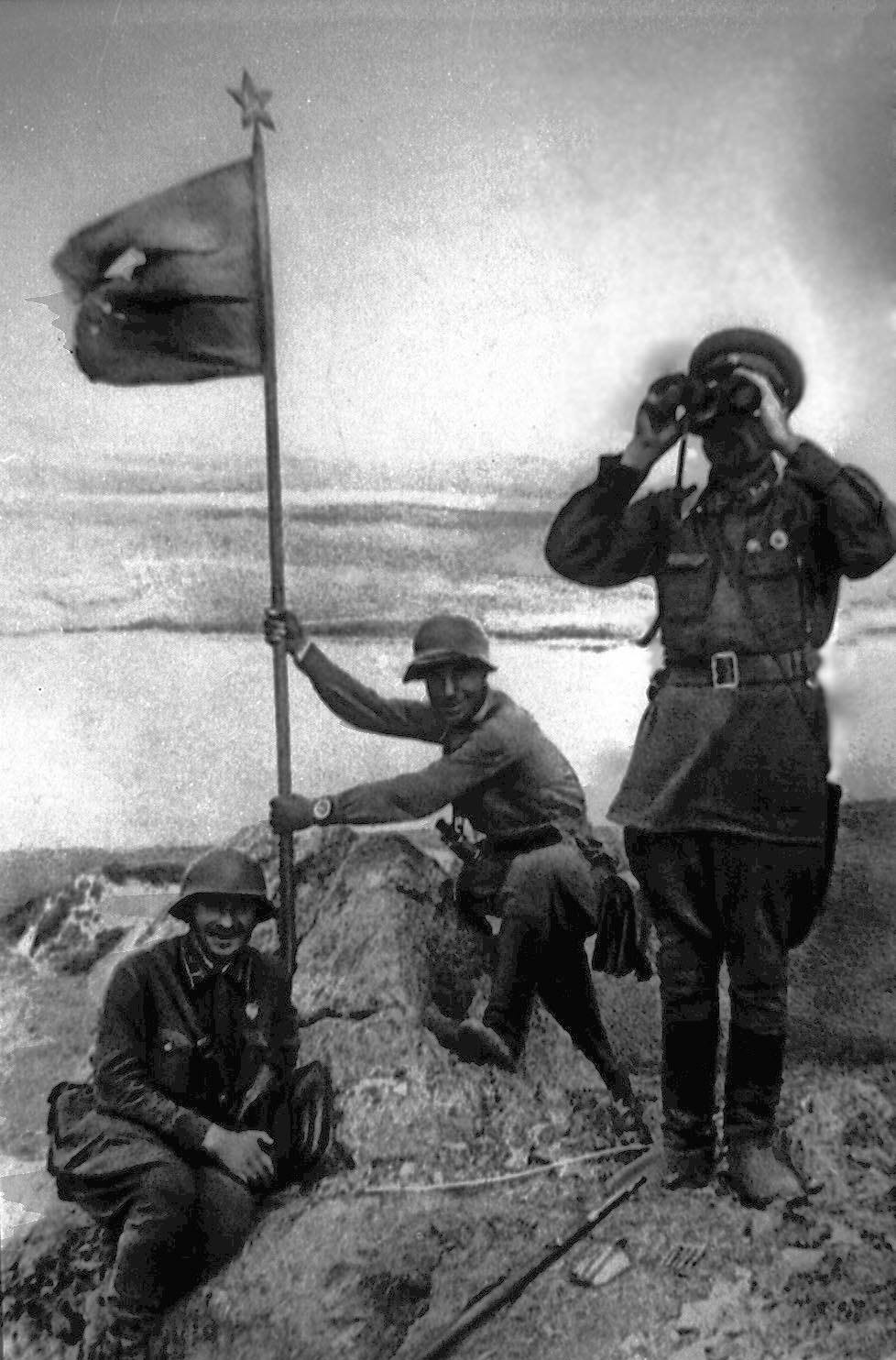
In two days, the Japanese advanced into the territory of the USSR by four kilometers, but on August 6 the Red Army went on the offensive. "Our tanks ... watered samurai with fire, as a man pours a man in his soul ... The brave tanker Comrade Andreev walked only forward ... Samuraev, hiding in the trenches, he began to trample on the tank caterpillars," the local newspaper wrote in those days. By August 9, the Japanese were completely replaced outside the Soviet territory, on August 11 a truce was signed, which restored the border under the Hunchun agreement. In Soviet newspapers, a photograph of the hooking of the Red Banner was published on the Zaozernaya Skad - the frame was staged, removed after the end of the battles, as in the case of the Reichstag seven years later.
According to local historian Boris Shadrin, who had been the history of Hassan for many years, the losses of the Soviet side amounted to 1009 people killed. The Japanese army, according to inaccurate estimates, lost about 650 people killed.
Due to large losses, the operation was regarded by Moscow as unsuccessful. The Main Military Council of the Red Army came to the conclusion that combat training was at an “unacceptably low level”, the troops were “broken out and incompetent”. In the secret order of the People’s Commissar of Defense Voroshilov, it was said: "Thanks to the slack, inorganization and combat unpreparedness of the military units and the confusion of the command and political staff ... We have hundreds of killed and thousands of wounded." The culprit was named Blucher, who was removed from his post and soon arrested.
Sometimes the winners are judged; Blucher, however, did not live before the trial - in November of the same year he died in Lefortovo. Stern survived him for a while - he was shot in 1941.
The conflict in Hassan can be considered as a link of not only half a century of confrontation between Russia and Japan, but also the Second World War. Perhaps the defeat on Hassan and especially on Khalkhin-Gol a year later influenced-along with other factors-that in 1941, Japan never opened its "second front" against the USSR.
The Primorsky Territory as a separate subject was formed just after (and largely due to) Hassan. Already in October 1938, the huge Far Eastern land was divided into two - Khabarovsk and Primorsky. So Vladivostok turned out to be directly subordinate to Moscow, without a gear link in the form of Khabarovsk, in order to improve management.
Today, the Khasan district is the Pearl of Primorye, the Far Eastern resort, the site of the relatively warm sea coast, which in Russia can be counted on the fingers of one hand. The last Far Eastern leopards live here and the boundaries of the three countries are closed: Russia, China and North Korea.
... My grandfather also participated in Khasan battles. True, I did not have time to ask him about this: my grandfather died in 1987. And now the "Khasantsev", probably, did not survive at all - they should be 100 years or more, and the Great Patriotic War of them sighed ...
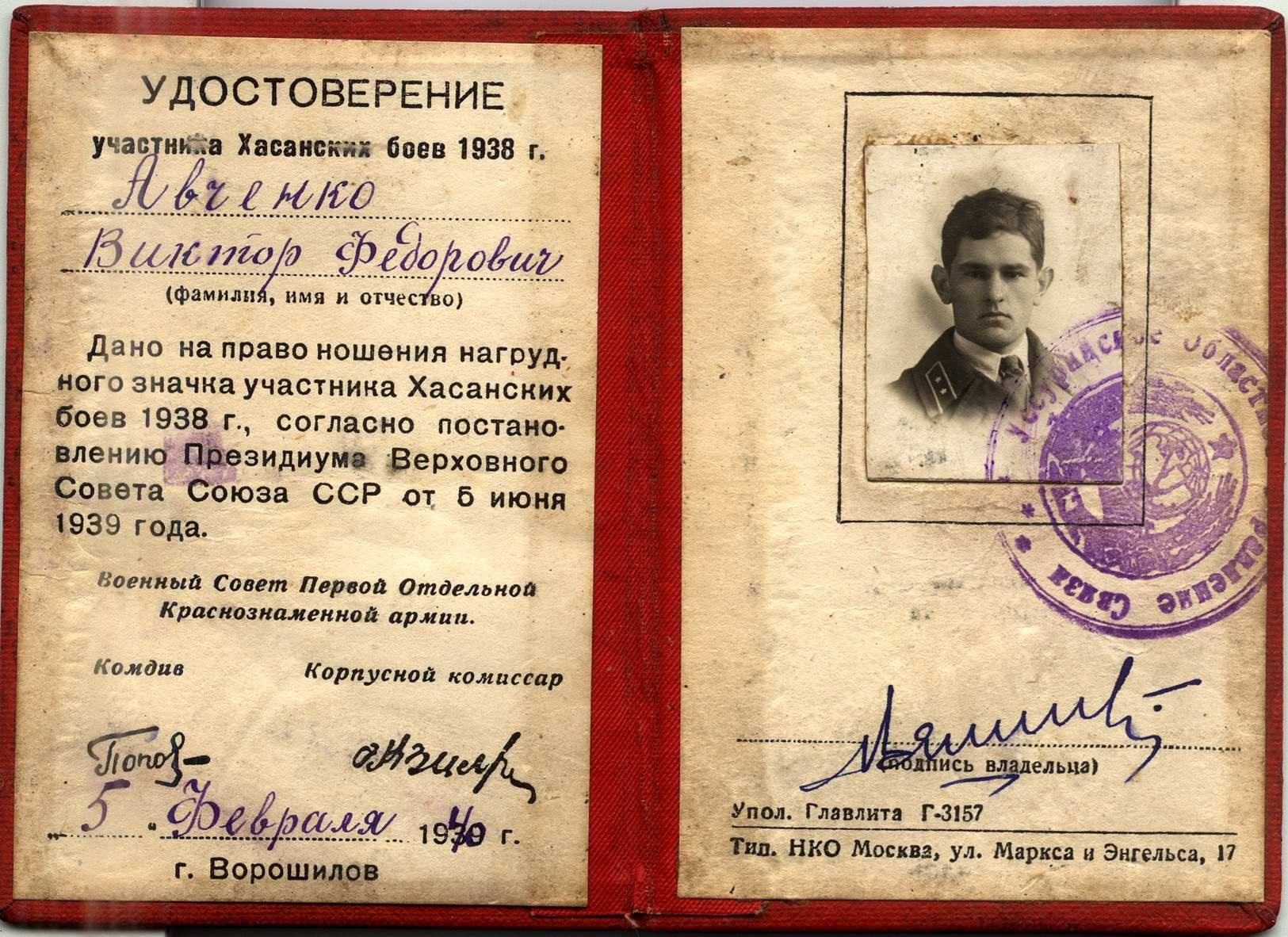
About fifteen years ago, I recorded the memoirs of one of the last veterans of Hassan - the gunner Stepan Sharonov (it was under 90, he soon died). Here's what he said:
- Only we started leaning with guns, as with this machine -gun skyscraper - it was all covered with wire, I don’t know how many machine -gun installations they had there, the mortars stood, ”they threw us absolutely. They fly on the grass - directly shine from them, from shells. We crawled to Zaozernaya along the coast, bypassed this unfortunate machine gun. When ours had kicked them out of there, it became easier. Our calculation advanced between Zaozernaya and machine gun - there were some dirty pad, two Korean fanza stood, the gardens, so we advanced at them between the hills to shoot both on the left side and on the right ... we did not go on the Japanese tanks, we fired all our shells-both fragmentation and armor-piercing on the third day. The assault fire was opened according to the dugouts, by fire points. Already the guns turned red ... I was not wounded. My whole tablet was rewarded, the lid is like a harrow. Then, in the binoculars, I open the lid, and there is a fragment. Sorry, I’m living the ninth ten, already starting to get out ...
The main thing is that the memory does not "knocked out" with us.