
Translated material
The ruble trembles
Against the background of the threat of sanctions, even dependence on oil prices seems a sign
The July Summit of President Vladimir Putin and Donald Trump in Helsinki buried the latest hopes that the sanctions wars of Russia and the United States could end in the foreseeable future. The intrigue was preserved only on the issue of the readiness of the American authorities to go to the end in order to punish the Kremlin for the alleged intervention in the electoral processes in the United States. I did not have to wait for the signals on this subject.
In early August, a group of American congressmen from both parties announced “crushing sanctions”, which equate Russia to the states - sponsors of terrorism and directly accuse Putin of encouraging the “illegal and corruption activity” of the oligarchs. Although the chances of adopting a bill called the “Act on the Protection of American Security from the Kremlin’s aggression of 2018” are quite high, the terms of entry into force of specific provisions may be delayed for a long time.
But the respite did not happen-on Wednesday, the US State Department announced the introduction of new sanctions against Russia from August 22 for the poisoning of Sergei and Julia Skripale in the UK NOVICE NOVENTIC STURALITIC. The accusations to the Russian side were brought under the American law on monitoring chemical and biological weapons. According to the law, restrictive measures will be divided into two blocks. First of all, a ban on exporting to Russia of all double goods will enter into force (however, now the trade relations of countries in this area are very difficult). The second block of sanctions, much more serious, comes into force three months later, if the extension country does not provide guarantees for the cessation of the use of chemical weapons and does not allow international inspectors to check. The US President will be obliged to choose at least three of the six possible measures, including the suspension of diplomatic relations, a complete freezing of trade, with the exception of food, ban on the purchase of Russian public debt and a ban on air transportation in the United States (in this case, the abolition of American Aeroflot flights). The potential damage of Russia from these measures in the State Department was estimated at “hundreds of millions of dollars”.
Due to the intricacies of American politics, the Russian economy may be under double fire. On the one hand, American parliamentarians, before the intermediate elections to Congress, compete for the authorship of the most stringent measures against Russia - from the moment of the summit in Helsinki, 6 different sanctions bills have been proposed until the most dragonovsky appeared. On the other hand, the Trump administration is also forced to follow a hard course in order to fight off the accusations in defense of the “Kremlin’s interests”. Moreover, if the President is the President, then the sanctions policy of the Congress is implemented outside Trump's control.
Russian financial markets predictably responded to news about the imposition of sanctions:
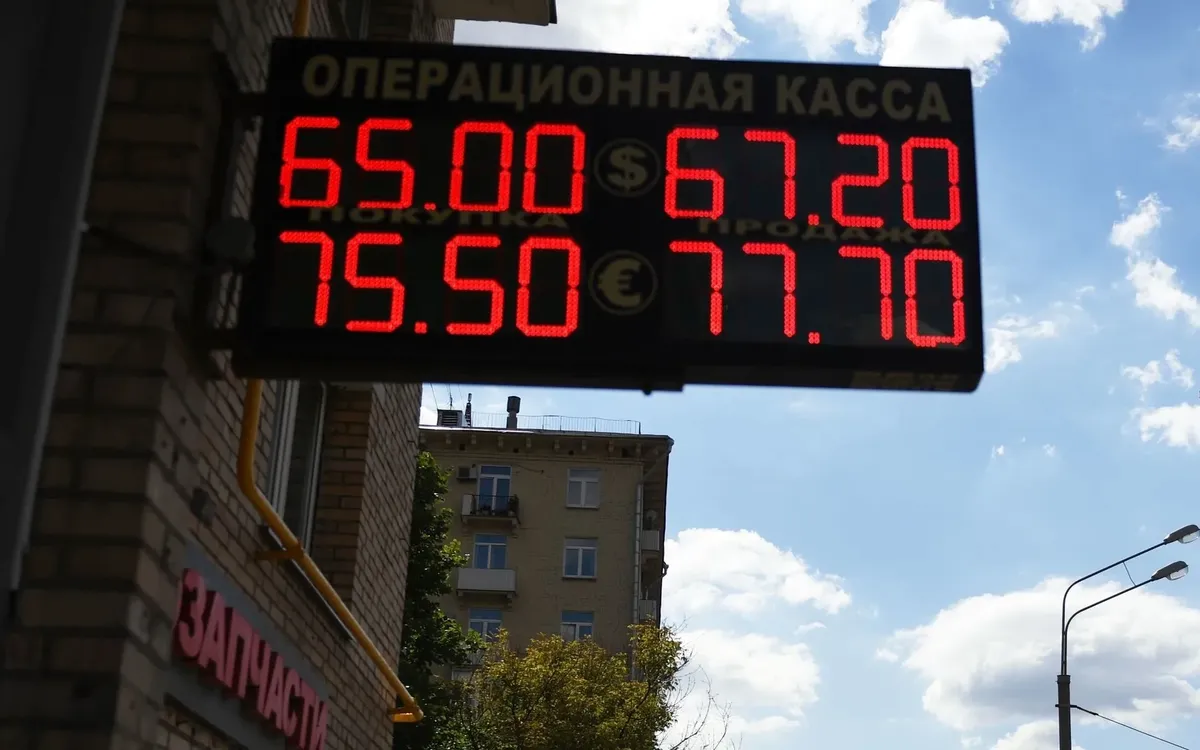
Aeroflot shares fell by 11%, the euro exceeded the mark of 77 rubles, and the dollar exchange rate jumped to 66.3 rubles for the first time since November 2016.
The fall of the ruble began on Wednesday against the backdrop of the publication of the full text of the sanctions bill of the US senators. In addition to strengthening the dollar, a local sale of Russian OFZ, Sberbank and VTB shares was recorded. After such an “emotional” fall, many analysts expected a turn, but the news of the introduction of sanctions by the White House showed that investors were worried not in vain. After the bidding on Thursday, the decline continued with renewed vigor.
Among the wide variety of sanctions options there are two points that threaten the Russian economy as serious as possible, this
restriction on operations with Russian external debt with a circulation period for more than 14 days
And the ban on American financial organizations to work with the largest Russian state banks (Sberbank, VTB, Gazprombank, Rosselkhozbank, Promsvyazbank and Web).
The proposal to prohibit Americans to work with OFZ arises when discussing each new round of sanctions. In April, it was decided to do without this measure - the American Ministry of Finance considered that the ban was destabilizing world markets and will hit the competitiveness of American investment funds. However, this time no one found such objections.
About a third of the volumes of Russian public debt falls on foreign investors. Due to the high interest rates of the Russian Central Bank, non-residents over the past two years have increased the volume of investments in OFZ by 2.5 times (up to 2.5 trillion rubles). This capital remains in Russian assets until the difference between interest rates in Russia and the United States is large enough and plus there are no serious sanctions risks. Now both conditions are close to stopping, which will lead to the mass exit of foreign investors from Russian papers. The flight of non -residents will not lead to the collapse of the financial system, but, according to Citigroup estimates, the ruble may lose 5-15% in relation to the dollar depending on whether the restrictions of the previous OFZ issues will affect (now the main version of the sanctions suggests a milder scenario).
A more painful for the economy may be a point on blocking the accounts and assets of Russian state banks in American jurisdiction. In this case, the Russian financial system will actually be cut off from the rest of the world. In April, Russian oligarchs had already encountered the consequences of such isolation: Renova and Rusal were disconnected from the dollar system of payments and could not settle down with their foreign partners. In the case of state -owned banks, the consequences can be even more serious.
The oil and gas and metallurgical sectors of Russia working for export experience great needs for international operations and for repatriation of currency revenue, the Barclays analytical report is noted.
For ordinary customers, sanctions against state banks may mean restrictions on servicing currency accounts and problems with the withdrawal of funds from foreign exchange deposits.
Any American sanctions will negatively affect the ruble, although due to the high uncertainty of political processes in the United States, it is now difficult to predict the dynamics of the course. Compared to the constant threat of sanctions, even dependence on oil prices seems to be a sign of the bygone stability. However, taking into account the experience of previous sanctions waves, it can be expected that if American lawmakers do not follow the hardest scenario, the dollar will soon remain in the corridor of 65–70 rubles.