
Translated material
Three classic English novels that first come out in Russian
About life on the eve of the First World War and the funny adventures of governesses
The Literary critic of “Medusa” Galina Yuzefovich tells about three English novels that were written many years ago and have already become classic in his native language - but they still have not been released in Russian: “End of the parade: to each of his own Ford Madox Ford,“ carefree years ”Elizabeth Jane Howard and“ Miss Petigerus ”Winifred Watson.
Ford Madox Ford. The end of the parade: to each his own. M.: Ripol Classic, 2018. Translation by A. Samarina
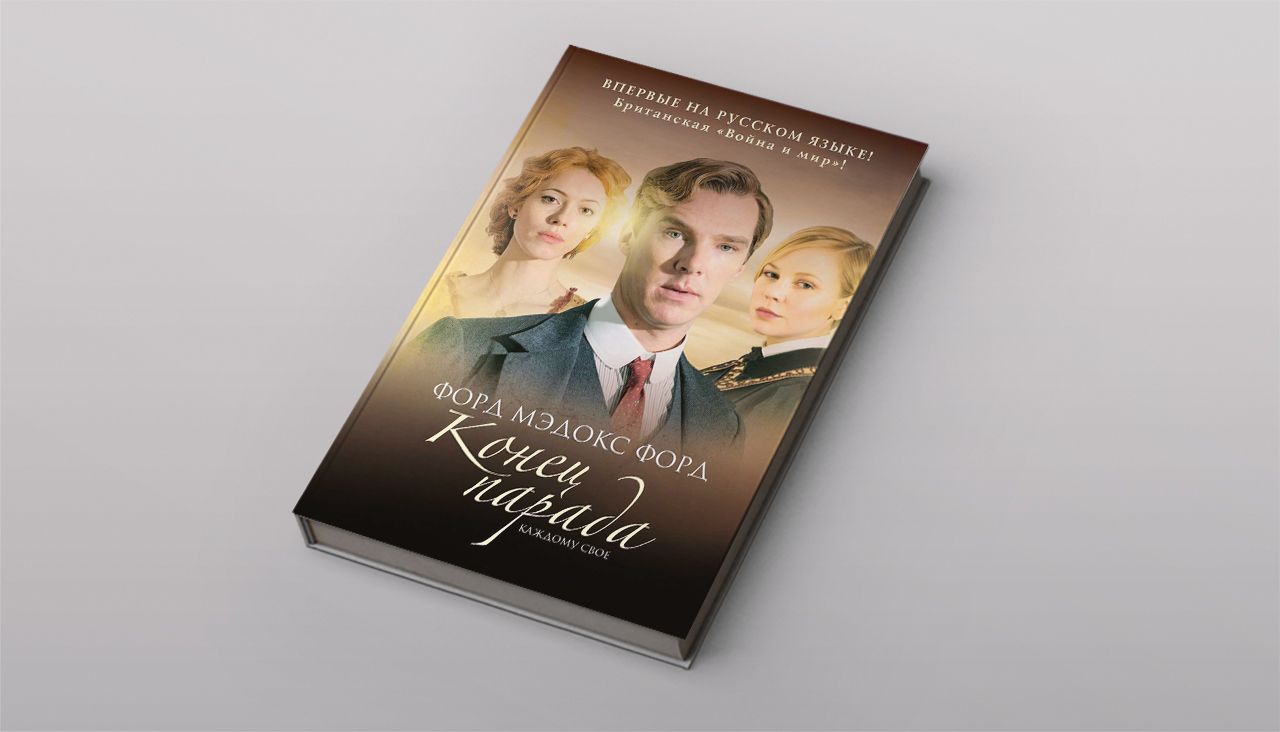
The Golden Classics of the twentieth century, the “end of the parade” of Ford Madox Ford (or rather, its first part is “each of its own”, first published in Russian) is a book for which it is necessary to prepare in advance, and which at the same time decisively cannot be prepared. Everything, starting from the place and time of its actions and ending with the series of the same name with Benedict Cumberbet in the title role, sets the reader on another classic English novel from an aristocratic life in the spirit of Ivlin in or at worst Nancy Mitford. But in reality, the “end of the parade” is anything, not this: Ford text is a modernist, tense, torn, deconstructing the very concept of a novel, and with all that paradoxically lying in line - if not in the heart - an English novel of tradition.
The main character of the “end of the parade” Christopher Titdenes is the brightest head in the kingdom, an incredible scale of the intellectual, while completely devoid of career ambitions. He serves in the department of statistics, he is rich, clumsy, is closed, and he is very unhappy in marriage: the wife of Titgens, beautiful and daring Sylvia, is cheating on him, but, being a Catholic, categorically opposes the divorce. Sylvia seeks to exhaust in all ways and, if possible, to morally destroy her husband, gaining a strange semblance of love in his hot and inventive hatred of him. Once, while playing Golf, Titdenes gets acquainted with Valentine Wonnop - a suffrazhist, an athlete and a groove. They are drawn to each other, but the knightly disposition of Titgens excludes the possibility of a banal adultery. And then the First World War begins, and the hero goes to the front.
However, you should not particularly rely on this linear retelling. Ford Roman is most reminiscent of lace, but not so much the subtlety and grace of weaving, but the fact that the voids in it are no less important than the prescribed fragments, and the sequence of loops sometimes does not succumb to the usual narrative logic. So, between the first and second parts gapes a lacuna with a length of several years, which the author does not even try to fill in - it simply begins the narrative again with some point random at first glance.
Heroes arise and disappear without any explanation, their actions for the most part are deprived of psychological motivations, and emotions are described deliberately detached - as if not “from the inside”, but “outside”. The episode of Christopher and Valentine's dating in a miscarriage follows the episode in which the consequences of this acquaintance are discussed in the light, which is why the reader has a feeling of slightly frightening absurdity.
This feeling of absurdity, a blurry picture, constant and rather painful discomfort, accompanies the entire reading process. Upon learning that the best friend of the protagonist Vincent McMaster married his lover, we wonder where her husband managed to get, because literally she was just married to a half -crazy priest? When, at the beginning of the second part, Sylvia dumps a plate with chopping on the head of Titgens, covering his military uniform with oil spots, we can only guess, which actually encouraged it on this gesture. Throughout the novel, we will have to sharply experience our own reader's incompetence and insolvency-this is probably the same about this, we were simply inattentive, missed something, and they misunderstood something.
The semantic and emotional voids, deliberately left by Ford,, like the missed stanzas in Eugene Onegin, burst out the novel from the inside, creating with the transparent simplicity of the language and relative compactness of the text - the illusion of a large and multi -layer book that requires the most attentive, possibly multiple reading.
However, fragmentation and dry restraint work not only on the effect “inside more than outside”: they fill the “end of the parade” with a tremendous internal voltage, almost not breaking out, but burning hot inside. Each act in the absence of copyright comments is poured with a special meaning, every look or word acquires a new weight and significance. It is this ability to achieve outstanding emotional impact, which was stiff and minimalistic visual means, revealed by Ford Madox Ford in all the splendor in the distant 1924 (it was then that the first edition of the novel was published), and allows us to talk about him as one of the most important writers of the twentieth century, which largely predetermined the development of English literature for the next hundred years.
Elizabeth Jane Howard. Carefree years (chronicles of the family of Kazalet). M.: Eksmo, 2018. Translation W. SAPSINA
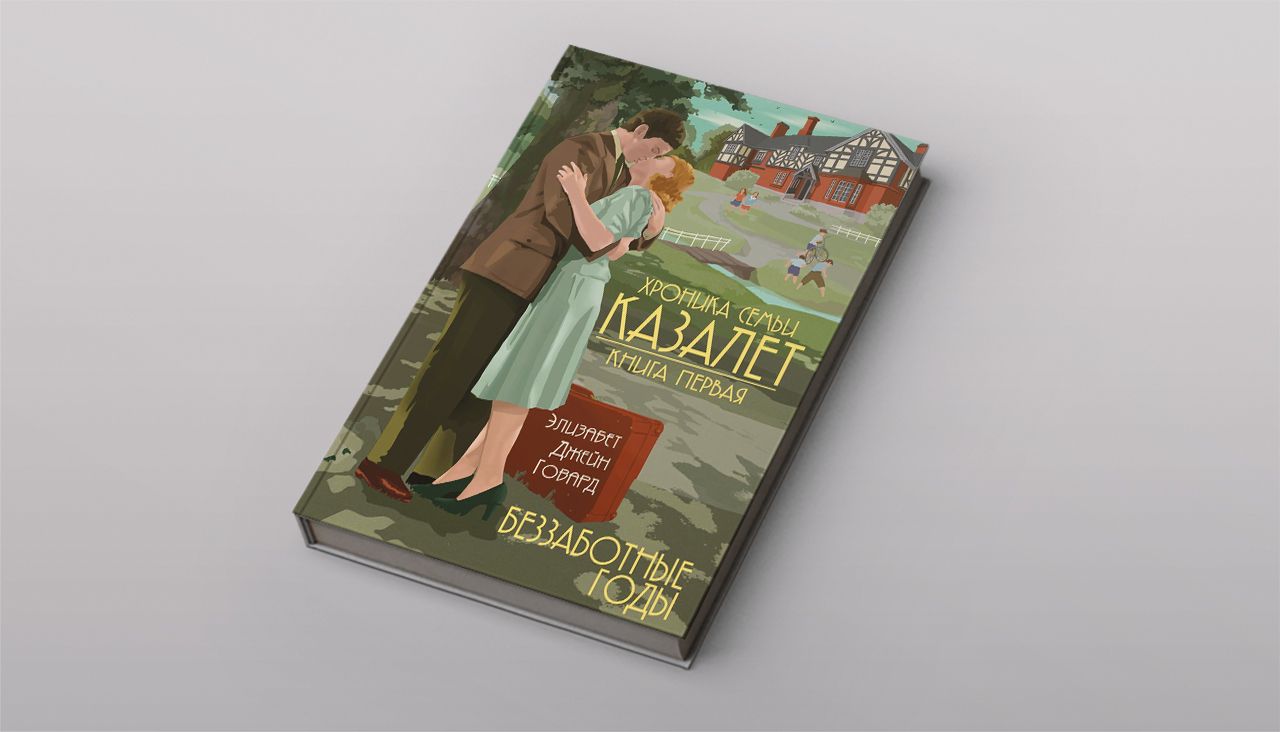
“Carecript years” are much more like a classic and familiar to the reader English novel, if you take John Golsourcy for the standard of the Forsyte Saga genre. The first volume of the huge five -volume cycle of Elizabeth Jane Howard (the second book “Fastened Time” will appear in Russian books until the end of August) is a wonderful example of a spacious, crowded family novel, rich not so much on action, characters, psychological nuances and half -tones.
In the summer of 1937, the whole large family of Kazaletov gathered in the country's suburban estate. Parents, their daughter Rachel and adult sons Rupert (artist and teacher of painting), Edward and Hugh (employees of a family company trading wood), as well as wives of sons, children and servants. Together, they will go to the beach, dinner, play tennis and hide and seek, riding, quarrel, put up, receive guests and solve family problems.
The handsome Edward is constantly cheating on his wife, energetic Viole, the stronghold of all traditional British virtues. Hugh suffers from the migraines that remained (along with a mutilated hand) in memory of the First World War, and his wife Sybil gives birth to twins. Rupert is trying to reconcile the young wife, the beauty of Zoui, with the children from the first marriage, whom she does not like and considers the burden. Rachel enjoys his secret forbidden novel. The four -year -old Neville - the son of Rupert - terribly coughs at night, and his older sister - twelve -year -old Clary - Michetet to get Kuzin Polly Kuzin, who is preferred by their third cousin - thirteen -year -old Louise. Louise, in turn, suffers from adulthood and harassment from her own father that suddenly fell on her.
The fact that with a fugitive presentation seems to be a meaningless pile of names and facts, in jewelry, Howard becomes an amazingly harmonious and exciting multi -figure drama. All the heroes - from maids to young children, and from cats to the head of the family, eccentric, powerful and nonsense William Casalet - play their roles without the slightest pathos, instantly becoming the reader close and pretty. Howard does not divide his heroes into good and bad - each has his own story, everyone can be forgiven, then to understand, but from the realization that their happy and at the same time restless summer is the last peaceful summer on the eve of the impending war, the reader has a habitually and sweet heart.
Elizabeth Jane Howard spent most of her life in the shadow of her husband - the brilliant and contradictory prose writer Kingsley Emis, who overshadowed her in the eyes of British readers. The late parish of Romanov Howard to Russia (the first of them went out in England almost thirty years ago), you also cannot call it especially loud. Nevertheless, the “Callest of the Family Callest Chronicles” is a comforting example of truly high-quality and notorious popular literature, and at the same time the excellent evidence that in skillful hands the conservative genre of the family saga can last an arbitrarily long time.
Winifred Watson. One day Miss Pettigrew. M.: Livebook, 2018. Translation of Yu. Machkasova
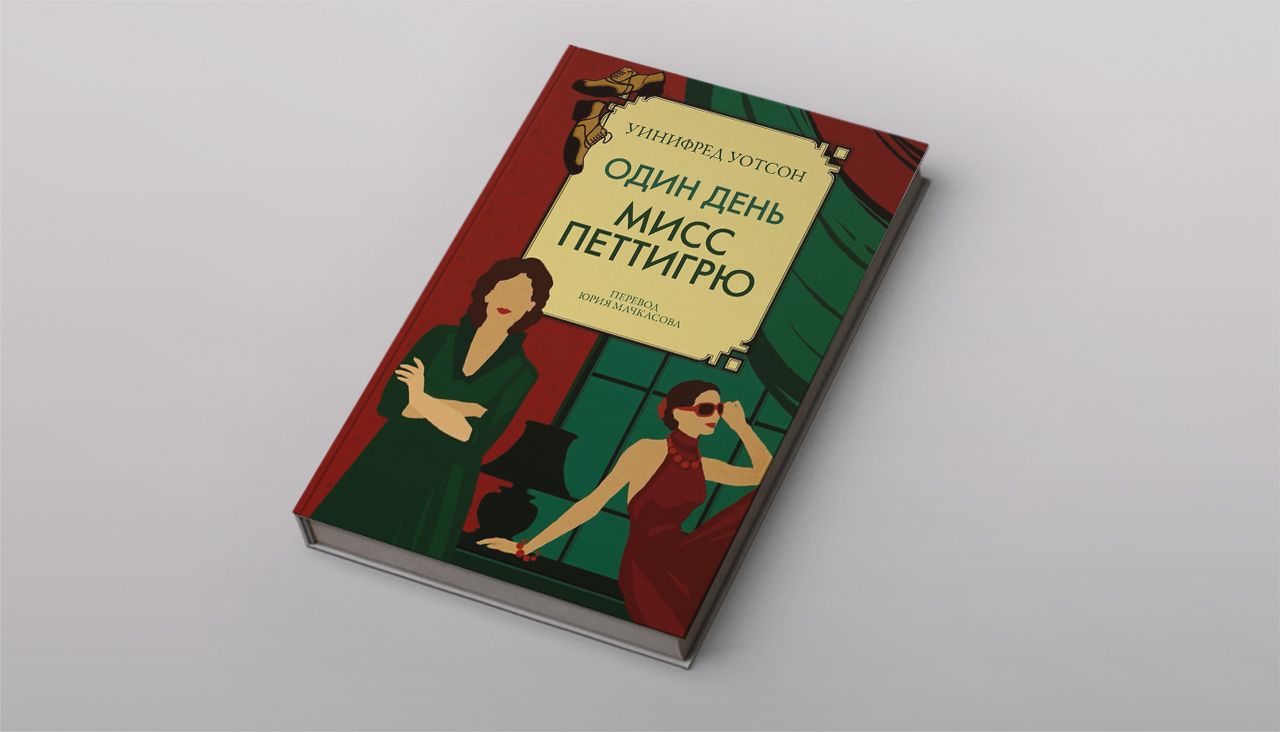
Miss Pettigrew, a poor unemployed governess of forty years, leaves the house to get a job - or finally admit that her life is destroyed and there is no more hope. Miss Pettigru is inconspicuous, boring and poorly dressed, the apartment mistress put her out into the street for non -payment, and lonely old age, hunger and death in the almshouse are clearly looming ahead. However, appearing on the ad, she is involved in a series of funny and incredible events that completely change her life.
The young, lovely and frivolous actress Miss Lafoss, a potential employer Miss Pettigrew, fell into a difficult situation: she needs to urgently deal with three lovers at once, and the relationship with each of them is a certain value for her - and some dangers are melt in themselves. And here the intervention of Miss Pettigru is invaluable: it not only unexpectedly for herself cleverly resolves the situation, but also a broken heart of the suddenly incurred friend of Miss Lafoss, the mistress of the luxurious salon of beauty. She, as a sign of gratitude, turns a miserable Cinderella into a luxurious and slightly mysterious princess - and the princess’s place, as you know, at the ball, where even a woman of not his first youth may well meet the beautiful prince of her years or a little older.
“One Day of Miss Pettigrew”, first published in 1937, is not so much a novel as a comedy bourgeois play. There are much more dialogs sparkling with wit in it than descriptions or reflection, and the entourage itself literally asks for a theater scene or at least a movie screen. In a word, in no way the great literature. But if you re -read the whole Woodhouse and the heart asks for additives, then Roman Winifred Watson is joyful, naive and irresistibly charming - a book that simply cannot be missed.
Galina Yuzefovich