
Translated material
The authorities are ready for rollback
To stop pension protests, citizens came up with new benefits - and this only confused the pension system

This week it became known that the government is thinking about an amendment to the legislation under which the benefits provided for pensioners by law will apply to those who have not yet retired due to raising the retirement age. In other words, the retirement age will be considered according to the new system, and the benefits - according to the old, from 55 and 60 years for women and men. Russians who have reached this age want to exempt from land tax, from real estate tax, from paying for travel in public transport, and for housing services can be paid at a discount.
According to RBC sources, such an amendment can be adopted in the fall during the consideration of the bill on raising the retirement age in the second reading. Allegedly, this is “the easiest of the questions”, since additionally looking for money to make a grandiose plan for the penetration of dissatisfied Russians. But this is only at first glance: the financial burden on the budgets of the regions will increase, and the method itself will not help very much - discontent will not go anywhere.
Generosity from
In the first approximation, the government’s initiative looks like “retreat to pre -prepared positions,” said Anton Tabakh, chief economist of the expert RA agency.
“There is no need to be a macroeconomic analyst,” he ironizes. “People are left part of material or intangible benefits, but incomparable in volume with pension.”
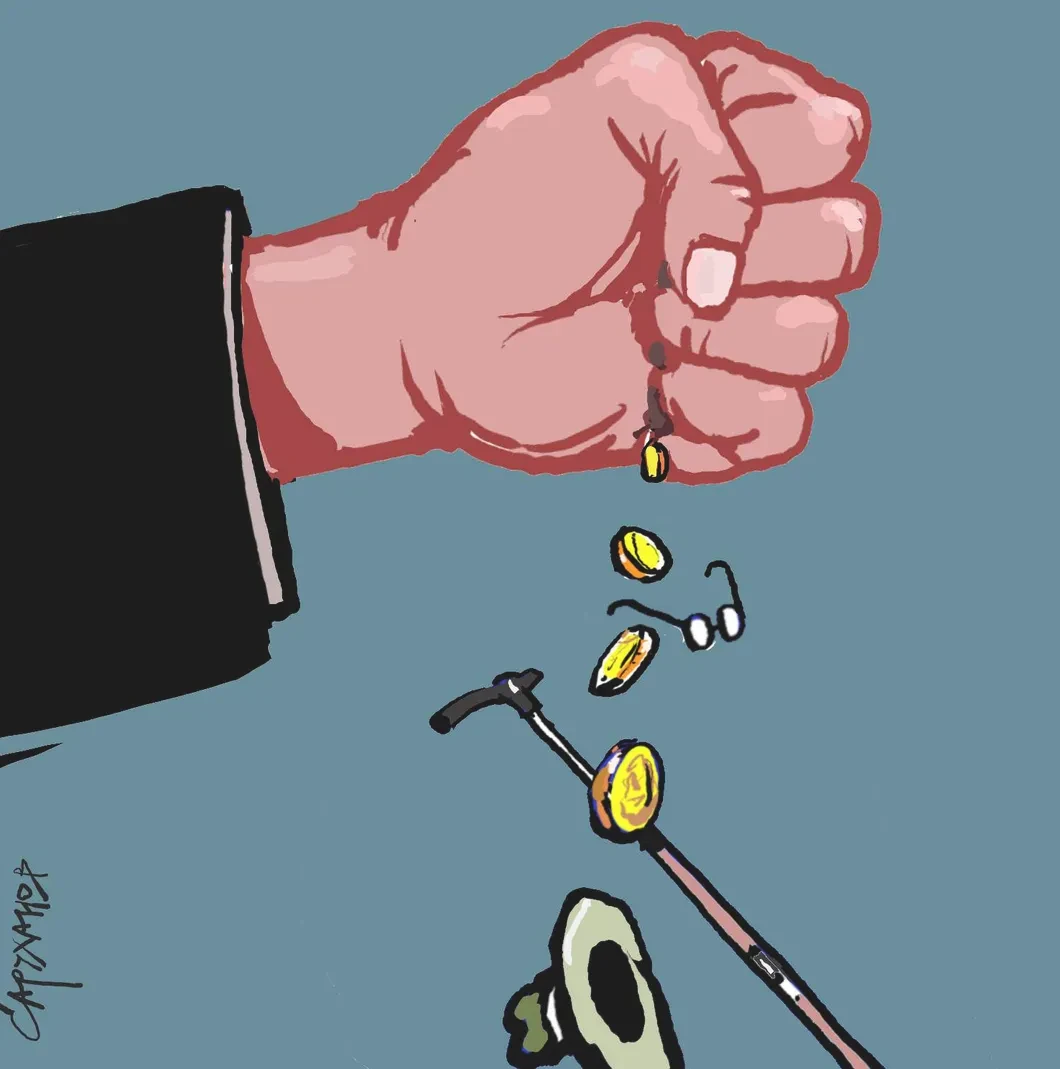
“For example, a typical property tax is several thousand rubles a year. The travel in the same Moscow is about two thousand rubles a month. It turns out the following: about 15 thousand rubles per month are taken in favor of the Pension Fund and the federal budget, and in return a small benefit is left - also at the expense of local budgets. This is generosity at someone else's expense. ”
For regional authorities, a new amendment is an additional headache: you will need to look for money and hold on. These are only formally additional sources of financing for the implementation of the “humanistic” government plans are not needed. In fact, everything will be different, the economist Natalya Zubarevich is convinced.
“The federal government decided to play with pensioners at the expense of regions,” she states. - I'm not sure that this will not affect the condition of these budgets. Firstly, it is far from the fact that in each region there is a transport benefit-this is only Moscow so rich that it is introduced by free travel in electric trains before the elections. Secondly, you need to look at the story with romance: Zhilsubsidia is given only to those who have income below the subsistence minimum. The rest are paid by the counter. " If the authorities want to expand the list of beneficiaries, the municipalities will simply quarrel. But they will not have much choice: a protest as a form of discontent is prohibited, so the budgets will have to “eat” and this, the economist believes. “All local authorities will bow for an additional subsidy for co -financing expenses. You can’t say loudly, you need to individually walk and explain how much additional money will be needed. All the same is only a view of the side, ”says Zubarevich.
The trouble is also that local budgets are in very poor condition, so there will inevitably have problems with the financing of existing and planned benefits, the KGI, economist Evgeny Gontmamer predicts.
“The budget situation is asthar, and now, due to additional load, the pressure will only increase: the number of people of the pre-retirement and retirement age is growing,” he says. Given that many benefits look very ineffective (the promotion of this thesis is attributed to Alexei Kudrin), the new government initiative only confuses the whole picture.
This is due to the fact that there really was no plan “B” in case of protests,
Hontmamer believes: “Preservation of benefits is a reaction to the negative response of society, to the same fall in the ratings of trust in power. But such measures are palliative: you increase the retirement age, but actually leave the second retirement age for benefits. Confusion - you can’t imagine worse. ”
White noise from the government
Such concessions from the government will almost certainly not help to bring down the protest, experts say.
“You can powder your head with benefits, but as soon as payments come, the people will immediately begin to work with brains,” -
Natalya Zubarevich is sure. “These measures are not enough, and the matter is not only in money,” adds Evgeny Gontmaker. “People are offended that no one is talking to them.”
This, by the way, is not entirely true: a few weeks ago in the media there was information that Vladimir Putin will personally explain the pension reform in the fall. And pension issues are raised at almost every meeting of officials with the population. It turns out not very. At a meeting with the inhabitants of Saratov, the State Duma speaker Vyacheslav Volodin generally scared all the possible abolition of state pensions. “We have a state pension system with you, it has such a hole in it, and at the expense of the budget it is filled. We will have further state pensions or not, this is also a question, because the budget has become scarce, ”said Volodin. But more often the conversation simply does not glue: at the end of July, the video of people with a deputy from United Russia Andrei Chernyshev became viral. “I have four children, and I have a question: why will my children, working, retire before death?” - asked Chernyshev from the hall. “Here I am one of 450 deputies. 450 people. Well, what if I just slapped the doors and would go out, who would invite me tomorrow? - the deputy fought back as best he could. - The first step was taken because we all realized that it would not be possible to get rid of the government. This bill will still be adopted in one form or another. ”
The pressure from the dissatisfied mass of people is growing, and opposition activists are actively used by the protesting agenda (it is enough to recall the rally of Alexei Navalny announced in September).
Therefore, in the future it will be necessary to invent tricky schemes or go to new concessions.
The initiative of Dmitry Medvedev was widespread to actually criminalize the dismissal of people of pre -retirement age. Specifically, this step, according to Anton Tabah, is more like “white noise” and “imitation of violent activity”, and while in power they expect to do with little blood. “No one [in the power] wants to neither shift the terms of introduction of retirement age, nor to review the age itself. But if further dissatisfaction is expressed not only in hundreds of hundreds, but in real actions (and meetings with deputies - this is a very indicative thing), then a further rollback will go, ”the economist believes.
At the same time, the most logical step that could arrange both sides seems to be a veto to increase the retirement age for some time. Society will calm this, and the authorities will make it possible to tighten the “tails” and remove all the shortcomings (in the same structure of benefits), after which it will be possible to return to the issue of an increase in a calm mode. Evgeny Gontmaker offers
A conditional embargo on any movements with retirement age until January 1, 2025.
“This will prepare and not produce entities when the retirement age is one, and the benefits are provided to people of a different age. During this time, you can normalize inter -budget relations, reform the system of benefits, find the sources of their financing - and then already tie everything to the new retirement age, ”summarizes the gontmamer.
There is only one problem: now, in fact, the authorities react reflexively to public discontent and add chaos with their decisions. And in order to sharply turn back (or at least turn aside), you need a certain courage. But to be very brave - tomorrow “no one will invite”, as the deputy Chernyshev explained. And this is even worse for any person in power than growing public discontent.