
Translated material
Lyme under crossfire
Why did Vaikule’s refusal sing in Crimea caused indignation not only in Russia, but also in Latvia
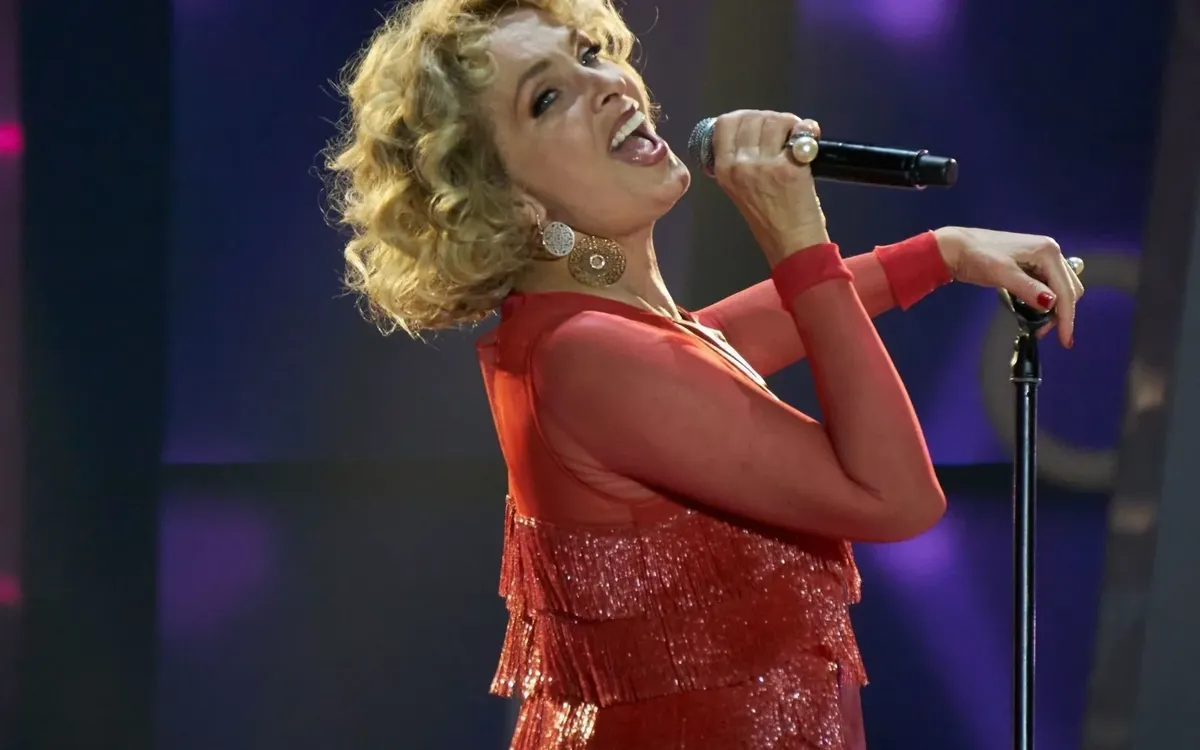
Laima Vaikule’s statement that she would not act in Crimea for any money provoked a storm of emotions. In addition to the usual in such cases, bullying in social networks, there was a more serious reaction. "Russia-1" devoted ether to this topic. The Ministry of Internal Affairs received a request to check the concert activity of Vaikule. MP Milonov was noted by the next boorish statement. What the singer thinks and talk about this, says Vadim Radionov, deputy chief editor of Radio Baltkom, Riga.
“She herself is to blame, you need to think what you say! If you want to make money in Russia, and behave decent! ”,“ Our Crimea! What is there to reason?! " The first calls on the air of Baltkom radio station make it clear: the statements of the Latvian Russian and Russian Latvian star of Laima Vaikule itself, many people were not to their liking not only in Russia, but also in Latvia.
The scandal arose from almost nothing. At a press conference in Odessa, Vaikula said that she would not go to Crimea for any money. Laima is a citizen of Latvia, the EU countries, and the EU does not recognize the status of Crimea and considers it illegal to visit the peninsula by citizens of his countries. And that means that the path there Vaikule is closed this way and so. Without special efforts on her part.
Another thing is the reaction to its statement. In two millionth Latvia, about 40% of the population are Russian -speaking. For many of them, “our Crimea”, that is, Russian, and Lyme itself - ours, just like Crimea - is Russian. Nobody carried out accurate measurements, but a significant part of the Russian -speaking inhabitants of Latvia perceives the world through the prism of the Russian media. When it became clear that Lyme’s statement in Russia was regarded negatively, Lima from “ours”, Russian, immediately became alien, that is, Latvian. “Carled under the nationalists,” one of the users wrote in a commentary under the program posted on Facebook.
The attitude towards Russia in Latvia is specific. I would call him black and white. So, the Latvians perceive the eastern neighbor mainly in black. It is officially believed that the republic was occupied by the USSR from 1940 to 1991. Some Latvians are afraid that Putin Russia will try to repeat what the USSR did. In almost every Latvian family there are relatives who were deported to Siberia by order of Stalin.
After the Crimea and the War in the Donbass joined the Russian Federation, these fears worsened, and Latvian politicians quickly adapted them to their needs. A number of Latvian nationalist parties can say thanks to President Putin - thanks to his actions their ratings are growing.
And among local Russians, idealized ideas about Russia as a new superpower, super-state, led by the infallible president-Sumender are widespread. “How do I envy the Russians that they have such a president as Putin,” the listener once said on our air.
“The West is bending, Russia is flourishing,” another listener admired. When I asked when he was the last time in Russia, he replied: "In 1993."
They learn about the situation in Russia from Russian channels.
Local Russians have a resentment of Latvian politicians. After the collapse of the USSR, many feel rejected by the Latvian elite. Putin against their background looks prettier: "He is for the Russian people, which means that he will not forget about us."
There are people on both sides who adhere to more critical views, but in the air and social networks they are almost invisible. By publishing the announcement of the next interview on Facebook, I see how users are indignant: "Why did you invite this liberal?" Or: "Why are you the air of this Prochrevsky quilted jacket?" The formulations are approximately the same for both of them. Most perceives what is happening without nuances - definitely against or unequivocally for. Vaikule was a victim of this black and white perception.
She got into a double trap - the Latvian media and the public also did not support her.
“I danced in Russia - you get it for it,” the reaction was about this.
Laima herself, whose career is capitalized mainly in Russia, is trying to remain Latvian singer in spite of everything. After leaving Jurmala, the young performers “New Wave”, she organized her festival “Laima. Randeveus ”, returning to the Baltic coast of many Russian stars and thousands of tourists. The departure of the “New Wave” was provoked by the decision of the Foreign Minister of Latvia Edgar Rinkevich, who forbade the entry of Russian pop artists to the country Oleg Gazmanov, Iosif Kobzon and Valeria. Rinkevich substantiated this by the fact that they more actively supported the accession of Crimea to Russia. The organizer of the “waves” Igor Krutoy was indignant, demanded the abolition of the decision and public apologies, Rinkevich did not begin to do this, and the “wave” subsided from Latvia.
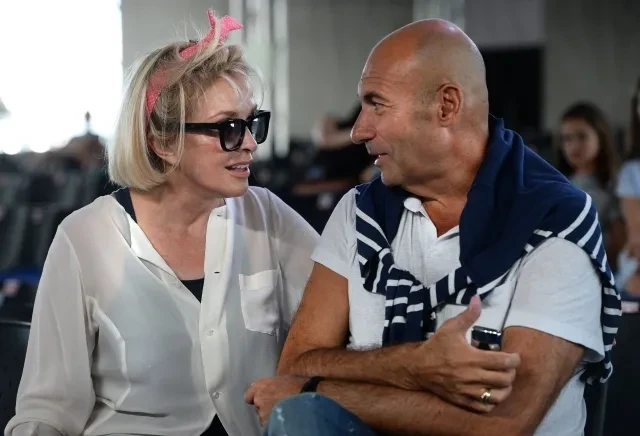
Rinkevich’s decision really turned out to be somehow slurred, even the then Prime Minister of Limdotus, the then Prime Minister of Limdom, could not explain it. I asked her on the air:
- Why was Valeria banned? How does it threaten our country?
“Well, they told me that she had a clip against the background of the Kremlin,” the Prime Minister answered, slightly bewildered.
Be that as it may, and after the departure of the “New Wave”, Jurmala lost many tourists, mostly rich and famous, and, as a result, pouring into the budget. Vaikule was able to partially compensate for this with her event. This summer, about 50 Russian stars took part in her festival in Jurmala. Travel companies recorded the growth of Russian tourists.
Recently, my colleagues and I discussed the paradoxical situation that arose in the Baltic countries after gaining independence. Residents of Latvia, Lithuania and Estonia know almost nothing about what is happening at each other. Although the distance from Riga to Vilnius, for example, does not exceed 300 km. The Baltic unity is a beautiful image, but it has almost no relation to reality.
If you ask the ordinary resident of Latvia, who is the Prime Minister of Lithuania, he is unlikely to be able to name his name.
I’m not sure that the Estonians will remember the name of the Latvian president.
But residents of all three republics are well aware of what is happening in Russia. A few months ago, we launched the “Subscriber Available” program - an interview with Skype with the stars. And since we broadcast in Russian, most of these stars are Russian. The project is successful, he not only liked it in Riga, but even got into the tops of the Russian Yandex. Along with the news about Vaikul. Whether we want it or not, and success in Latvia is connected with success in Russia. And failure too. The story with a lime, which was under cross fire, is another sad confirmation.
Vadim Radionov, Deputy editor -in -Chief of Radio Baltkom, Riga, especially for "New"