
Translated material
Valery from Valencia
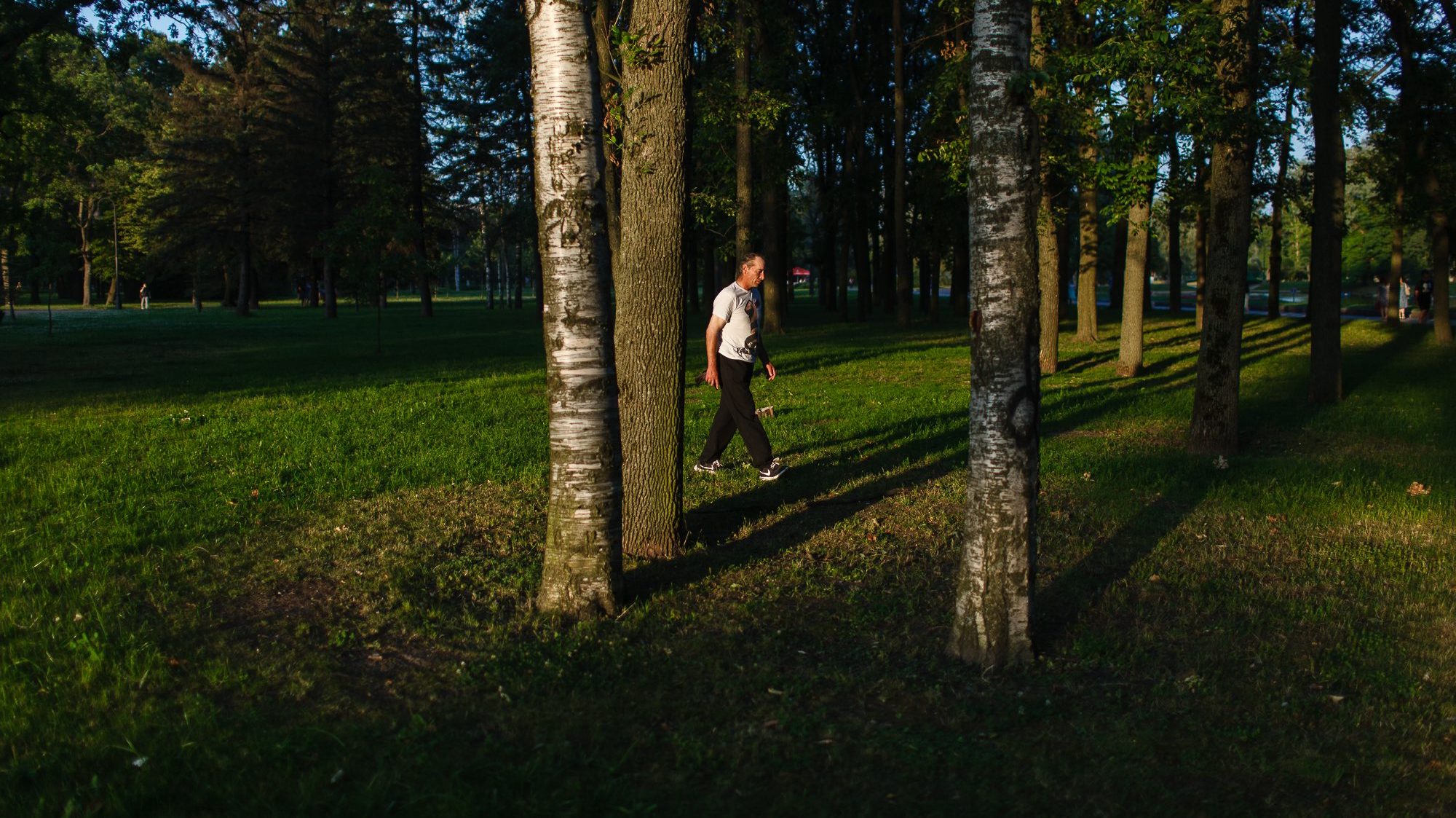
More than twenty years ago, he fled from the Chechen war to Spain. And when he returned to his homeland, he ended up on the street
Help the hip helpWhile I am waiting for Valery, a bench is released in the courtyard of the "night". This is luck: in warm weather, the guests' guests usually descend into the yard: they warm up in the sun, talk, observe. Valery goes out in a clean white T -shirt, explains that he wanted to put himself in order before the conversation. Sits on the very edge of the bench, closely and close to me, embarrassedly explains: "Sorry, I hear a little better with my right ear, so it will be easier for me to communicate."
The story of Valery Ivanov is a protracted series of fatal accidents. For many years, he, a healthy working man, has been fighting for the right to exist. In this right, a large country regularly refuses him and - from time to time - his own organism.
Gudermes - Moscow
It all started in the first Chechen. My wife and my little son lived in Grozny, my grandfathers and great -grandfathers built this city. There was a house, relatives, work - I graduated from an oil technical school, worked throughout the Caucasus and Southern Federal District, was considered an excellent specialist. When captures and looting began in the city, friends began to advise: leave.
The idea of abandoning a native, familiar place and leaving nowhere was incredible to us, my mother flatly refused to leave. But the situation in the city became more and more intense, and then I seriously began to fear for the life of my wife and child. We decided to run.
From someone we heard that in Moscow they help refugees from Chechnya. Stations in Grozny patrolled militants, took things and money, so my family and I went to Gudermes - five and a half hours with a child in my arms. From Gudermes, we managed to go to Moscow by train.
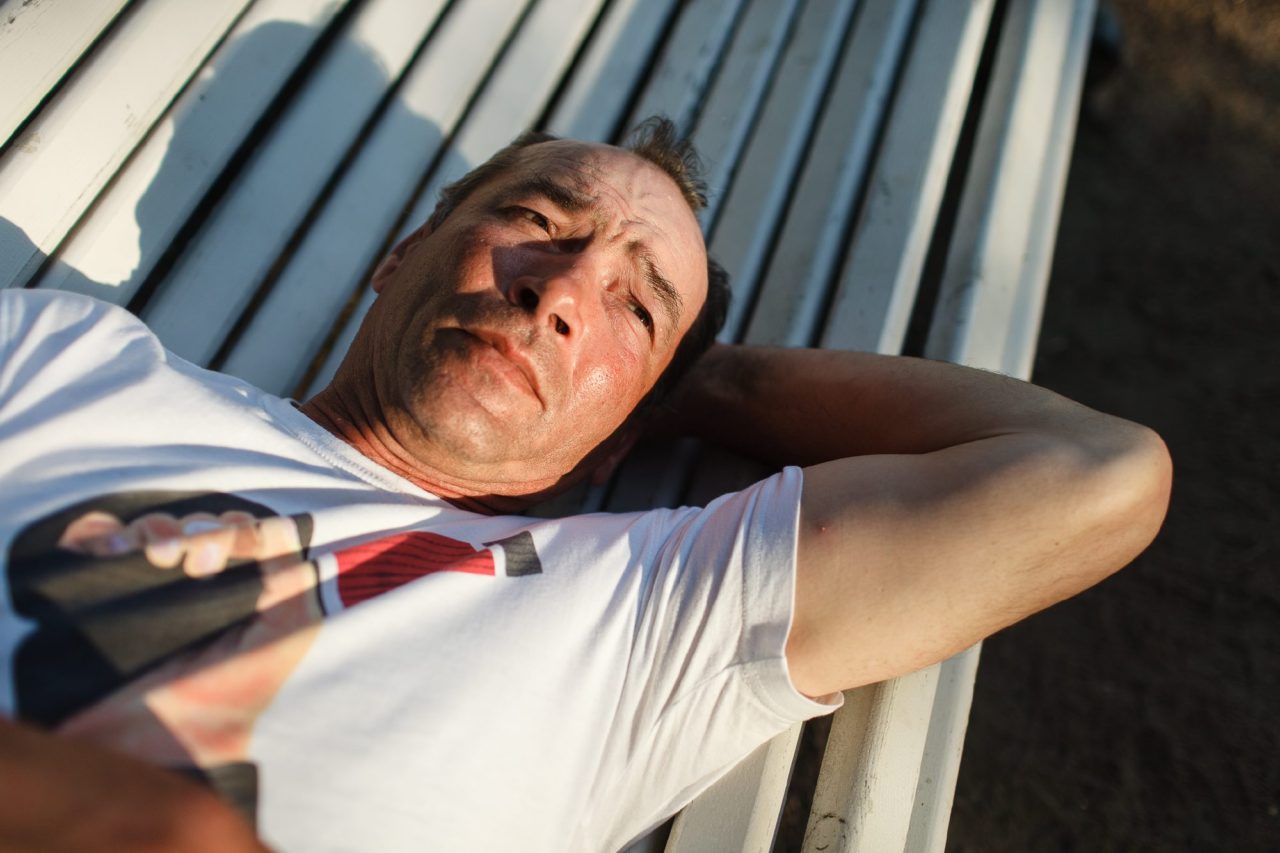 Valery is resting on a bench in Victory Park photo: Valery Zaitsev for TD
There was no war in the capital. In the migration service, having heard my stories, they threatened with arrest for slander and inciting the growth on national grounds: "Everything is calm in Chechnya, do not mislead people, return home." But we no longer had at home.
On the street there was a crowd of refugees, journalists, everyone talked, and I told someone loudly my story. The Spanish journalist heard me, approached us, began to ask. Probably sympathized with a young family with a small child. He told us that Spain, Germany and France accept refugees from Chechnya, suggested helping.
It was very scary to leave for someone else's country - without acquaintances, without knowledge of the language, but it quickly became clear that this is the only chance. Having skipped for several days through the streets, they decided to take a chance. The plan was like this: to wait out the war, then return to Grozny, restore the house, live as before. Journalists helped submit documents for a visa, bought a mobile phone and plane tickets. A few days later we flew out of Sheremetyev: I am for twenty -two years, and my family is forever.
Valencia
Of course, we were not met at the airport. We could hardly get into Moscow, oriented, went to look for a red cross. In Europe, they did not yet know what was happening in Chechnya, only a few days later the media exploded with articles about the war. We were placed in the center for refugees, helped with food and things. The child was arranged in the kindergarten, I began to look for work.
I did not know the language. I studied German at the technical school, a little English, so there was always a dictionary with him. Gradually mastered. The specialty helped a lot. After all, I was a high-class specialist in complex gas-automatic welding, I was taken under the contract to work in the port with a welder. He worked at the most dangerous and complex objects, with toxic gases. Every six months, the contract was extended. He held on to work tightly, did not take leave and sick leave, tried not to miss a day. Once he died: while working in one of the blocks, an explosion occurred, I was thrown back by an explosive wave, my face burned. But if I left to be treated or required compensation, the owner could easily break the contract. I continued to work. Sometimes a head was spinning, my ears were laid, a rumor fell, but I did not pay attention. Not used to complaining.
Gradually established life. The second son was born in Spain. My wife no longer wanted to return to Russia. Family quarrels began, which ended in divorce. The wife and children went to the Spaniard, they issued citizenship. And I worked, helped my sons with money. He did not formalize his citizenship: it was necessary to ask for work, go to Barcelona for several days. He only extended a residence permit, earned, saved up a trip to Russia. He did not chase a foreign passport.
In 2011, I learned that new areas will build in Grozny and demolish the cemetery where all my relatives are buried. And I decided to go.
Terrible-St. Petersburg
In Grozny, I did not find my area: everything was rebuilt. He visited the graves of his mother and relatives, found out that many friends and classmates died, protecting their homes and families. The peaceful Terrible in 2011 lived his life, I was no longer a place here.
Then I decided to go to St. Petersburg: in my youth I served near Peter, I loved the city, planned to live a little here, find a job. At the exit from the Moscow station, the police stopped me - to check the documents. In Europe, they often checked the documents, I got used to it, so I put everything in one folder in the outer pocket of the bag in advance so that it was more convenient to get it. He showed - and removed there. While he was talking with a policeman, he released a bag out of his hands for a second, put it nearby. And she immediately disappeared, there were a lot of people at that moment at the station. The bag was bright, beautiful, it is clear that it was foreign. Someone was planning, thinking: rich booty. But there was no money there, but there were all the documents, a notebook with addresses and phones and warm things.
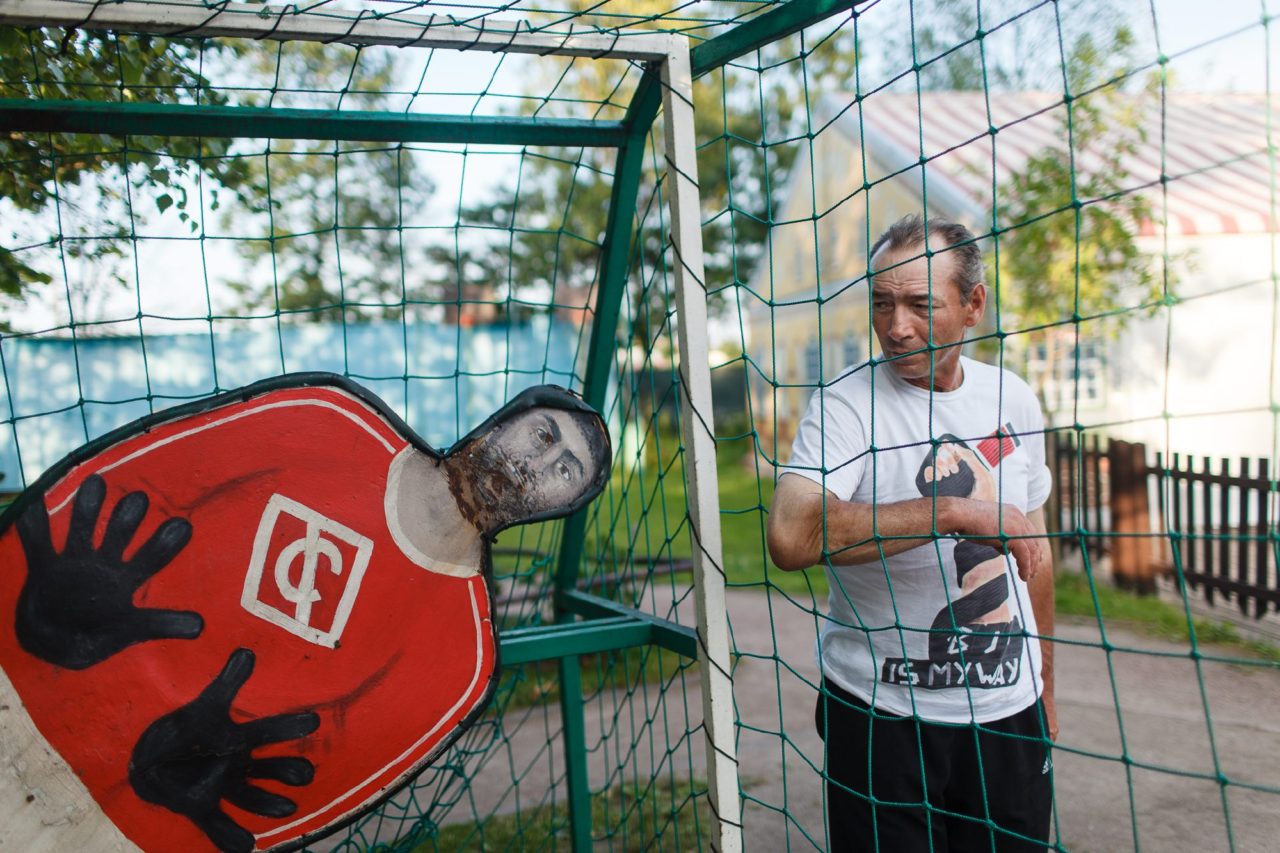 Valery next to the attractions "Know the goal" Photo: Valery Zaitsev for TD
On the records from the cameras, they did not consider anyone. They did not help in the Spanish consulate, because I was not a citizen of Spain. So in early December 2011 I was on the street.
First of all, he began to look for work. It was very difficult, no one took without a passport. Interrupted by temporary parties: welding, work at construction sites, distribution of business cards, newspapers. I did not know then that there were centers for helping homeless. I tried to survive myself. In winter it was especially difficult. Once he fell asleep on a bench and almost froze, since then he began to walk around the city at night, move, and to warm up in the subway early in the morning. In Russia in winter, homeless is very difficult. This temperature does not drop below zero in Spain, it is always warm on the coast, fountains work almost all year round - you can swim, wash things. In Russia in the cold, there is very little chance of surviving on the street.
Once my temperature rose sharply, but I still went to work - to distribute business cards. On the street is minus five, and throws me into the heat. I lost consciousness, and woke up two weeks later, on December 29, in the Botkin hospital with a severe form of meningitis. From death, a doctor saved me, who entered the duty on the New Year holidays: he forbade disconnecting the “hopeless” from the apparatus.
I was embarrassed to say that I had nowhere to go. He asked me about relatives, about the house, but I was silent: at first it was a shame to admit that I was a bum, and then I realized that I could not hear most of the questions at all. The old trauma made a complication due to meningitis.
"Overnight" - Spain
So again I ended up on the street, weakened and almost deaf. I tried to find a job, but from everywhere I was kicked out as soon as they found out that I did not hear. Nobody needs deaf workers. He turned to the army of salvation, they helped with clothes and sent to a working house where you could get an overnight stay and food for work at a construction site. I went to work - in winter they cleaned the roofs from the snow. One day, his head was dizzy, colored spots floated before his eyes, almost lost consciousness.
I had to leave the working house. Sometimes there were some part-time jobs. He worked during the day, and at night he slept right there, on the territory of the warehouses, hiding in a jacket. Last fall, I realized that I would not survive another winter on the street.
From people, I learned about the St. Petersburg Center for Assistance to the Crown of the Overnight. He came and told everything in spirit. Before that, I did not tell anyone my story: I did not communicate with other homeless people - many of them drank, but I had to work. And our situations are too different: the majority, having flicked in St. Petersburg, went back to their villages, to relatives. I had nowhere to go in Russia.
In the "night" I was listened to and sent to restore the Russian passport: they gave detailed instructions, helped to pay the fee. A few weeks later in the shelter, a place was released, and I received a roof over my head. Thanks a lot of "overnight" - they help with food and things. Social workers are very sensible, smart advice gives what needs to be done. Thanks to the “overnight” I went through the commission, they gave me the third disability group, this is five thousand a month. Of course, not a lot of money for St. Petersburg, but still. I work, I try not to sit idle.
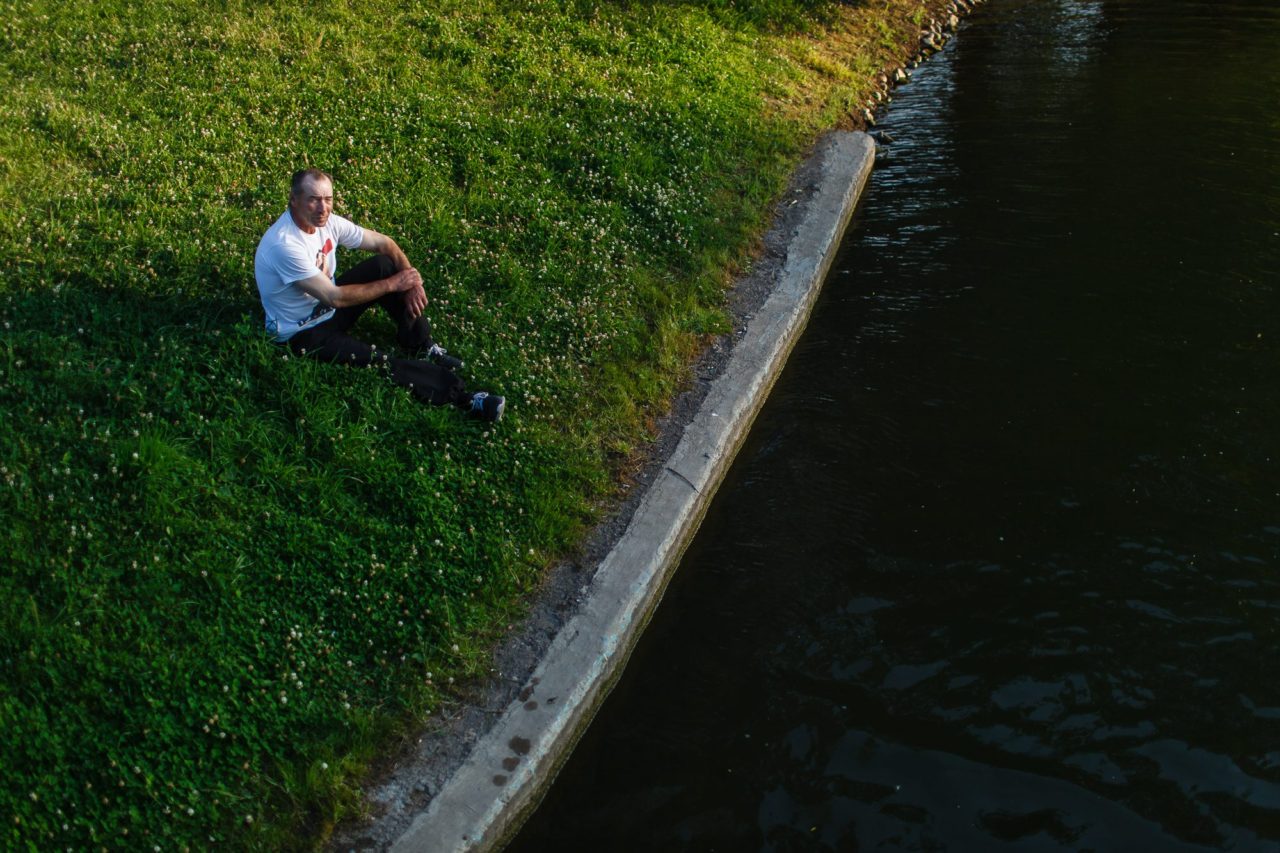 Valery walks near the ponds in the Victory Park photo: Valery Zaitsev for TD
Now I have found a part -time job and hold on to it very much: I roll ice cream on Nevsky, sausages. The boss knows that I hear poorly, but I try, I have established myself well, they treat me with understanding. The only negative is work on the weather: good weather - we work, rain - no work. In the summer, they let go of work at ten in the evening, while I’ll run away from Palace Square to the “night”, they have already told everything important and all things were dismantled. But social workers know my situation and try to help. Now the number one task is - hearing aids. They have a queue, but I do not have St. Petersburg registration. It is unrealistic to buy expensive devices yourself. But I really need them. They drive me everywhere like a ugly duckling when they find out that I am deaf. But is it my fault?
I myself earn and put off money, I am looking for information myself, I go to the instances, I try to follow myself. The "night" gives me the main thing - shelter and support. It is necessary not only to survive, you have to want to live. If it weren’t for the “overnight”, I myself probably could not cope.
***
Valery turns away, embarrassed by approaching tears.
There is no guilt in the event that his hearing violated, neither in the loss of documents, nor in the Chechen war. True, it is difficult to believe him himself - pride and desire to act haunted. Having consulted with lawyers, Valery decided to save money to accumulate on a trip to Spain - there he was given a minimum pension. To do this, you need to return and restore the working experience before the moment he is 55 years old, otherwise the pension is canceled. Now Valery is already 51 years old. This pension is his only chance for a decent old age. In addition, in Spain, he hopes to restore relations with his sons, find friends.
In the evening, in the courtyard, the “nights” gather her wards: men and women, young and in the age, with a wand and on crutches. They sit on benches, listen to the voice of a large city, look at the bright northern sky.
"Overnight" helps them. We help the "night". Your regular donation for any amount - 100, 200, 500 rubles - this is a chance for Valery and hundreds of other people to go to the streets of the city for a walk or on business, and not in search of food and shelter.